Biography
Utagawa Kuniteru I (歌川国輝, 1808–1876) was a Bakumatsu and early Meiji ukiyo-e print designer of the Utagawa school, a pupil of Utagawa Kunisada I (Toyokuni III, 1786–1865), and an active middle-rank member of the dominant Kunisada workshop in nineteenth-century Edo. Across a career rooted in the late Edo and early Meiji decades he produced actor prints (yakusha-e), warrior and history prints (musha-e and rekishi-ga), sumo prints (sumō-e), and Yokohama-e and modernization prints depicting the new foreign presence at the treaty port of Yokohama and the technological transformations of early Meiji Tokyo. The Kuniteru name is closely associated with two of the great visual subjects of early Meiji Japan: the first steam railway between Shimbashi and Yokohama, opened in 1872, and the foreign circus troupes that performed in the new capital in the early 1870s. Prints signed Kuniteru appear in collection records at the Museum of Fine Arts, Boston (particularly the William Sturgis Bigelow Collection), the Metropolitan Museum of Art, the British Museum, and other major Western institutional holdings of Japanese prints.
Kuniteru's biography is complicated by a generational naming problem that has long confused both collectors and museum cataloguers. Two distinct artists used the name 'Utagawa Kuniteru' in roughly overlapping periods: Kuniteru I (1808–1876), trained under Kunisada I, who used the gō Ichiyūsai (一雄斎) and earlier signed himself Sadashige (貞重), Gochōtei Sadashige, and Tōkaen; and Kuniteru II (1830–1874), a slightly later Utagawa designer also active in the Bakumatsu and early Meiji decades. Many works signed simply 'Kuniteru' or 'Kuniteru ga' cannot be assigned to one artist or the other on signature alone, and museum records frequently merge their dates into a single composite entry ('Utagawa Kuniteru, Japanese, 1830–1874' is common at the Metropolitan Museum of Art, for example, even on prints stylistically and chronologically consistent with Kuniteru I). The Museum of Fine Arts, Boston is more rigorous: its catalogue records explicitly distinguish 'Utagawa Kuniteru I (Sadashige)' (1808–1876) from Kuniteru II, anchoring Kuniteru I to the line of Utagawa Kunisada (Toyokuni III) and to the signature name Sadashige. The MFA's stance is closer to current scholarly consensus, and the prints in its Bigelow collection — such as the Susanoo (Gozu Tennō) and Inada-hime print from the series Lives of Heroes of Our Country (Honchō eiyū den), dated 1847–52 — are securely attributed to Kuniteru I.
Within the Utagawa lineage Kuniteru I belonged to the second generation of Kunisada's pupils. After his teacher took the name Toyokuni III in 1844, Kuniteru continued to produce actor prints in the standardized Kunisada/Toyokuni III idiom: ōban portraits of kabuki performers, half-length close-ups (ōkubi-e), multi-figure compositions for popular plays, and silhouette-style novelty images (kage-e). His Lives of Heroes of Our Country (Honchō eiyū den) series of 1847–52 places him in the warrior-print tradition that ran from Kunisada and Kuniyoshi through the late-Edo period, and his sumo prints participate in the parallel sumō-e genre that Kunisada had codified for the Utagawa school.
The Yokohama-e and Meiji modernization prints form the most-discussed part of the output associated with the Kuniteru name. Yokohama opened as a treaty port in 1859, and from 1860 a substantial school of 'Yokohama prints' emerged depicting foreigners, foreign ships and buildings, and the gradual transformation of Japanese life under the new diplomatic and commercial relationships. Artists working under the Kuniteru name contributed to this genre alongside Sadahide, Yoshitora, Yoshiiku, and Yoshikazu, and extended Yokohama subject matter into Tokyo itself in the early Meiji period. Triptychs of the Tōkyō–Yokohama steam railway, which opened in October 1872 (Meiji 5), are among the most-reproduced images of the railway's first years, depicting locomotives along the Takanawa coastline and the elevated track between the new capital and the foreign settlement; prints recording the visiting French circus of 1871 belong to the same current of Meiji reportage. Because these works date from the very end of Kuniteru I's life and the years of Kuniteru II's activity, their attribution between the two artists is often uncertain, and museum records commonly assign them to 'Kuniteru' with the composite dates 1830–1874.
Kuniteru I died in 1876, in the early Meiji period, before the wholesale modernization of Japanese print publishing in the 1880s. The younger Kuniteru II (1830–1874) worked under the same name during overlapping years and died two years before him, a chronological entanglement that has fueled the enduring attribution confusion. Both artists are now represented in the major Western collections of Japanese prints, and the Kuniteru name is increasingly recognized for its chronicle of the Bakumatsu–Meiji transition, the moment when the world of Edo-period kabuki and sumō began to share the printed page with foreign locomotives, equestrian acrobats, and the architectural and social transformations of treaty-port Japan.
Key Facts
- Active Period
- 1808–1876
- Nationality
- 🇯🇵Japan
- Movement
- Ukiyo-e
- Subjects
- SumoBirds & Flowers
- Works Indexed
- 7
Frequently Asked Questions
Utagawa Kuniteru I (歌川国輝, 1808–1876) was a Bakumatsu and early Meiji ukiyo-e print designer of the Utagawa school, a pupil of Utagawa Kunisada I (Toyokuni III, 1786–1865), and an active middle-rank member of the dominant Kunisada workshop in nineteenth-century Edo. Across a career rooted in the late Edo and early Meiji decades he produced actor prints (yakusha-e), warrior and history prints (musha-e and rekishi-ga), sumo prints (sumō-e), and Yokohama-e and modernization prints depicting the new foreign presence at the treaty port of Yokohama and the technological transformations of early Meiji Tokyo. The Kuniteru name is closely associated with two of the great visual subjects of early Meiji Japan: the first steam railway between Shimbashi and Yokohama, opened in 1872, and the foreign circus troupes that performed in the new capital in the early 1870s. Prints signed Kuniteru appear in collection records at the Museum of Fine Arts, Boston (particularly the William Sturgis Bigelow Collection), the Metropolitan Museum of Art, the British Museum, and other major Western institutional holdings of Japanese prints.
Utagawa Kuniteru was active from 1808 to 1876. They were associated with the Ukiyo-e movement.
Utagawa Kuniteru's work was shaped by the Ukiyo-e tradition in Japanese woodblock printmaking. Ukiyo-e: ## What is ukiyo-e? Ukiyo-e ([浮世絵](/glossary/ukiyo-e)) — literally "pictures of the floating world" — is the Edo-period Japanese print and painting tradition that flourished from roughly 1660 to 1868, depicting the pleasures of urban life in Edo (modern Tokyo): courtesans, kabuki actors, sumo wrestlers, famous landscapes, and seasonal beauties.
Utagawa Kuniteru's prints frequently feature sumo, birds & flowers.
Original prints by Utagawa Kuniteru can be found in collections including Metropolitan Museum of Art, Museum of Fine Arts, Boston.
Woodblock Prints by Utagawa Kuniteru (7)
Gozu Tennō (=Susanoo) and Inada-hime, from the series Lives of Heroes of Our Country (Honchō eiyū den)
本朝英雄伝 牛頭天皇 稲田姫
1847–52 (Kōka 4–Kaei 5)
Woodblock print (nishiki-e); ink and color on paper
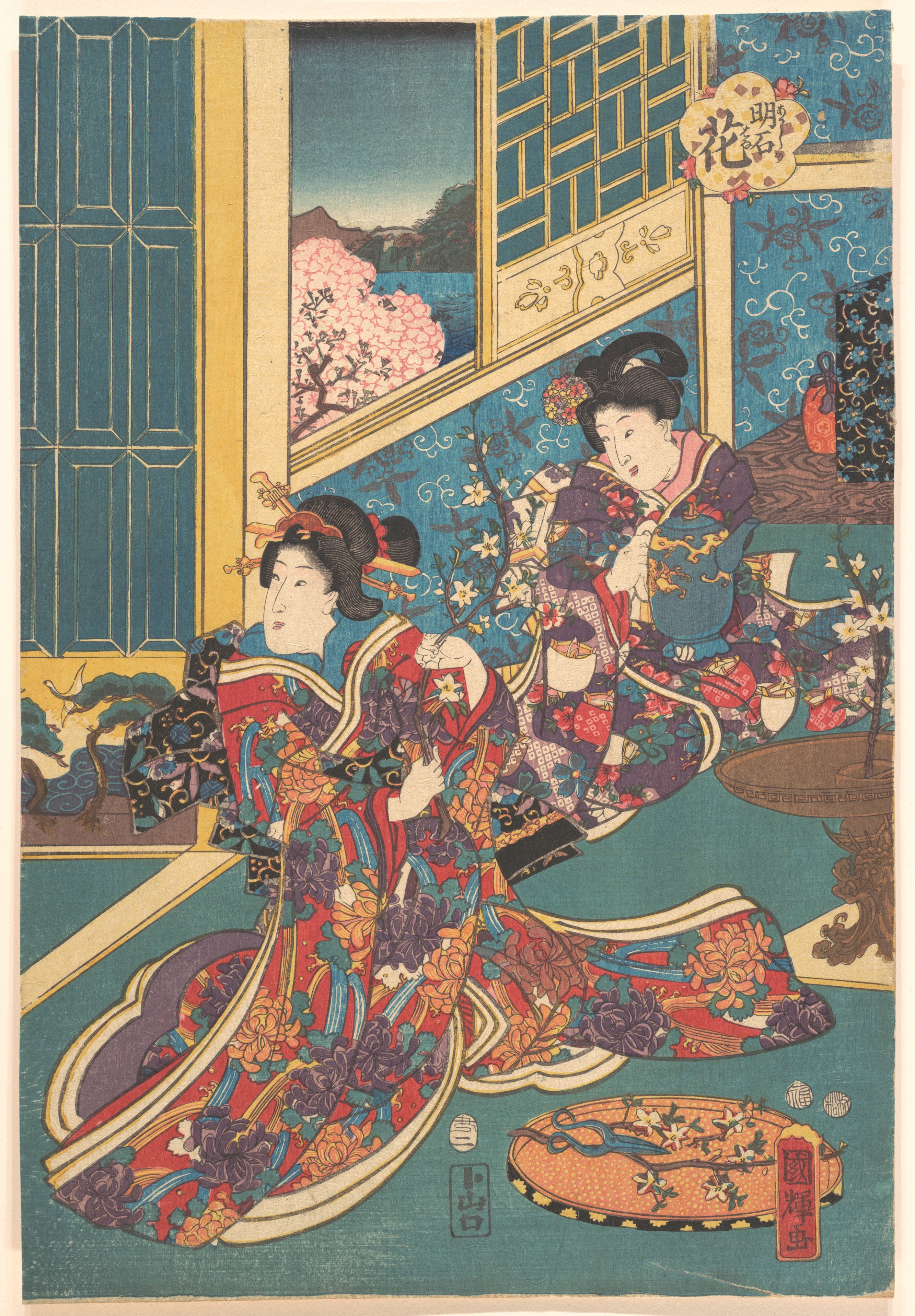
Flower of Akashi (Akashi no hana)
明石の花
1853
Woodblock print; ink and color on paper
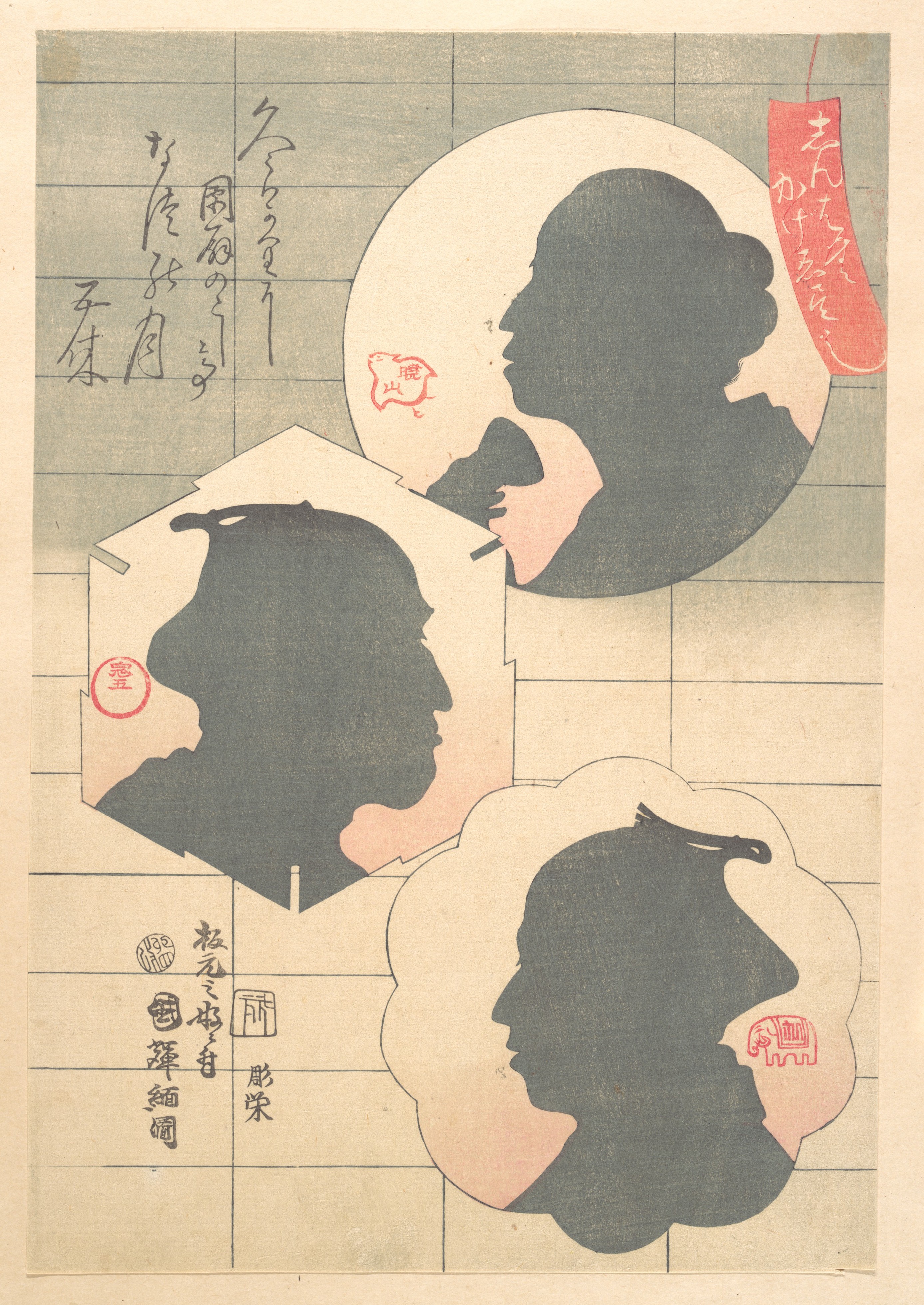
Silhouette Image of Kabuki Actor
歌舞伎役者影絵
19th century
Woodblock print; ink and color on paper
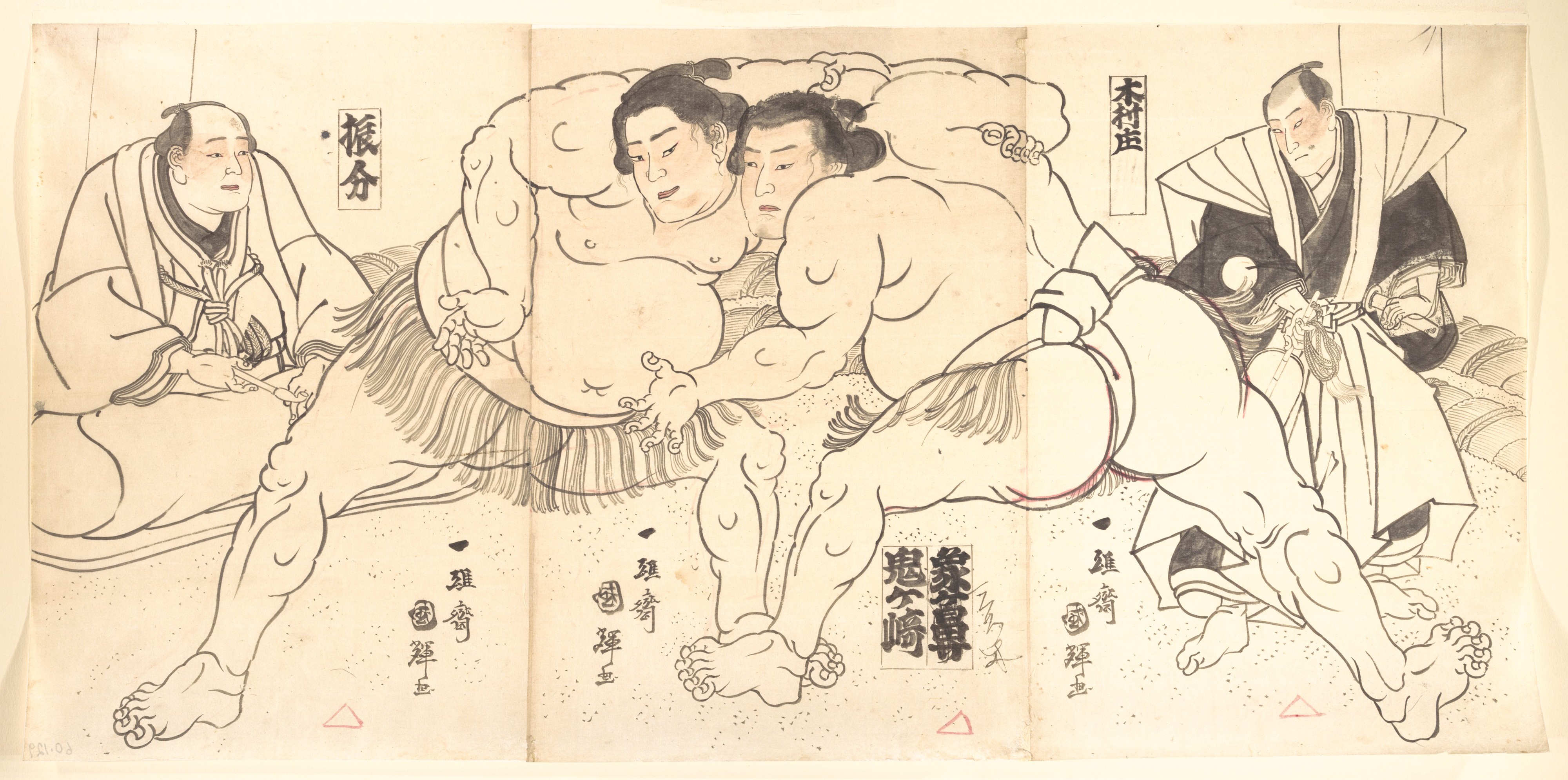
Sumo Wrestling
相撲
19th century
Matted painting; ink on paper
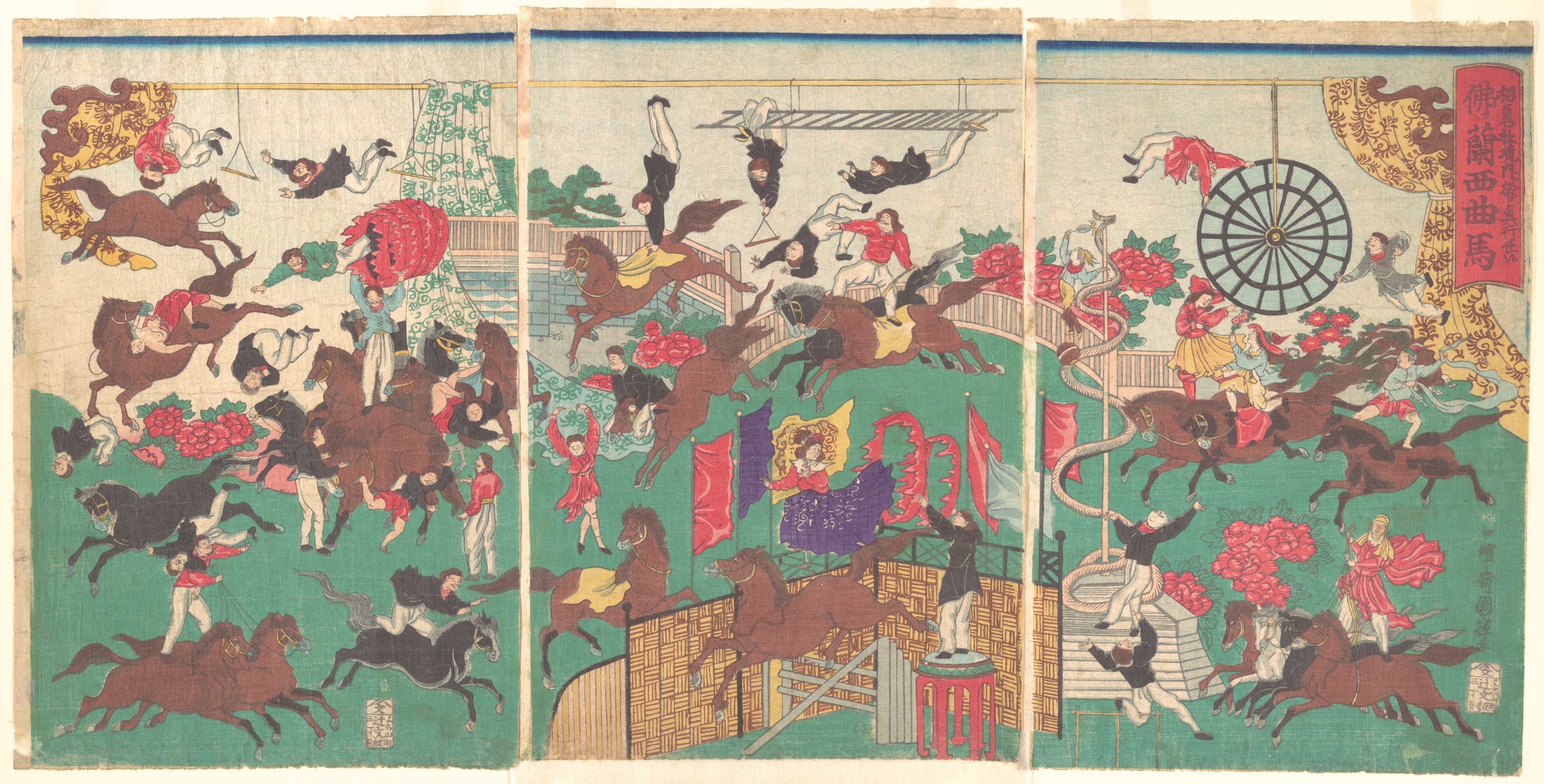
French Equestrian Circus on the Grounds of Asakusa Kannon Temple (Asakusa kannon keidai ni oite kōgyō tsukawashi sōrō — Furansu kyokuba)
浅草観音境内ニ於テ興行仕候 仏蘭西曲馬
1871
Woodblock print; ink and color on paper
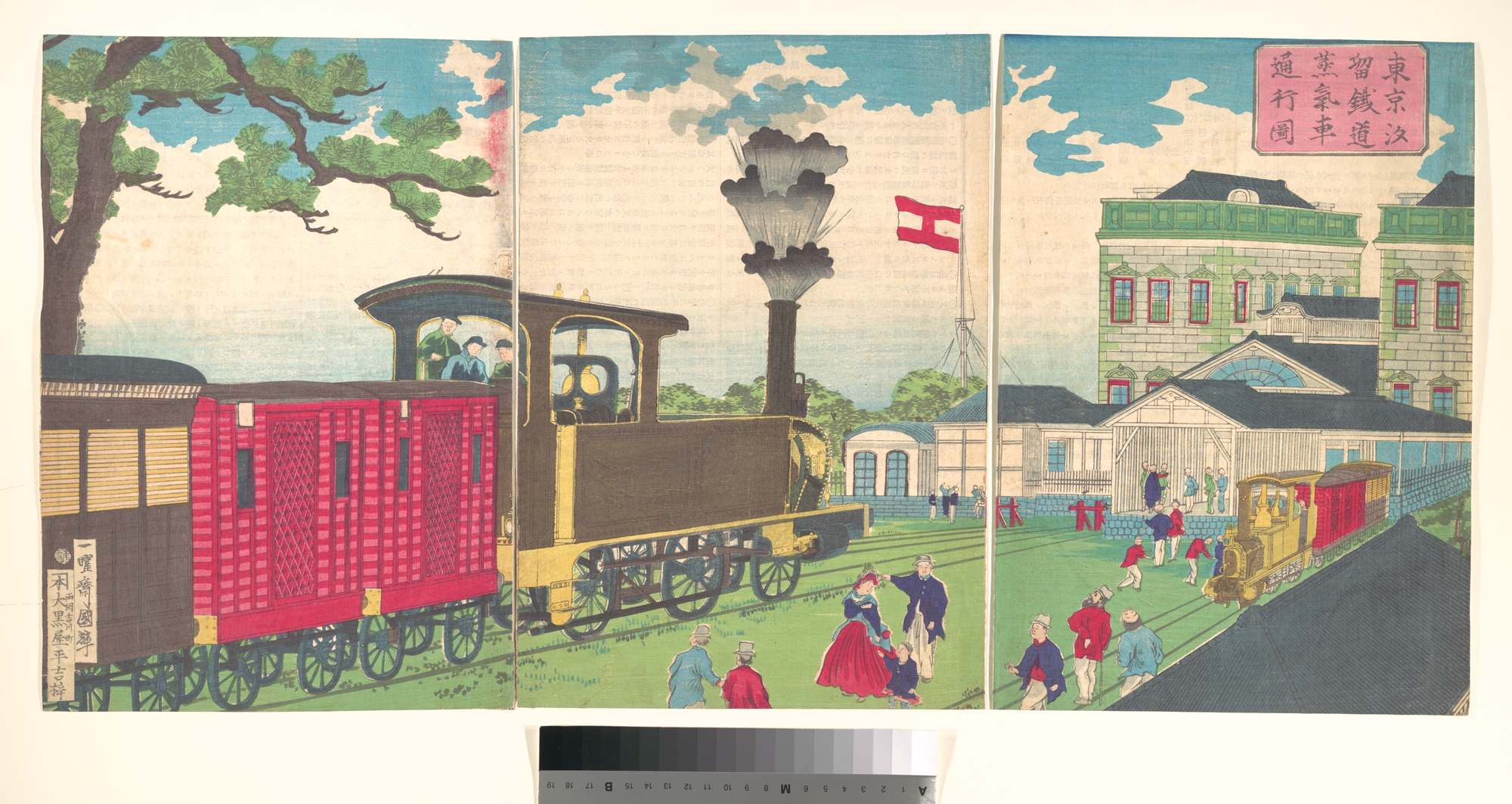
Illustration of a Steam Locomotive Passing Shiodome in Tokyo (Tōkyō Shiodome tetsudō jōkisha tsūkō zu)
東京汐留鉄道蒸気車通行図
1872
Triptych of woodblock prints; ink and color on paper
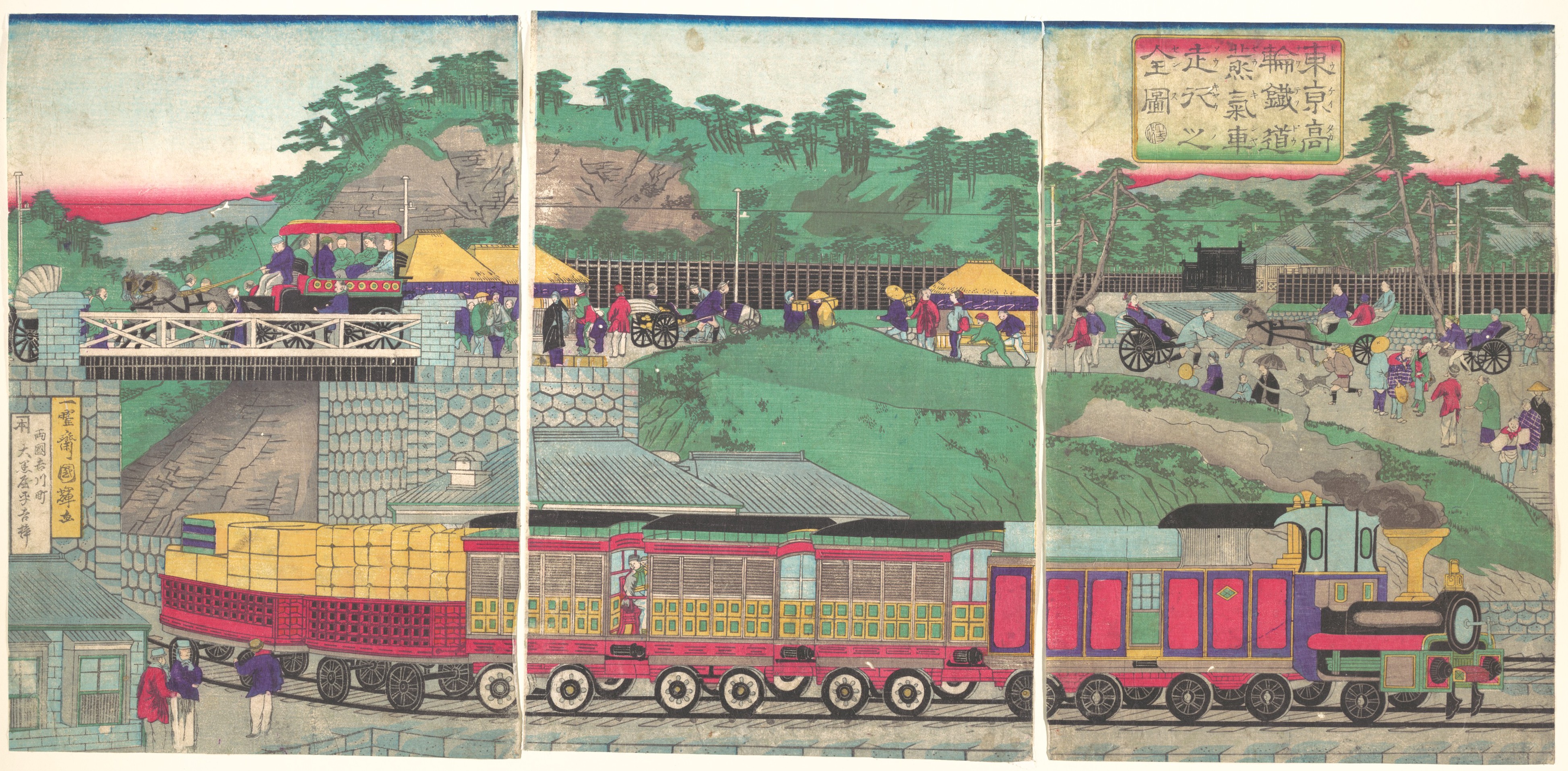
Illustration of a Steam Locomotive Running on the Takanawa Railroad in Tokyo (Tōkyō takanawa tetsudō jōkisha sōkō no zu)
東京高輪鉄道蒸気車走行之図
ca. 1873
Triptych of woodblock prints; ink and color on paper