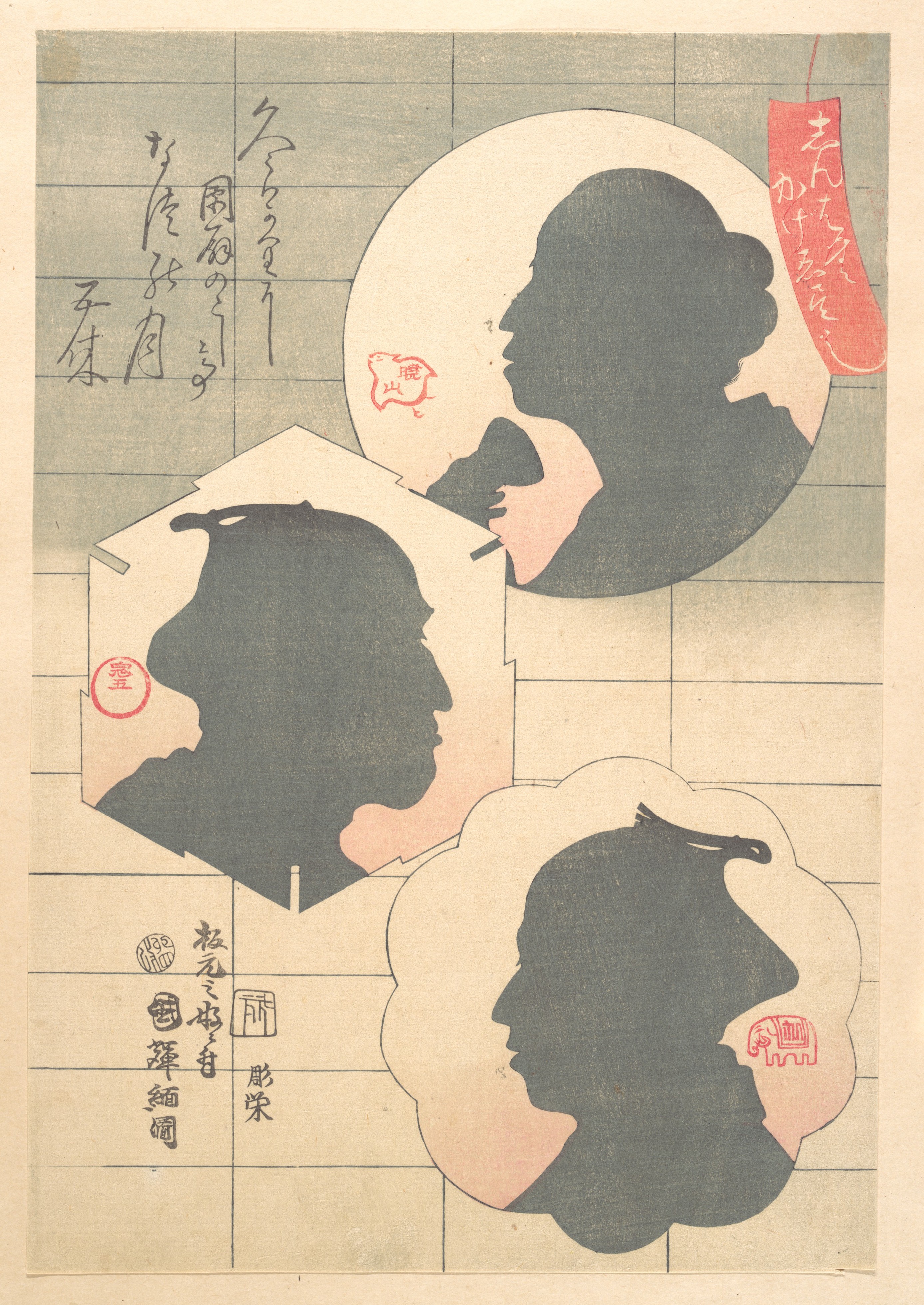
Silhouette Image of Kabuki Actor
歌舞伎役者影絵
- Date:
- 19th century
- Medium:
- Woodblock print; ink and color on paper
- Source:
- Metropolitan Museum of Art
Description
Silhouette Image of Kabuki Actor is a nineteenth-century woodblock print by Utagawa Kuniteru held by the Metropolitan Museum of Art (accession JP2748.3). The work belongs to the genre of kage-e (shadow pictures or silhouette images), a small but distinctive category of ukiyo-e in which an actor or famous personage is depicted as a black silhouette against a contrasting ground — a visual joke or recognition game in which the viewer is invited to identify the kabuki performer from posture and costume outline alone. Kage-e proliferated in the Bakumatsu decades partly as a response to the Tenpō-era reforms (1841-43) and the subsequent intermittent prohibitions on naming specific actors in prints; designers including Kunisada, Kuniyoshi, and members of their workshops developed the silhouette device as an oblique way to maintain the actor-print trade. Kuniteru's contribution to the genre demonstrates his participation in the standard workshop repertoire of the late Utagawa school under Kunisada I and Kunisada's successors; the simplified black-and-color composition is technically straightforward but depends on precise observation of the actor's stage posture. The Met preserves the print in its Bigelow- and Mansfield-era holdings of Japanese ukiyo-e and has digitized it under its Open Access program.
More Prints by Utagawa Kuniteru
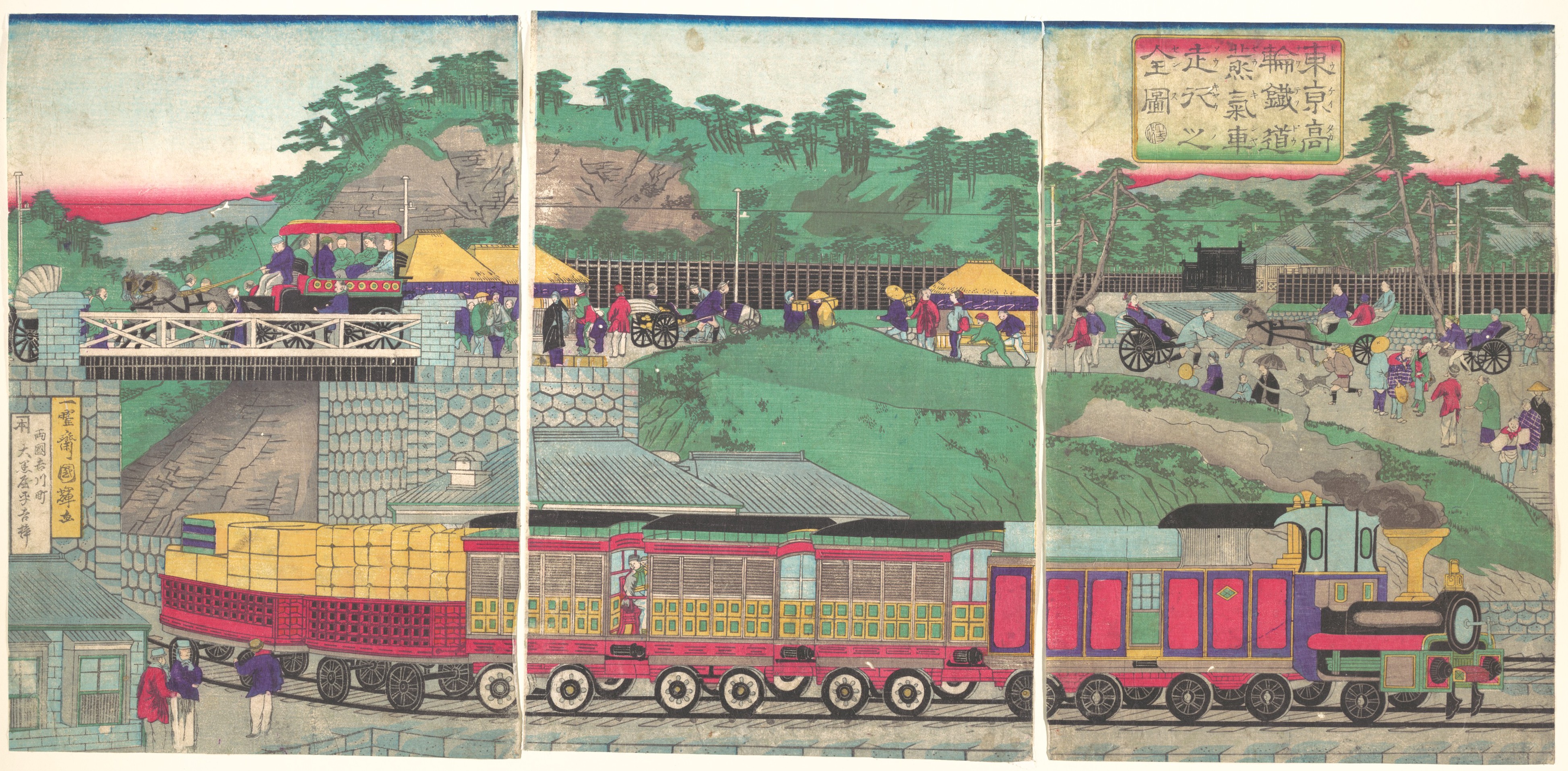
Illustration of a Steam Locomotive Running on the Takanawa Railroad in Tokyo (Tōkyō takanawa tetsudō jōkisha sōkō no zu)
東京高輪鉄道蒸気車走行之図
ca. 1873
Triptych of woodblock prints; ink and color on paper
Gozu Tennō (=Susanoo) and Inada-hime, from the series Lives of Heroes of Our Country (Honchō eiyū den)
本朝英雄伝 牛頭天皇 稲田姫
1847–52 (Kōka 4–Kaei 5)
Woodblock print (nishiki-e); ink and color on paper
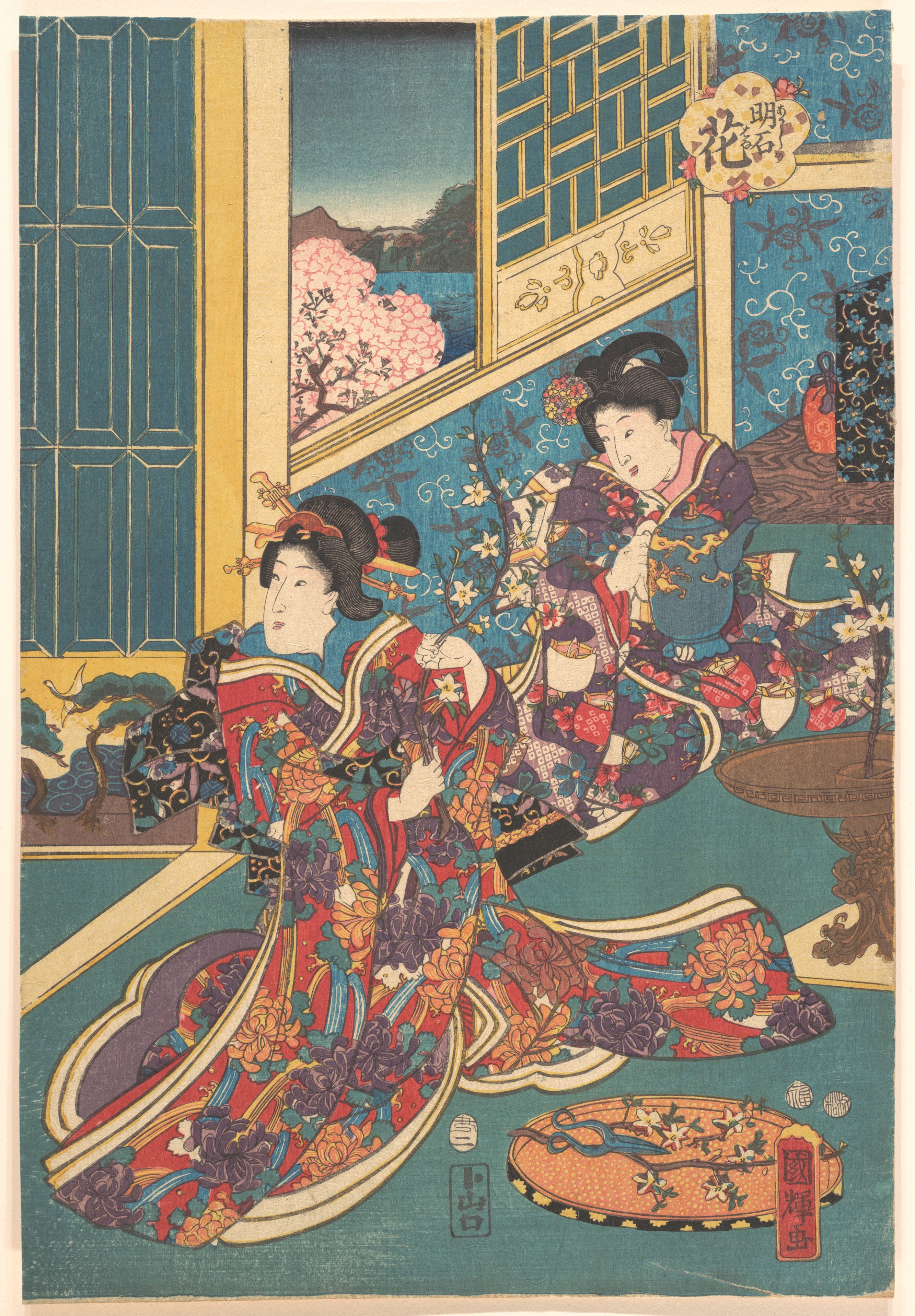
Flower of Akashi (Akashi no hana)
明石の花
1853
Woodblock print; ink and color on paper
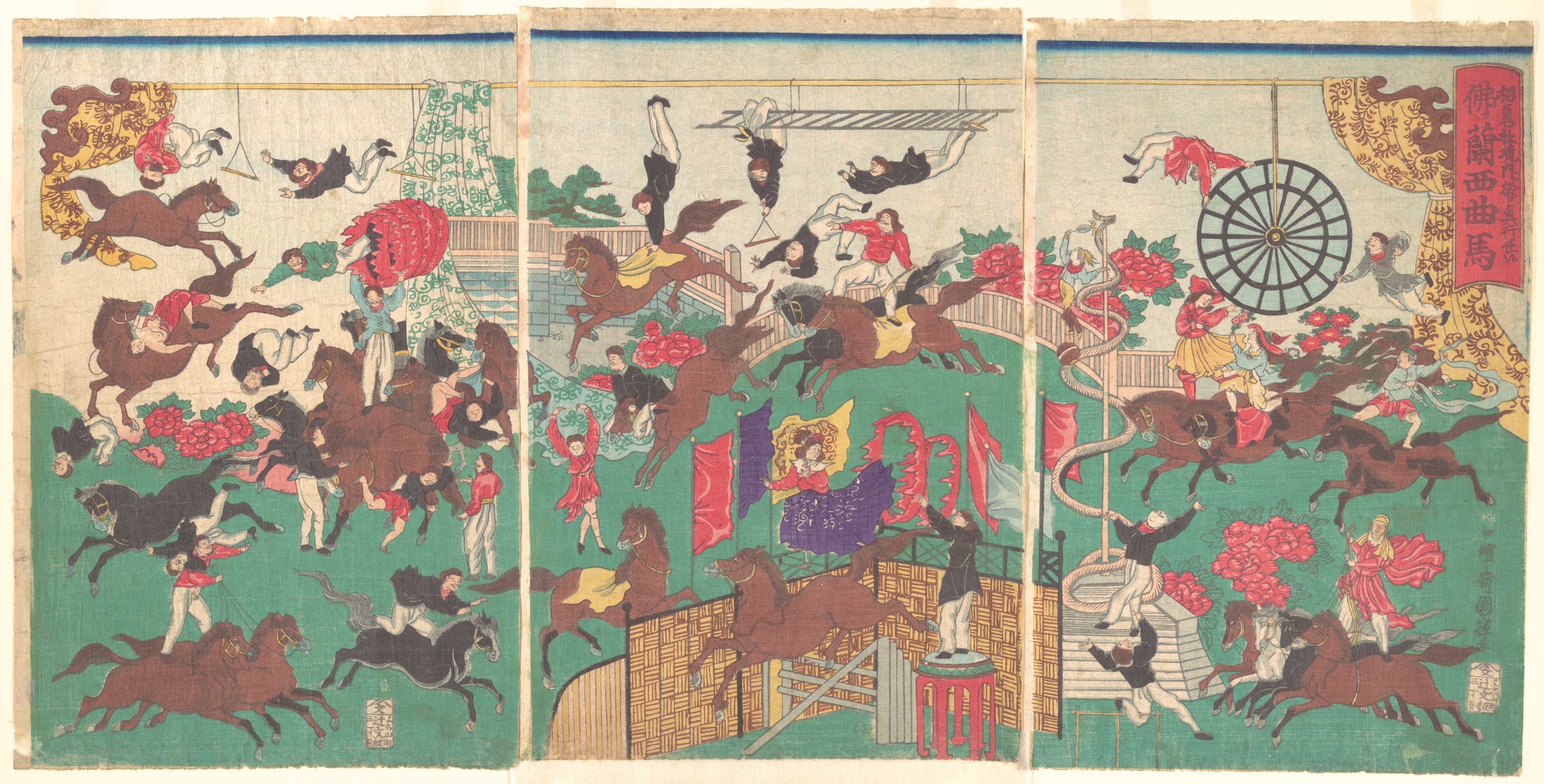
French Equestrian Circus on the Grounds of Asakusa Kannon Temple (Asakusa kannon keidai ni oite kōgyō tsukawashi sōrō — Furansu kyokuba)
浅草観音境内ニ於テ興行仕候 仏蘭西曲馬
1871
Woodblock print; ink and color on paper
Frequently Asked Questions
Silhouette Image of Kabuki Actor (歌舞伎役者影絵) was created by Utagawa Kuniteru (歌川国輝) in 19th century.