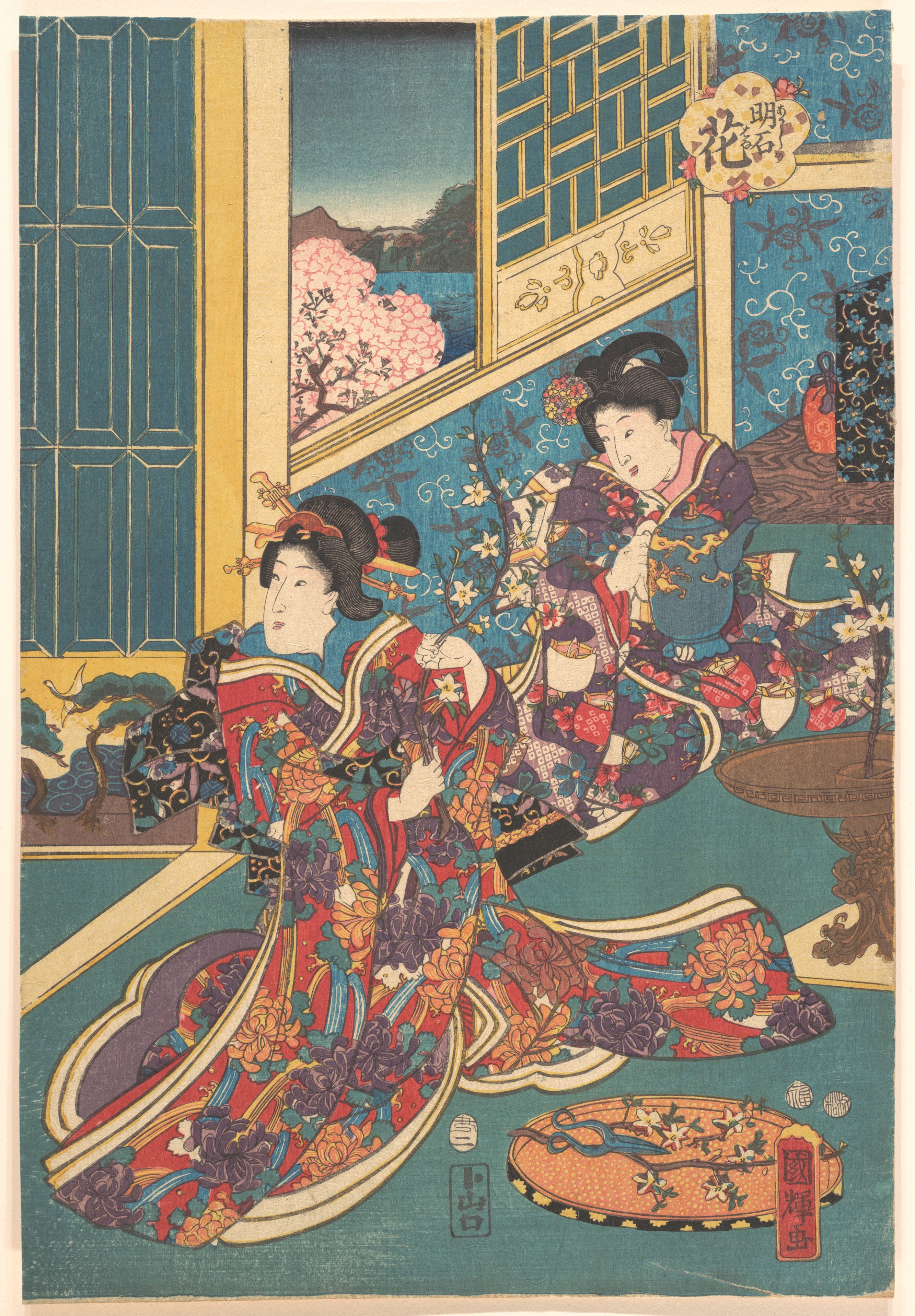
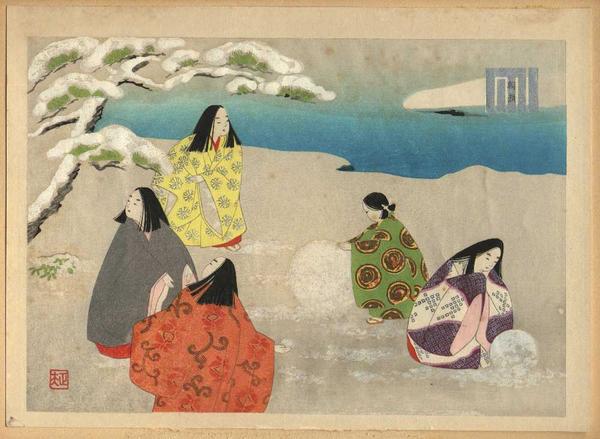
Flower of Akashi (Akashi no hana)
明石の花
- Date:
- 1853
- Medium:
- Woodblock print; ink and color on paper
- Source:
- Metropolitan Museum of Art
Description
Flower of Akashi (Akashi no hana) is a woodblock print by Utagawa Kuniteru dated 1853 and now in the Metropolitan Museum of Art (accession JP1093.8). The title evokes the Akashi chapter of the Tale of Genji, one of the most lyrical sections of Murasaki Shikibu's eleventh-century romance, in which the exiled Genji forms an attachment to the daughter of a coastal nobleman at Akashi on the Inland Sea. By the mid-nineteenth century the Akashi chapter and its associations with coastal beauty, music, and tragic romance had become a standard subject for ukiyo-e designers working in the bijin-ga (beautiful women) tradition. Kuniteru's print, executed in the Kunisada-school manner of slender vertical figures with elaborate hairstyles and richly patterned robes, would have read for its 1853 Edo audience as both a portrait of a contemporary courtesan or actor and as a literary reference to the classical Genji material. The 1853 date places this print firmly in the active career of Kuniteru I (1808-1876), the Utagawa pupil of Kunisada I; it predates the documented working years of Kuniteru II. The Met has digitized the print under its Open Access program, and the artist's signature follows the conventional Utagawa pattern for the period.
More Prints by Utagawa Kuniteru
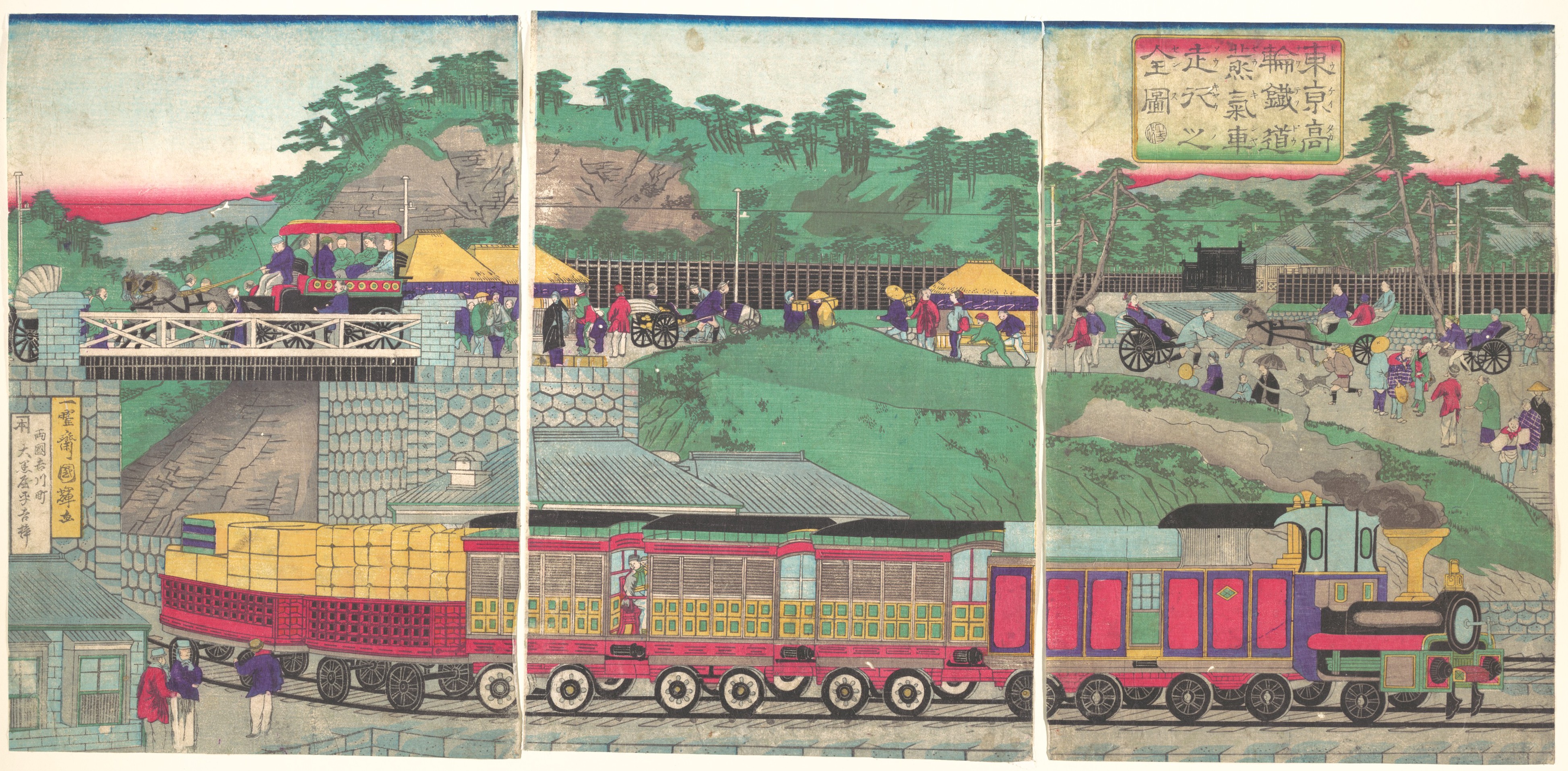
Illustration of a Steam Locomotive Running on the Takanawa Railroad in Tokyo (Tōkyō takanawa tetsudō jōkisha sōkō no zu)
東京高輪鉄道蒸気車走行之図
ca. 1873
Triptych of woodblock prints; ink and color on paper
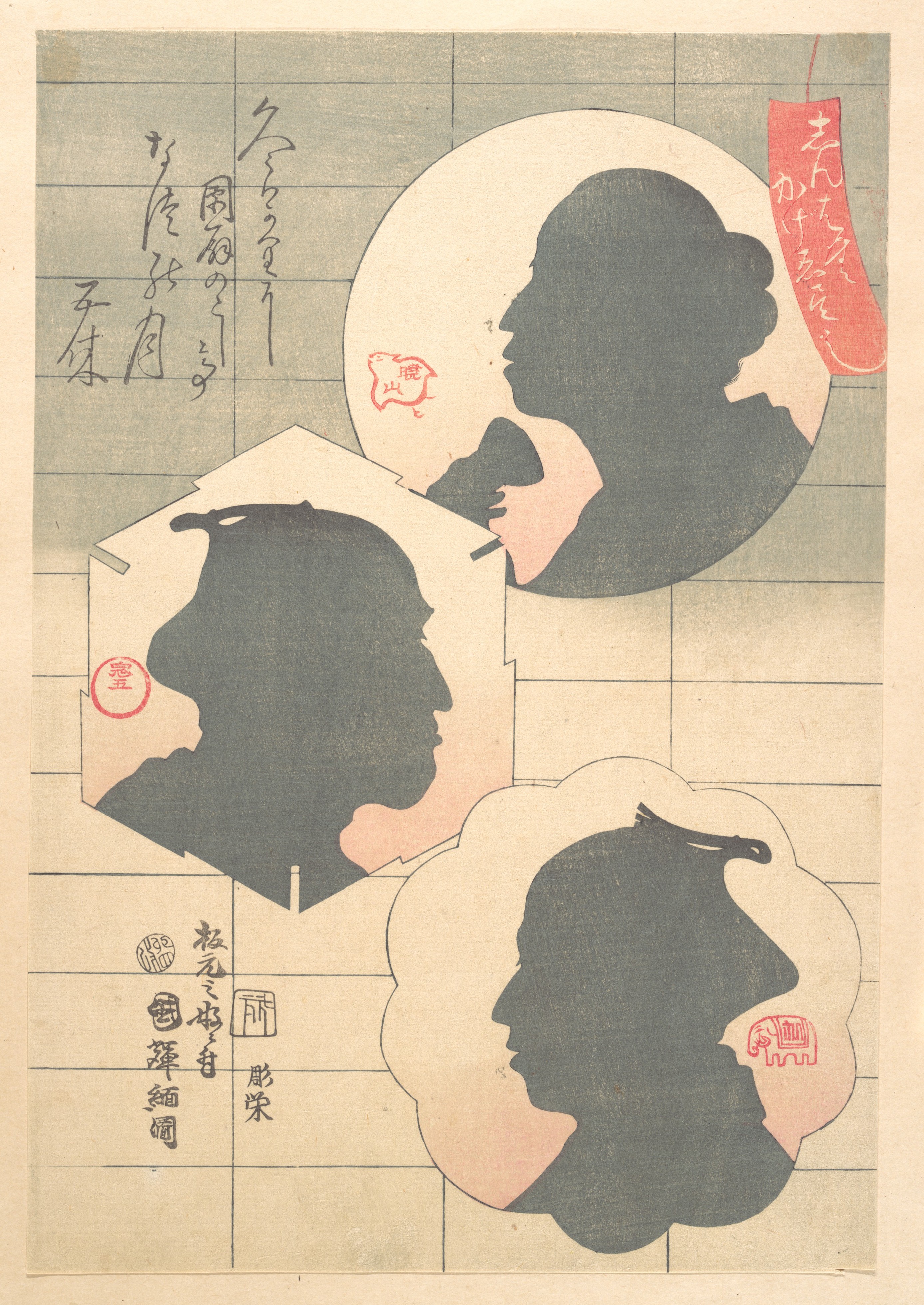
Silhouette Image of Kabuki Actor
歌舞伎役者影絵
19th century
Woodblock print; ink and color on paper
Gozu Tennō (=Susanoo) and Inada-hime, from the series Lives of Heroes of Our Country (Honchō eiyū den)
本朝英雄伝 牛頭天皇 稲田姫
1847–52 (Kōka 4–Kaei 5)
Woodblock print (nishiki-e); ink and color on paper
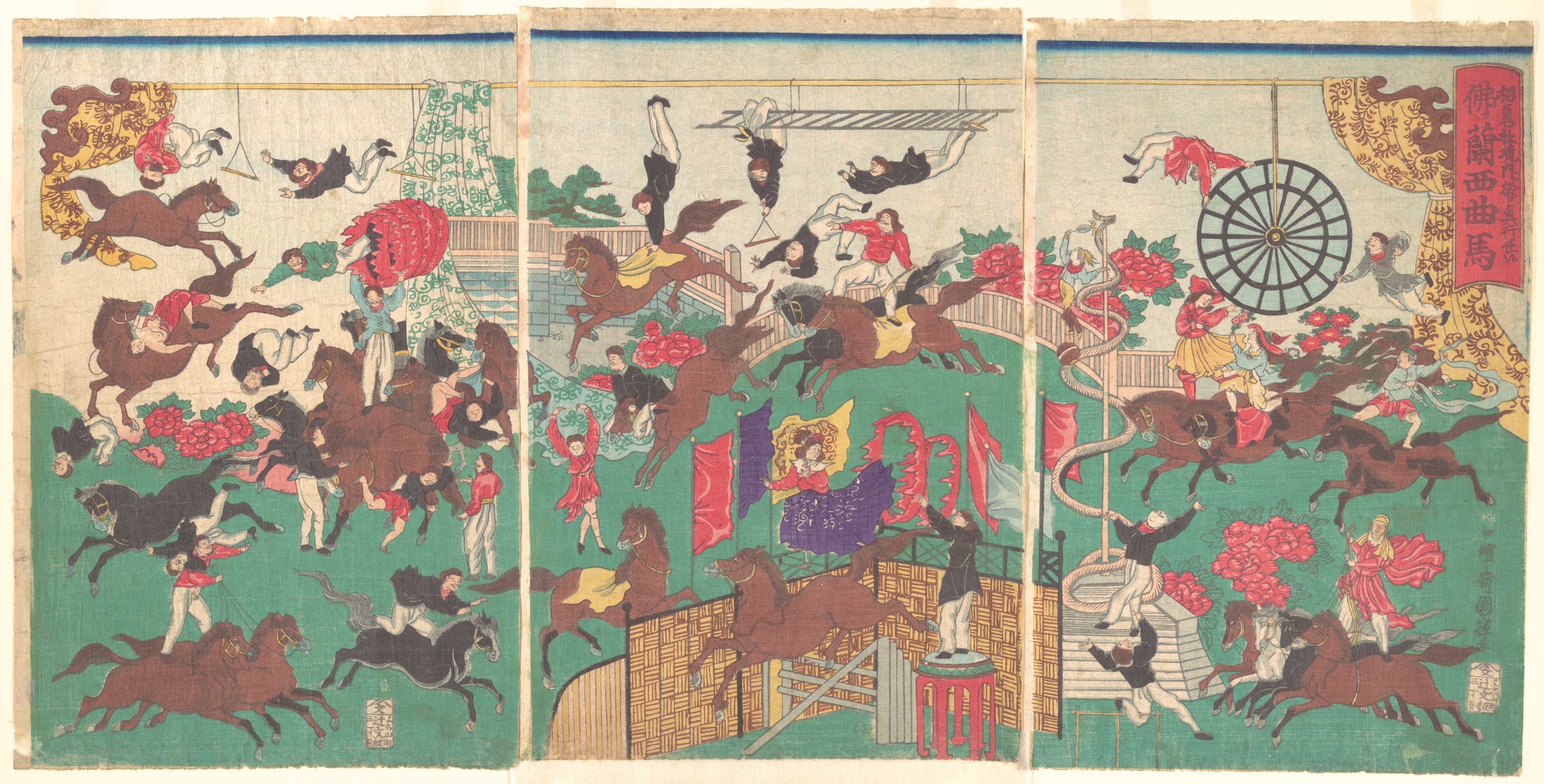
French Equestrian Circus on the Grounds of Asakusa Kannon Temple (Asakusa kannon keidai ni oite kōgyō tsukawashi sōrō — Furansu kyokuba)
浅草観音境内ニ於テ興行仕候 仏蘭西曲馬
1871
Woodblock print; ink and color on paper
More Birds & Flowers Prints
Frequently Asked Questions
Flower of Akashi (Akashi no hana) (明石の花) was created by Utagawa Kuniteru (歌川国輝) in 1853.
Flower of Akashi (Akashi no hana) depicts birds & flowers.