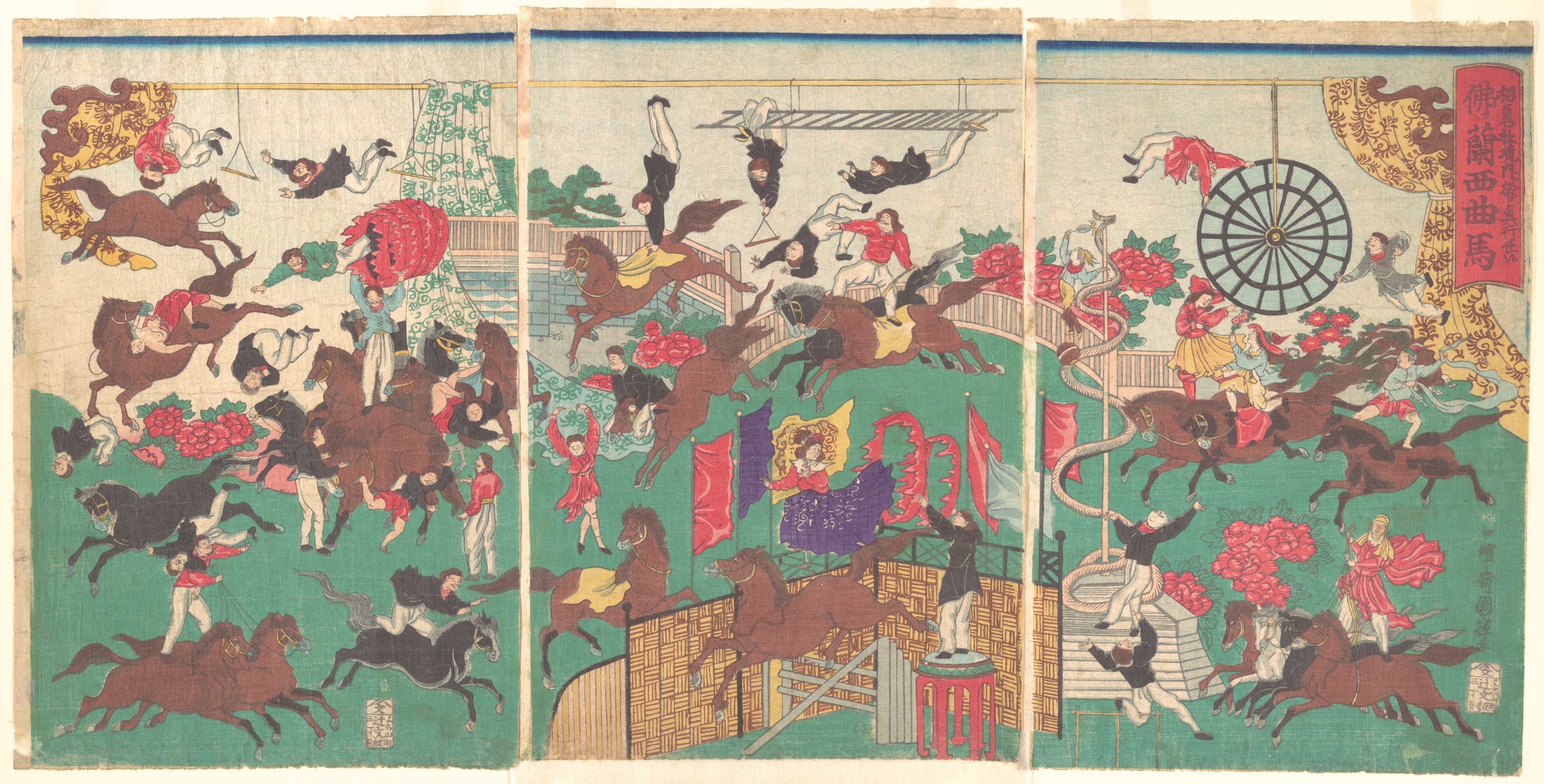
French Equestrian Circus on the Grounds of Asakusa Kannon Temple (Asakusa kannon keidai ni oite kōgyō tsukawashi sōrō — Furansu kyokuba)
浅草観音境内ニ於テ興行仕候 仏蘭西曲馬
- Date:
- 1871
- Medium:
- Woodblock print; ink and color on paper
- Source:
- Metropolitan Museum of Art
Description
French Equestrian Circus on the Grounds of Asakusa Kannon Temple (Asakusa kannon keidai ni oite kōgyō tsukawashi sōrō — Furansu kyokuba) is a 1871 woodblock print by Utagawa Kuniteru held by the Metropolitan Museum of Art (accession JP3315). The print documents one of the most widely advertised entertainments of early Meiji Tokyo: the visit of a French circus troupe — almost certainly the Cirque Napoléon under the impresario Louis Soullier, which had performed in Yokohama from 1864 — to the grounds of the Asakusa Kannon (Sensō-ji) temple, a centuries-old center of Edo popular entertainment that had hosted spectacles, sideshows, and performance booths for generations. Kuniteru's composition depicts mounted equestrian acrobatics in the manner that European circus troupes had developed through the early nineteenth century, with riders standing on horseback and performing tricks at the gallop, observed by a crowd of Meiji Tokyo spectators including both Japanese figures in mixed traditional and Western dress and Western residents of the city. The print extends Kuniteru's Yokohama-e practice — the depiction of foreigners and foreign customs — into the new Meiji capital itself, recording the moment when European popular culture became visible as a public entertainment in central Tokyo. It belongs to a substantial subgenre of "foreign curiosity" prints produced in Tokyo from 1868 onwards.
More Prints by Utagawa Kuniteru
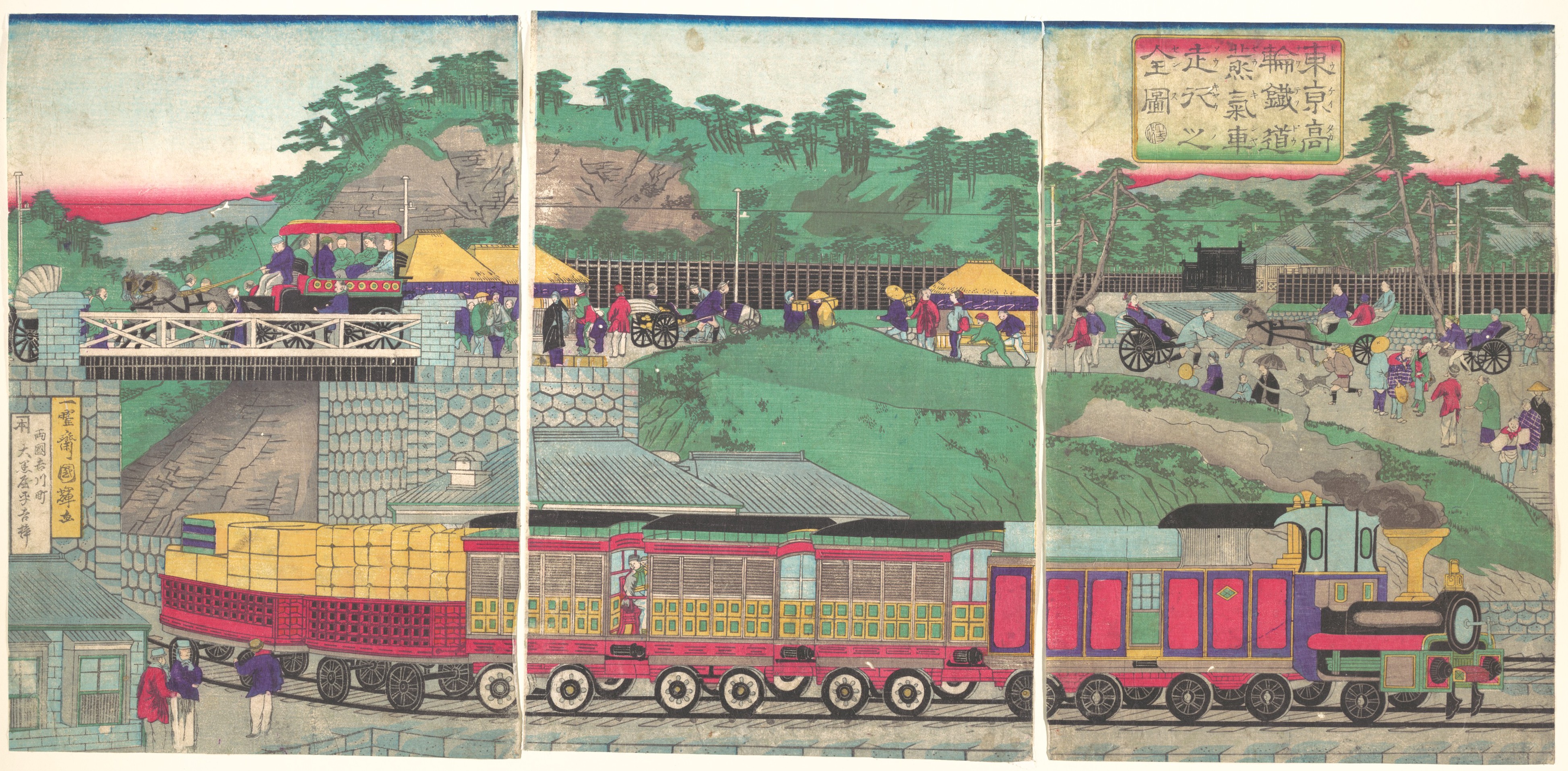
Illustration of a Steam Locomotive Running on the Takanawa Railroad in Tokyo (Tōkyō takanawa tetsudō jōkisha sōkō no zu)
東京高輪鉄道蒸気車走行之図
ca. 1873
Triptych of woodblock prints; ink and color on paper
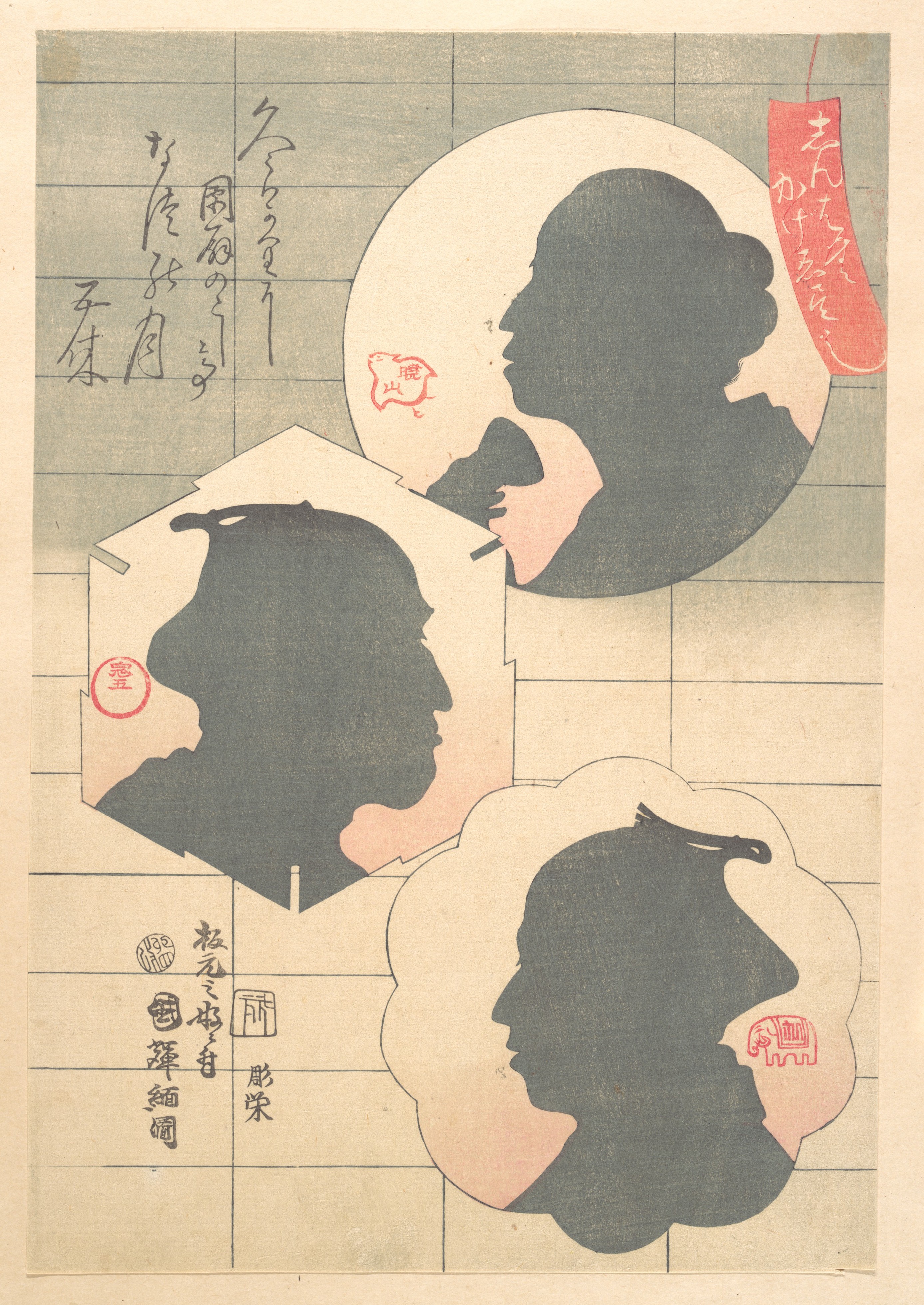
Silhouette Image of Kabuki Actor
歌舞伎役者影絵
19th century
Woodblock print; ink and color on paper
Gozu Tennō (=Susanoo) and Inada-hime, from the series Lives of Heroes of Our Country (Honchō eiyū den)
本朝英雄伝 牛頭天皇 稲田姫
1847–52 (Kōka 4–Kaei 5)
Woodblock print (nishiki-e); ink and color on paper
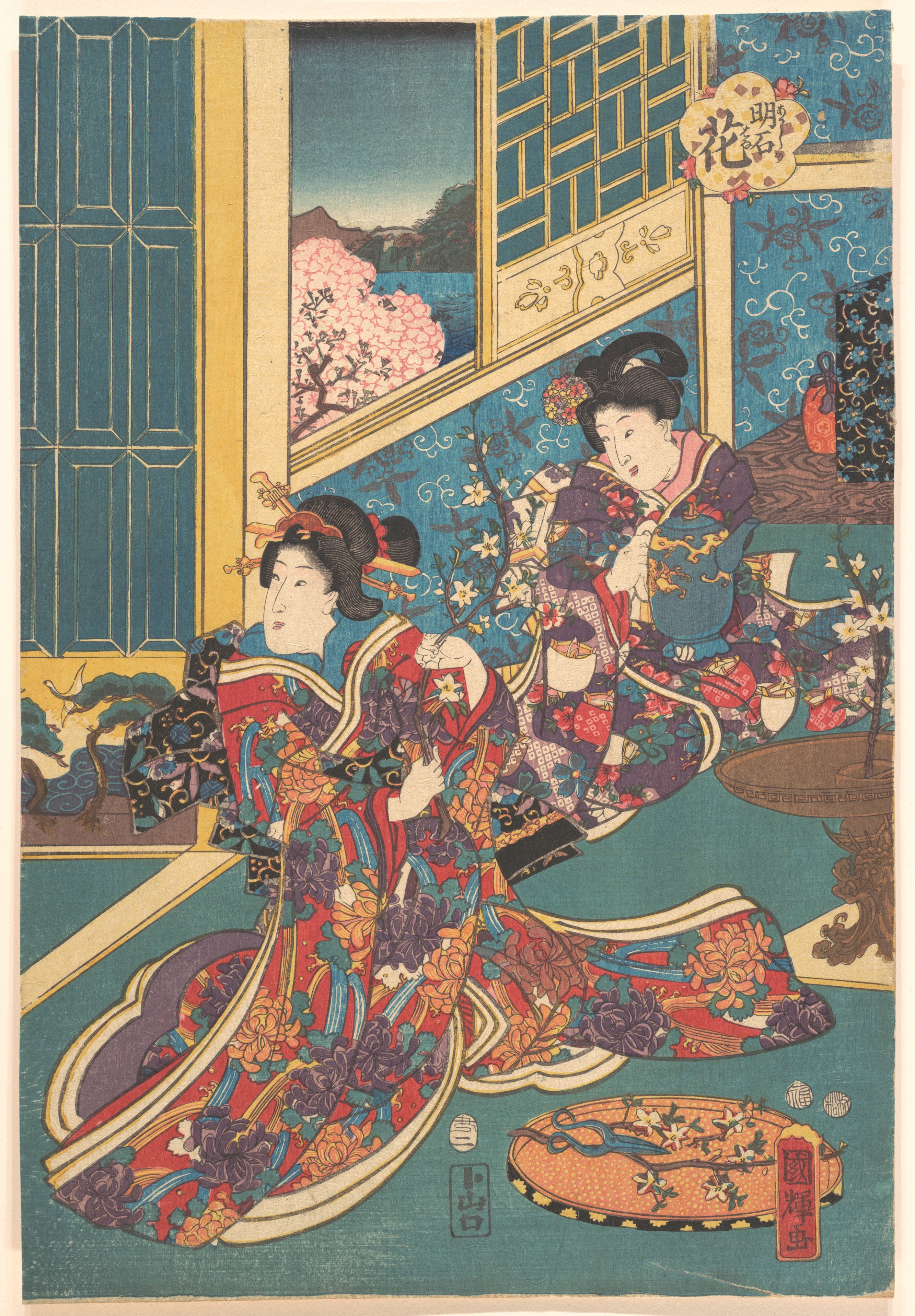
Flower of Akashi (Akashi no hana)
明石の花
1853
Woodblock print; ink and color on paper
Frequently Asked Questions
French Equestrian Circus on the Grounds of Asakusa Kannon Temple (Asakusa kannon keidai ni oite kōgyō tsukawashi sōrō — Furansu kyokuba) (浅草観音境内ニ於テ興行仕候 仏蘭西曲馬) was created by Utagawa Kuniteru (歌川国輝) in 1871.