
Biography
Utagawa Kunitoshi (歌川国利, 1847-1899) was a Meiji-era ukiyo-e printmaker whose work documents the rapid transformation of Tokyo and the Japanese state in the decades after the Restoration of 1868. A student of Utagawa Kunisada (Toyokuni III), the dominant figure of late-Edo print publishing, he belonged to the nineteenth-century Utagawa school's vast lineage of print designers and became a prolific chronicler of Meiji modernity, working in kaika-e (enlightenment pictures), Tokyo meisho-e (famous places), and the ceremonial subjects of the new constitutional state.
Little biographical detail survives about Kunitoshi's early life beyond his birth in 1847, in the closing years of the Tokugawa period. His personal name was Yamamura Kiyosuke, and, following the naming conventions of the Utagawa school, he trained under Utagawa Kunisada and Utagawa Kunitsugu, from one of whom the art name Kunitoshi was most likely bestowed; he also signed works as Baijū Kunitoshi. When the Meiji Restoration of 1868 toppled the Tokugawa shogunate and inaugurated a sweeping program of Westernisation, Kunitoshi was just entering his twenties, and the visual culture of the new state became the dominant subject of his mature career.
Kunitoshi's most characteristic output belongs to the genre of kaika-e — colourful single sheets and triptychs that depicted the symbols of bunmei kaika ("civilisation and enlightenment"), the slogan under which Meiji officials promoted Western industry, education, and political reform. He produced prints of horse-drawn trams, railway terminals, brick-built Western-style buildings rising in the new commercial districts, the iron bridges replacing their wooden Edo predecessors, and the steam ships of the new era. These prints were produced in large editions for an urban audience eager to follow the visible transformation of their city, and they constitute one of the principal visual records of the early Meiji built environment.
Kunitoshi was also a designer of ceremonial and historical prints commemorating the great occasions of the new state, along with portraits of the imperial family. His triptych "View of the Issuance of the Constitution," now in the Metropolitan Museum of Art, is among the visual records of the promulgation of the Meiji Constitution in February 1889, depicting the ceremony in which the Emperor Meiji granted the constitutional document to Prime Minister Kuroda Kiyotaka before assembled court officials, military officers, and foreign diplomats. He produced related prints of the imperial ceremonies and national industrial exhibitions of the period, and of contemporary events such as the Satsuma Rebellion, as well as prints marking the opening of the new bicameral Diet in 1890. Alongside this official subject matter he designed a continuing stream of meisho-e of Tokyo's famous places, especially the great religious sites of Asakusa and Ueno.
Kunitoshi worked with the commercial print publishers of Meiji Tokyo, and his designs appeared in popular series of famous views of the modernising capital. The decline of the woodblock print industry in the face of photography and lithography accelerated in the 1890s, and Kunitoshi maintained a sustained career in the medium until his death in 1899.
His prints are held by the Metropolitan Museum of Art, among other major museum collections in Japan, Europe, and the United States. For scholars and collectors of Meiji visual culture, Kunitoshi remains a valuable figure: his prints offer an accessible and visually immediate record of the political ceremonies, urban transformations, and technological wonders that defined the first three decades of modern Japan.
Key Facts
- Active Period
- 1847–1899
- Nationality
- 🇯🇵Japan
- Movements
- Meiji/Taishō PrintsUkiyo-e
- Works Indexed
- 11
Frequently Asked Questions
Utagawa Kunitoshi (歌川国利, 1847-1899) was a Meiji-era ukiyo-e printmaker whose work documents the rapid transformation of Tokyo and the Japanese state in the decades after the Restoration of 1868. A student of Utagawa Kunisada (Toyokuni III), the dominant figure of late-Edo print publishing, he belonged to the nineteenth-century Utagawa school's vast lineage of print designers and became a prolific chronicler of Meiji modernity, working in kaika-e (enlightenment pictures), Tokyo meisho-e (famous places), and the ceremonial subjects of the new constitutional state.
Utagawa Kunitoshi was active from 1847 to 1899. They were associated with the Meiji/Taishō Prints and Ukiyo-e movements.
Utagawa Kunitoshi's work was shaped by the Meiji/Taishō Prints and Ukiyo-e traditions in Japanese woodblock printmaking. Meiji/Taishō Prints: Meiji and Taishō era prints (1868–1926) bridge the transition from traditional ukiyo-e to the modern shin-hanga and sosaku-hanga movements. Ukiyo-e: ## What is ukiyo-e? Ukiyo-e ([浮世絵](/glossary/ukiyo-e)) — literally "pictures of the floating world" — is the Edo-period Japanese print and painting tradition that flourished from roughly 1660 to 1868, depicting the pleasures of urban life in Edo (modern Tokyo): courtesans, kabuki actors, sumo wrestlers, famous landscapes, and seasonal beauties.
Utagawa Kunitoshi's prints frequently feature bridges, rain.
Original prints by Utagawa Kunitoshi can be found in collections including Art Institute of Chicago, Metropolitan Museum of Art (via ukiyo-e.org), Fine Arts Museums of San Francisco (Legion of Honor) via ukiyo-e.org, Edo-Tokyo Museum (via ukiyo-e.org).
Woodblock Prints by Utagawa Kunitoshi (11)
The Kannon Temple at Asakusa
1881
Woodblock print (nishiki-e), ink and color on paper
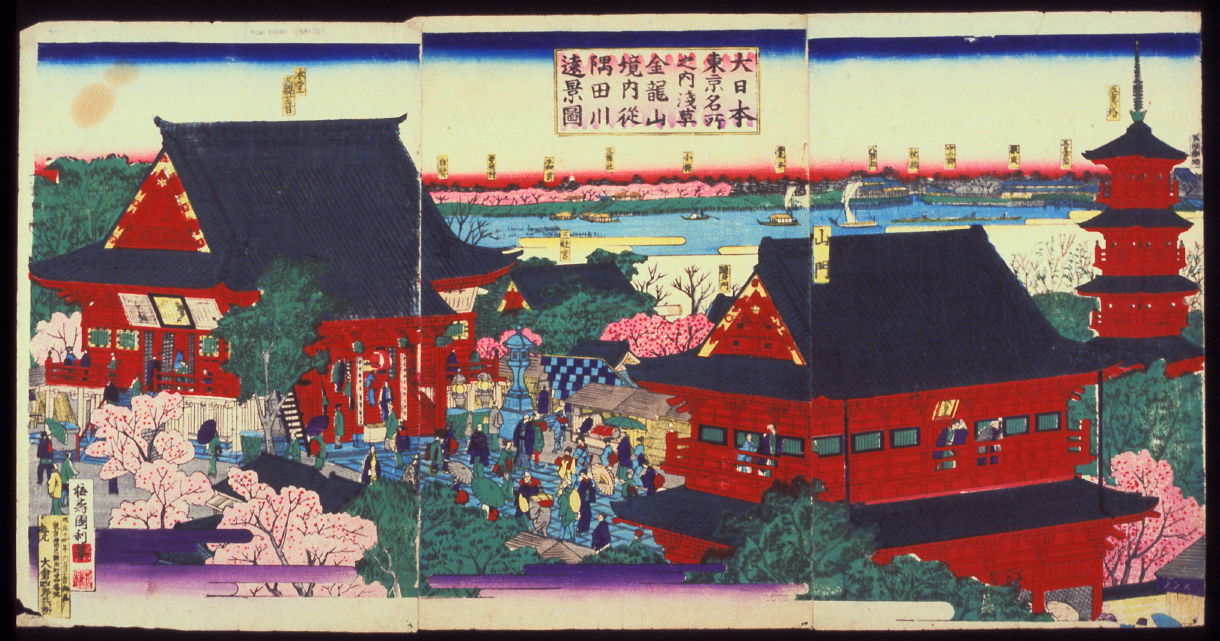
The Sumida River from the Precincts of Kinryūzan Temple in Asakusa, from the series Famous Places in Tokyo
1881
Color woodcut triptych
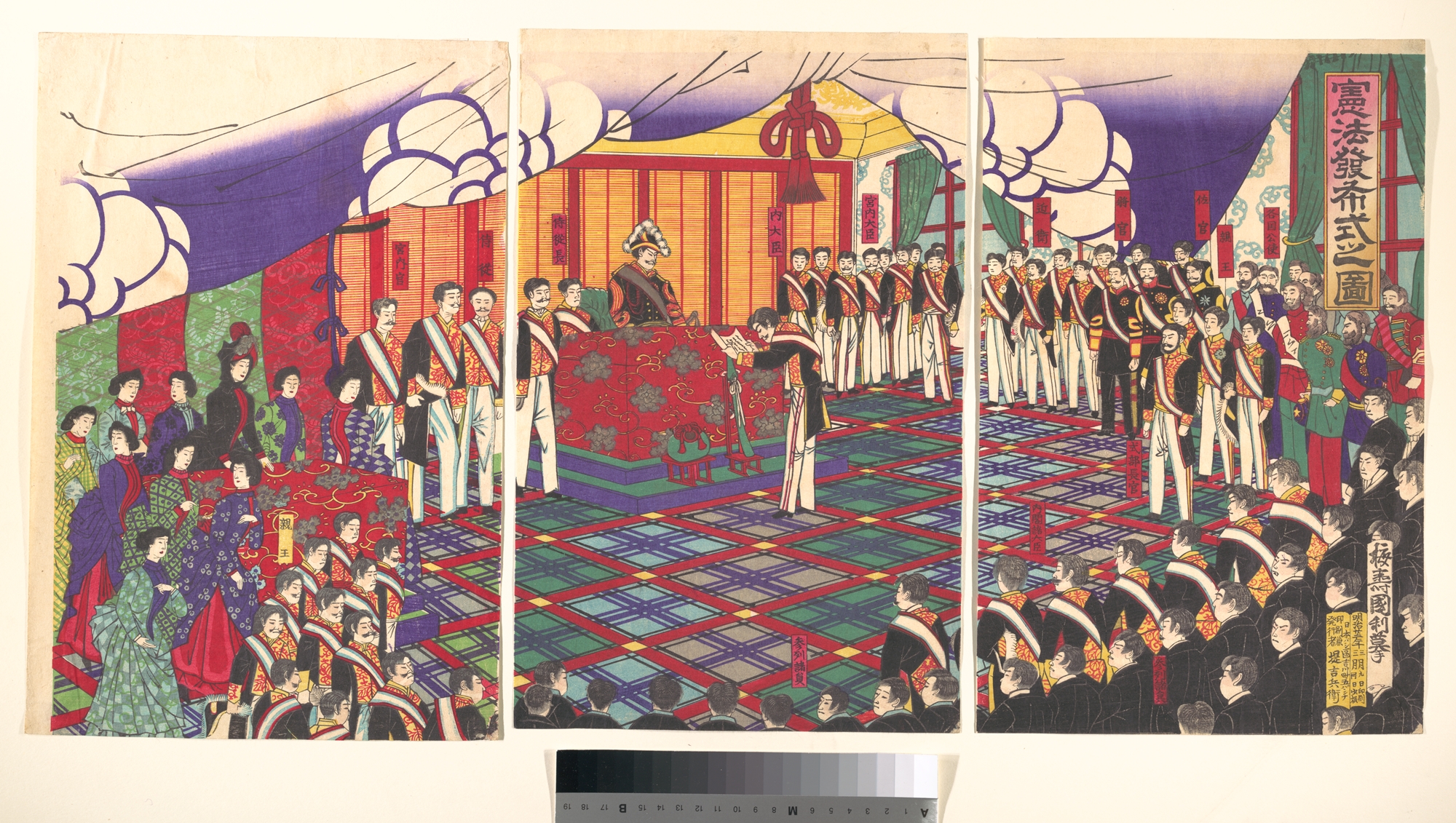
View of the Issuance of the Constitution
1889 (Meiji 22, 3rd month)
Woodblock print (nishiki-e), ink and color on paper
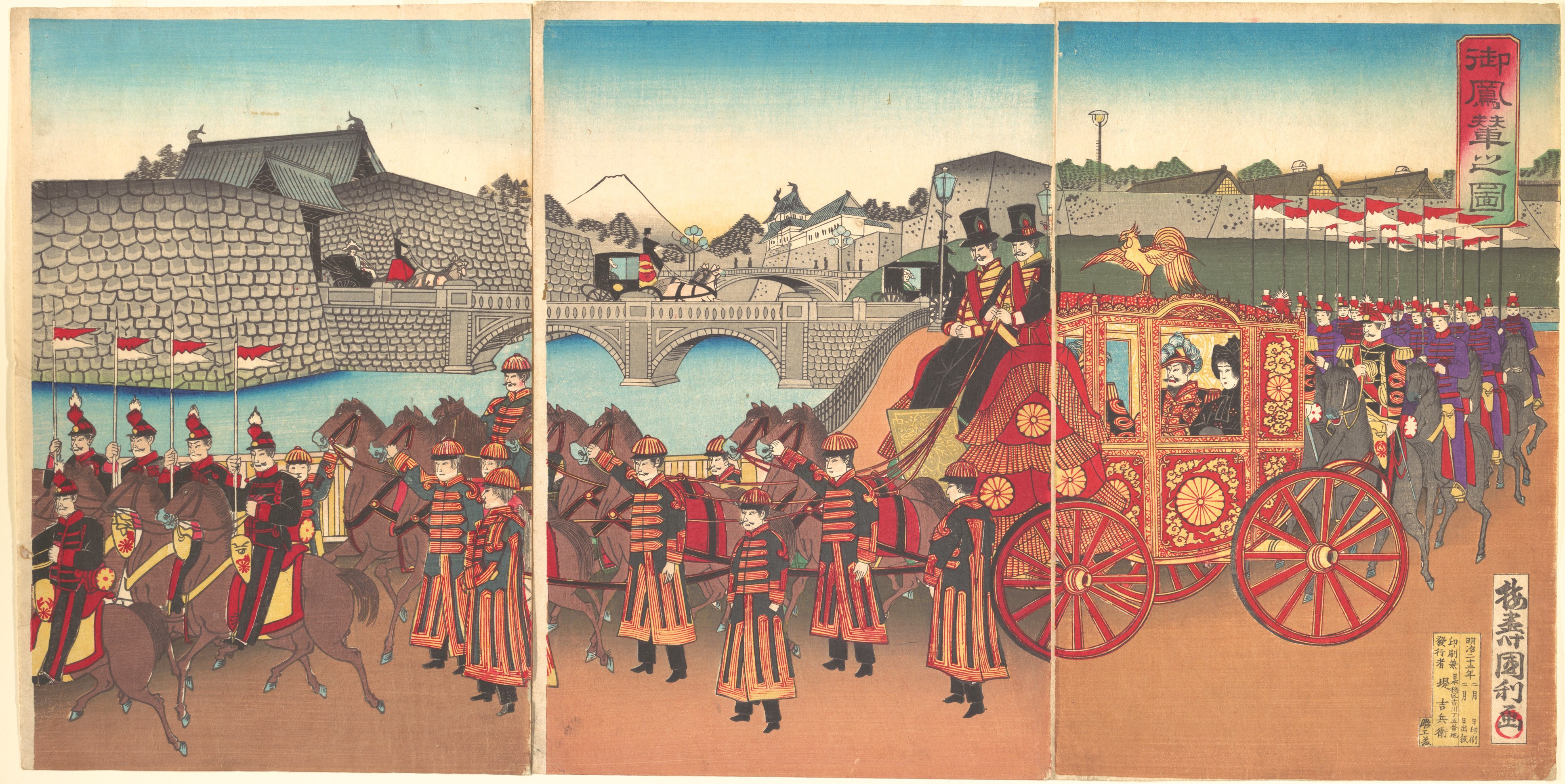
View of the Imperial Carriage
1889 (Meiji 22)
Woodblock print (nishiki-e), ink and color on paper
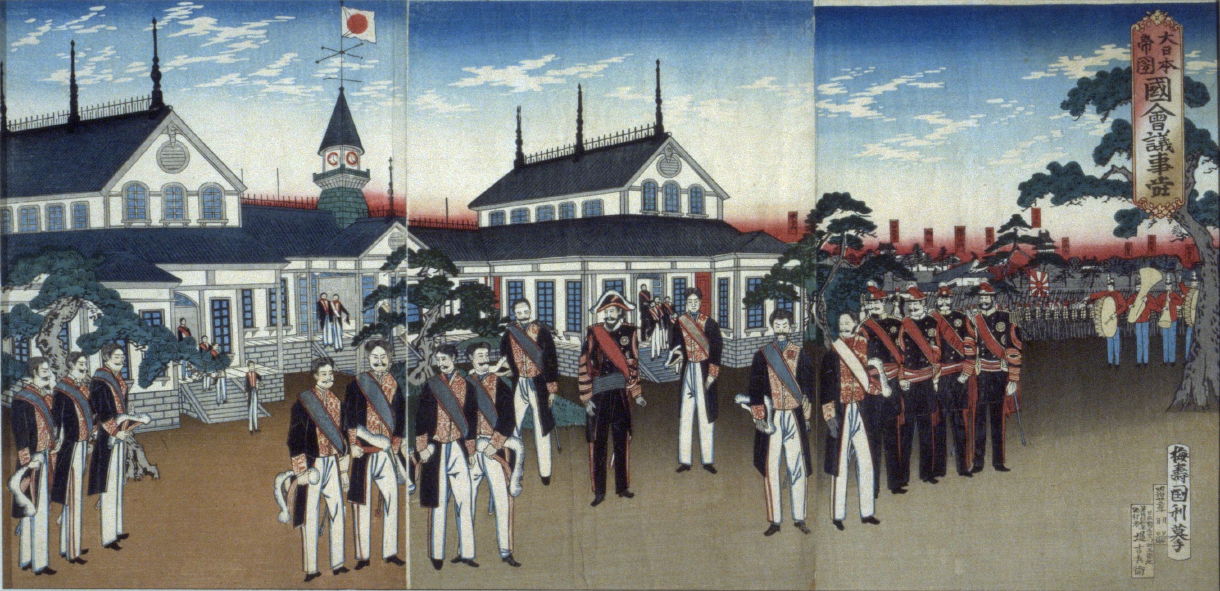
The National Diet of Japan
1889
Color woodcut triptych
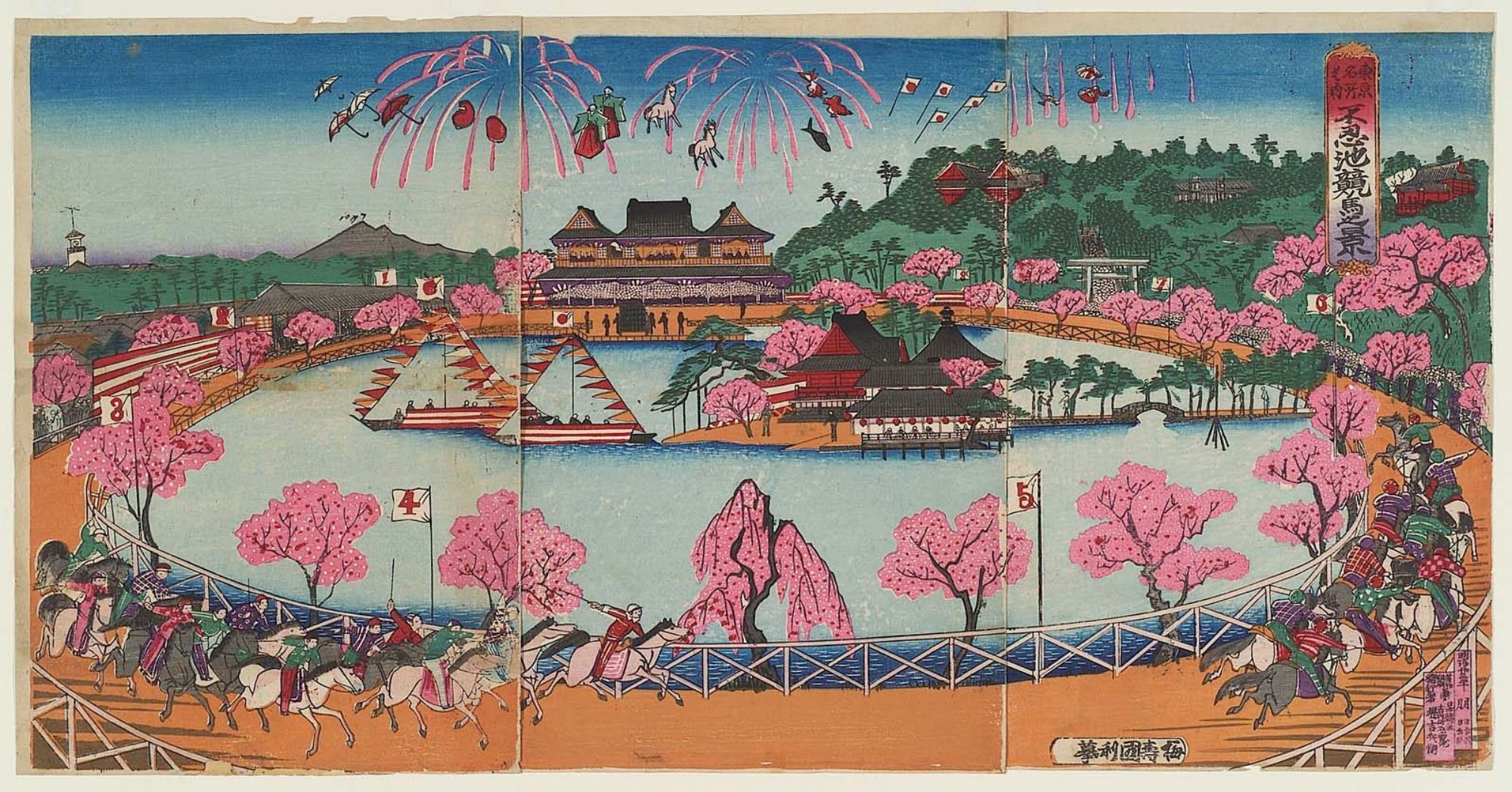
Famous Places in Tokyo: Illustration of the Horse-Race Track at Shinobazu Pond
1889
Woodblock print (nishiki-e), ink and color on paper
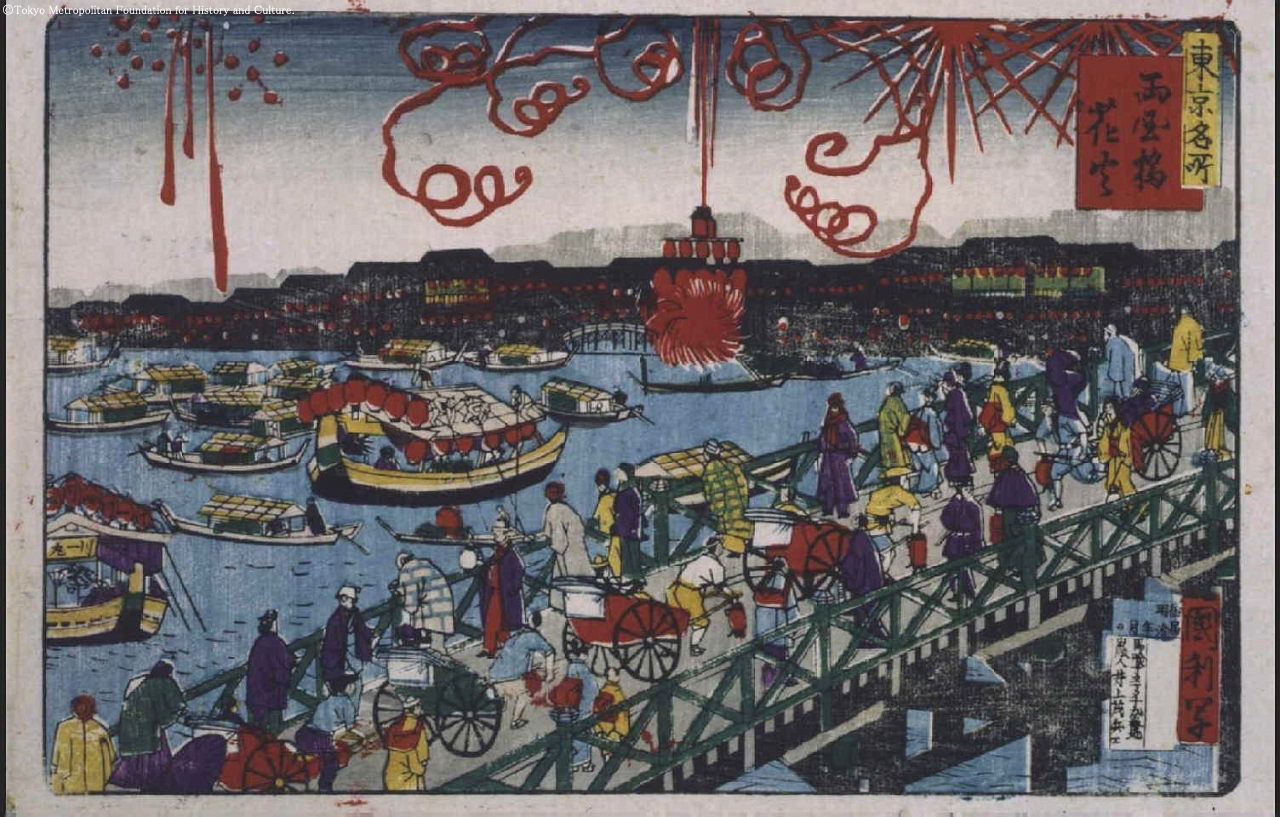
Famous Views of Tokyo: Fireworks at Ryōgoku Bridge
Meiji era, c. 1880s–1890s
Woodblock print (nishiki-e), ink and color on paper
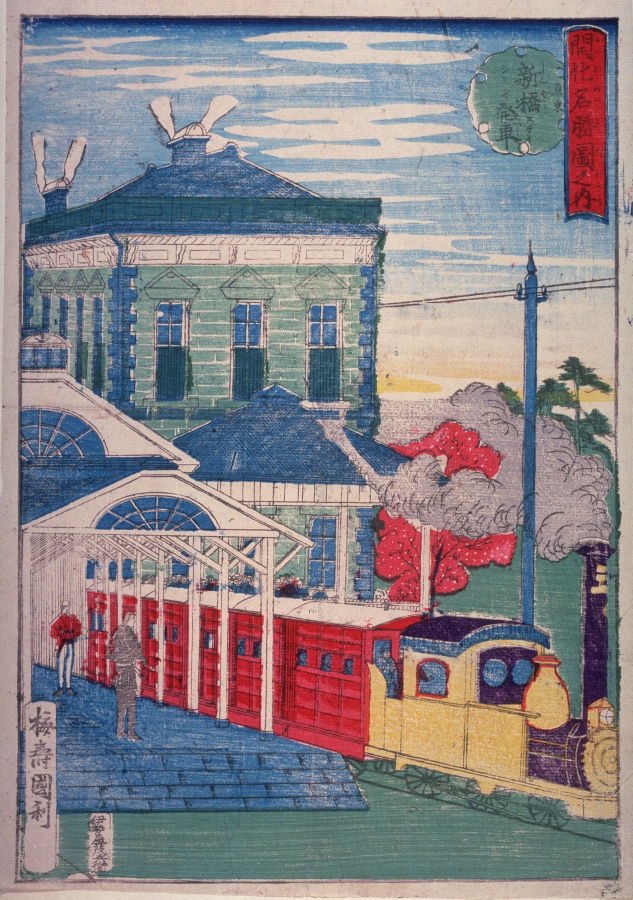
Train Station at Shimbashi in Tokyo
1870–1880
Color woodcut
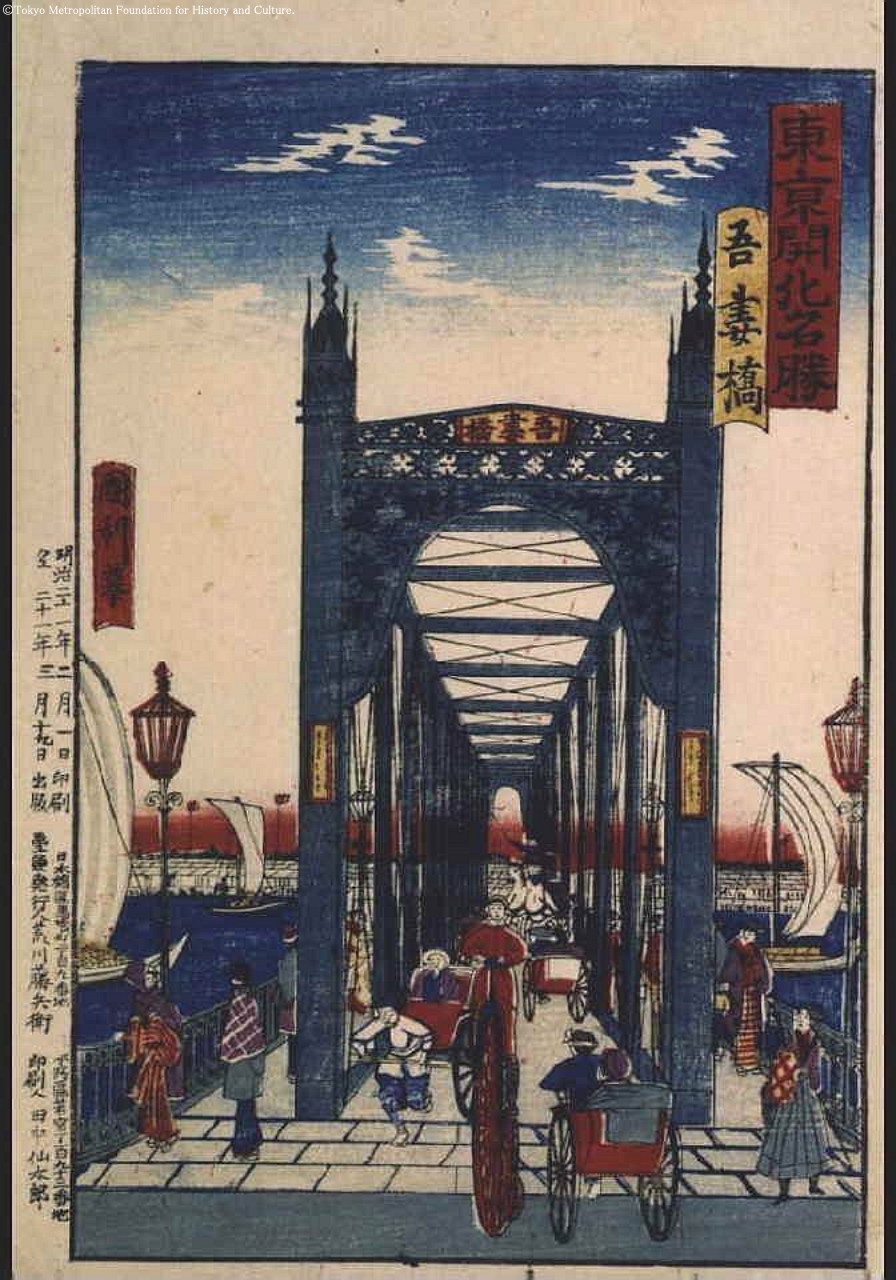
Famous Views of Modern Tokyo: Azuma Bridge
Meiji era, c. 1880s–1890s
Woodblock print (nishiki-e), ink and color on paper
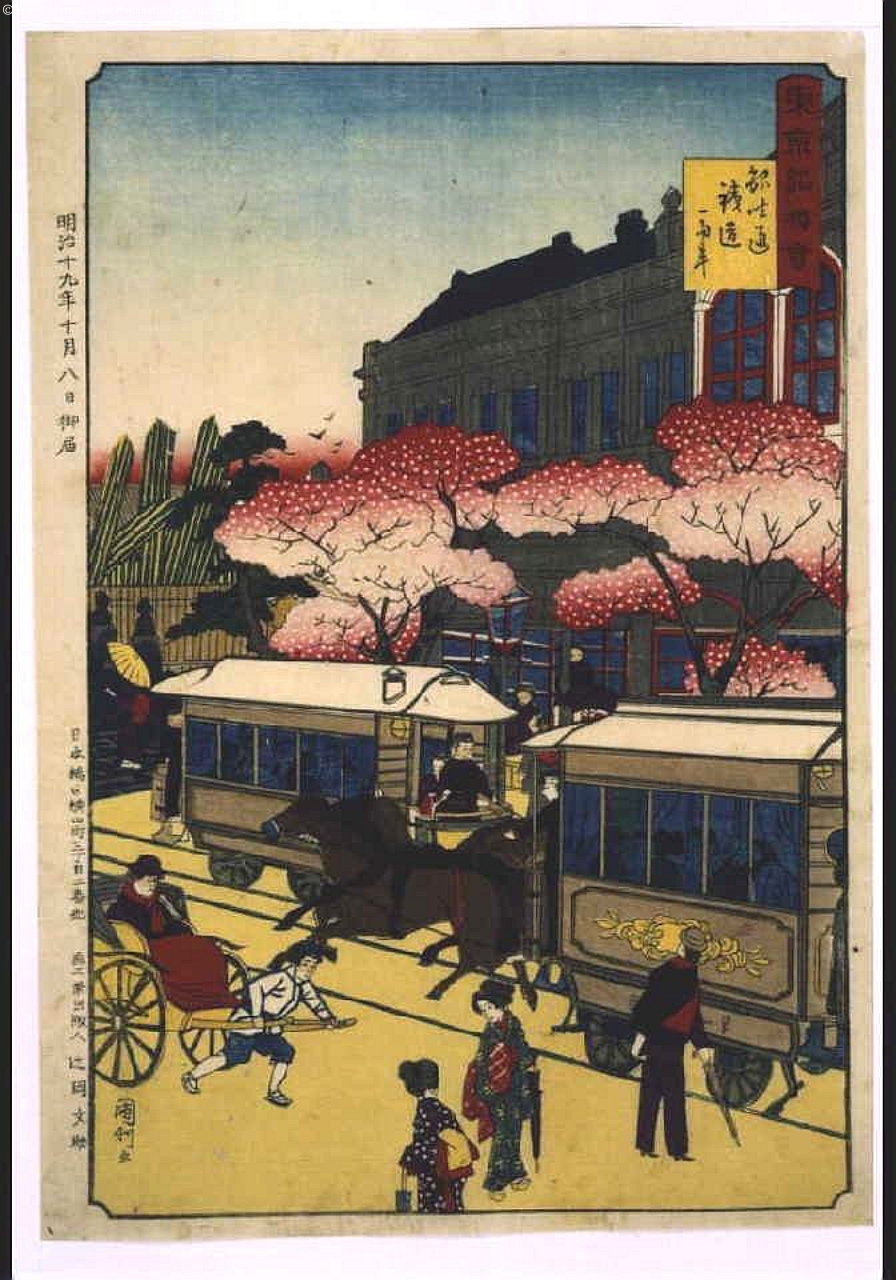
Pictures of Famous Sights in Tokyo: Horse-Drawn Trams on Ginza Dōri
Meiji era, c. 1880s
Woodblock print (nishiki-e), ink and color on paper

Tempest
late 19th century
Former hanging scroll; ink and color on silk