Biography
Utagawa Sadatora (歌川貞虎, active c. 1818–1844) was an Edo ukiyo-e artist of the Utagawa school who studied under Utagawa Kunisada I (Toyokuni III), one of the most commercially dominant print designers of the late Edo period. Working through the Bunsei (1818–30) and Tenpō (1830–44) eras, Sadatora belonged to the generation of Kunisada pupils whose art names began with the character 'Sada' (貞), a studio convention by which the master granted a favored pupil the use of a character taken from his own name, Kunisada (国貞). His surviving prints, held in public and museum collections in Japan, Europe, and North America — among them the Block Museum of Art at Northwestern University — document an artist who worked across the full range of late-Edo ukiyo-e subjects without specializing in any single genre.
Sadatora signed his prints both as 'Sadatora ga' (貞虎画) and under the pseudonym Gofūtei (五風亭), most often appearing as 'Gofūtei Sadatora ga' (五風亭貞虎画). This second name reflects the studio practice by which Utagawa pupils adopted a separate studio-name (the suffix -tei meaning 'pavilion') in addition to their personal art name, a system that allowed multiple working identities and helped distinguish prints made for different publishers and projects. His career overlapped with the Utagawa school's commercial dominance of the Edo print market under Kunisada, Kuniyoshi, and Hiroshige, and his work shows the characteristic vocabulary of that environment: bold contour drawing, dense decorative patterning on costume, and the strong synthetic pigments that became available in the 1820s and 1830s.
One of Sadatora's most historically noted prints, Hotei at Dusk (Higure Hotei) from his series The Seven Gods of Fortune, is recognized for containing one of the earliest documented uses of Prussian blue (bero-ai) in Japanese woodblock printing. Prussian blue, the synthetic pigment imported through Dutch trade at Nagasaki, transformed the chromatic possibilities of nishiki-e in the late 1820s and 1830s, allowing for the deeper, more atmospheric blues that would soon define Hokusai's Thirty-Six Views of Mount Fuji (1830–32) and Hiroshige's Famous Views of the Eastern Capital (1832–34). Sadatora's early adoption of the imported color places him among the experimenters with a pigment that would soon reshape ukiyo-e's chromatic identity.
In subject matter, Sadatora moved fluidly across the standard categories of late-Edo commercial printmaking. He produced yakusha-e (actor prints) of kabuki performers in role, often in the triptych and diptych formats that the Utagawa school had standardized for theater portraiture; bijin-ga (pictures of beautiful women), including images of celebrated Yoshiwara courtesans such as Hanamurasaki of the Tamaya; warrior prints (musha-e) drawing on historical narratives such as the Oguri Hangan cycle; meisho-e (famous-place pictures) of Edo and its environs, including Enoshima; kachō-e (bird-and-flower compositions); and auspicious prints of the Seven Gods of Fortune and treasure ships. The breadth of his output reflects the commercial structure of the late-Edo print trade, in which publishers commissioned designers across whatever subject markets were lucrative at the moment rather than concentrating their work in a single specialty.
Despite the substantial body of surviving prints, Sadatora's birth and death dates remain undocumented in the standard biographical reference works, and his career is known principally through the dated and datable prints themselves. He occupies the position of a productive but secondary figure within the Kunisada workshop, comparable to fellow Sada-line pupils such as Sadahide, Sadakage, and Sadamasu, whose careers contributed to the volume and stylistic diffusion of Utagawa school output during the years before Kuniyoshi's warrior-print revival and Hiroshige's landscape series came to dominate the Edo market.
Key Facts
- Nationality
- 🇯🇵Japan
- Movement
- Ukiyo-e
- Works Indexed
- 5
Frequently Asked Questions
Utagawa Sadatora (歌川貞虎, active c. 1818–1844) was an Edo ukiyo-e artist of the Utagawa school who studied under Utagawa Kunisada I (Toyokuni III), one of the most commercially dominant print designers of the late Edo period. Working through the Bunsei (1818–30) and Tenpō (1830–44) eras, Sadatora belonged to the generation of Kunisada pupils whose art names began with the character 'Sada' (貞), a studio convention by which the master granted a favored pupil the use of a character taken from his own name, Kunisada (国貞). His surviving prints, held in public and museum collections in Japan, Europe, and North America — among them the Block Museum of Art at Northwestern University — document an artist who worked across the full range of late-Edo ukiyo-e subjects without specializing in any single genre.
Utagawa Sadatora's work was shaped by the Ukiyo-e tradition in Japanese woodblock printmaking. Ukiyo-e: ## What is ukiyo-e? Ukiyo-e ([浮世絵](/glossary/ukiyo-e)) — literally "pictures of the floating world" — is the Edo-period Japanese print and painting tradition that flourished from roughly 1660 to 1868, depicting the pleasures of urban life in Edo (modern Tokyo): courtesans, kabuki actors, sumo wrestlers, famous landscapes, and seasonal beauties.
Utagawa Sadatora's prints frequently feature children, winter, bridges.
Original prints by Utagawa Sadatora can be found in collections including Museum of Fine Arts, Boston.
Woodblock Prints by Utagawa Sadatora (5)
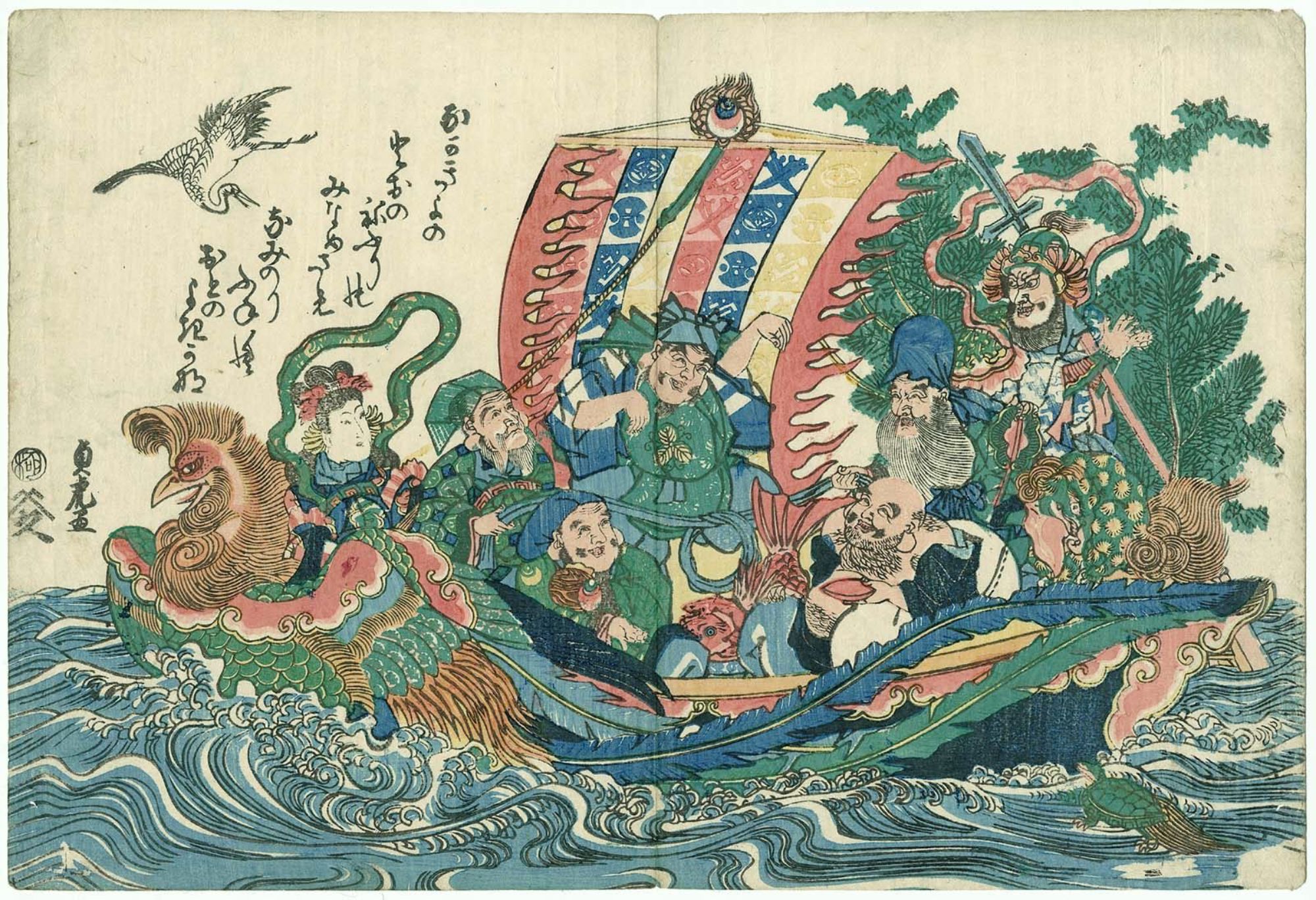
The Seven Gods of Good Fortune in the Treasure Boat
c. 1818-1844 (Edo period)
Woodblock print (nishiki-e); ink and color on paper
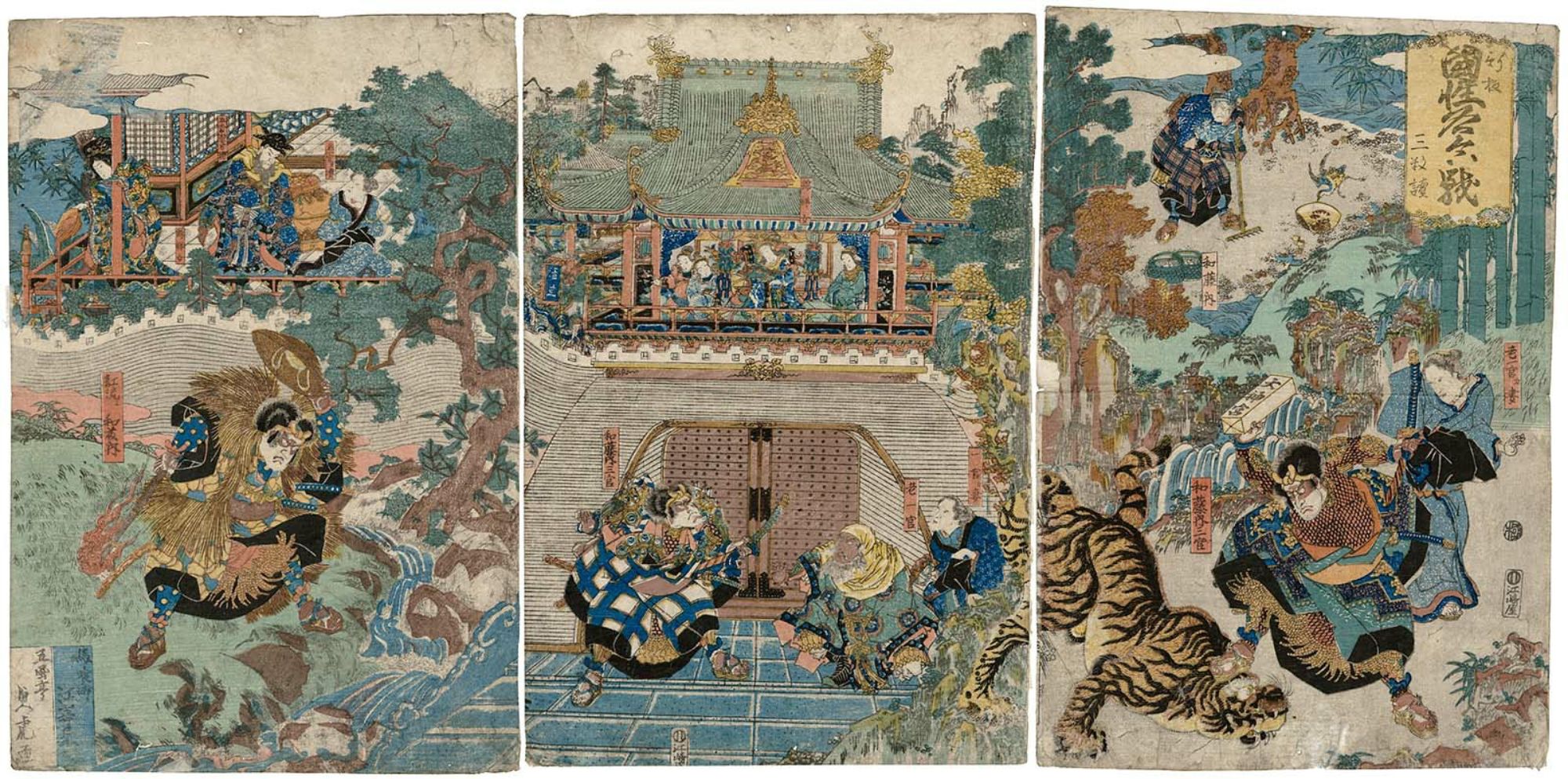
The Battles of Coxinga, Newly Published, a Triptych (Shinpan Kokusenya kassen sanmai tsuzuki)
新版国性爺合戦三枚続
c. 1818-1844 (Edo period)
Woodblock print triptych (nishiki-e); ink and color on paper
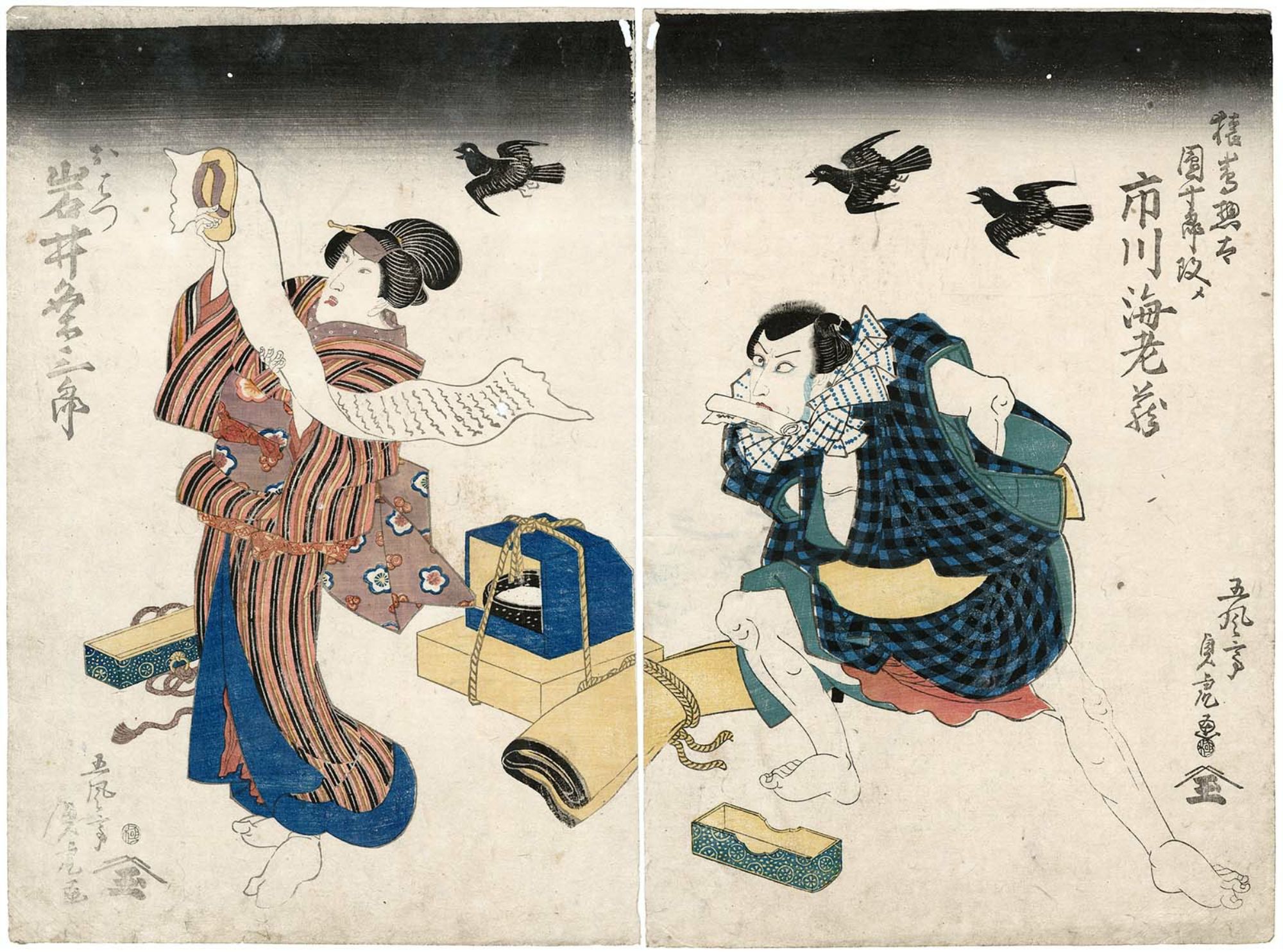
Actors
c. 1818-1844 (Edo period)
Woodblock print (nishiki-e); ink and color on paper
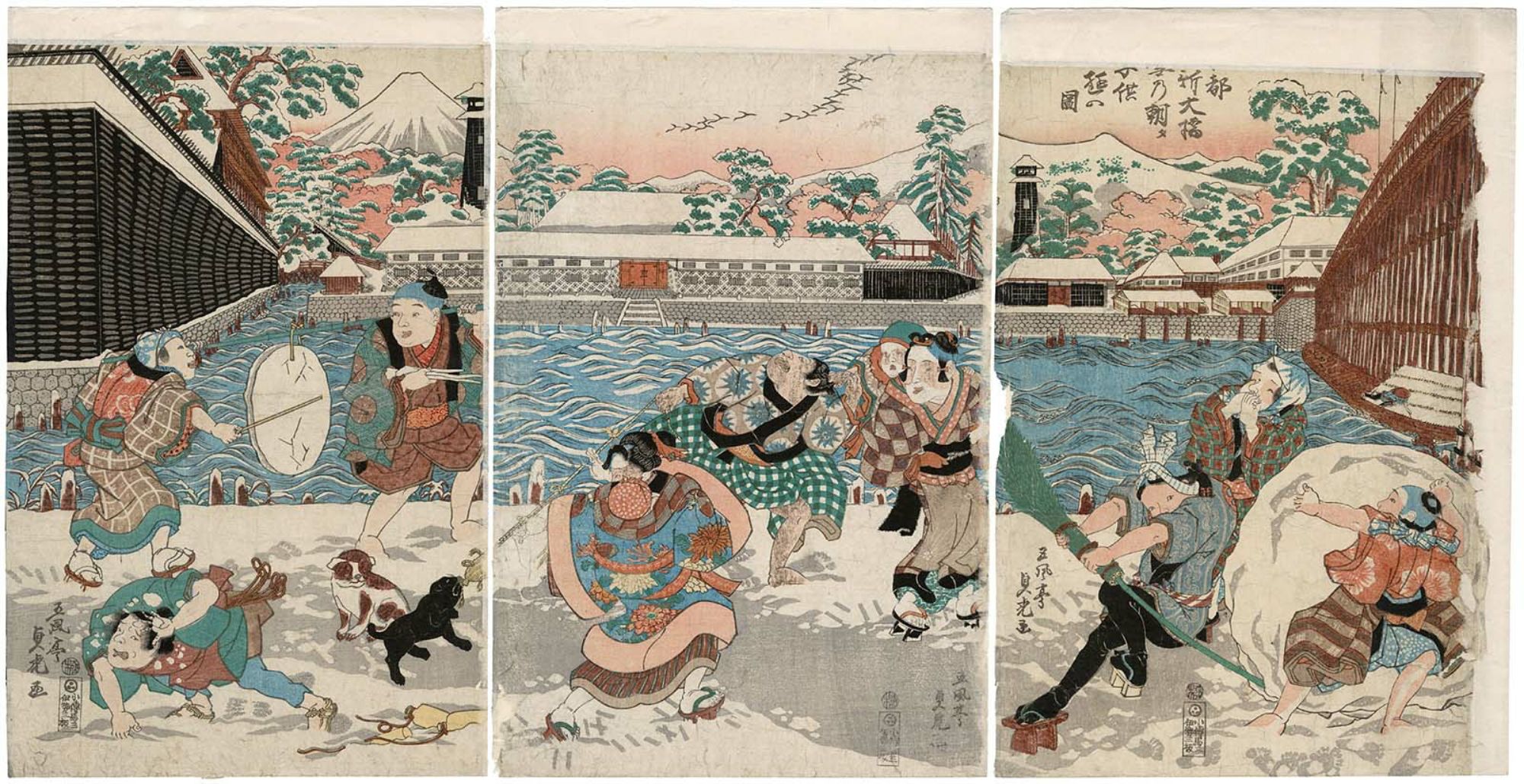
Children at Play on a Snowy Morning by the Great Bridge in the Eastern Capital (Tôto Shin Ôhashi yuki no asa kodomo asobi no zu)
東都新大橋雪の朝子供遊の図
c. 1830s (Edo period)
Woodblock print (nishiki-e); ink and color on paper
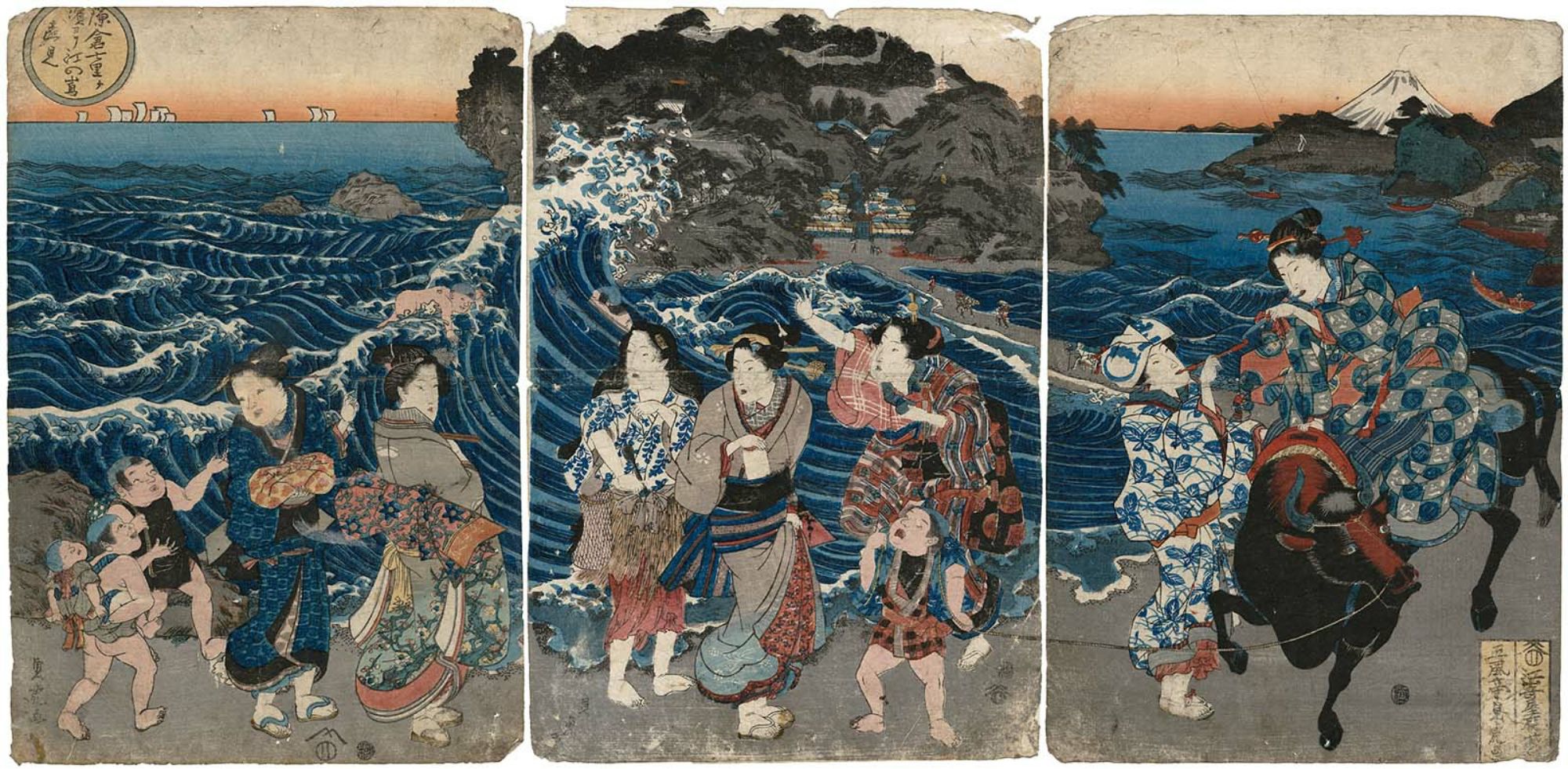
Distant View of Enoshima from Seven-mile Beach in Kamakura (Kamakura Shichiri-ga-hama yori Enoshima enmi)
鎌倉七里ヶ浜より江の島遠見
c. 1830s (Edo period)
Woodblock print (nishiki-e); ink and color on paper