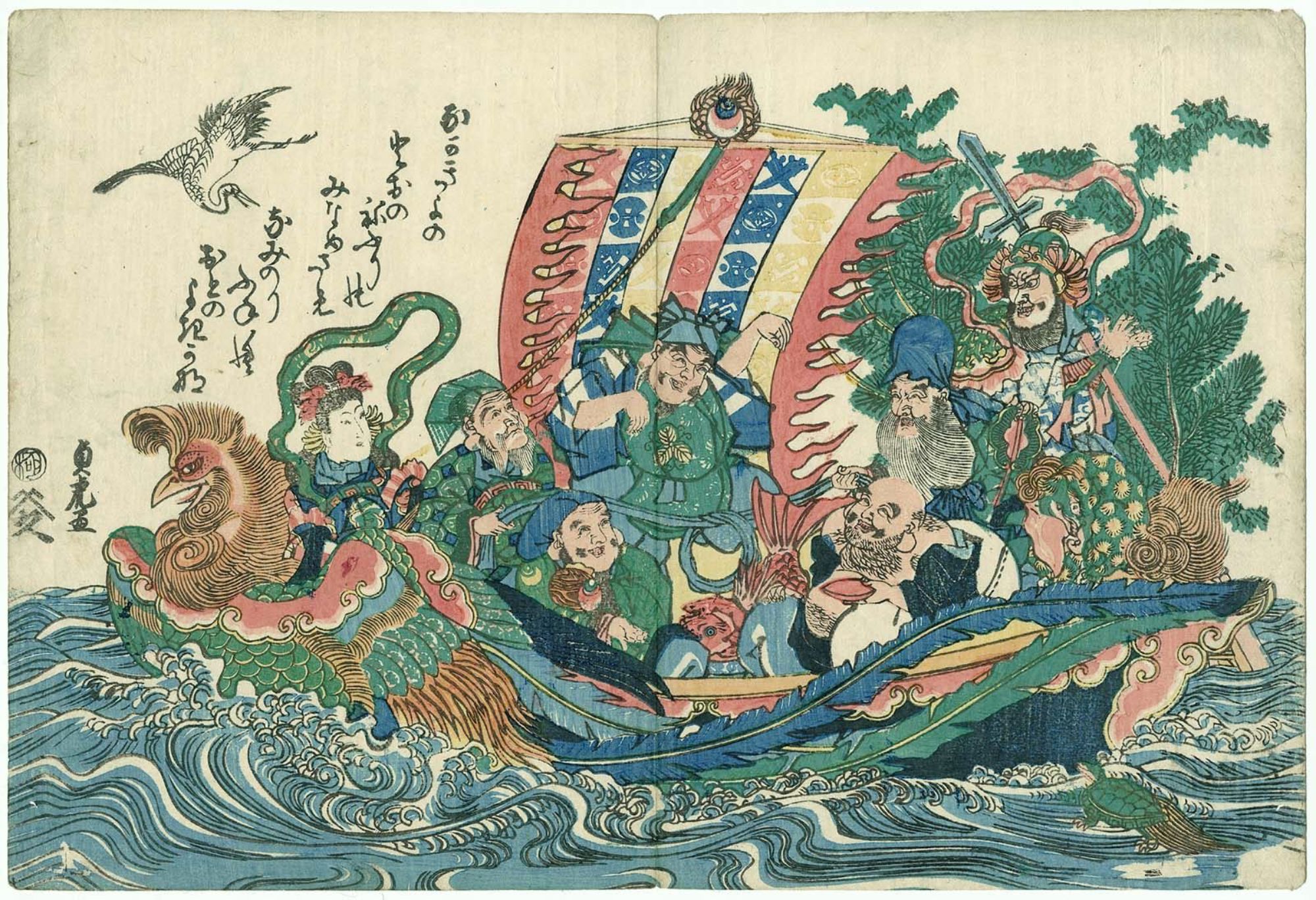
The Seven Gods of Good Fortune in the Treasure Boat
- Date:
- c. 1818-1844 (Edo period)
- Medium:
- Woodblock print (nishiki-e); ink and color on paper
- Source:
- Museum of Fine Arts, Boston
Description
This Museum of Fine Arts print by Sadatora addresses one of the most enduring iconographic subjects of Japanese New Year tradition: the takarabune (treasure ship) carrying the seven gods of good fortune (shichifukujin) into the harbor of the new year. The composition assembles the seven deities—Daikoku, the god of wealth; Ebisu, the patron of fishermen and merchants; Bishamon, the warrior guardian; Benzaiten, the goddess of music and water; Hotei, the laughing god of contentment; Jurōjin, the deity of longevity; and Fukurokuju, the god of wisdom and prosperity—aboard a ship laden with the legendary treasures of inexhaustible abundance, including the magic mallet, the inexhaustible purse, the lucky raincoat, and sacred scrolls. By Edo-period convention, prints of the takarabune were placed under pillows on the second night of the new year to induce auspicious dreams (hatsuyume), and the subject was a perennial commercial mainstay of the late-year and early-year print market. Sadatora's contribution to the iconographic tradition demonstrates the Utagawa-school approach to auspicious imagery: bold figural drawing, dense pattern on the deities' robes, and the careful organization of the boat's cargo as a visual catalog of New Year's prosperity symbols. The MFA example contributes to the documentation of late-Edo treasure-ship iconography and to the surviving body of Sadatora's auspicious prints, which also included individual portraits of Hotei and Daikoku from the same Seven Gods cycle.
More Prints by Utagawa Sadatora
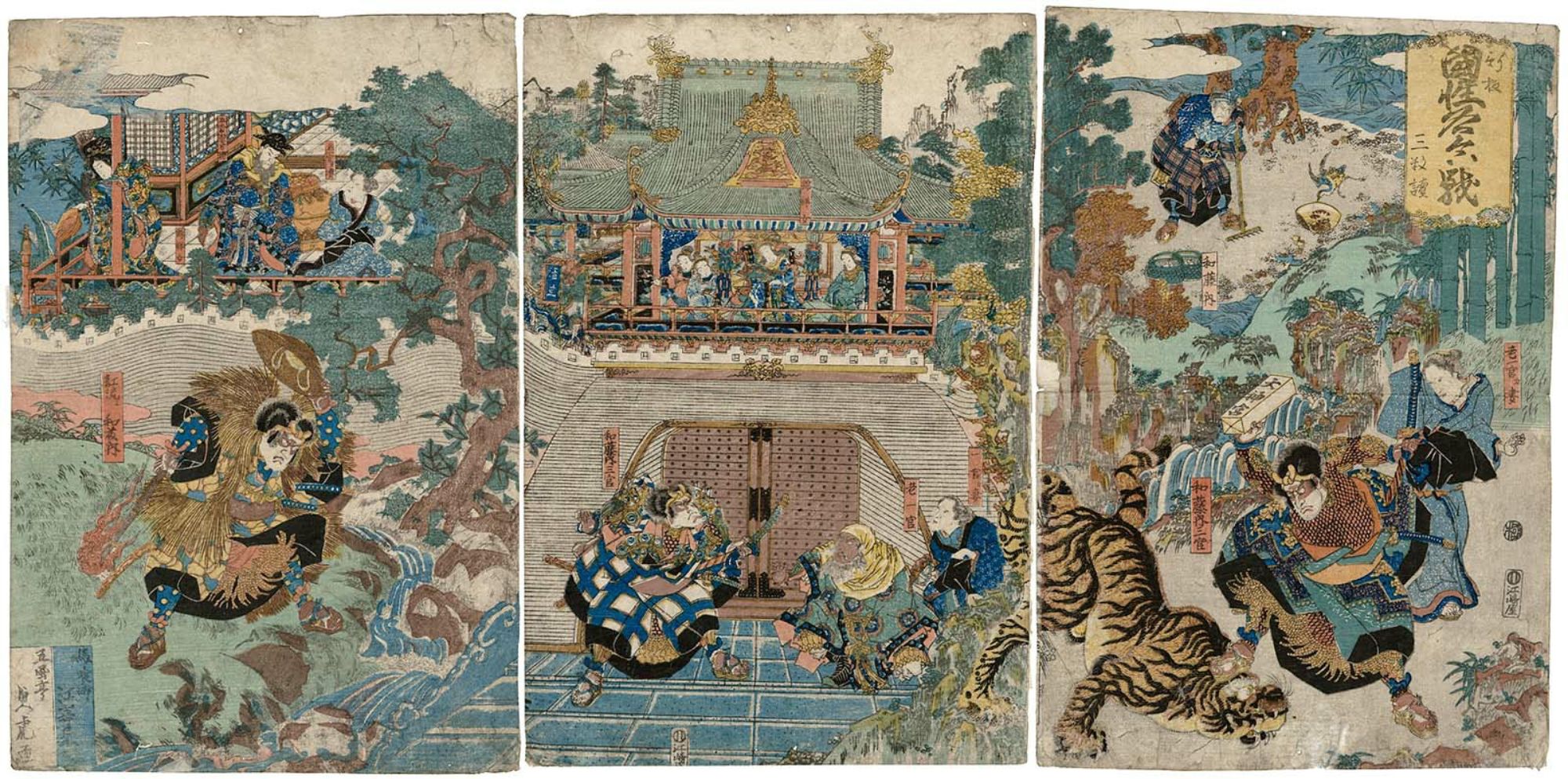
The Battles of Coxinga, Newly Published, a Triptych (Shinpan Kokusenya kassen sanmai tsuzuki)
新版国性爺合戦三枚続
c. 1818-1844 (Edo period)
Woodblock print triptych (nishiki-e); ink and color on paper
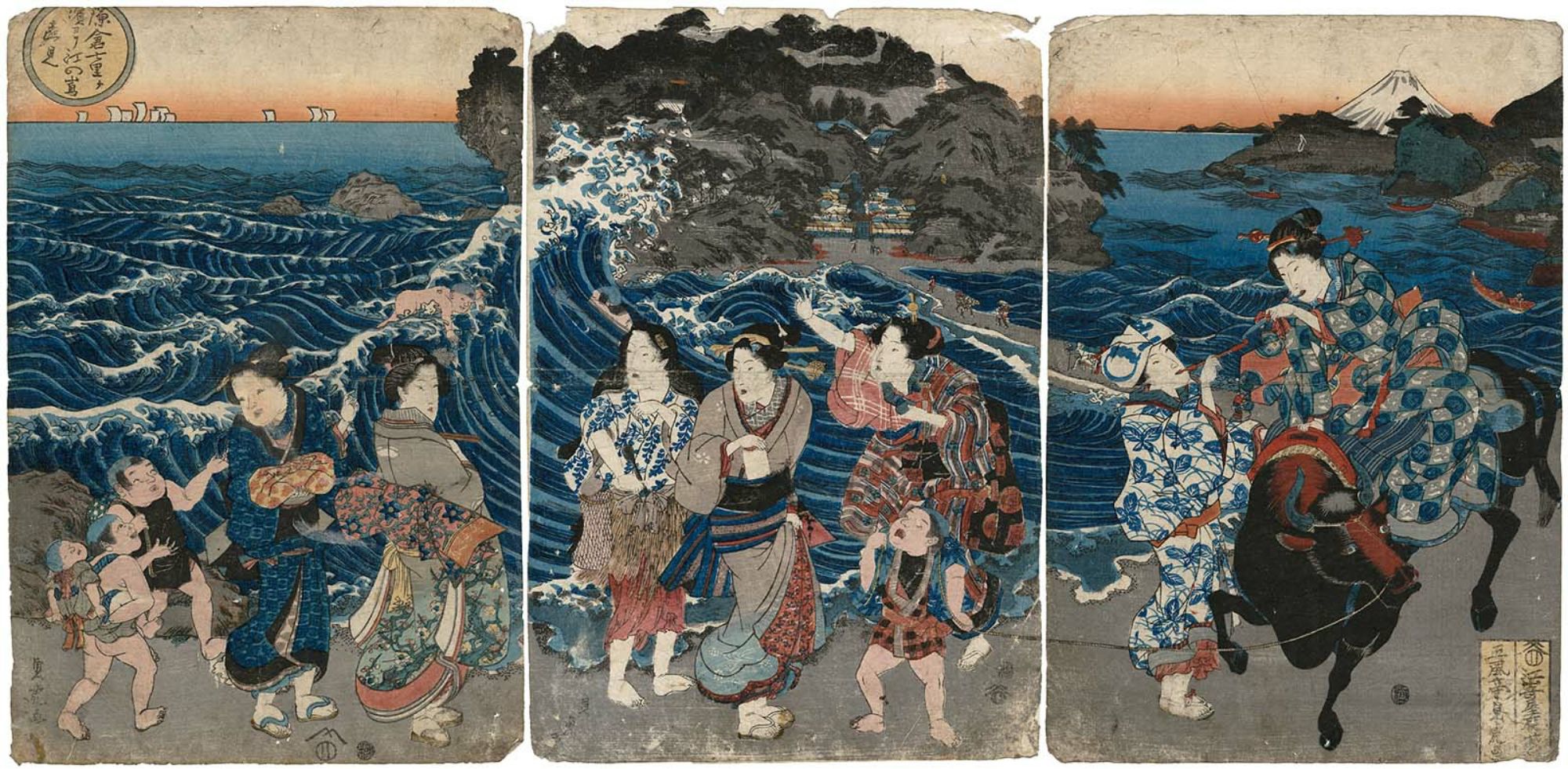
Distant View of Enoshima from Seven-mile Beach in Kamakura (Kamakura Shichiri-ga-hama yori Enoshima enmi)
鎌倉七里ヶ浜より江の島遠見
c. 1830s (Edo period)
Woodblock print (nishiki-e); ink and color on paper
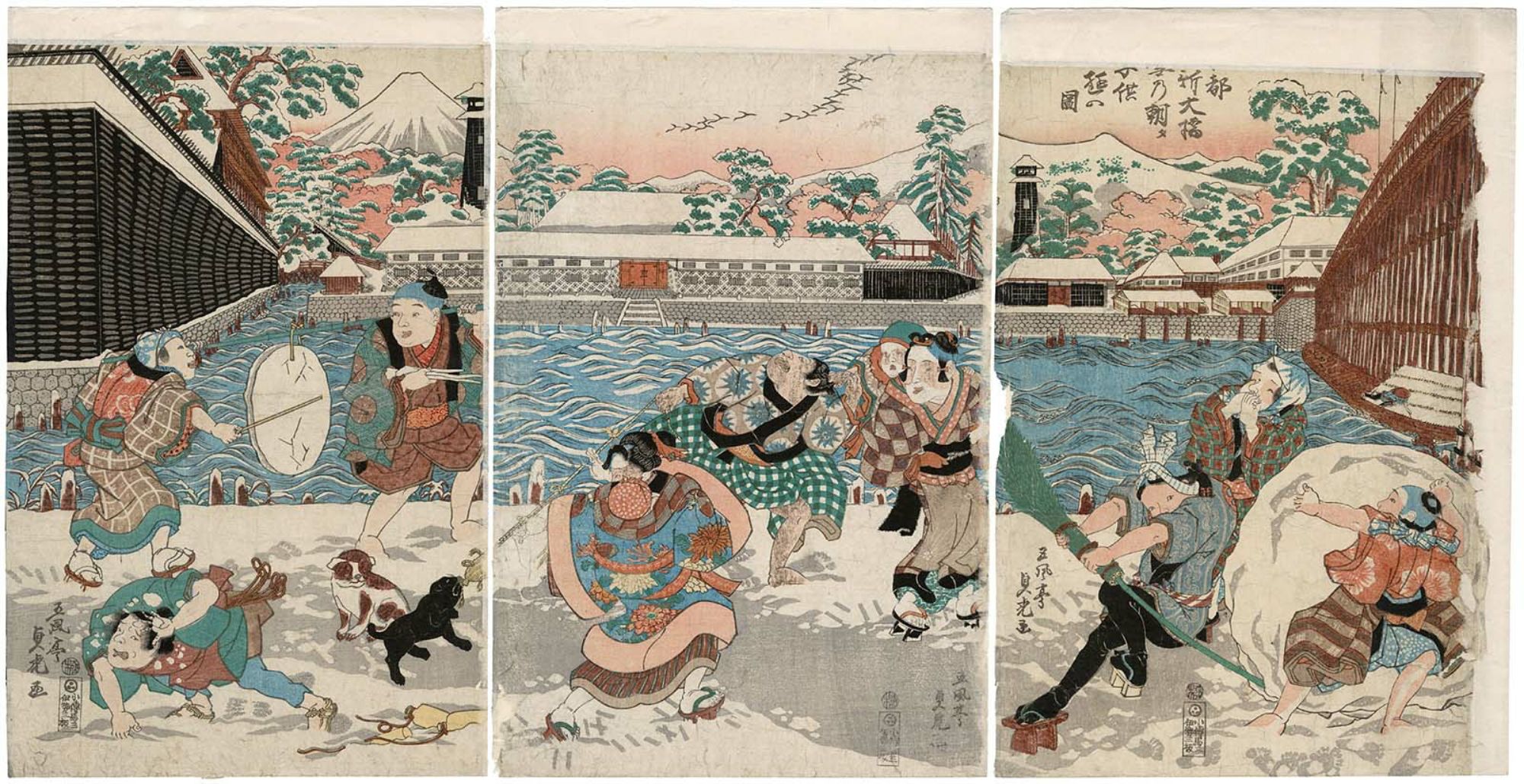
Children at Play on a Snowy Morning by the Great Bridge in the Eastern Capital (Tôto Shin Ôhashi yuki no asa kodomo asobi no zu)
東都新大橋雪の朝子供遊の図
c. 1830s (Edo period)
Woodblock print (nishiki-e); ink and color on paper
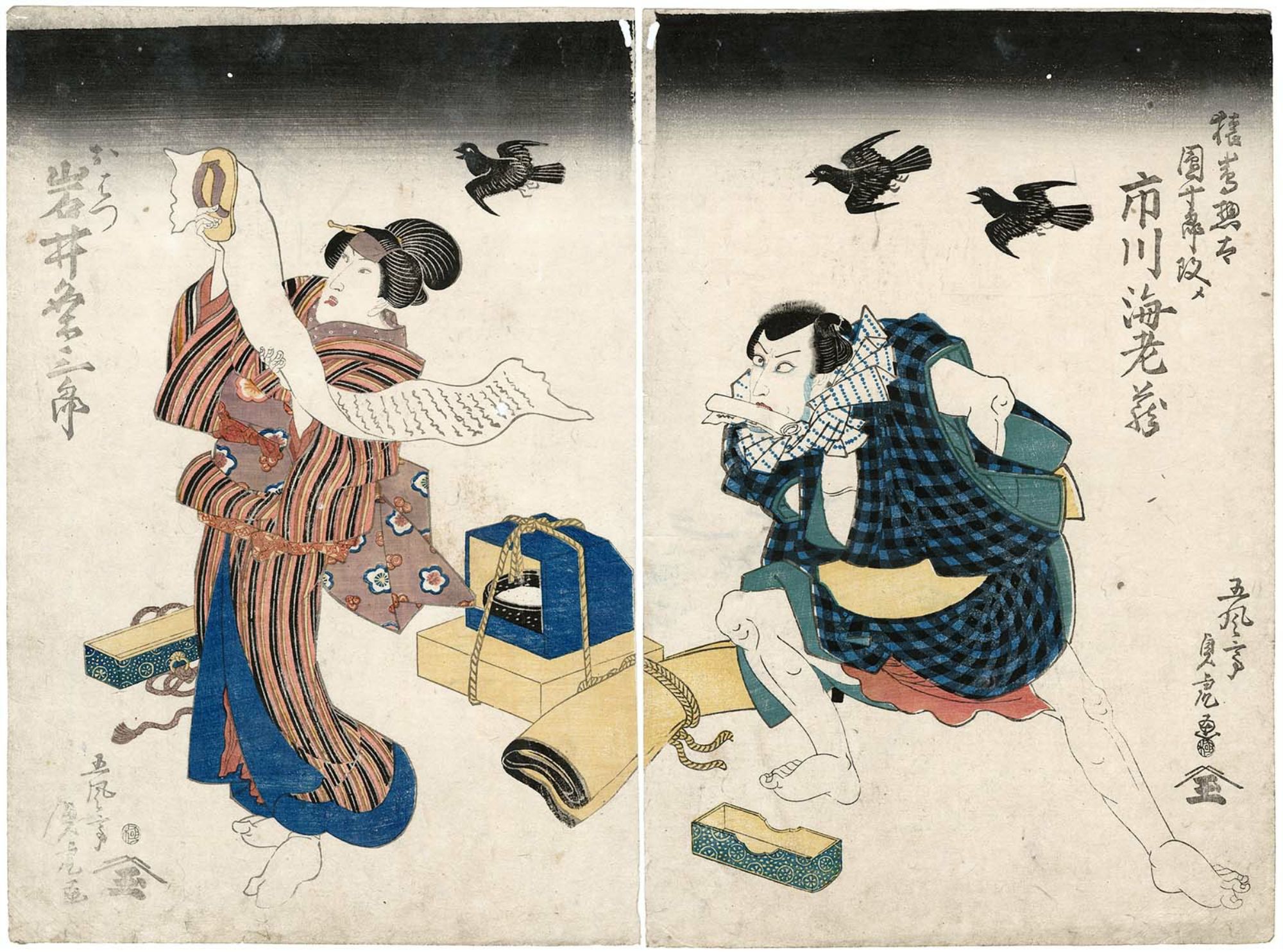
Actors
c. 1818-1844 (Edo period)
Woodblock print (nishiki-e); ink and color on paper
Frequently Asked Questions
The Seven Gods of Good Fortune in the Treasure Boat was created by Utagawa Sadatora (歌川貞虎) in c. 1818-1844 (Edo period).