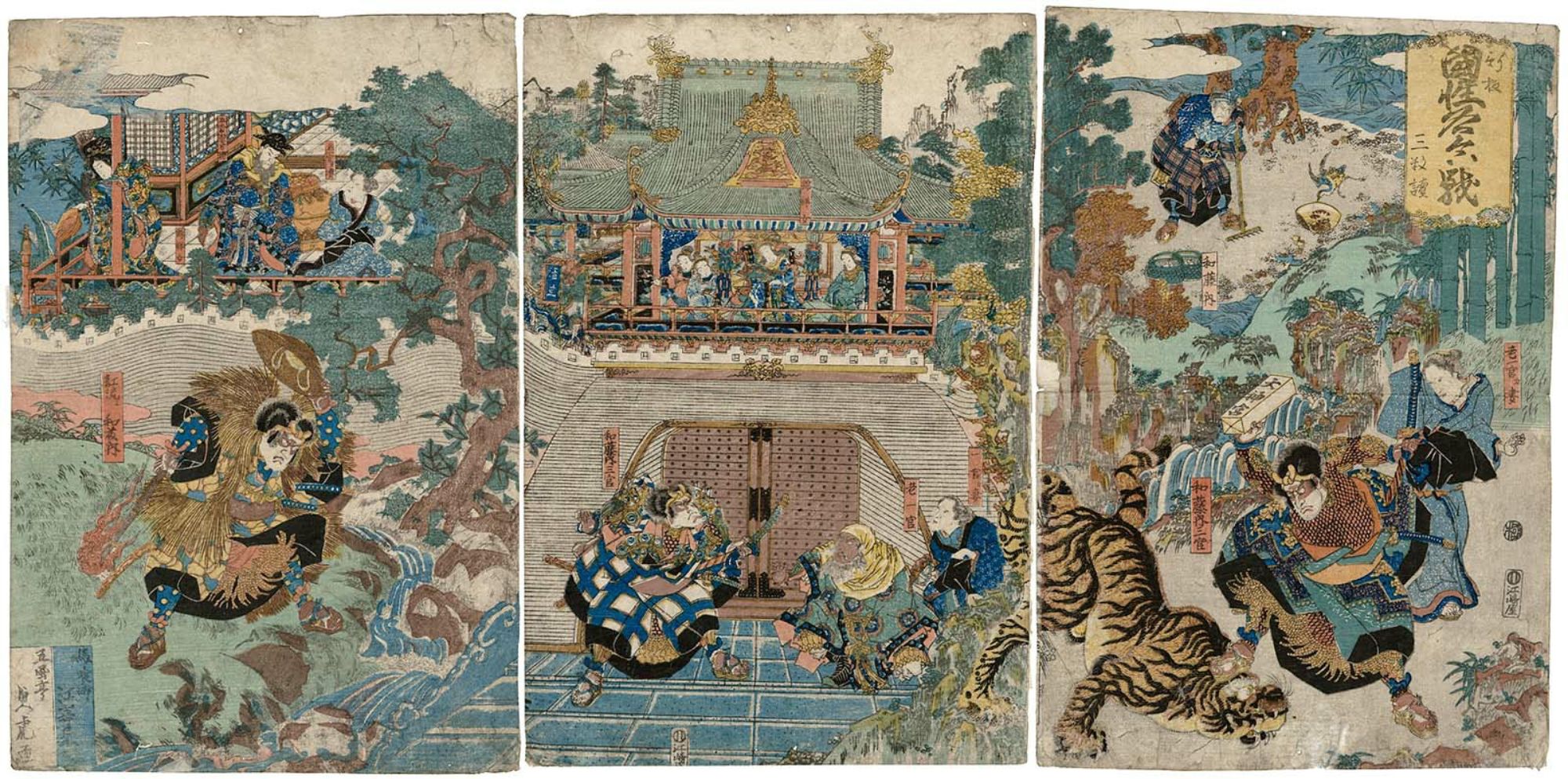
The Battles of Coxinga, Newly Published, a Triptych (Shinpan Kokusenya kassen sanmai tsuzuki)
新版国性爺合戦三枚続
- Date:
- c. 1818-1844 (Edo period)
- Medium:
- Woodblock print triptych (nishiki-e); ink and color on paper
- Source:
- Museum of Fine Arts, Boston
Description
This Museum of Fine Arts triptych by Sadatora, titled Shinpan Kokusenya kassen sanmai tsuzuki ('The Battles of Coxinga, Newly Published, in Three Sheets'), draws on one of the most enduring narrative cycles in the late-Edo theatrical and printmaking imagination: the saga of Coxinga (Zheng Chenggong, 1624-1662), the Ming loyalist general of mixed Chinese and Japanese parentage who waged the long resistance against the Manchu Qing conquest in seventeenth-century southern China. Coxinga's biography had been transformed into one of the most influential works of Japanese puppet theater (jōruri) by Chikamatsu Monzaemon in his 1715 masterpiece Kokusen'ya kassen (The Battles of Coxinga), which became a foundational text of the Edo theatrical canon and provided a recurring subject for ukiyo-e from the eighteenth century onward. Sadatora's triptych belongs to the warrior-print (musha-e) genre that experienced a major commercial expansion during the 1830s under Kuniyoshi's influence, but the 'Newly Published' designation in the title suggests it was issued to capitalize on a specific contemporary kabuki revival of the Chikamatsu material. The three-sheet horizontal format allowed for the elaborate battle composition that the Coxinga cycle demanded, with armored warriors, exotic Chinese setting, and the kind of dynamic figural arrangement that the Utagawa school was developing in parallel with Kuniyoshi's Suikoden series of the early 1830s. The MFA example documents Sadatora's engagement with the warrior genre and contributes to the broader picture of late-Edo musha-e production beyond the dominant Kuniyoshi workshop.
More Prints by Utagawa Sadatora
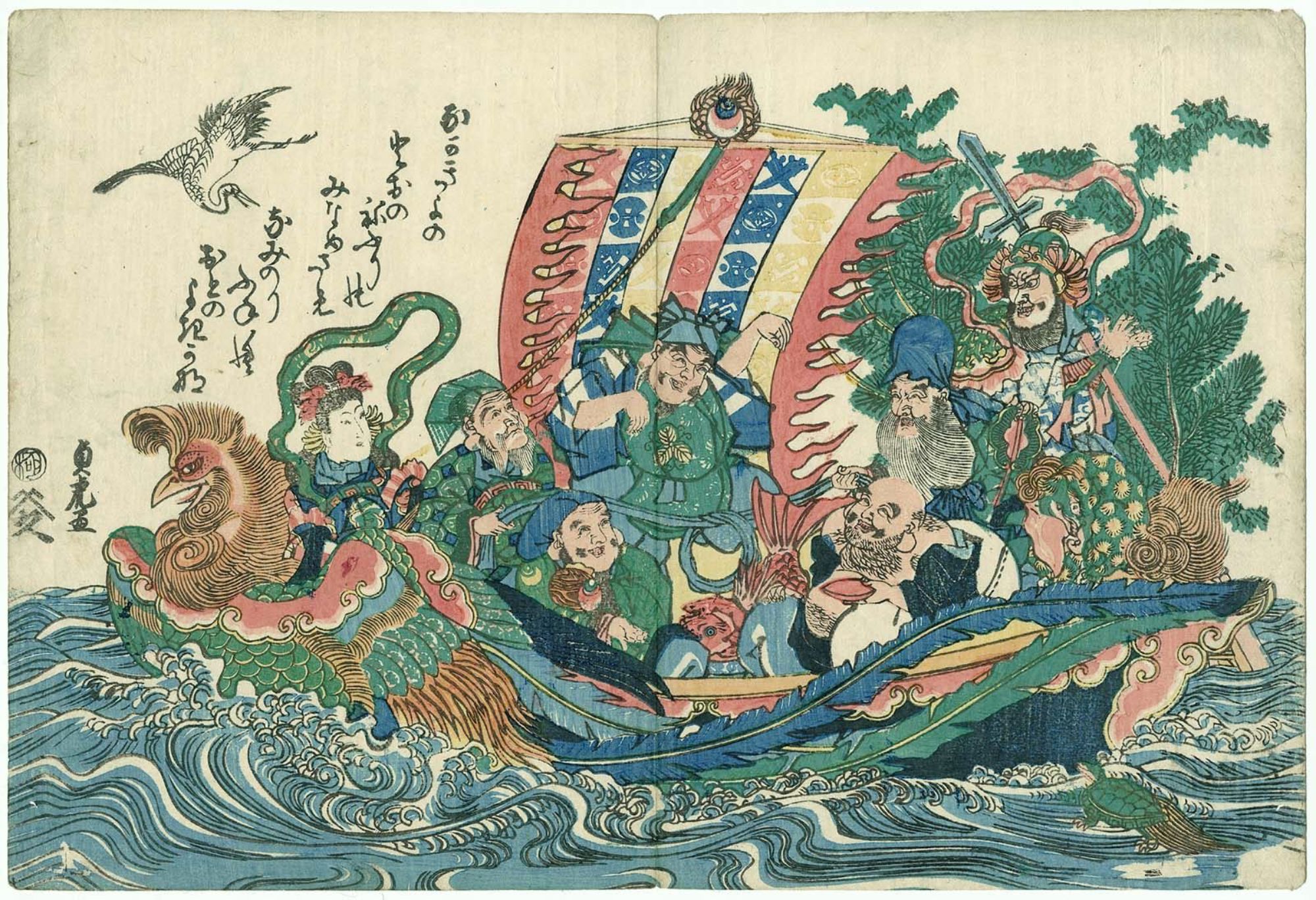
The Seven Gods of Good Fortune in the Treasure Boat
c. 1818-1844 (Edo period)
Woodblock print (nishiki-e); ink and color on paper
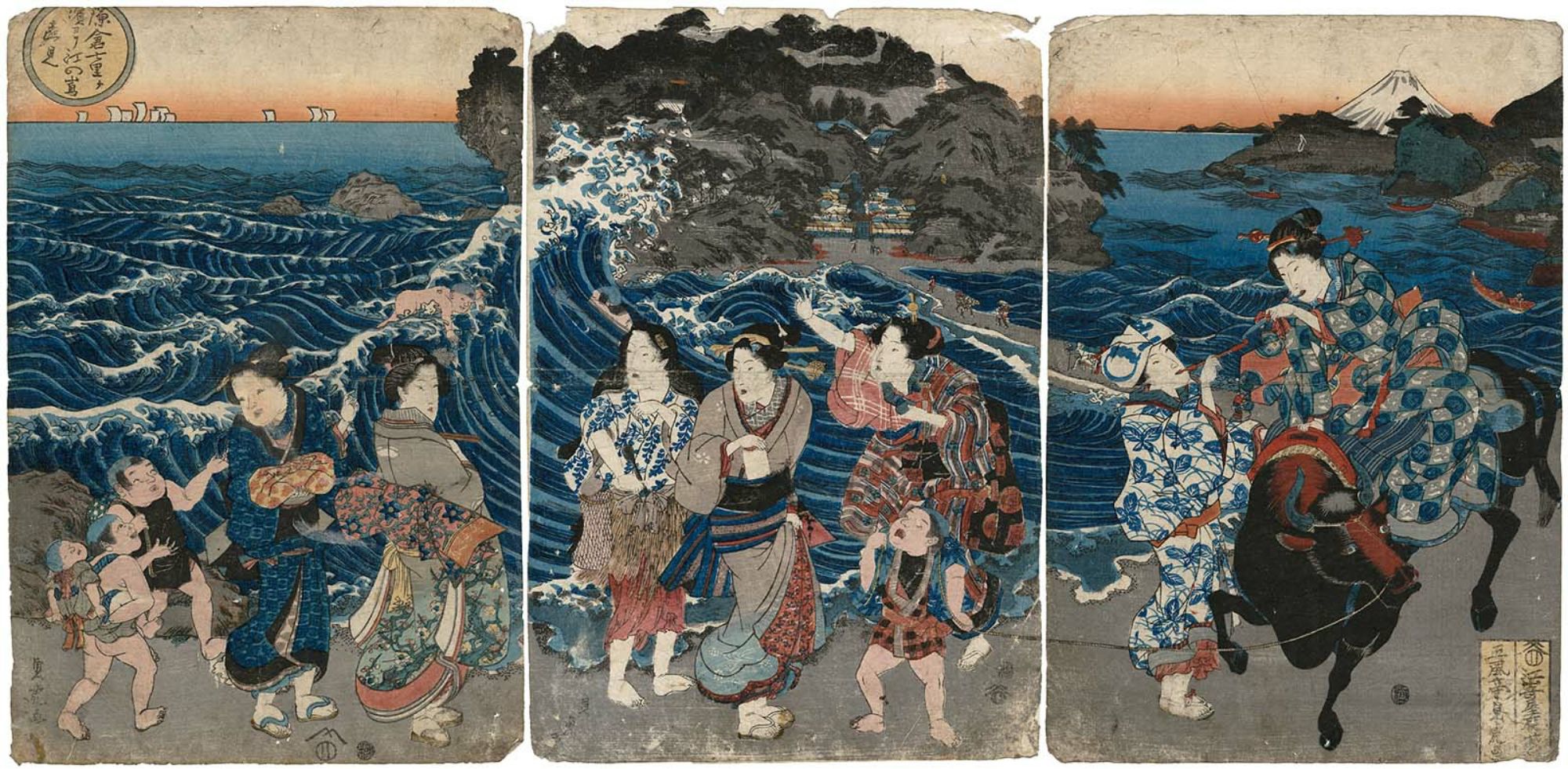
Distant View of Enoshima from Seven-mile Beach in Kamakura (Kamakura Shichiri-ga-hama yori Enoshima enmi)
鎌倉七里ヶ浜より江の島遠見
c. 1830s (Edo period)
Woodblock print (nishiki-e); ink and color on paper
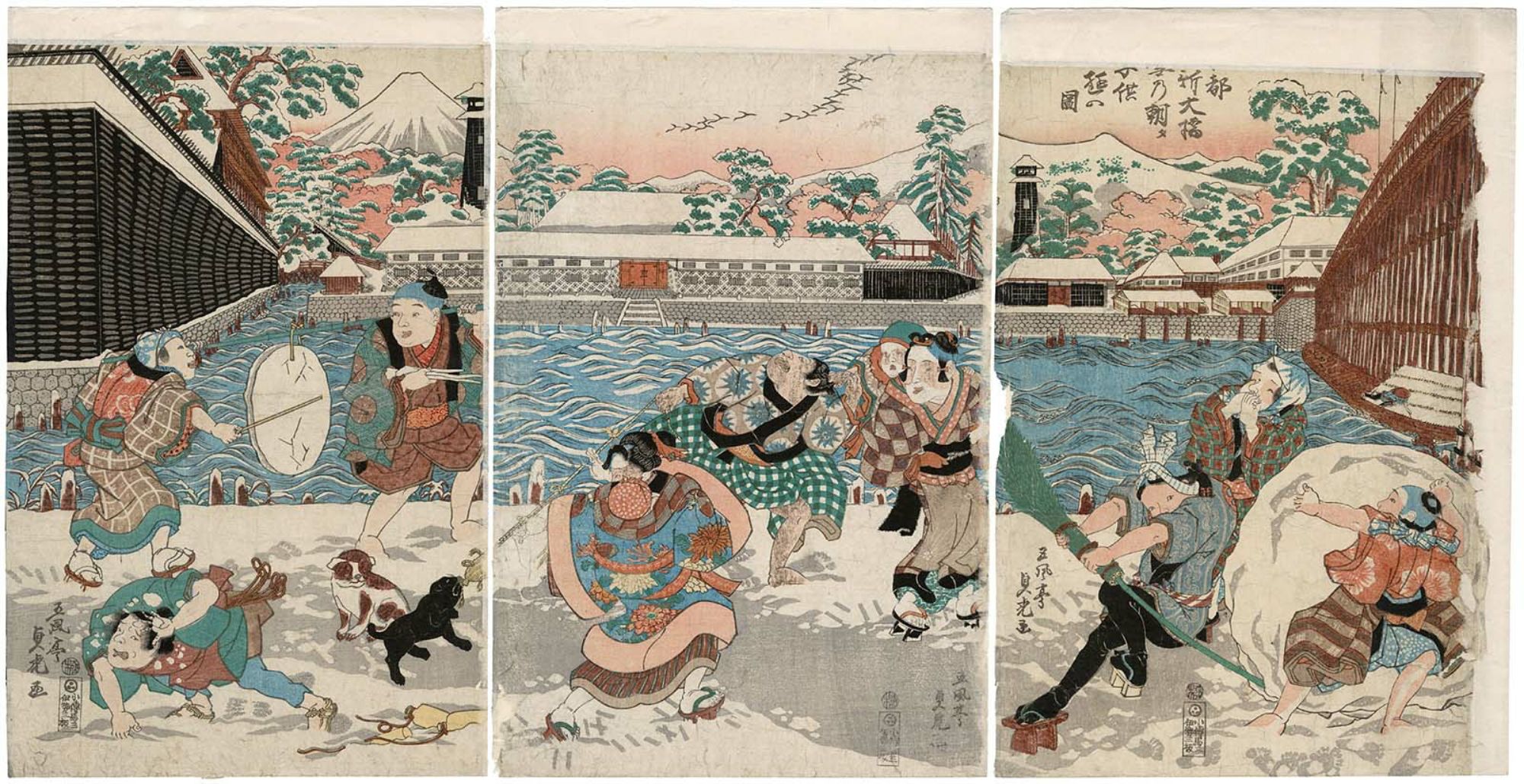
Children at Play on a Snowy Morning by the Great Bridge in the Eastern Capital (Tôto Shin Ôhashi yuki no asa kodomo asobi no zu)
東都新大橋雪の朝子供遊の図
c. 1830s (Edo period)
Woodblock print (nishiki-e); ink and color on paper
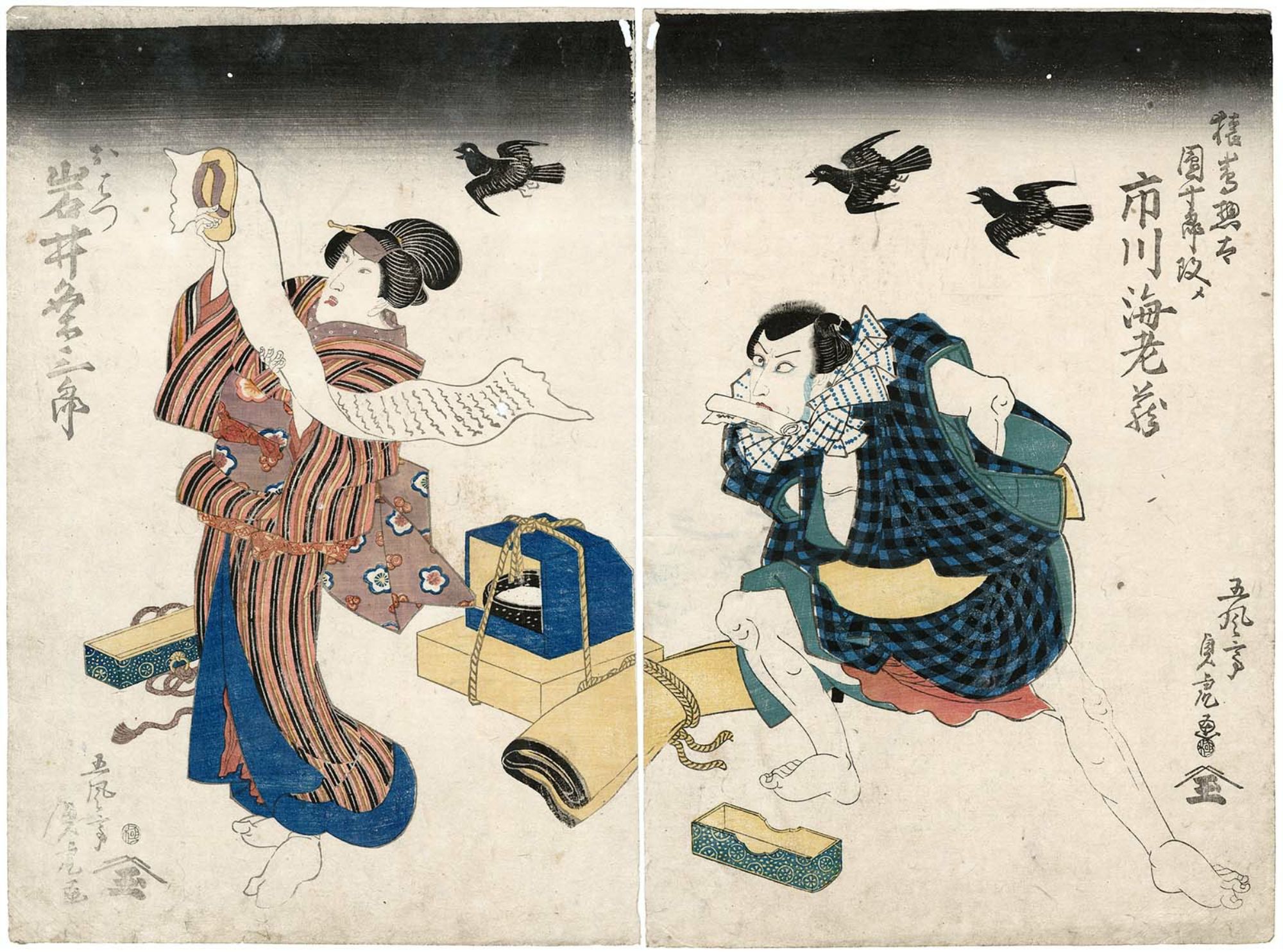
Actors
c. 1818-1844 (Edo period)
Woodblock print (nishiki-e); ink and color on paper
Frequently Asked Questions
The Battles of Coxinga, Newly Published, a Triptych (Shinpan Kokusenya kassen sanmai tsuzuki) (新版国性爺合戦三枚続) was created by Utagawa Sadatora (歌川貞虎) in c. 1818-1844 (Edo period).