Biography
Utagawa Yoshikuni (歌川芳国, active circa 1813-1832), better known in the modern literature by his principal art name Jukōdō Yoshikuni (壽好堂芳國) and also recorded under the surnames Toyokawa and Kō, was one of the central designers of Osaka kamigata-e yakusha-e in the 1810s and 1820s, working alongside Shunkōsai Hokushū to produce the comprehensive printed record of Osaka kabuki that survives from the late Bunka and Bunsei eras. Although his line was loosely tied to the Edo Utagawa school through stylistic and reputational affiliation, his entire career was based in Osaka, and his work belongs to the distinct regional tradition of kamigata-e (literally upper-region prints) that flourished in the Kansai cultural sphere of Osaka and Kyoto.
His personal biography survives in only fragmentary form, a pattern that holds for nearly every Osaka print designer of the period. He worked under the early art name Ashimaru until March 1816, when he adopted the name Yoshikuni and the studio name Jukōdō. The Jukōdō sobriquet identified not only his studio but also a poetry circle he led, the Jukōdō-sha, indicating that like many Osaka townsman artists he combined print design with literary and theatrical engagements as a bunraku chanter, haikai poet, and host of cultural gatherings. His teacher was Kyōgadō Ashikuni, one of the leading Osaka actor-print designers of the preceding generation, a lineage that placed Yoshikuni within the continuous tradition of kamigata-e specialists. The surname variations under which his prints appear (Takagi, Kō, and the most commonly cited Toyokawa) reflect the layered identity conventions of Osaka townsman artists rather than separate persons, and modern catalogues variously file his work under Toyokawa Yoshikuni or Jukōdō Yoshikuni.
Like Shunkōsai Hokushū, his almost exact contemporary, Yoshikuni produced primarily yakusha-e portraits of the leading Osaka stars, above all the superstar Nakamura Utaemon III, whom he depicted repeatedly, along with actors such as Nakamura Tsurusuke I. Osaka kamigata-e differed sharply from Edo yakusha-e in its market, production, and aesthetic. Osaka prints were issued in smaller editions, frequently privately commissioned by fan clubs (renju) and theatre patrons rather than mass-published, and they employed heavier paper, more lavish printing effects (metallic pigments, mica grounds, embossing), and a darker, more restrained palette than the Edo equivalents. His compositions follow the Osaka preference for tight half-length cropping, intense facial study, and prominent inscription of the actor's name, role, and play title, a documentary discipline that allows modern scholars to date and identify his work precisely. Such deluxe treatments — mica and metallic-pigment grounds among them — gave Osaka publishers a way to mark prestige editions for the merchant patrons who drove the local print market.
Yoshikuni's most consequential legacy was as a teacher. At least seven documented pupils carried his line into the late Bunsei and Tenpō eras, including Umekuni, Toshikuni, and the well-documented Jukōdō Masakuni, who succeeded to a version of the master's studio name and continued the actor-portrait franchise into the 1830s. Through these pupils his school continued the comprehensive Osaka yakusha-e documentary practice that he and Hokushū had jointly established, contributing to a regional school whose prints are now collected by the Metropolitan Museum of Art, the Art Institute of Chicago, the Victoria and Albert Museum, the Cleveland Museum of Art, and the Museum of Fine Arts in Boston, the last of which holds one of the largest specialist collections of Osaka kamigata-e outside Japan. His signed work disappears around 1832, the cause and date of his death unrecorded, and the production that followed under his pupils was overtaken in the late 1830s by the next generation of Osaka actor-print designers around Shunbaisai Hokuei and his circle. His prints remain a principal visual record of Osaka kabuki in the Bunka and Bunsei eras, and his career documents how the kamigata-e tradition evolved from its founding generation into the mature regional school that defined Osaka yakusha-e until the Tenpō Reforms suppressed the genre in the early 1840s.
Key Facts
- Nationality
- 🇯🇵Japan
- Movement
- Ukiyo-e
- Works Indexed
- 6
Frequently Asked Questions
Utagawa Yoshikuni (歌川芳国, active circa 1813-1832), better known in the modern literature by his principal art name Jukōdō Yoshikuni (壽好堂芳國) and also recorded under the surnames Toyokawa and Kō, was one of the central designers of Osaka kamigata-e yakusha-e in the 1810s and 1820s, working alongside Shunkōsai Hokushū to produce the comprehensive printed record of Osaka kabuki that survives from the late Bunka and Bunsei eras. Although his line was loosely tied to the Edo Utagawa school through stylistic and reputational affiliation, his entire career was based in Osaka, and his work belongs to the distinct regional tradition of kamigata-e (literally upper-region prints) that flourished in the Kansai cultural sphere of Osaka and Kyoto.
Utagawa Yoshikuni's work was shaped by the Ukiyo-e tradition in Japanese woodblock printmaking. Ukiyo-e: ## What is ukiyo-e? Ukiyo-e ([浮世絵](/glossary/ukiyo-e)) — literally "pictures of the floating world" — is the Edo-period Japanese print and painting tradition that flourished from roughly 1660 to 1868, depicting the pleasures of urban life in Edo (modern Tokyo): courtesans, kabuki actors, sumo wrestlers, famous landscapes, and seasonal beauties.
Original prints by Utagawa Yoshikuni can be found in collections including Metropolitan Museum of Art, Victoria and Albert Museum, Art Institute of Chicago.
Woodblock Prints by Utagawa Yoshikuni (6)
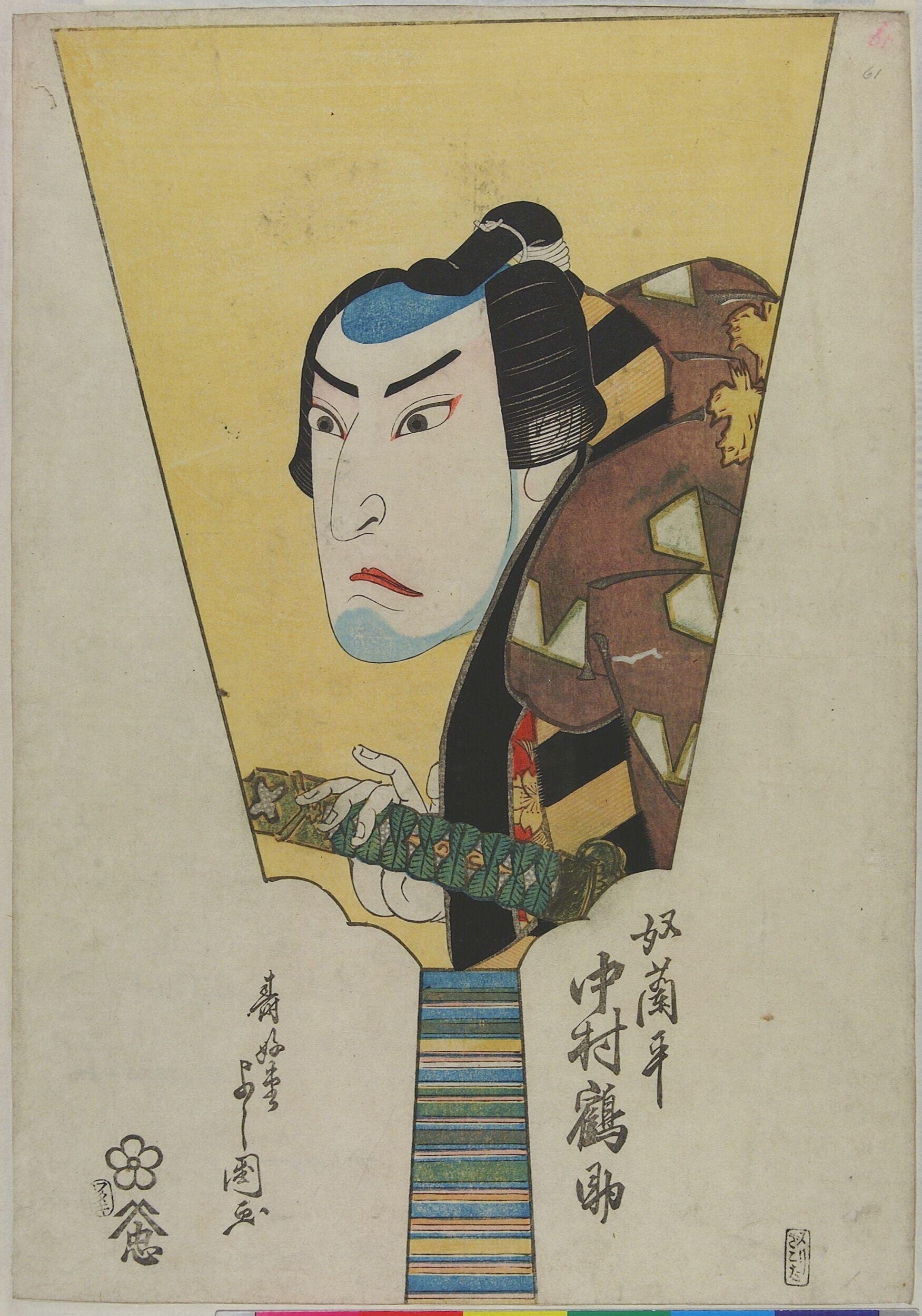
Nakamura Tsurusuke I (Utaemon IV) shuttlecock print in the role of Yakko Ranpei
1824
Woodblock print on paper
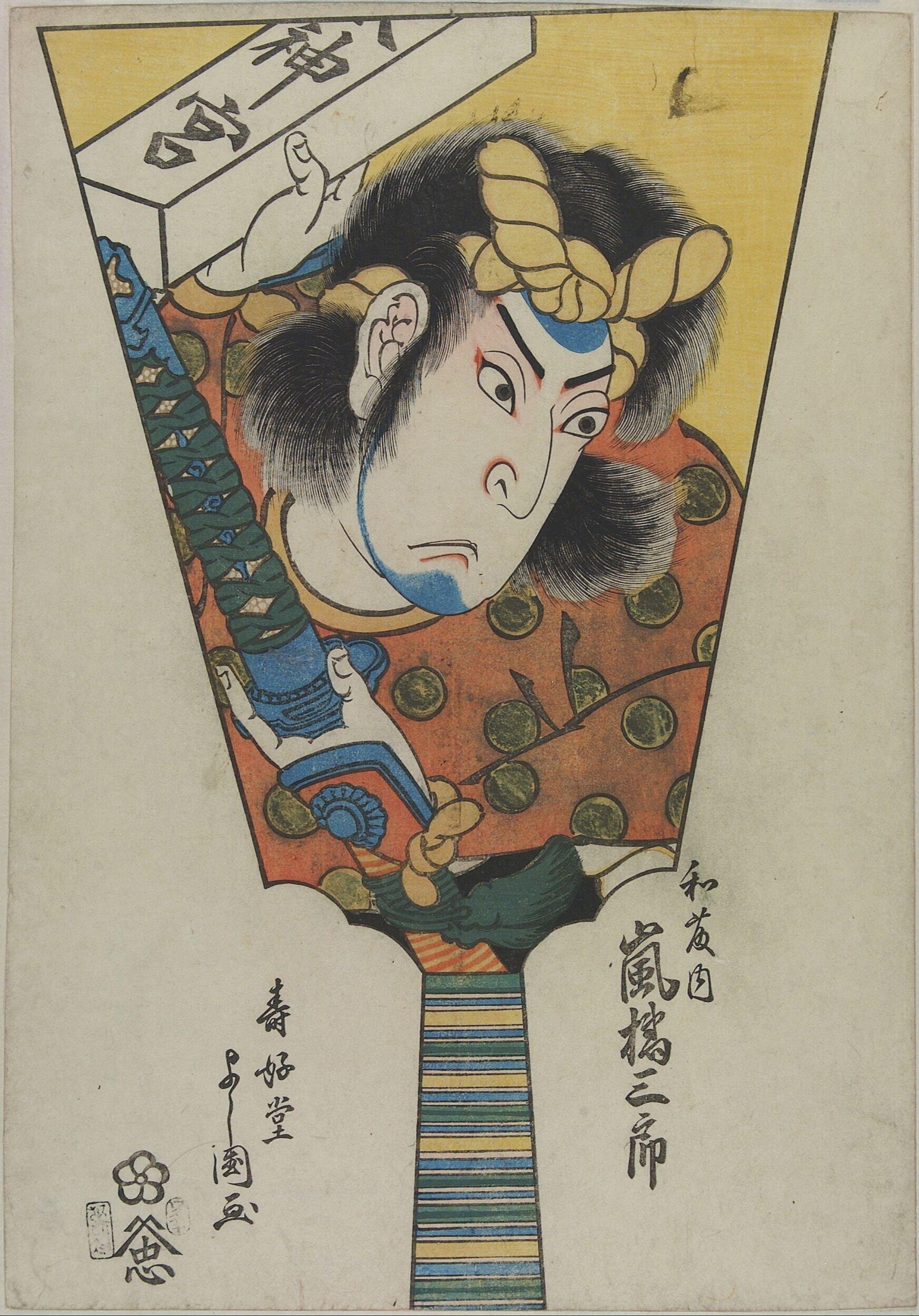
Arashi Kitsusaburō II shuttlecock portraits
1824
Woodblock print on paper
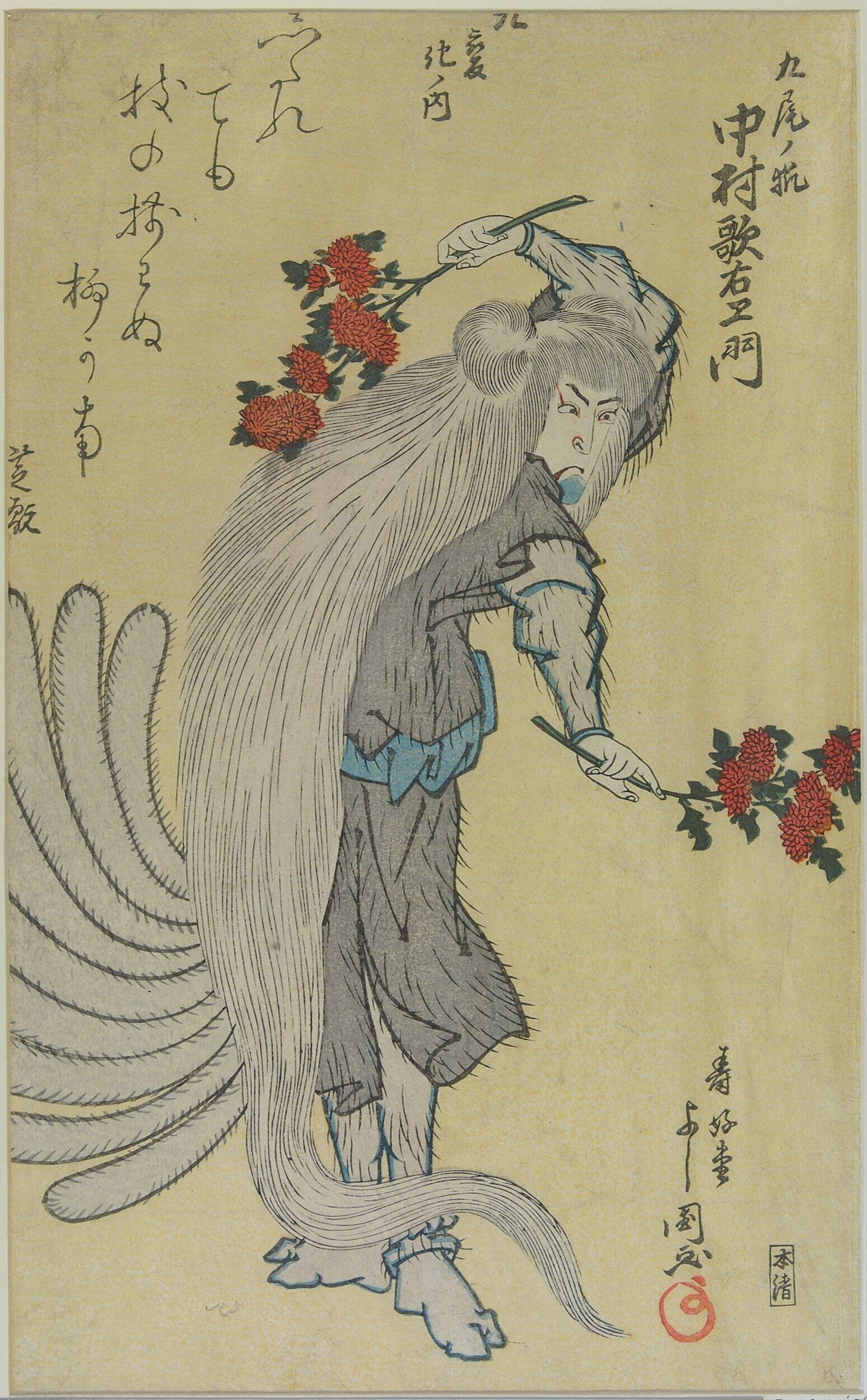
Nakamura Utaemon Playing the Nine-tailed Fox
1825
Woodblock print on paper

Portrait of the actor Ichikawa Danzō V as Tamaya Shinbei in the play "Sato-gayoi Tosei Sugata" (The Latest Fashion, to Frequent a House of Ill-Fame)
c. 1830
Color woodblock print
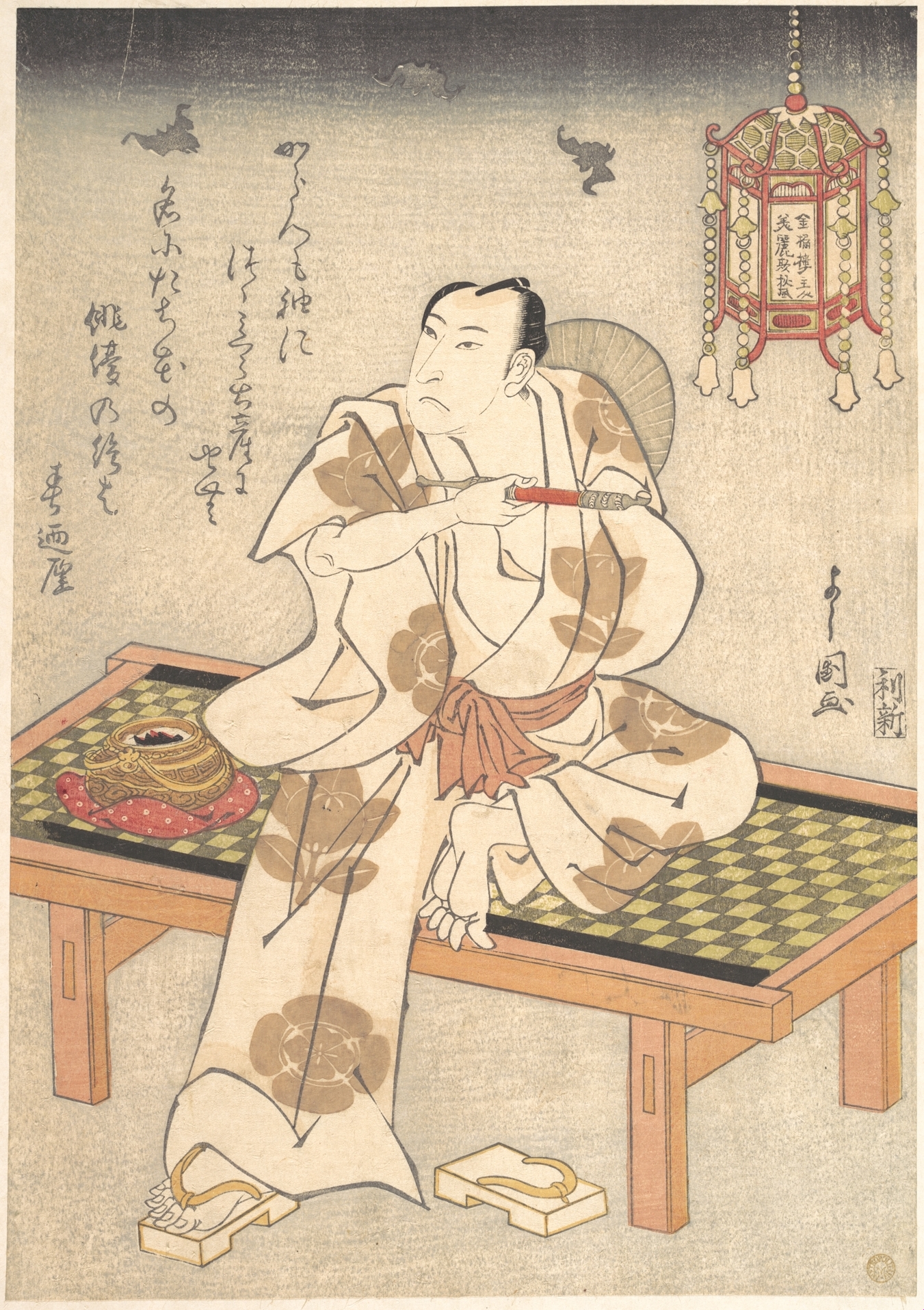
An Actor of the Ichimura Line Sitting on a Shōgi (Wooden Bench) and Holding a Pipe
1836–1870
Woodblock print; ink and color on paper
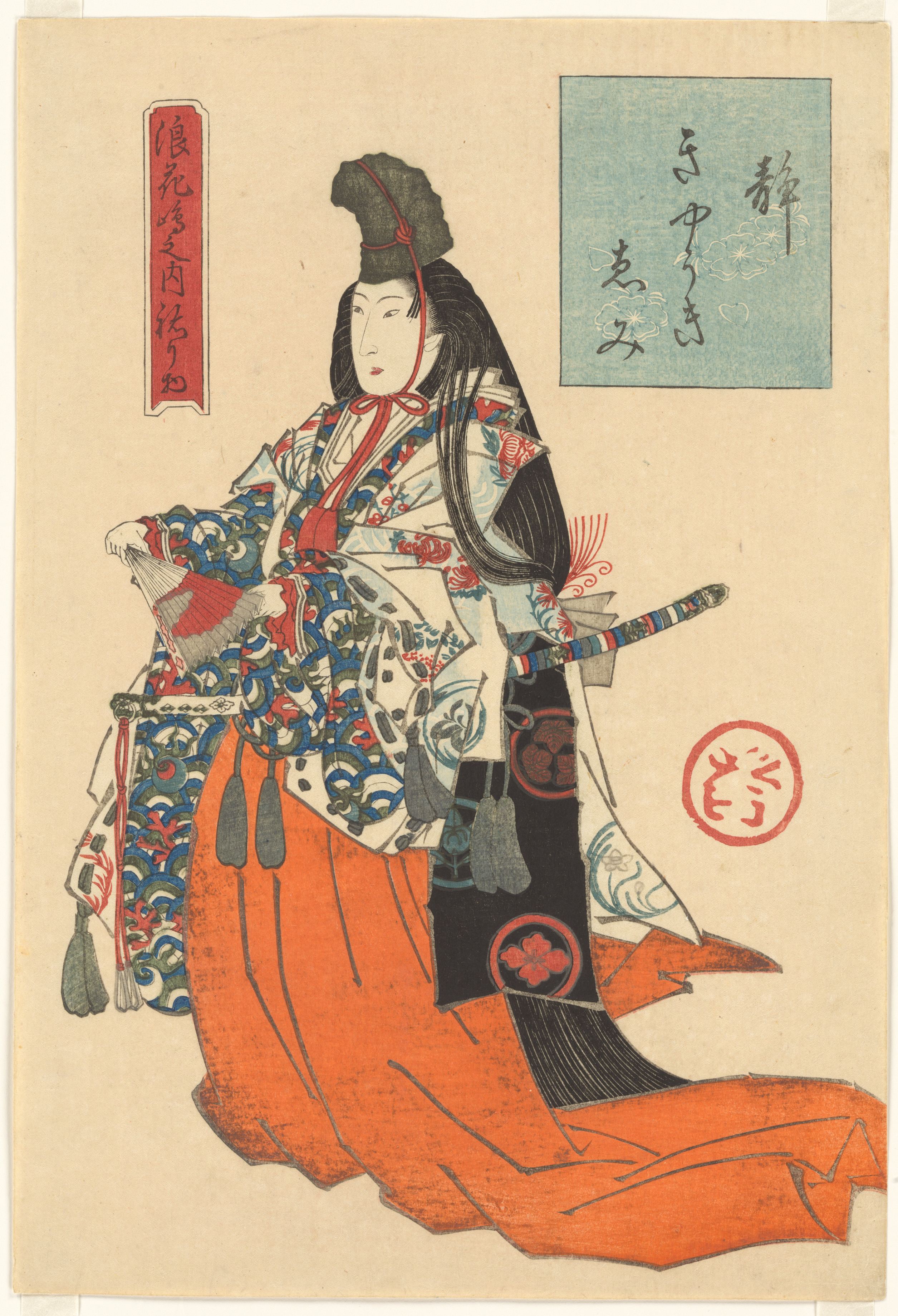
The Courtesan Emi of the Kyōki Brothel as Shizuka Gozen (Shizuka Kyōki Emi), from the series Costume Parade of the Shimanouchi District in Osaka (Naniwa Shimanouchi nerimono)
probably 1836
Woodblock print (nishiki-e); ink and color on paper; vertical ōban