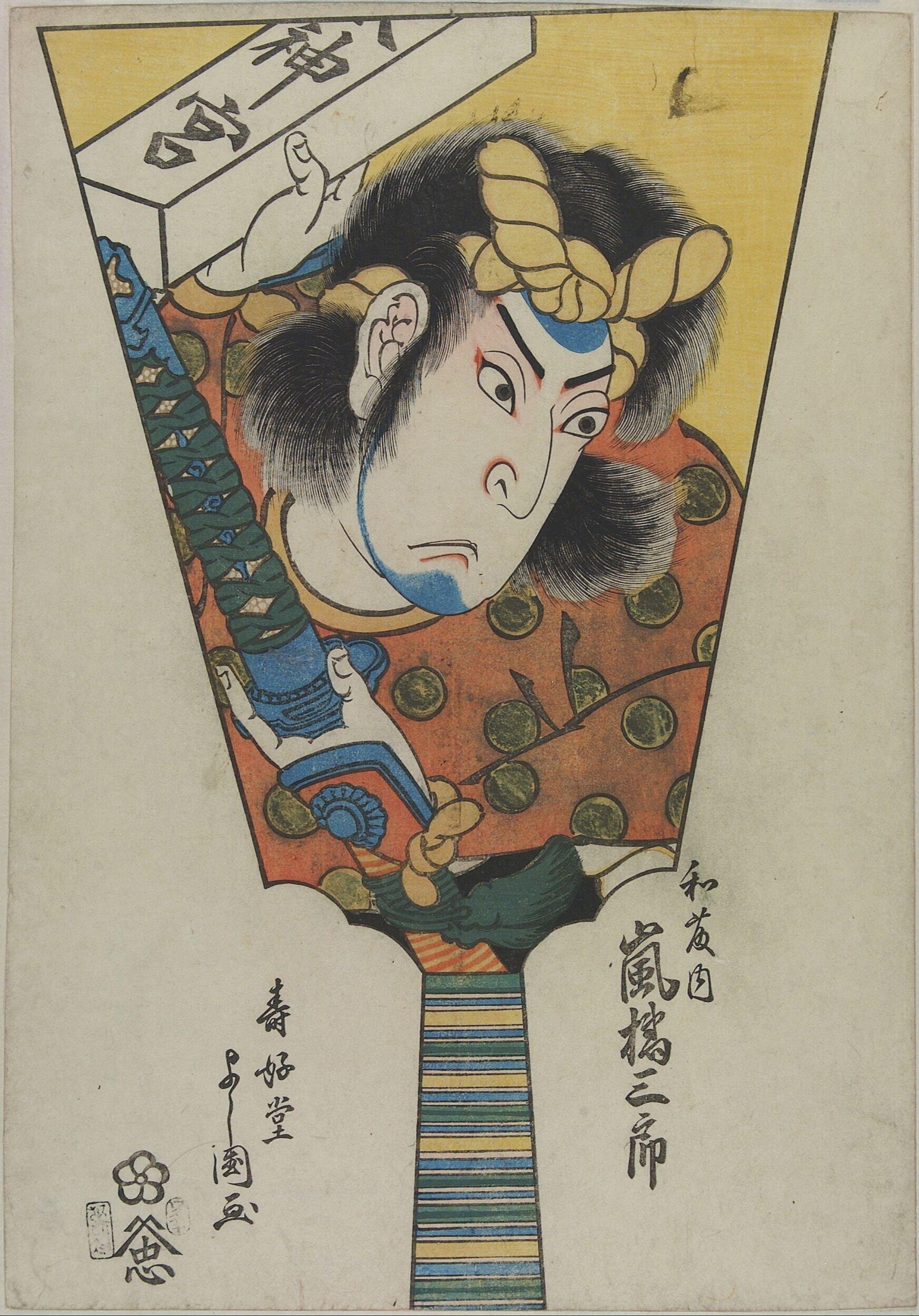
Arashi Kitsusaburō II shuttlecock portraits
- Date:
- 1824
- Medium:
- Woodblock print on paper
- Source:
- Victoria and Albert Museum
Description
This 1824 Osaka kamigata-e yakusha-e by Utagawa Yoshikuni, held by the Victoria and Albert Museum (accession E.13824-1886, system number O111293), depicts Arashi Kitsusaburō II in a portrait framed within a hagoita (battledore-shaped) panel. The hagoita format, in which the actor's portrait is rendered inside the silhouette of an ornamental wooden paddle used in the traditional New Year's game hanetsuki, was a specialty design type that Osaka kamigata-e designers developed to produce prestige New Year prints. Hagoita as physical objects were given as New Year gifts in nineteenth-century Japan, and the hagoita-shaped portrait print extended the gift-giving custom into the print medium, often featuring the most celebrated actors of the season in their signature roles. Arashi Kitsusaburō II was the successor name in the Arashi acting line; Arashi Kitsusaburō I had died in 1821 and Hokushū's memorial print of the elder actor at the V&A (O111301) closes the older star's career, while his portrait of Kitsusaburō II from three years later opens the younger actor's documentary record. The print measures approximately 37.4 by 26.0 centimeters as a woodblock print on paper in the standard Osaka kamigata-e oban format. The V&A's accession (E.13824-1886) places the print in an 1886 acquisition of Osaka materials that constitutes one of the earliest European institutional collections of kamigata-e, formed at the moment when British collectors first began assembling Osaka prints systematically alongside the better-known Edo ukiyo-e. The hagoita-format yakusha-e is a distinctively Osaka kamigata-e innovation, and his examples of the type demonstrate the regional school's willingness to extend the actor-portrait genre into format experiments that Edo publishers rarely matched.
More Prints by Utagawa Yoshikuni
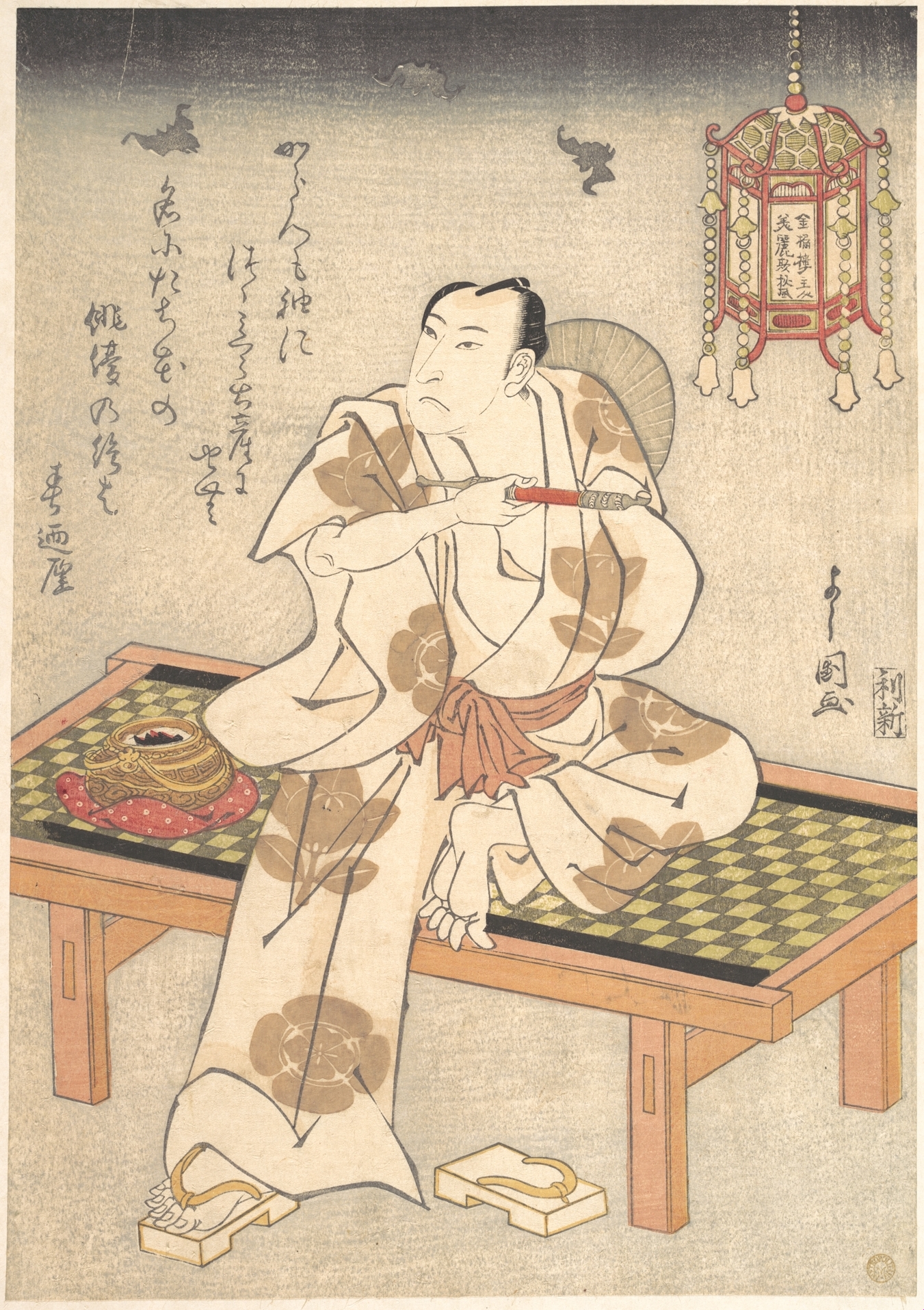
An Actor of the Ichimura Line Sitting on a Shōgi (Wooden Bench) and Holding a Pipe
1836–1870
Woodblock print; ink and color on paper
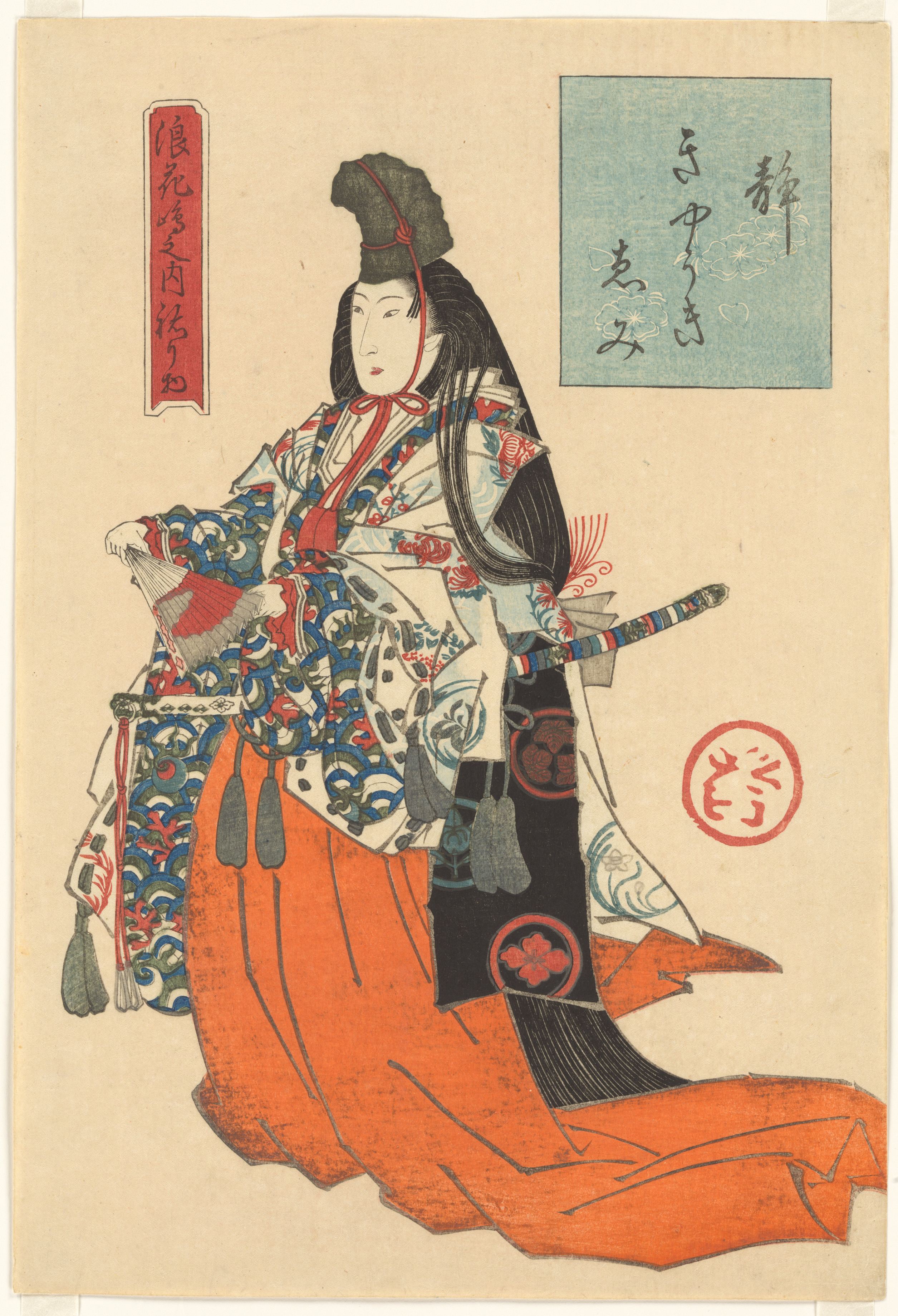
The Courtesan Emi of the Kyōki Brothel as Shizuka Gozen (Shizuka Kyōki Emi), from the series Costume Parade of the Shimanouchi District in Osaka (Naniwa Shimanouchi nerimono)
probably 1836
Woodblock print (nishiki-e); ink and color on paper; vertical ōban
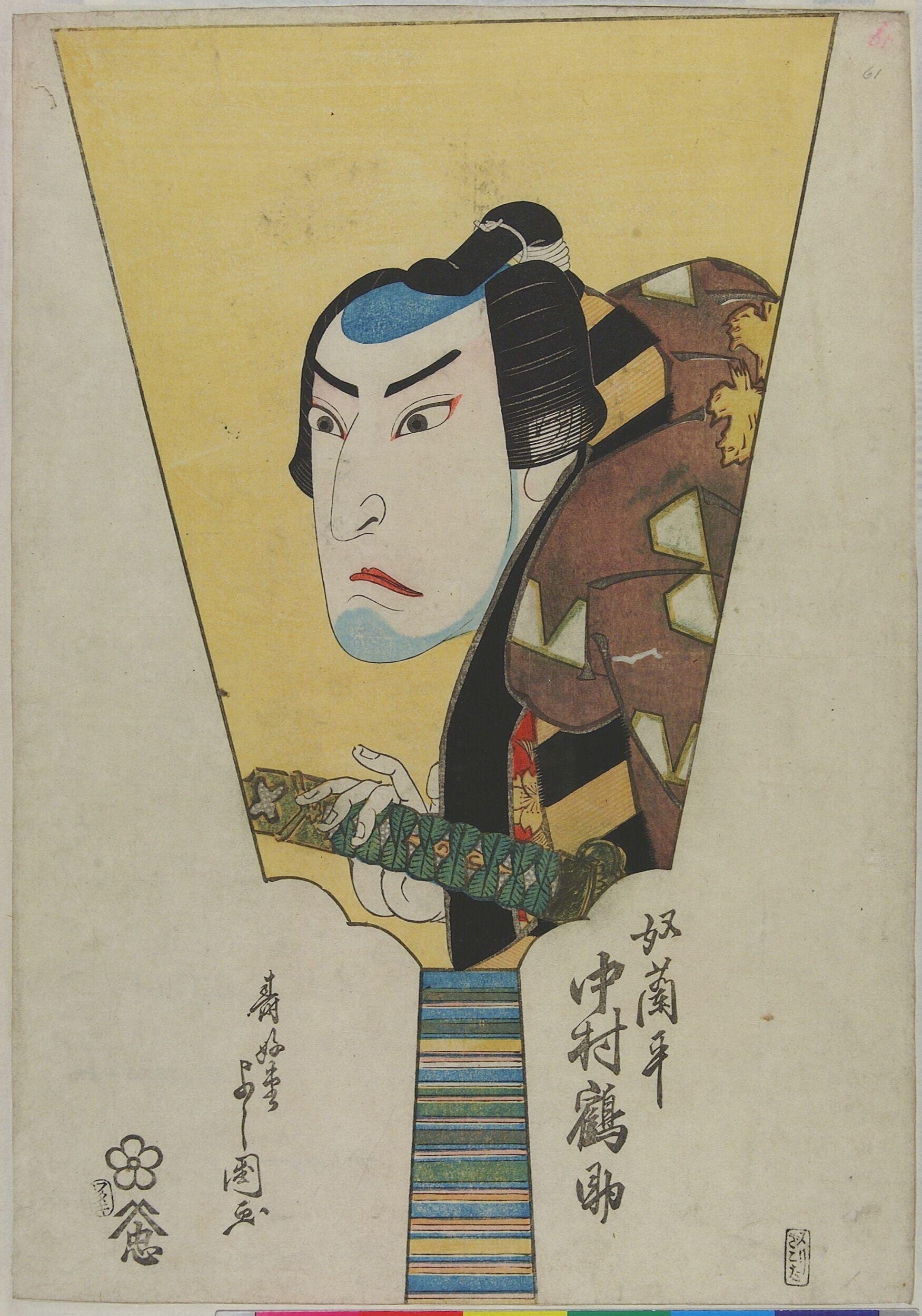
Nakamura Tsurusuke I (Utaemon IV) shuttlecock print in the role of Yakko Ranpei
1824
Woodblock print on paper

Portrait of the actor Ichikawa Danzō V as Tamaya Shinbei in the play "Sato-gayoi Tosei Sugata" (The Latest Fashion, to Frequent a House of Ill-Fame)
c. 1830
Color woodblock print
Frequently Asked Questions
Arashi Kitsusaburō II shuttlecock portraits was created by Utagawa Yoshikuni (歌川芳国) in 1824.