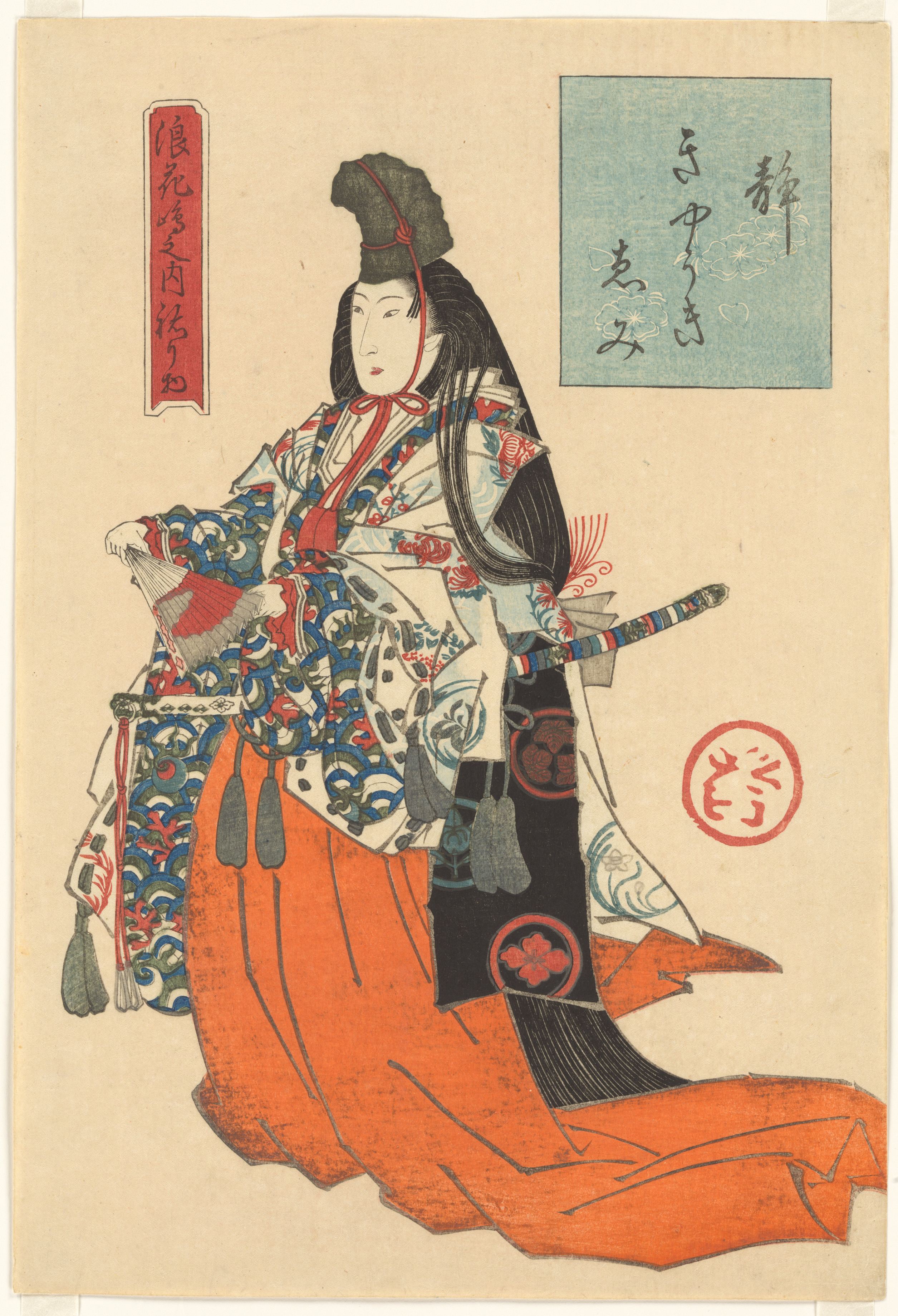
The Courtesan Emi of the Kyōki Brothel as Shizuka Gozen (Shizuka Kyōki Emi), from the series Costume Parade of the Shimanouchi District in Osaka (Naniwa Shimanouchi nerimono)
- Date:
- probably 1836
- Medium:
- Woodblock print (nishiki-e); ink and color on paper; vertical ōban
- Source:
- Metropolitan Museum of Art
Description
This circa 1836 yakusha-e by Utagawa Yoshikuni (signed under the studio name Jukōdō Yoshikuni) belongs to the series Naniwa Shimanouchi nerimono (Costume Parade of the Shimanouchi District in Osaka), a coordinated Osaka kamigata-e series documenting an annual procession in which the courtesans of the Shimanouchi pleasure district paraded in costumes representing famous female roles from kabuki and classical literature. Held by the Metropolitan Museum of Art (accession 2020.304), the print depicts the courtesan Emi of the Kyōki brothel impersonating the historical heroine Shizuka Gozen, the dancer-mistress of Minamoto no Yoshitsune and one of the most celebrated female figures in Japanese narrative tradition. The conceit of the series, a courtesan portraying a kabuki or literary heroine, layers identities in a way characteristic of Osaka prestige prints: the named pleasure-quarter performer is shown in the role of a stage character who is herself a historical figure. The composition exemplifies the Osaka kamigata-e preference for half-length framing and careful inscription of identity, with the woman's name, her brothel affiliation, and the role she portrays all anchored in the printed cartouches. The print measures approximately 37.8 by 25.7 centimeters as a vertical oban nishiki-e (multi-color woodblock print) executed in ink and color on paper, dimensions consistent with the standard Osaka kamigata-e format he used throughout his mature career. The Met's accession (2020.304) was acquired in a 2020 group that signaled the museum's recognition of Osaka yakusha-e as a school deserving dedicated representation, alongside parallel Hokushū prints of the same period. The Naniwa Shimanouchi nerimono series stands as one of the most ambitious Osaka kamigata-e projects of the late 1830s and demonstrates how the regional school carried the actor-portrait tradition into hybrid genres that blended the worlds of theatre and the pleasure quarter.
More Prints by Utagawa Yoshikuni
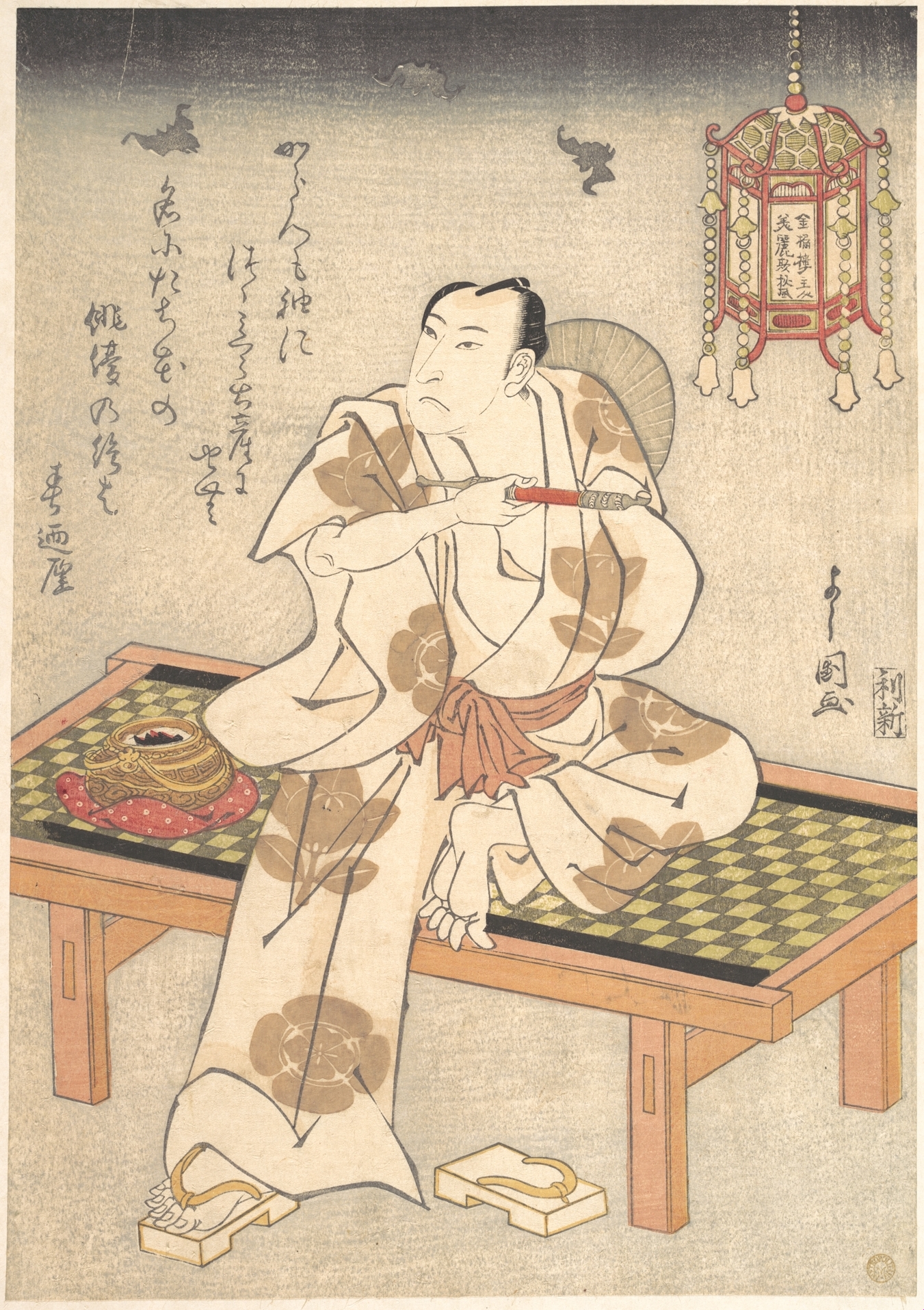
An Actor of the Ichimura Line Sitting on a Shōgi (Wooden Bench) and Holding a Pipe
1836–1870
Woodblock print; ink and color on paper
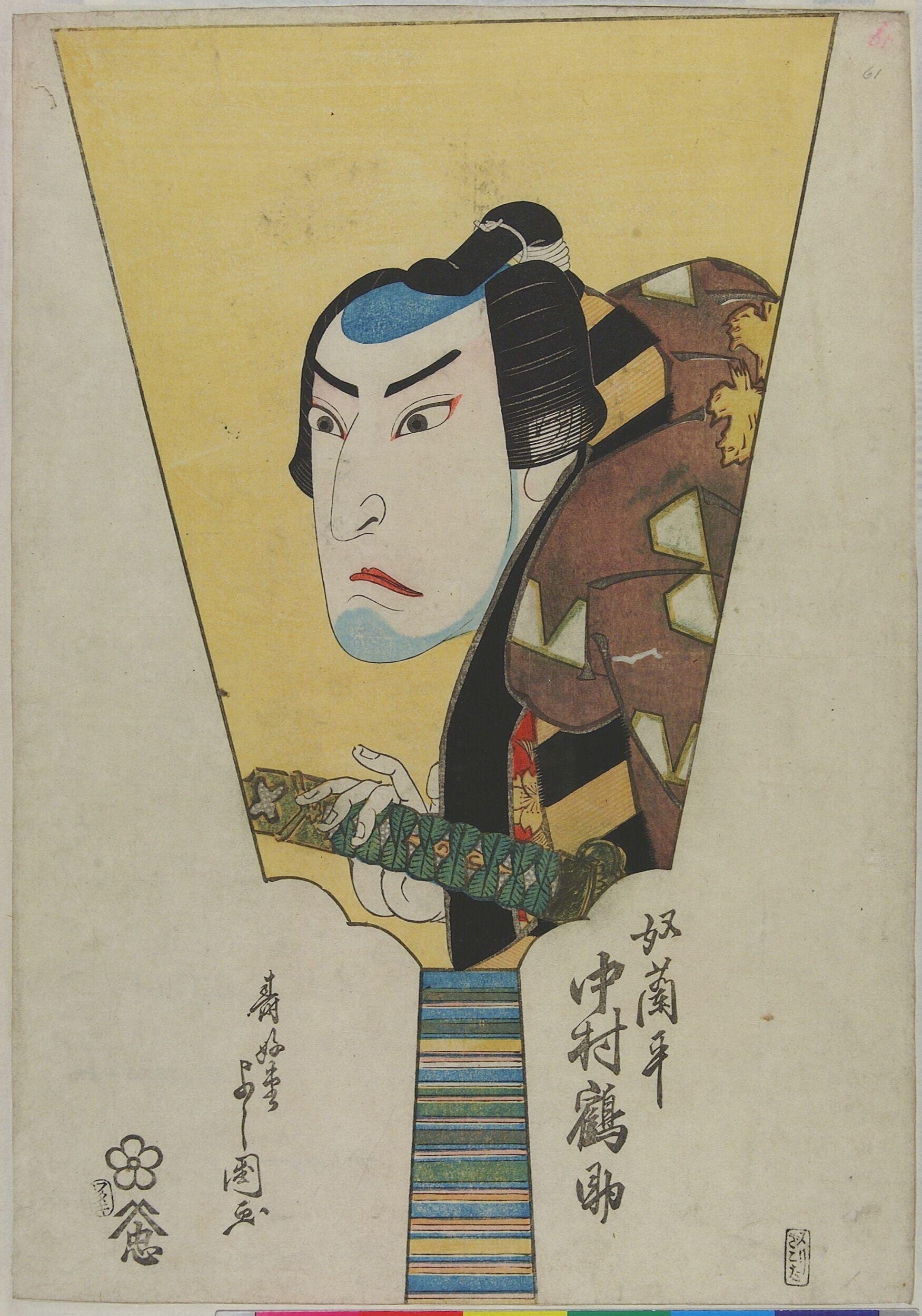
Nakamura Tsurusuke I (Utaemon IV) shuttlecock print in the role of Yakko Ranpei
1824
Woodblock print on paper
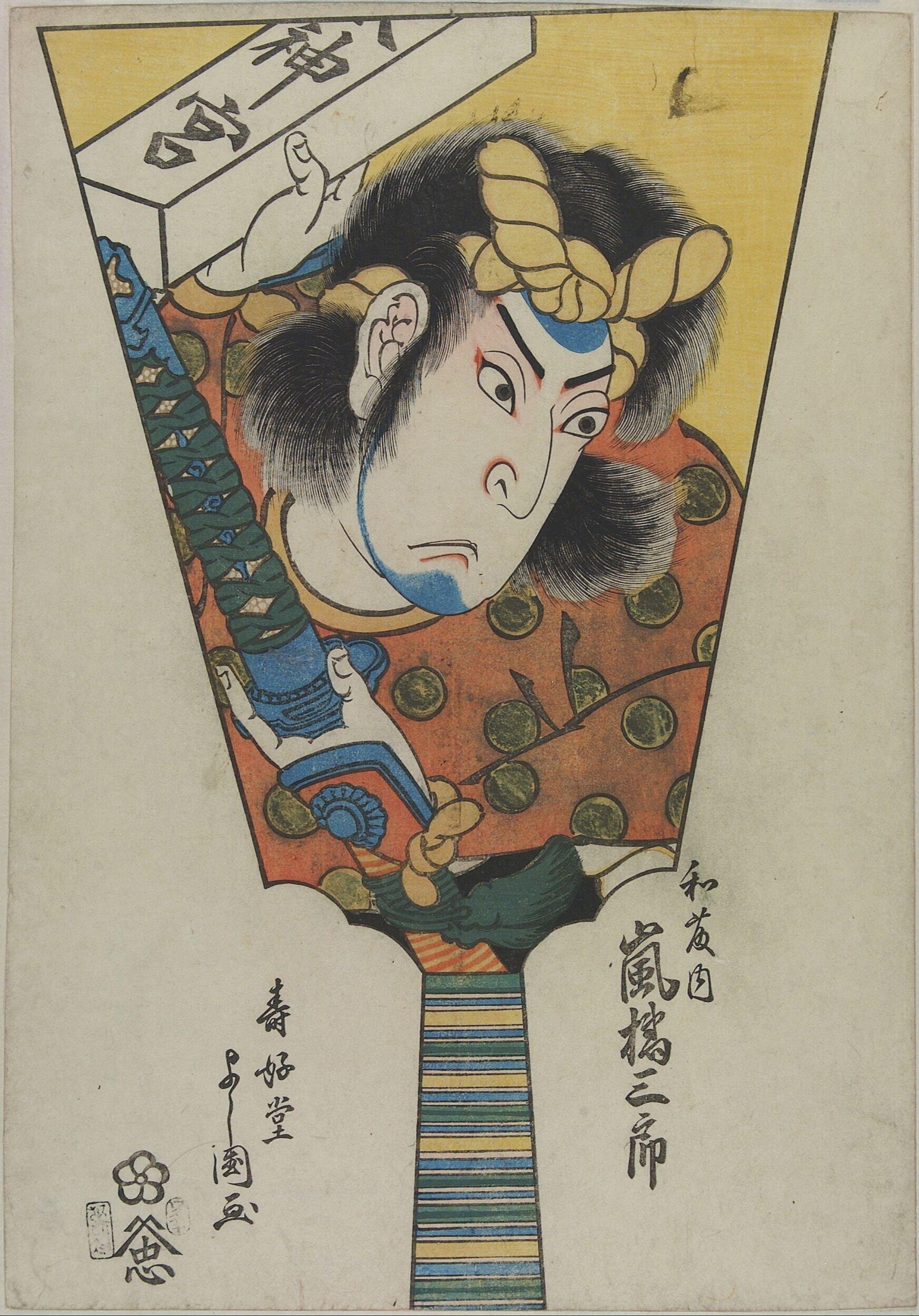
Arashi Kitsusaburō II shuttlecock portraits
1824
Woodblock print on paper

Portrait of the actor Ichikawa Danzō V as Tamaya Shinbei in the play "Sato-gayoi Tosei Sugata" (The Latest Fashion, to Frequent a House of Ill-Fame)
c. 1830
Color woodblock print
Frequently Asked Questions
The Courtesan Emi of the Kyōki Brothel as Shizuka Gozen (Shizuka Kyōki Emi), from the series Costume Parade of the Shimanouchi District in Osaka (Naniwa Shimanouchi nerimono) was created by Utagawa Yoshikuni (歌川芳国) in probably 1836.