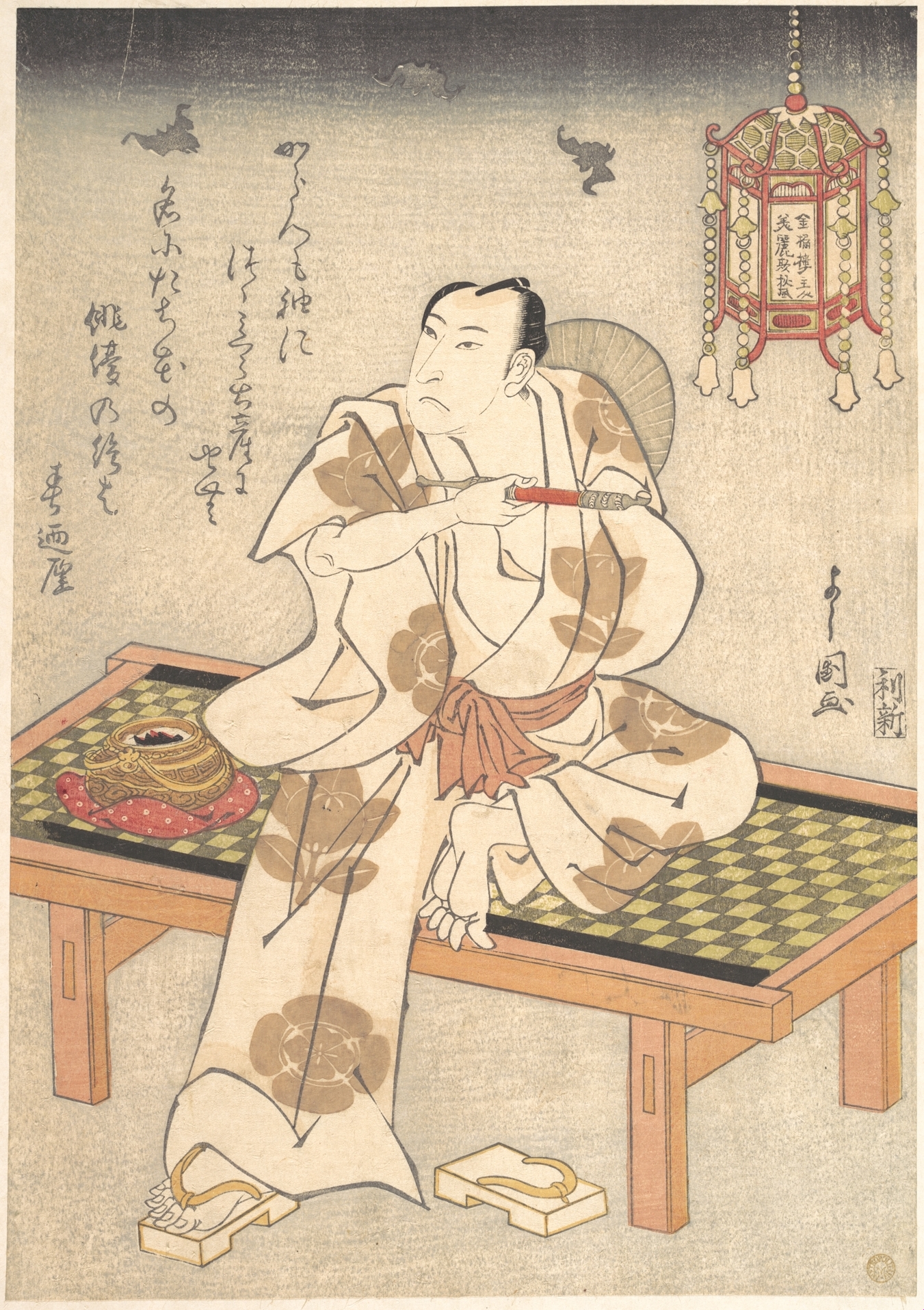
An Actor of the Ichimura Line Sitting on a Shōgi (Wooden Bench) and Holding a Pipe
- Date:
- 1836–1870
- Medium:
- Woodblock print; ink and color on paper
- Source:
- Metropolitan Museum of Art
Description
This yakusha-e by Utagawa Yoshikuni, signed Ippyōtei Yoshikuni and dated by the Met to the 1836-1870 range, portrays an actor of the Ichimura line seated on a shōgi wooden bench while holding a smoking pipe. Held by the Metropolitan Museum of Art (accession JP1020), the print exemplifies the relaxed off-stage portrait register that Osaka kamigata-e occasionally explored alongside its dominant on-stage yakusha-e tradition: rather than capturing the actor in the heroic posture of a celebrated role, the composition shows him in a moment of leisure, smoking a pipe in a posed contemplative attitude. The Ichimura family was one of the great Edo acting lineages associated with the Ichimura-za theatre, and the appearance of a member of this line in his Osaka print indicates that the design either commemorates a touring engagement on the Osaka stage or registers the broader interregional cabuki traffic of the period. The Met's JP1020 accession places the print among the earliest Japanese print acquisitions at the museum, reflecting the late nineteenth-century beginnings of American institutional collecting of ukiyo-e. The Ippyōtei signature represents one of the several go (art names) under which he worked across his career, complementing the Jukōdō and Toyokawa signatures attested in his other surviving prints. The print is a single woodblock print in ink and color on paper executed in the standard Osaka kamigata-e format, and it documents the way Osaka yakusha-e designers occasionally portrayed actors in informal off-stage registers as a counterpoint to the on-stage portraits that dominated their output. The print exemplifies a less-studied dimension of his Osaka kamigata-e practice and indicates that his portrait corpus encompassed both touring Edo stars and the resident Osaka leads documented in his better-known yakusha-e.
More Prints by Utagawa Yoshikuni
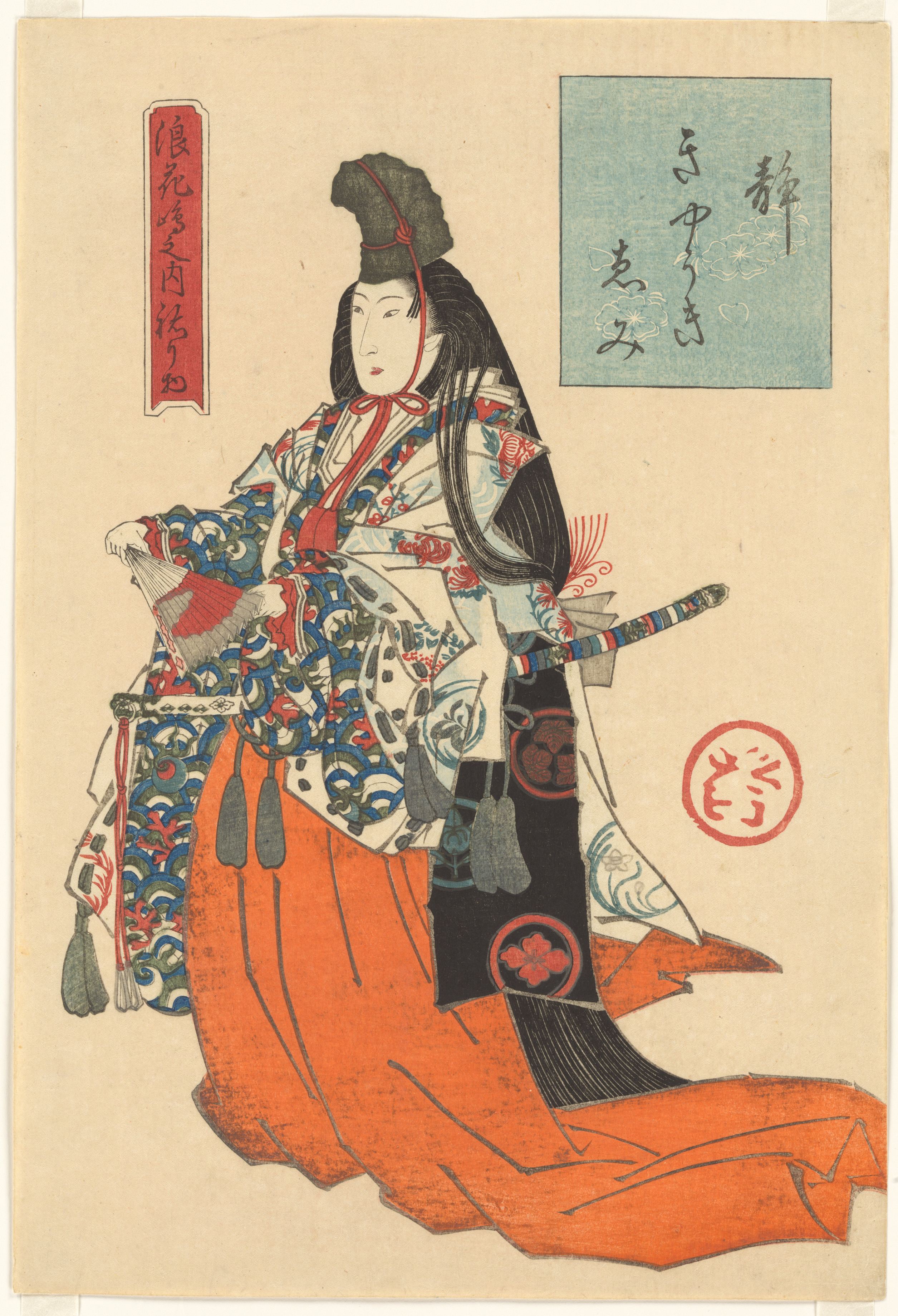
The Courtesan Emi of the Kyōki Brothel as Shizuka Gozen (Shizuka Kyōki Emi), from the series Costume Parade of the Shimanouchi District in Osaka (Naniwa Shimanouchi nerimono)
probably 1836
Woodblock print (nishiki-e); ink and color on paper; vertical ōban
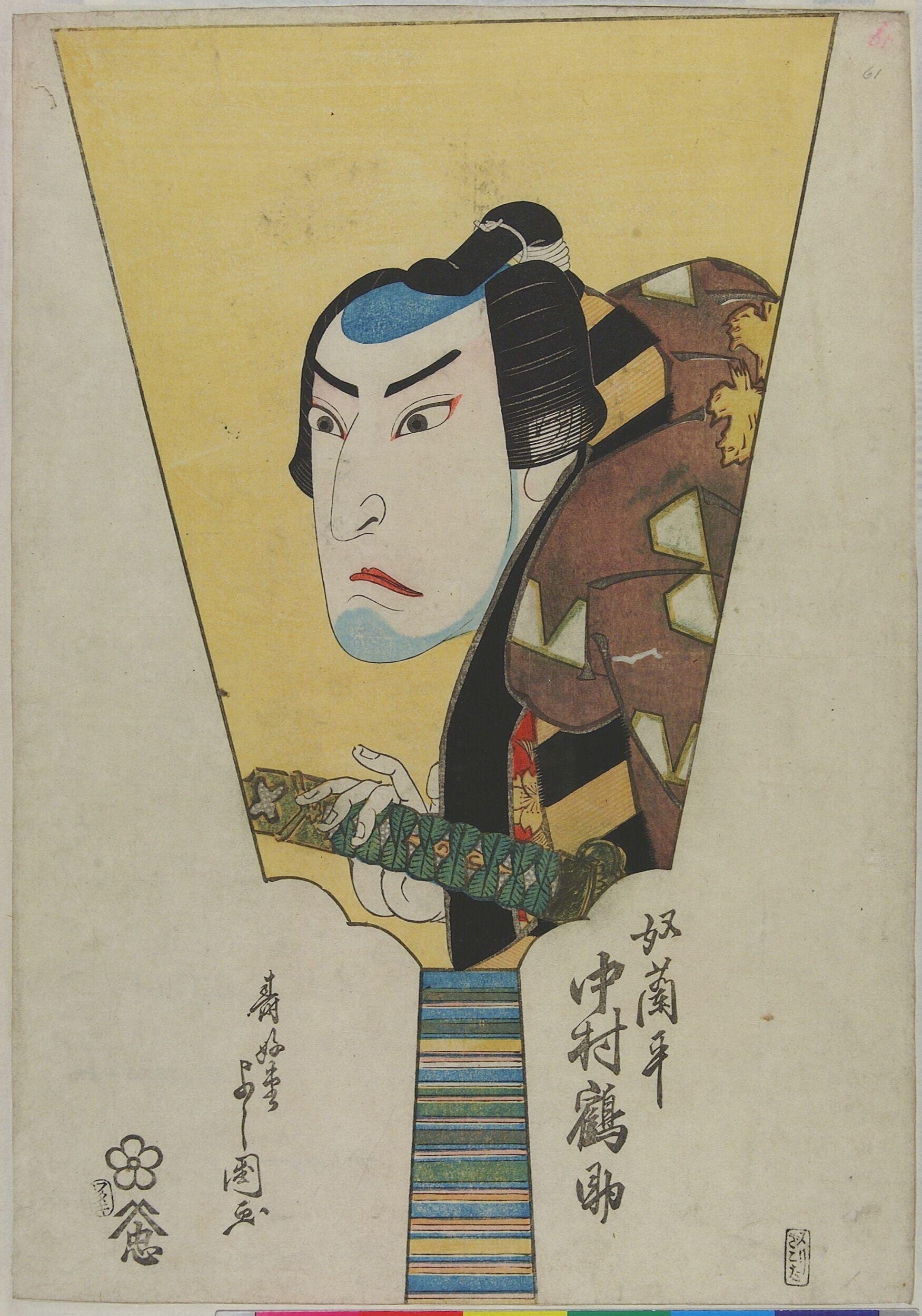
Nakamura Tsurusuke I (Utaemon IV) shuttlecock print in the role of Yakko Ranpei
1824
Woodblock print on paper
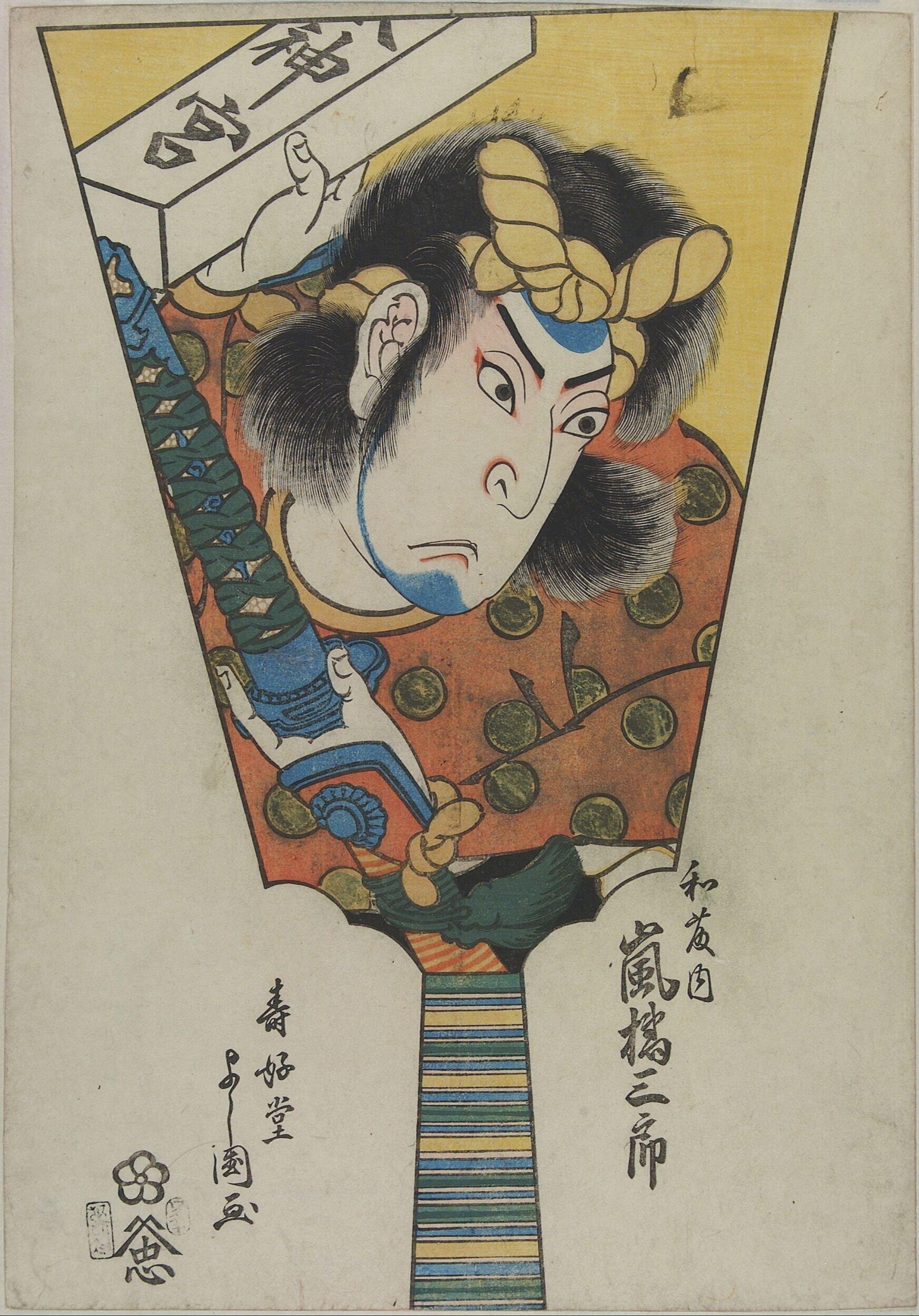
Arashi Kitsusaburō II shuttlecock portraits
1824
Woodblock print on paper

Portrait of the actor Ichikawa Danzō V as Tamaya Shinbei in the play "Sato-gayoi Tosei Sugata" (The Latest Fashion, to Frequent a House of Ill-Fame)
c. 1830
Color woodblock print
Frequently Asked Questions
An Actor of the Ichimura Line Sitting on a Shōgi (Wooden Bench) and Holding a Pipe was created by Utagawa Yoshikuni (歌川芳国) in 1836–1870.