Biography
Yoshida Masaji (吉田政次, 1917–1971) was a sōsaku-hanga printmaker who developed a distinctive abstract style built from the physical properties of wood itself. He was born in Wakayama in 1917, and although he shared the Yoshida surname with the celebrated printmaking family of Hiroshi Yoshida, he was not related to them. Working outside that lineage, he forged a resolutely modern path that departed sharply from the representational landscapes for which his better-known namesakes are remembered.
Yoshida entered the Tokyo School of Fine Arts in Ueno in the 1930s, where he took extracurricular woodblock classes under Hiratsuka Un'ichi. After military service in the Second World War — an experience he later credited with turning him toward abstraction — he studied under the sōsaku-hanga pioneer Onchi Kōshirō, who gave him the impetus to pursue non-representational work. In 1951 he became a member of the Nihon Hanga Kyōkai (the Japan Print Association), and he exhibited regularly in domestic and international print exhibitions thereafter. His breakthrough came through an uncompromising exploration of woodgrain as both medium and subject: rather than treating the block as a neutral surface to be carved into representational imagery, he let the organic patterns of the grain help dictate compositional structure.
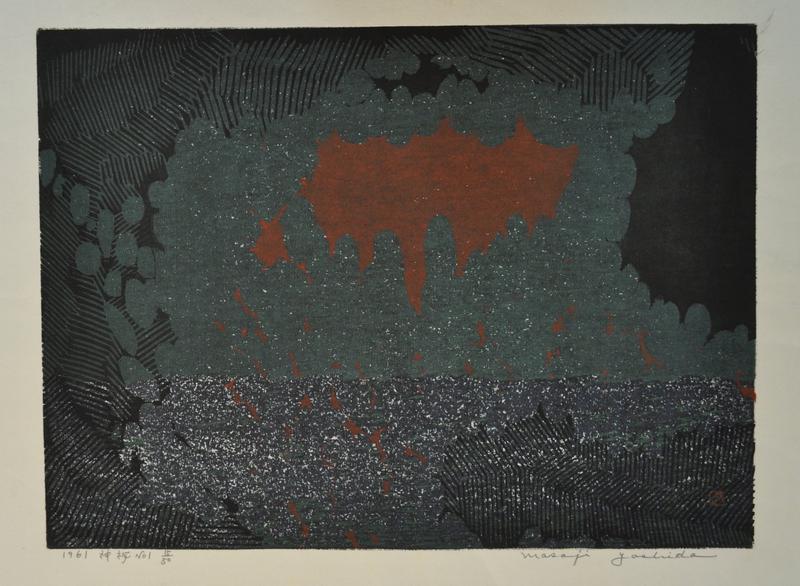
His mature prints featured dense fields of parallel lines, concentric rings, and radiating textures evoking cross-sections of timber. He gouged, scraped, and incised his blocks to expose and exaggerate natural wood patterns, then printed them in restrained palettes of black, brown, deep red, and occasional blue, often on heavily dampened, unsized paper that softened the edges of each shape. The results hovered between landscape and pure abstraction, evoking topographic maps, geological cross-sections, and aerial views of furrowed earth, and their spare, abstract titles signaled his alignment with international modernism rather than the figurative traditions of Japanese printmaking.
Masaji's work gained significant international recognition, appearing at international print biennials — including São Paulo and Tokyo — during the late 1950s and 1960s. His prints were acquired by major institutions including the Museum of Modern Art in New York, the Art Institute of Chicago, the British Museum, the Cleveland Museum of Art, and the Philadelphia Museum of Art.
He continued to push the boundaries of wood-based abstraction until his early death in 1971. His body of work, though produced over a relatively compact career, demonstrated that the traditional Japanese woodblock could serve as a vehicle for radical formal experimentation while remaining rooted in the material honesty of the medium.
Key Facts
- Active Period
- 1917–1971
- Nationality
- 🇯🇵Japan
- Movement
- Sōsaku-hanga
- Works Indexed
- 33
Frequently Asked Questions
Yoshida Masaji (吉田政次, 1917–1971) was a sōsaku-hanga printmaker who developed a distinctive abstract style built from the physical properties of wood itself. He was born in Wakayama in 1917, and although he shared the Yoshida surname with the celebrated printmaking family of Hiroshi Yoshida, he was not related to them. Working outside that lineage, he forged a resolutely modern path that departed sharply from the representational landscapes for which his better-known namesakes are remembered.
Yoshida Masaji was active from 1917 to 1971. They were associated with the Sōsaku-hanga movement.
Yoshida Masaji's work was shaped by the Sōsaku-hanga tradition in Japanese woodblock printmaking. Sōsaku-hanga: ## What is sōsaku-hanga? Sōsaku-hanga (創作版画, "creative prints") was a twentieth-century Japanese print movement defined by a single commitment: the artist must design, carve, and print every work alone.
Yoshida Masaji's prints frequently feature abstract, landscapes, night scenes, gardens, snow scenes.
Original prints by Yoshida Masaji can be found in collections including British Museum, Art Institute of Chicago, Minneapolis Institute of Art, Fine Arts Museums of San Francisco.
Woodblock Prints by Yoshida Masaji (33)
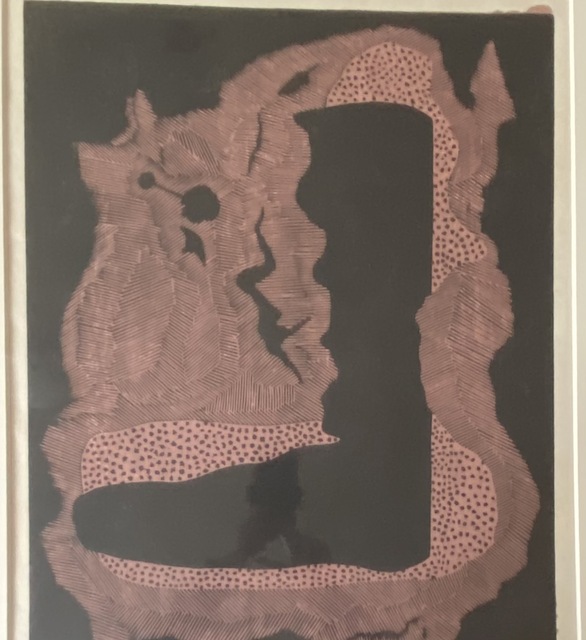
Lonely Day
1956
Woodblock

Sad Day (Kanashii hi)
1957
Color woodblock print; edition 21/50

Empty Day (Kukyo naru hi)
1957
Color woodblock print; edition 21/50
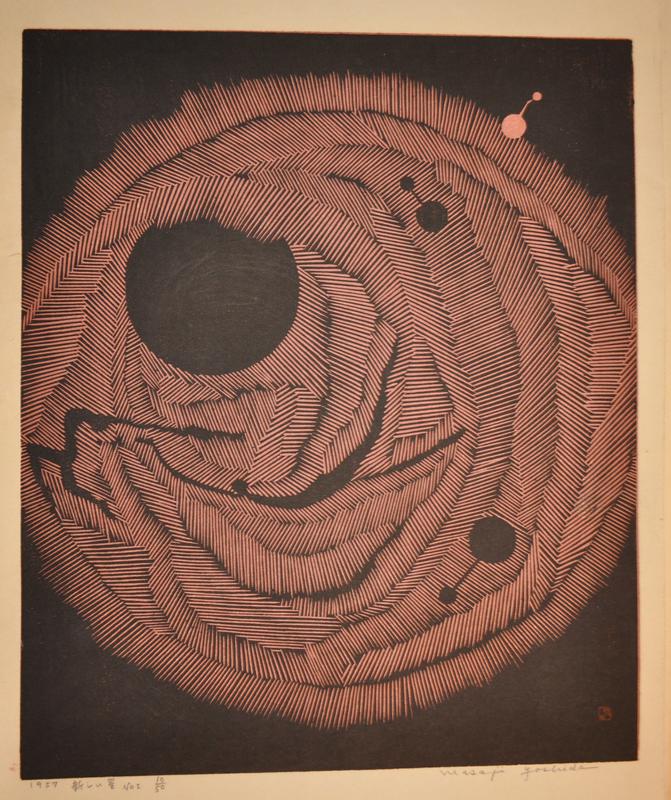
New Star No. 2
1957
Woodblock print, ink and color on paper
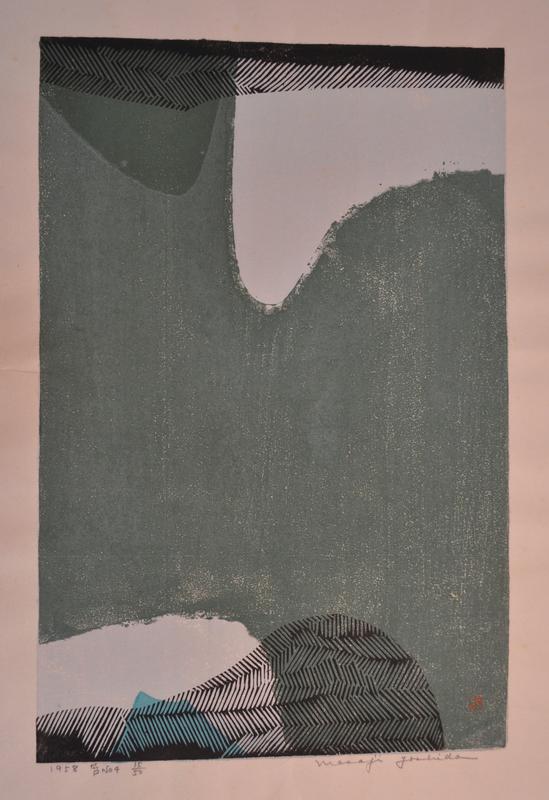
Moss No. 4
1958
Woodblock print, ink and color on paper
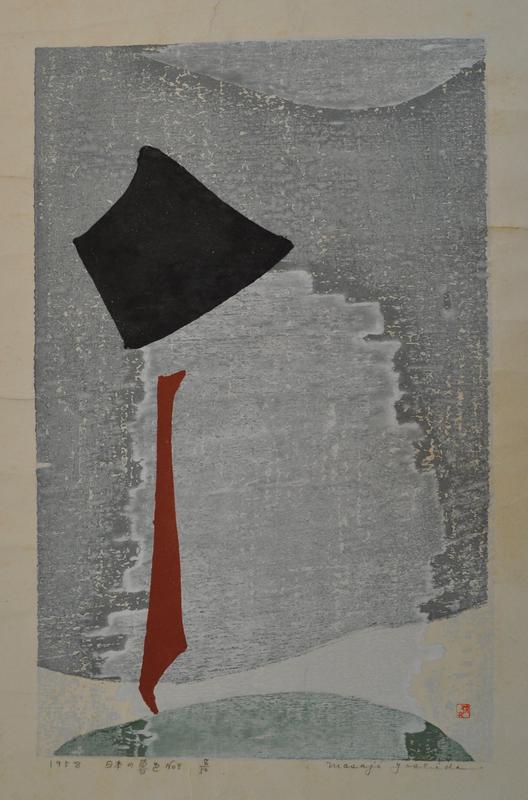
Evening Gloom of Japan No. 3
1958
Woodblock print, ink and color on paper

Profundity No. 2
1959
Color woodblock print
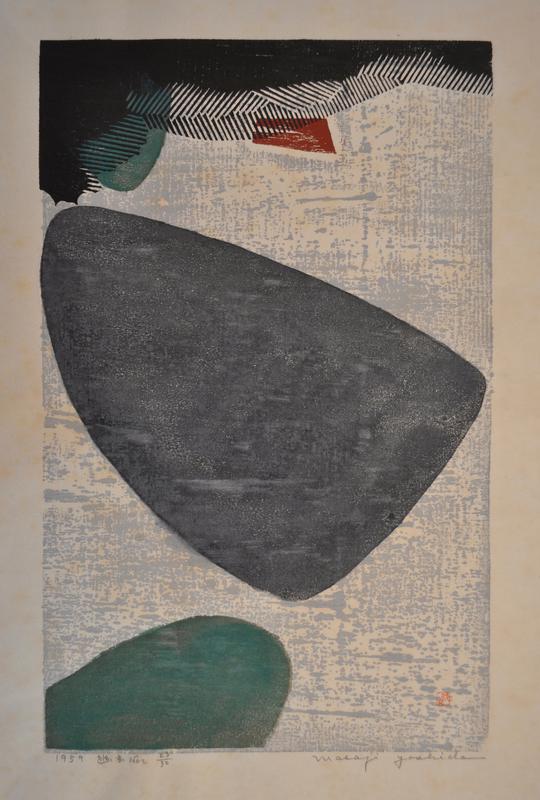
Transcendence No. 2
1959
Woodblock print, ink and color on paper

Ancient No. 1 (Mukashi No. 1)
1960
Color woodblock print; edition 4/20
Mystery No. 1
1961
Woodblock print, ink and color on paper

Space No. 37
1963
Woodblock print, ink and color on paper

Espace No 41
1964

Wall of Art (Geijutsu no kabe) No. 3
1965
Color woodblock print; edition 5/30

Earth No.3
Mokuhanga (Japanese woodblock)

Earth No.3
Mokuhanga (Japanese woodblock)

Shizuka 静 (Nagare 流れ) (Silence no. 74)
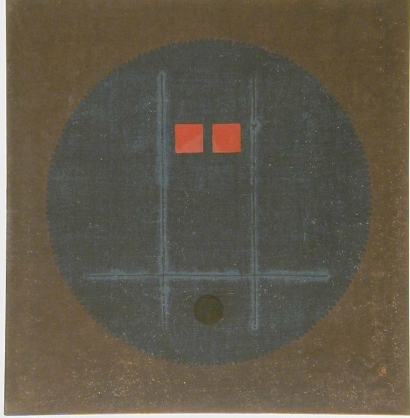
Kukan No. 52
Woodblock print
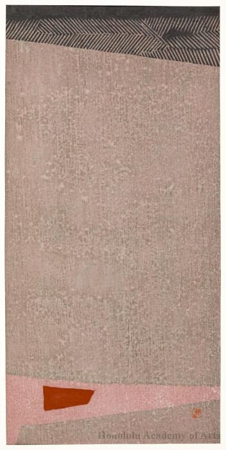
Earth, No. 3
Woodblock print
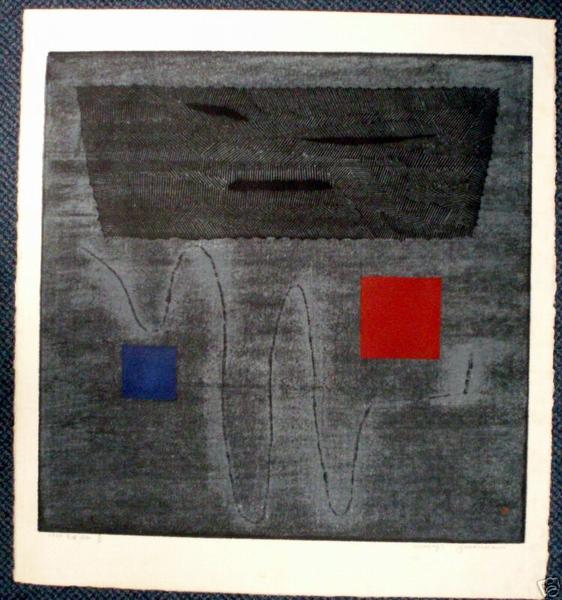
No 30
Woodblock print

Kukan No. 13 (Space No. 13)
Woodblock print

New Star No. 22
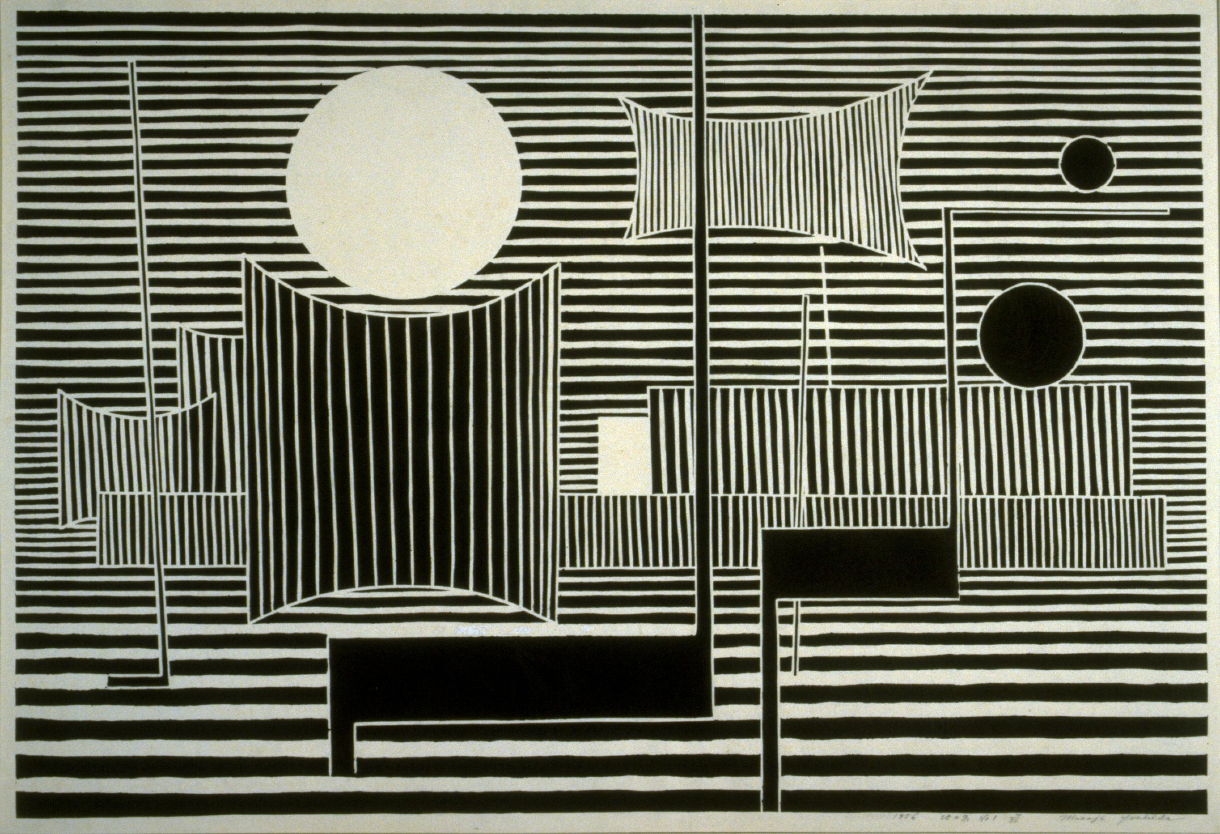
Fountain of Earth #1
Woodblock print
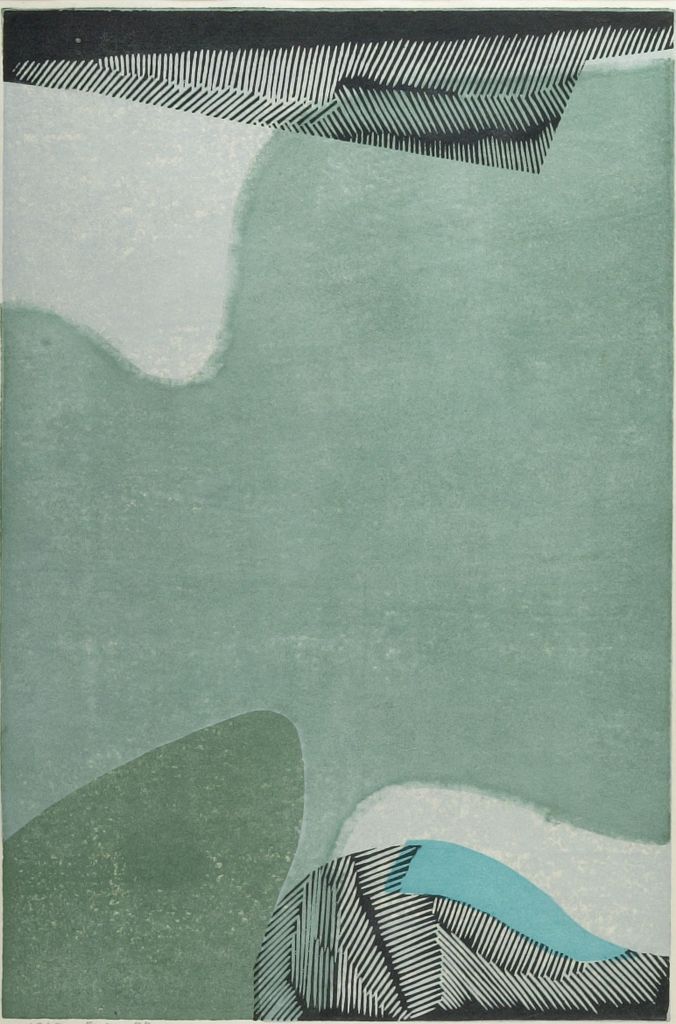
Moss (Koke) No. 1, Shôwa period,
Woodblock print
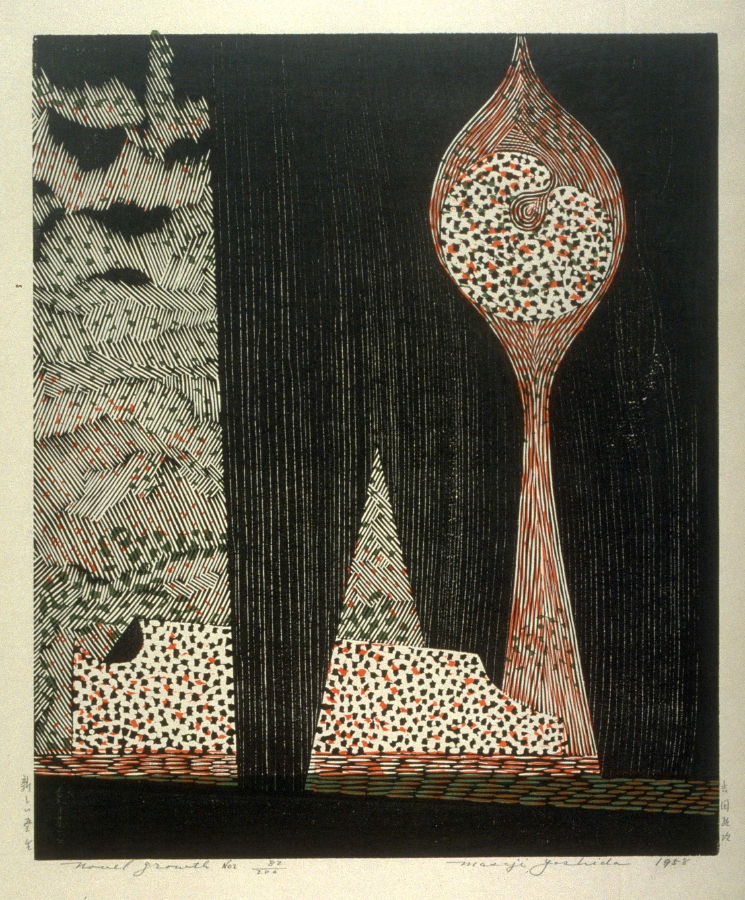
Novel Growth No. 2
Woodblock print