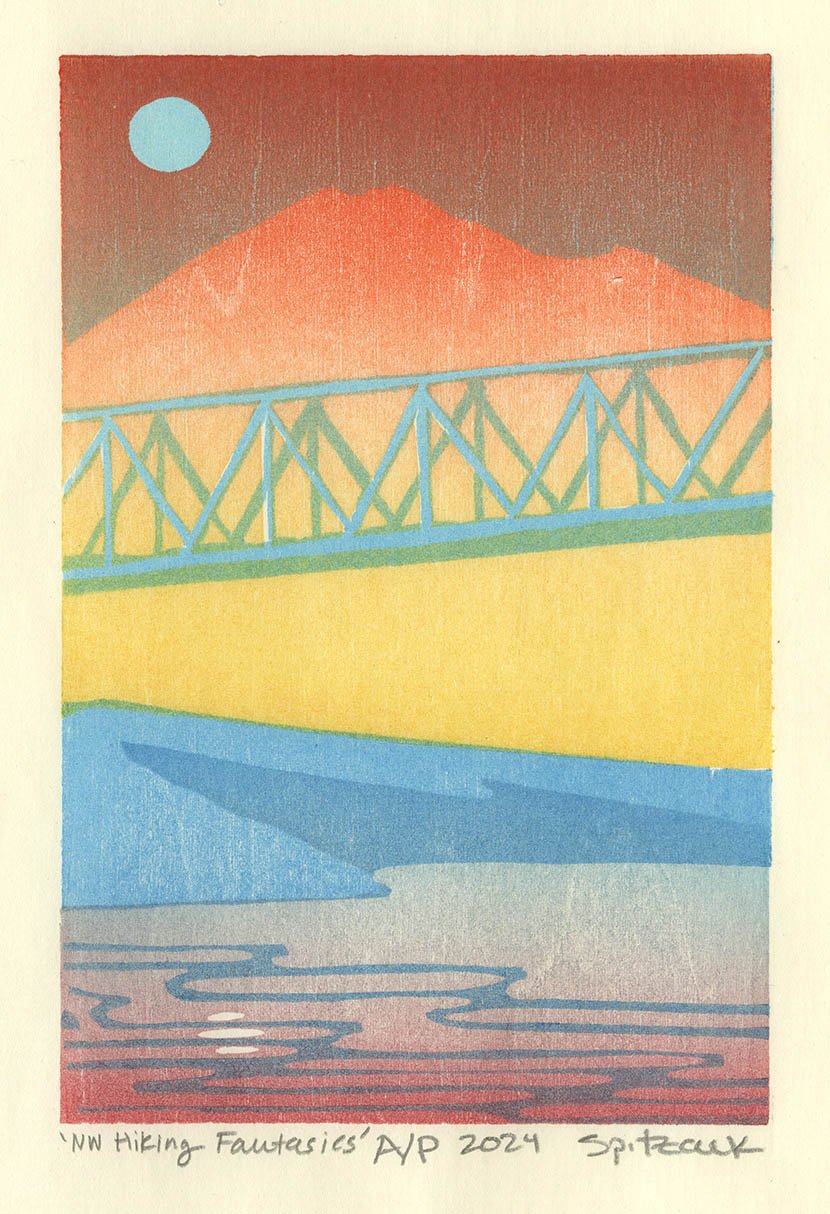
2024 spitzack nw hiking fantasies train bridge mountain woodcut print woodblock mokuhanga seattle art artist relief printmaking lino linocut
- Image courtesy of
- Artist website (Charles Spitzack)
Description
A 2024 print combining a train bridge and mountain into a composite Pacific Northwest landscape titled as a "hiking fantasy"—indicating an imagined or idealized scene rather than a specific location. The genre of meisho-e in classical Japanese printmaking often produced views that combined and rearranged landscape elements for compositional effect rather than topographic accuracy. The bridge-and-mountain pairing recalls Hokusai's "Thirty-six Views of Mount Fuji," which uses engineered structures—wells, scaffolding, bridges—to scale and frame the mountain. Mokuhanga handles the compositional demands of such a subject through multiple blocks: the linear precision of a bridge requires sharp carving and tight registration, while mountains permit broader bokashi-rendered planes. The print belongs to a body of 2024 work in which Spitzack treats Pacific Northwest geography as both subject and source material for invented compositions.
More Prints by Charles Spitzack

trickster spitzack woodblock woodcut mokuhanga print printmaking washi seattle art

dog dawg pack spitzack woodblock woodcut mokuhanga print printmaking washi seattle art
Expanded Egg #2
Mokuhanga (Japanese woodblock)
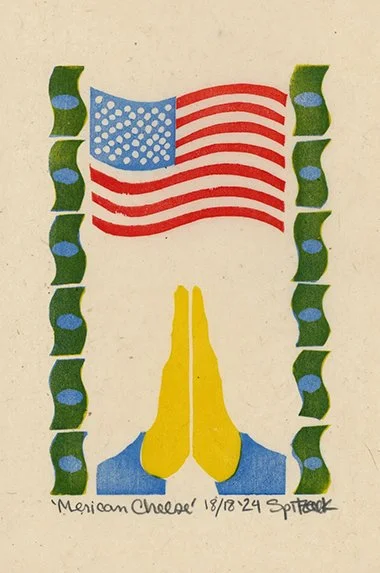
2024 charles spitzack merican cheese america the dollar money prayer flag emoji woodcut print woodblock mokuhanga seattle art artist relief printmaking lino linocut
More Bridges Prints
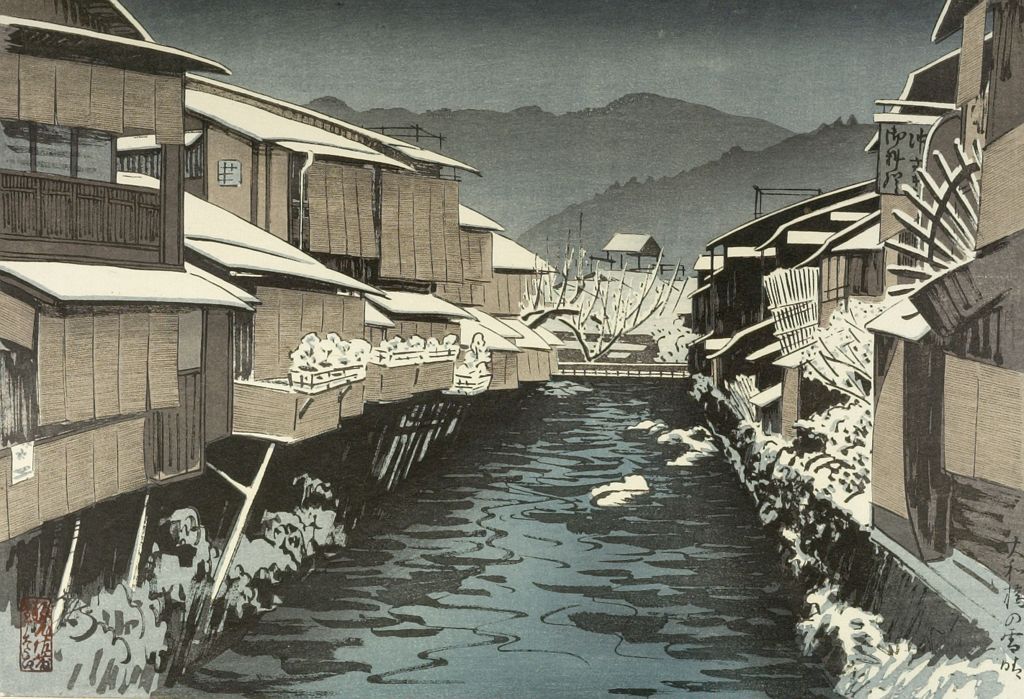
Fair Weather After Snow at Yamato Bridge, Kyoto (Yamato bashi no yukibare), Taishô period, dated 1924
Woodblock print
![Mount Fuji on a Moonlit Night, Kawai Bridge (Tsukiyo no Fuji [Kawaibashi]), from the series "Selection of Views of the Tokaido (Tokaido fukei senshu)" by Kawase Hasui](https://www.artic.edu/iiif/2/d0960668-1e73-339a-b182-fb995a54bff0/full/843,/0/default.jpg)
Mount Fuji on a Moonlit Night, Kawai Bridge (Tsukiyo no Fuji [Kawaibashi]), from the series "Selection of Views of the Tokaido (Tokaido fukei senshu)"
1947
Color woodblock print; oban

Shin Ohashi Bridge (Shin Ohashi), from the series "Twenty View of Tokyo (Tokyu nijukkei)"
1926
Color woodblock print; oban

Sacred Bridge in Nikko (Nikko Shinkyo)
1930
Color woodblock print; oban
Frequently Asked Questions
2024 spitzack nw hiking fantasies train bridge mountain woodcut print woodblock mokuhanga seattle art artist relief printmaking lino linocut was created by Charles Spitzack.
2024 spitzack nw hiking fantasies train bridge mountain woodcut print woodblock mokuhanga seattle art artist relief printmaking lino linocut depicts bridges, transportation, and mountains.