
Kamigamo Garden
- Medium:
- Mokuhanga (Japanese woodblock)
- Image courtesy of
- Saru Gallery
Description
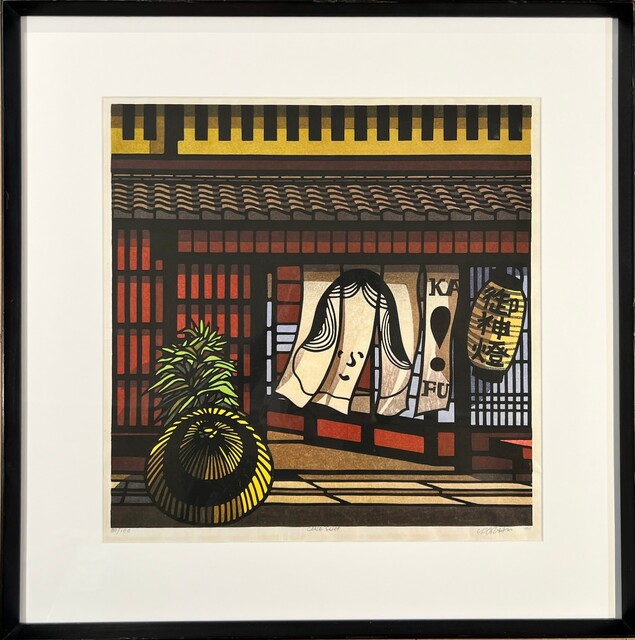
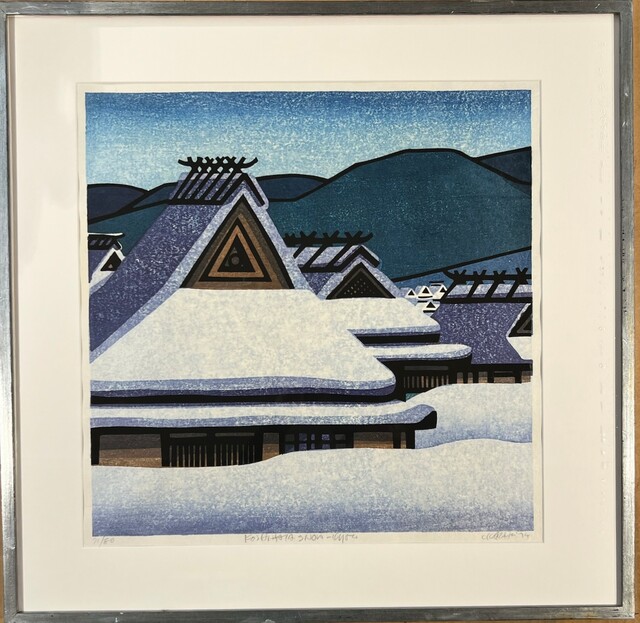
Kamigamo Jinja is one of Kyoto's oldest Shinto shrines, founded in the seventh century and surrounded by sacred grounds along the Kamo River. "Kamigamo Garden" likely depicts the shrine's open precincts, the conical sand mounds (tatesuna), or the moss and tree-shaded approach paths characteristic of the site. Karhu's garden subjects tend to favor architectural framing — fences, gates, and roof lines — over horticultural detail, with vegetation rendered as flat, simplified shapes. The print probably uses muted greens, ochres, and indigos against generous areas of unprinted washi, with the heavy black outline that became Karhu's signature device. He often allowed the texture of the baren to register subtly within color fields, giving each impression a tactile surface. Karhu's deep familiarity with Kyoto's shrines and gardens, accumulated over more than fifty years of residence in the city, distinguishes his work from that of foreign artists who treated such subjects more cursorily. Within his oeuvre, Kamigamo joins a sequence of shrine and temple prints that document Kyoto's sacred geography.
More Prints by Clifton Karhu


More Gardens Prints
![[Garden of] Taj Mahal, No. 1 (Taji Maharu no niwa, dai ichi) by Hiroshi Yoshida](https://www.artic.edu/iiif/2/230993a7-d4f0-c979-c267-127d48e1ef1c/full/843,/0/default.jpg)
[Garden of] Taj Mahal, No. 1 (Taji Maharu no niwa, dai ichi)
Taji Maharu no niwa, dai ichi
1931
Color woodblock print; oban

Kiyozumi Garden in Moonlight
January 1938
Woodblock print, ink and color on paper

Moon over Kiyosumi Garden (Tsuki no Kiyosumien)
1938
Color woodblock print; oban
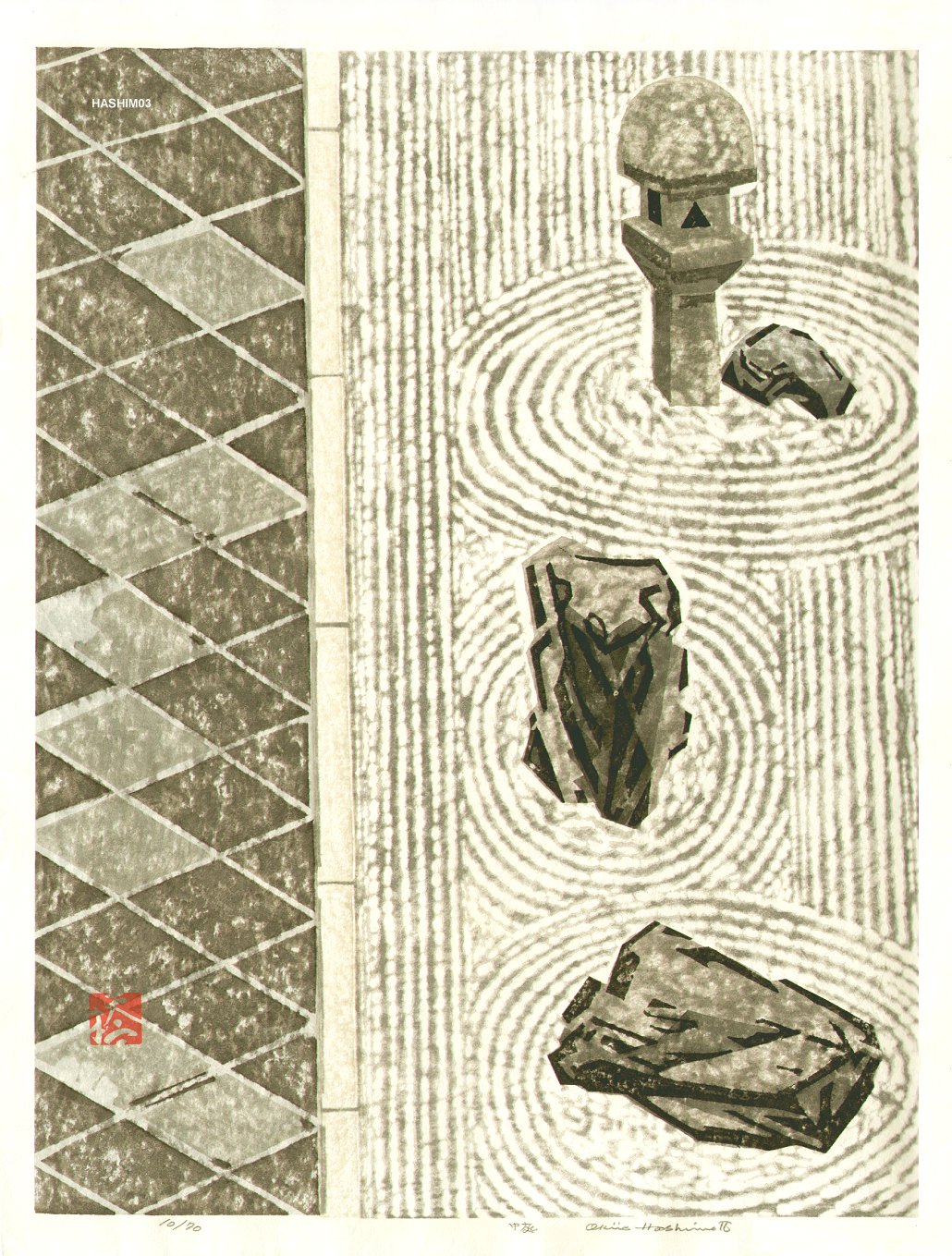
Rock garden
10/70, 1966
Woodblock print
Featured in Collections
Curated cross-cuts that include this print.
Frequently Asked Questions
Kamigamo Garden was created by Clifton Karhu.
Kamigamo Garden depicts gardens.