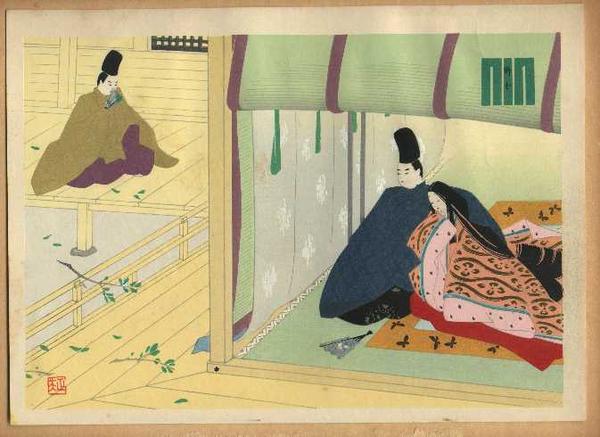
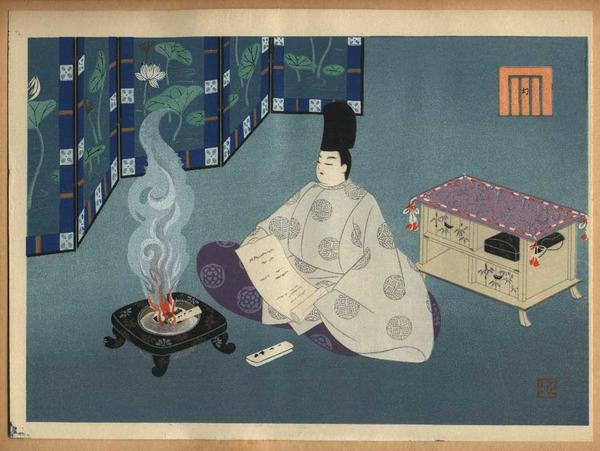
The Tale of Genji
by Ebina Masao
- Medium:
- Woodblock print
- Source:
- Japanese Art Open Database
- Image courtesy of
- Japanese Art Open Database
Description
Ebina Masao produced woodblock print illustrations responding to Murasaki Shikibu's eleventh-century Heian narrative, one of the most frequently illustrated texts in the Japanese visual tradition. This print, identified by the source work rather than a specific chapter title, likely depicts a scene of aristocratic courtly life: a garden encounter, a moonlit correspondence, or a ceremonial interior with figures in Heian court dress. The formal conventions of Genji illustration include the fukinuki yatai (roofless architectural interior seen from a diagonal overhead perspective), figures shown through a compressed spatial scheme inherited from yamato-e painting, and layered textile patterns requiring precise color registration to resolve their detail. The palette likely draws on the refined neutrals and deep accent colors—indigo, crimson, moss green, and gold—associated with Heian aesthetic taste (miyabi). Ebina would have worked within this classical illustration tradition while adapting its compositional logic to the woodblock print medium, where flat color areas and crisp outline printing replace the brushed gradations of painted emaki.
More Prints by Ebina Masao
More Literary Prints

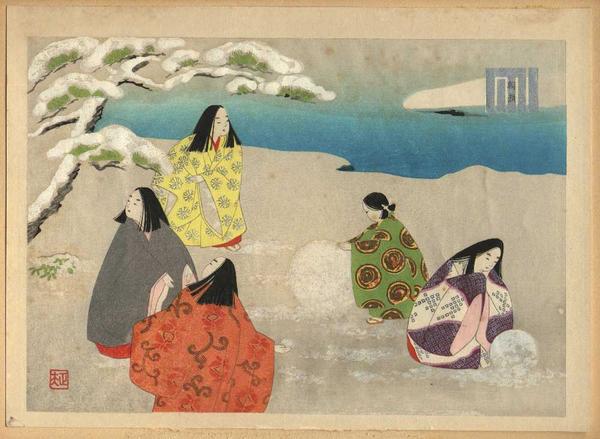
Poem 69-8, Shôwa period, 1969
Woodblock print
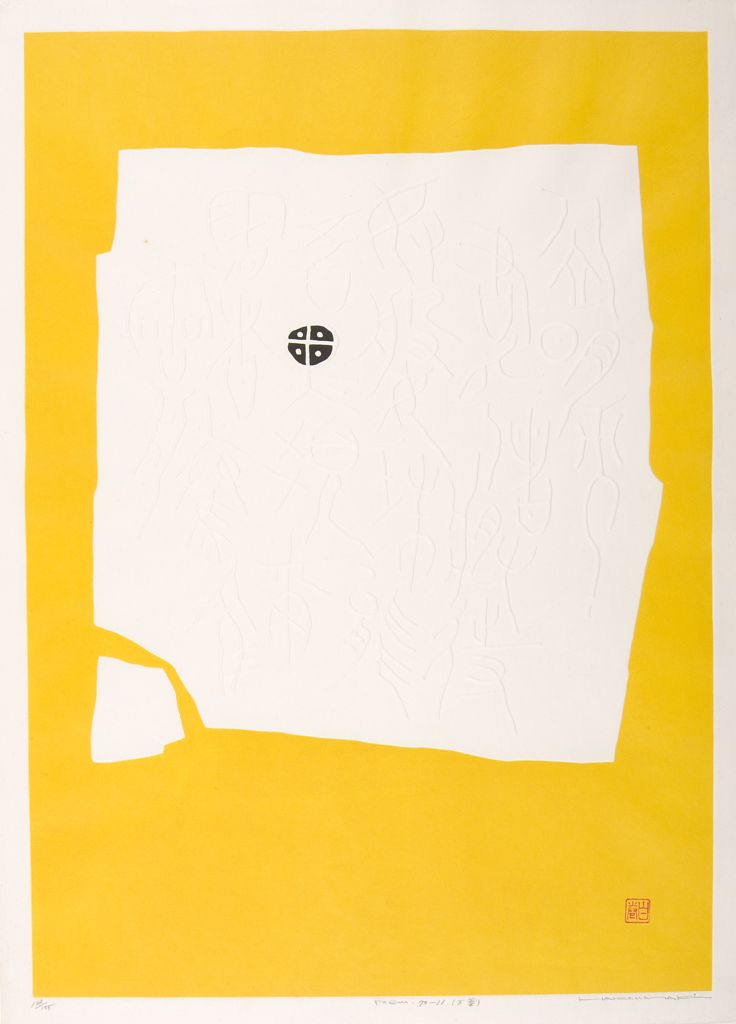
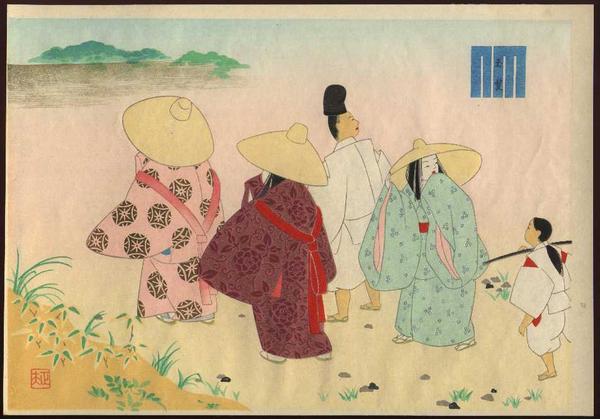
Poem 70-11, Shôwa period, 1970
Woodblock print

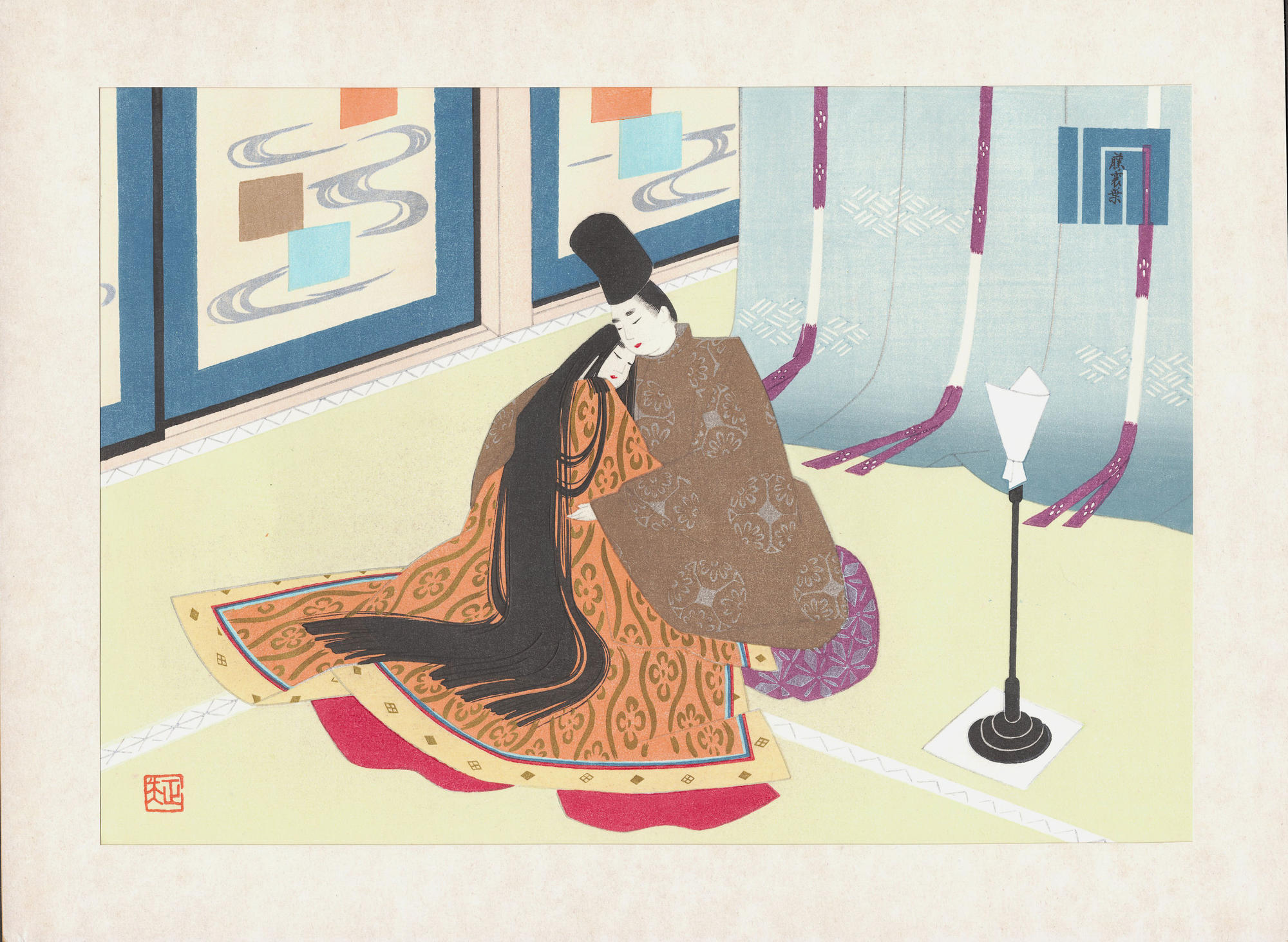
Poem 70-26, Shôwa period, 1970

Chiryu, from the series "Fifty-three Stations of the Tokaido (Tokaido gojusan tsugi)," also known as the Tokaido with Poem (Kyoka iri Tokaido)
c. 1837/42
Color woodblock print; chuban
Frequently Asked Questions
The Tale of Genji was created by Ebina Masao (海老名正夫).
The Tale of Genji depicts literary.