
Chiryu, from the series "Fifty-three Stations of the Tokaido (Tokaido gojusan tsugi)," also known as the Tokaido with Poem (Kyoka iri Tokaido)
- Date:
- c. 1837/42
- Medium:
- Color woodblock print; chuban
- Source:
- Art Institute of Chicago
Description
Chiryu, from the series Fifty-three Stations of the Tokaido (Tokaido gojusan tsugi), also known as the Tokaido with Poem (Kyoka iri Tokaido), is a landscape print by Utagawa Hiroshige produced around 1832 and now in the Art Institute of Chicago. Chiryu was the thirty-ninth station of the Tokaido, in present-day Aichi Prefecture between Ikeda and Narumi, and was associated in Edo memory with the great horse market held there each spring on the open Chiryu plain. Hiroshige's designs of Chiryu, including the celebrated Hoeido version, often centre on this expanse and on the horses, traders, and trees that punctuated it. In the Kyoka iri Tokaido a kyoka verse is integrated into the design, encouraging the viewer to read the landscape through the lens of comic poetry. The flatness of the Chiryu plain made it a notable stretch of the route, a place where the road opened out between hilly sections and where seasonal events animated the otherwise quiet meadow. As an entry in the broader Edo ukiyo-e landscape print tradition, Chiryu reminds us that the Tokaido was not only a sequence of bridges, rivers, and shrines, but also a corridor through specific local economies, of which horse markets, salt production, paper making, and rice cultivation each left their visual imprint. The Art Institute of Chicago's holdings of Hiroshige's Tokaido prints, including this Kyoka iri version, allow viewers to trace how the same station could be re-staged across multiple series, with each new design honouring a slightly different aspect of the place's geography or commercial life.
More Prints by Utagawa Hiroshige


More Landscapes Prints

Lake Kugushi in Wakasa Province (Wakasa Kugushiko), from the series Souvenirs of Travel I (Tabi miyage dai isshu)"
Wakasa Kugushiko
1920
Color woodblock print; oban
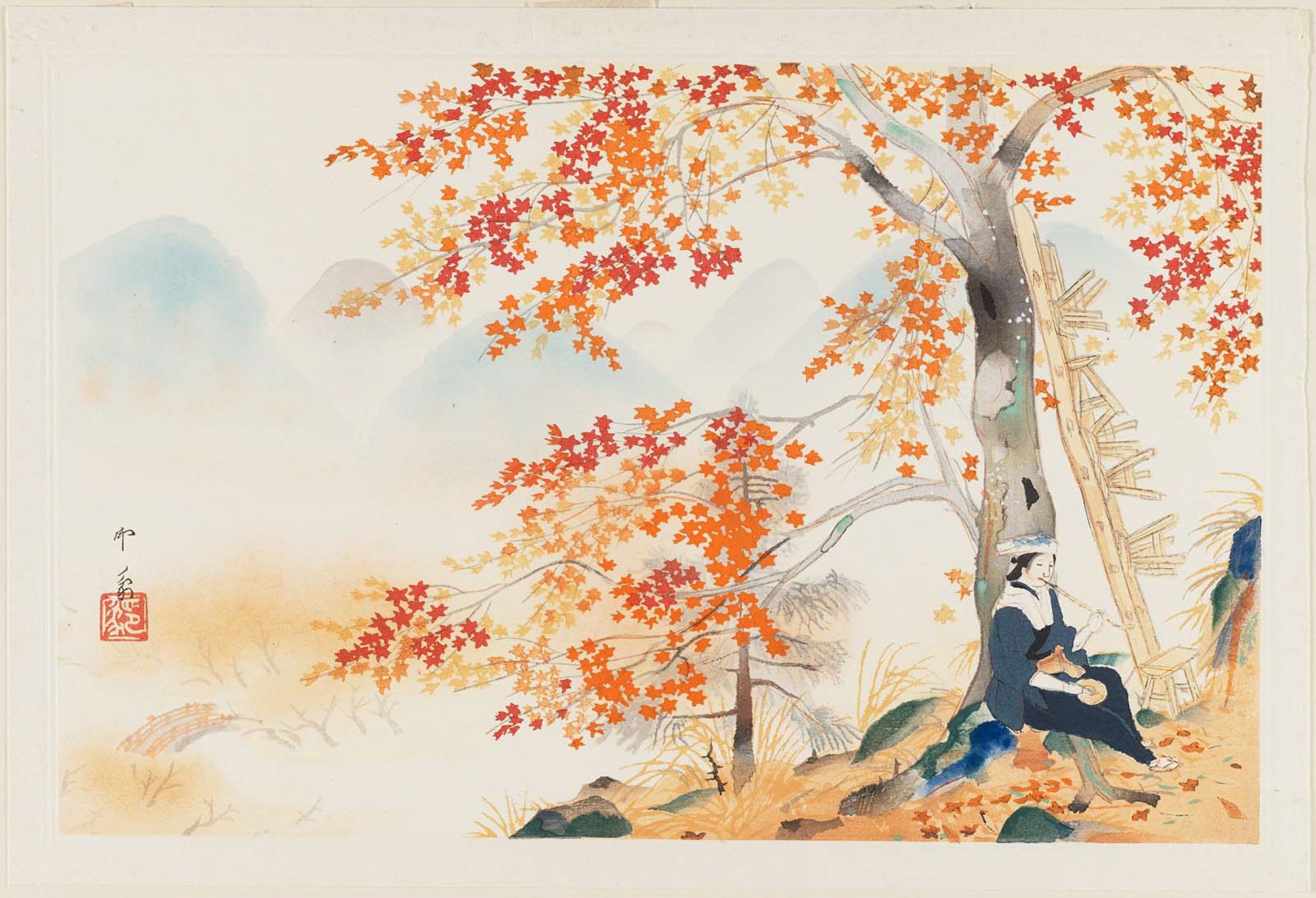
Autumn Maple Leaves at Takao, from the album Eight Views of Kyoto (Kyôto hakkei)
Woodblock print

The Beach at Kaiganji in Sanuki Province (Sanuki Kaiganji no hama), from the series "Collection of Views of Japan II, Kansai Edition (Nihon fukei shu II Kansai hen)"
1934
Color woodblock print; oban

Tea Kettle, section of a sheet from the series "Mirror of Stone Rubbings of Views of the Provinces" (Kohon meihitsu ishizuri kagami)
n.d.
Woodblock print; ishizuri-e, section of harimaze sheet
Featured in Collections
Curated cross-cuts that include this print.
Frequently Asked Questions
Chiryu, from the series "Fifty-three Stations of the Tokaido (Tokaido gojusan tsugi)," also known as the Tokaido with Poem (Kyoka iri Tokaido) was created by Utagawa Hiroshige (歌川広重) in c. 1837/42.
Chiryu, from the series "Fifty-three Stations of the Tokaido (Tokaido gojusan tsugi)," also known as the Tokaido with Poem (Kyoka iri Tokaido) depicts landscapes, tōkaidō, and travel scenes.