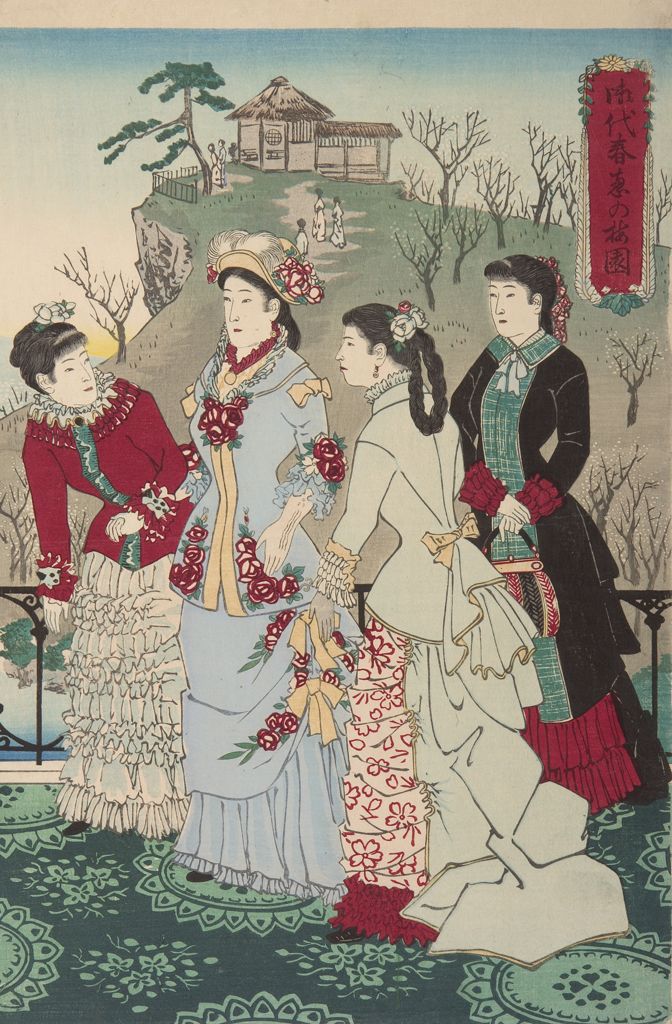
"Emperor Meiji and His Consort in the Plum Garden (Miyo shun'e no baien), Meiji period, dated 1887"
- Medium:
- Woodblock print
- Source:
- Harvard Art Museum
- Image courtesy of
- Harvard Art Museum
Description
This oban-format print depicts Emperor Meiji and Empress Haruko within a plum garden in early spring bloom. Issued in 1887 at the height of Japan's Meiji Westernization, the composition presents the imperial couple as symbols of a modernizing nation. The plum blossom (ume) setting draws on centuries of classical Japanese poetry associating ume with early spring and renewal, grounding the imperial figures in cultural tradition even as the Meiji period represented radical transformation. Kiyochika renders the figures with careful attention to formal attire, likely incorporating both Western ceremonial dress and elements of traditional court costume. Delicate bokashi gradations softening the sky and garden atmosphere are characteristic of his tonal sensibility. As a commemorative imperial image, the print participates in the broader Meiji project of constructing a unified national identity centered on the emperor's person, using the accessible woodblock medium to disseminate imperial imagery to a wide public audience.
More Prints by Kobayashi Kiyochika
More Gardens Prints
![[Garden of] Taj Mahal, No. 1 (Taji Maharu no niwa, dai ichi) by Hiroshi Yoshida](https://www.artic.edu/iiif/2/230993a7-d4f0-c979-c267-127d48e1ef1c/full/843,/0/default.jpg)
[Garden of] Taj Mahal, No. 1 (Taji Maharu no niwa, dai ichi)
Taji Maharu no niwa, dai ichi
1931
Color woodblock print; oban

Kiyozumi Garden in Moonlight
January 1938
Woodblock print, ink and color on paper

Moon over Kiyosumi Garden (Tsuki no Kiyosumien)
1938
Color woodblock print; oban
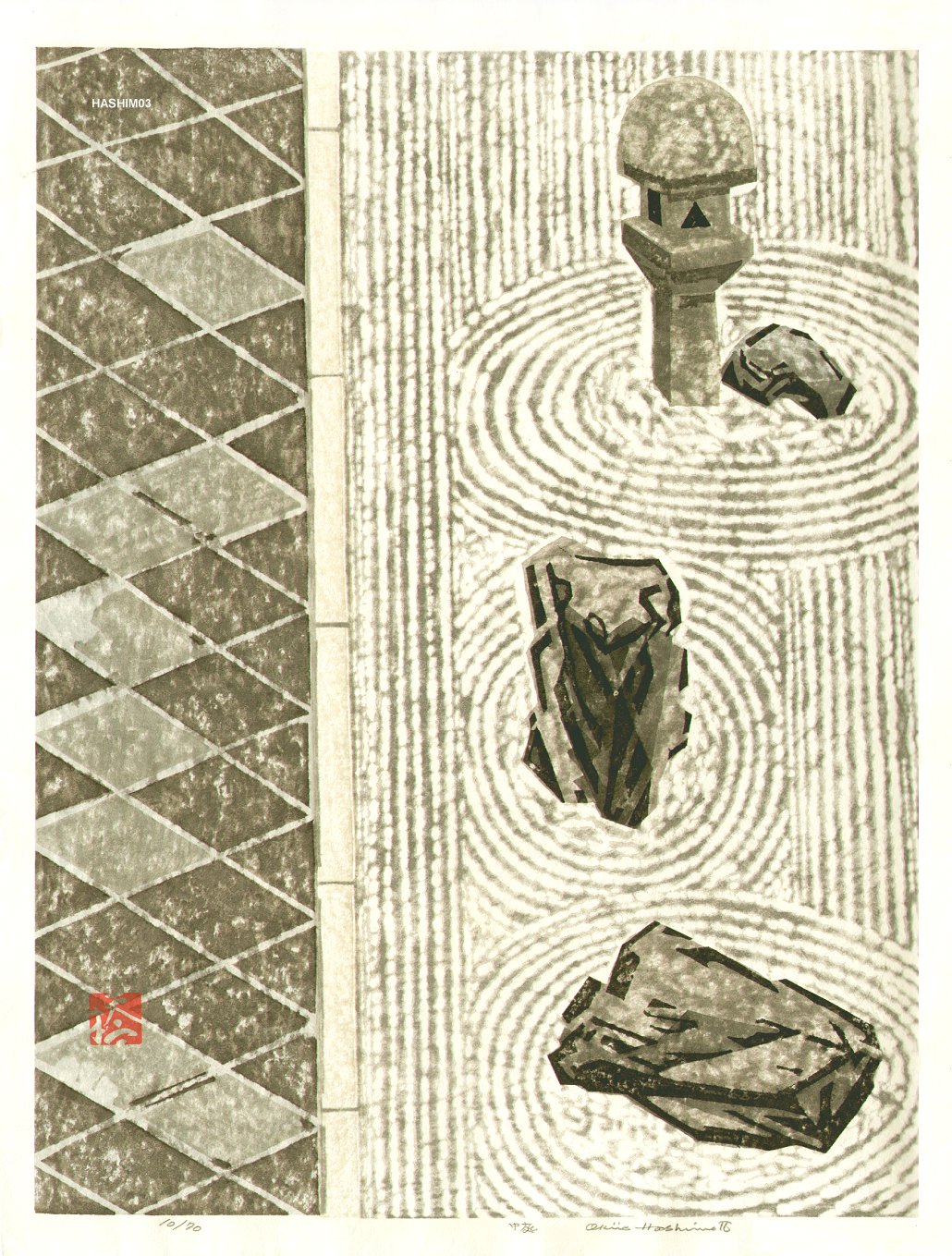
Rock garden
10/70, 1966
Woodblock print
Frequently Asked Questions
"Emperor Meiji and His Consort in the Plum Garden (Miyo shun'e no baien), Meiji period, dated 1887" was created by Kobayashi Kiyochika (小林清親).
"Emperor Meiji and His Consort in the Plum Garden (Miyo shun'e no baien), Meiji period, dated 1887" depicts gardens.