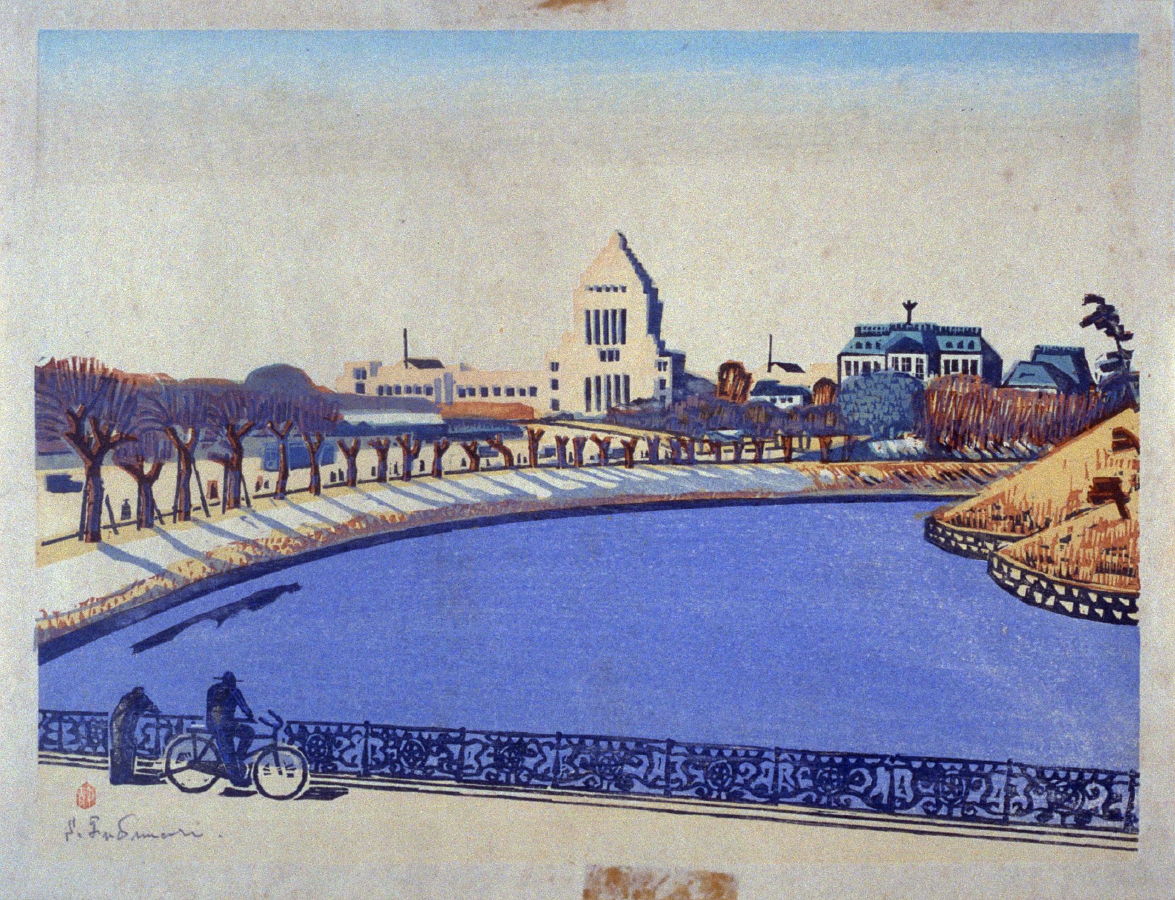
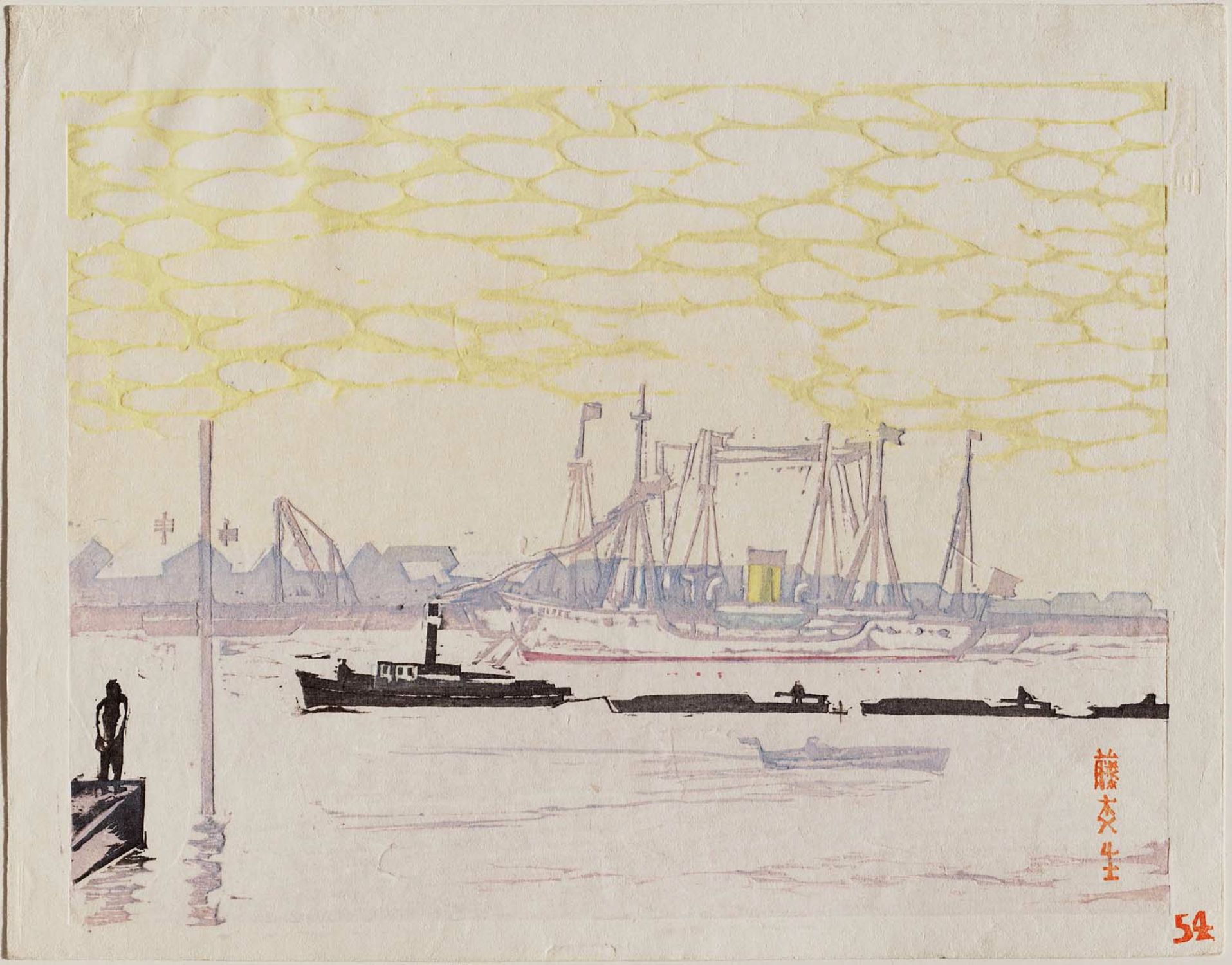
The National Diet from the Imperial Moat
- Date:
- 19th–20th century
- Medium:
- Woodblock print
Description
The National Diet from the Imperial Moat presents one of Tokyo's most symbolically charged views: Japan's parliament building seen across the water of the moat that surrounds the Imperial Palace. The National Diet Building, completed in 1936 after decades of planning, was designed to represent Japan's commitment to constitutional governance, and its pyramidal tower became an instant landmark. Fujimori's composition places the viewer at the moat's edge, using the water's reflective surface to double the building's image and create depth within the picture plane. The juxtaposition of the imperial moat, a remnant of feudal Edo, with the modern parliament building encapsulates the transformation from shogunate to democracy. The woodblock rendering gives this political landscape the aesthetic dignity that the subject demands.
More Prints by Fujimori Shizuo
More Urban Scenes Prints
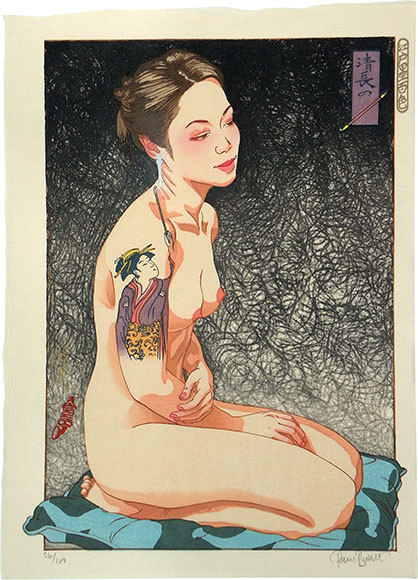
A Hundred Shades of Ink of Edo: Kiyonaga's Pipe (Edo zumi hyaku shoku: Kiyonaga no kiseru)
Woodblock print

View of Kabuki Theater from Matsuya (Ginza Matsuya yori Kabukiza), no. 3 from the series "Pictures of Ginza, First Series (Gashu Ginza dai isshu)"
1928
Color lithograph

Distant View of Mitsukoshi Movie Theater in Shinjuku from the Sixth Floor of Hoteiya (Hoteiya rokkai kara Shinjuku Mitsukoshi Musashi no kan enbo zu), no. 1 from the series "Scenery of Shinjuku (Gashu Shinjuku fukei)"
1930
Color lithograph
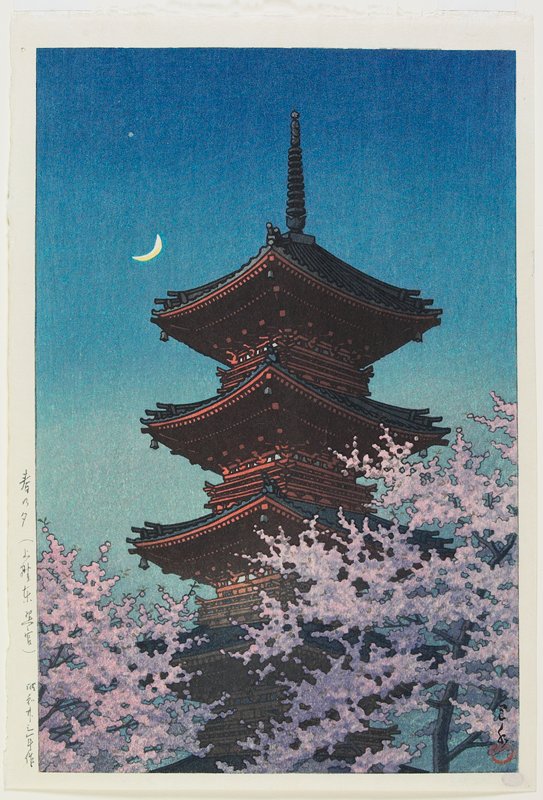
Spring Dusk at the Tōshō Shrine in Ueno
1948
Woodblock print, ink and color on paper
Featured in Collections
Curated cross-cuts that include this print.
Frequently Asked Questions
The National Diet from the Imperial Moat was created by Fujimori Shizuo (藤森静雄) in 19th–20th century.
The National Diet from the Imperial Moat depicts urban scenes, rivers & lakes, and architecture.