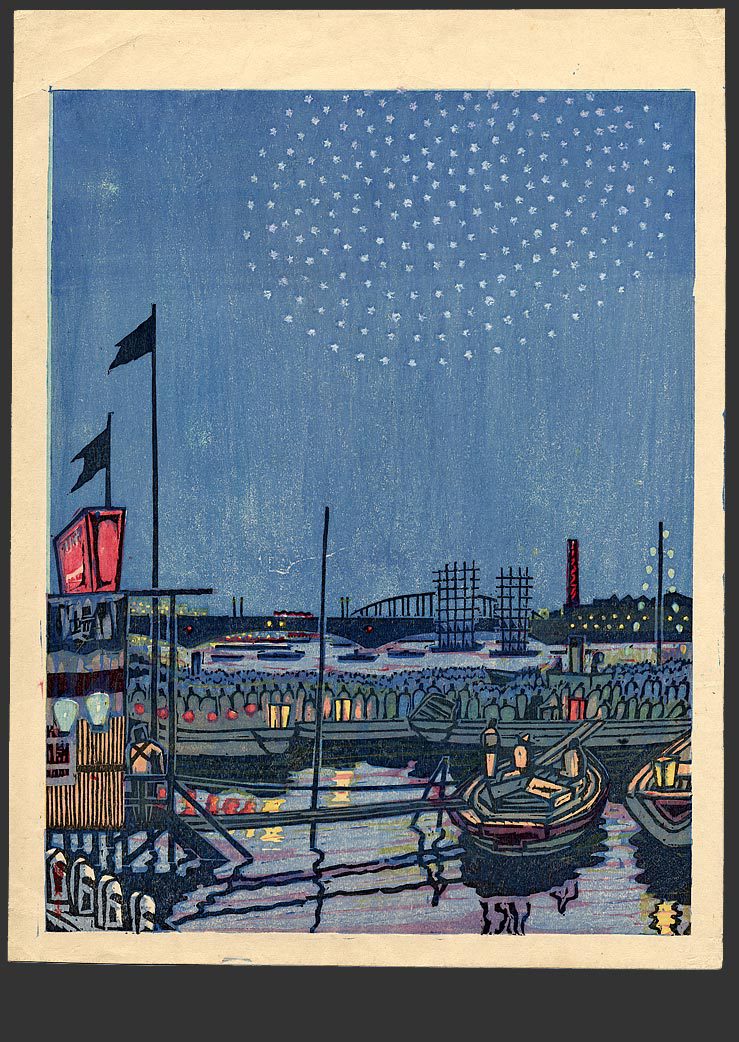
Sumidagawa
- Date:
- 1933
- Medium:
- Woodblock print
- Source:
- Art of Japan
Description
Dated 1933, Sumidagawa depicts Tokyo's most famous river, the Sumida, which has been a defining feature of the capital's geography and culture since the city was known as Edo. The river divides the eastern shitamachi districts from the western yamanote hills and has served as a transportation corridor, recreational space, and artistic subject for centuries. Fujimori's 1933 rendering captures the Sumida during a decade when the river's banks were being modernized with concrete embankments and new bridges to replace structures destroyed in the 1923 earthquake. The woodblock medium connects Fujimori's view to the long tradition of Sumida River prints by Hiroshige, Hokusai, and countless other artists, while his contemporary perspective documents the river in its modern, reconstructed state.
More Prints by Fujimori Shizuo

More Urban Scenes Prints
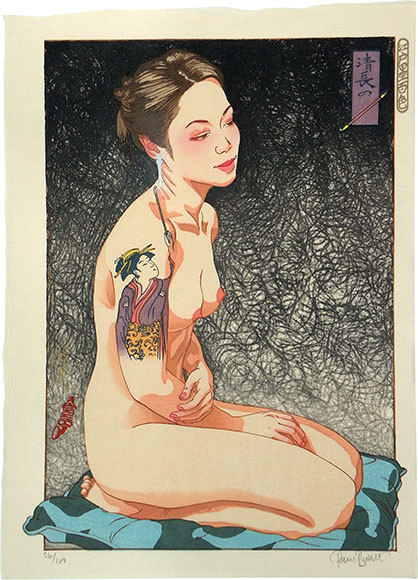
A Hundred Shades of Ink of Edo: Kiyonaga's Pipe (Edo zumi hyaku shoku: Kiyonaga no kiseru)
Woodblock print

View of Kabuki Theater from Matsuya (Ginza Matsuya yori Kabukiza), no. 3 from the series "Pictures of Ginza, First Series (Gashu Ginza dai isshu)"
1928
Color lithograph

Distant View of Mitsukoshi Movie Theater in Shinjuku from the Sixth Floor of Hoteiya (Hoteiya rokkai kara Shinjuku Mitsukoshi Musashi no kan enbo zu), no. 1 from the series "Scenery of Shinjuku (Gashu Shinjuku fukei)"
1930
Color lithograph
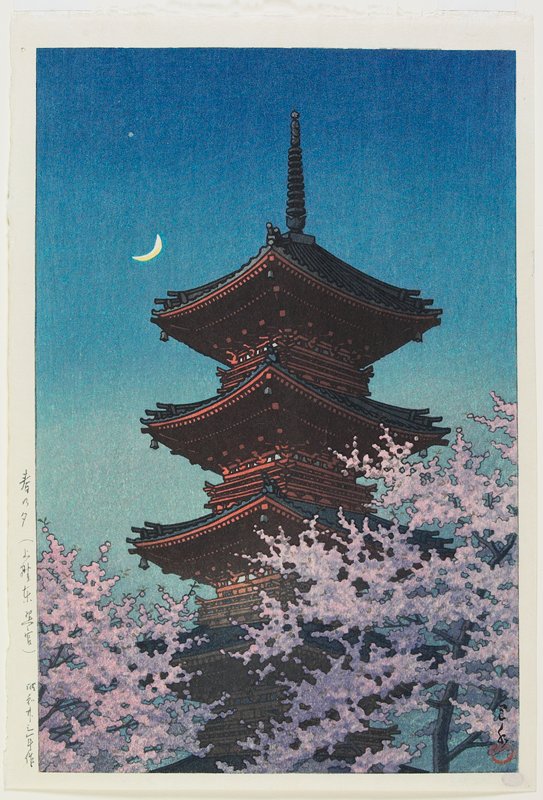
Spring Dusk at the Tōshō Shrine in Ueno
1948
Woodblock print, ink and color on paper
Featured in Collections
Curated cross-cuts that include this print.
Frequently Asked Questions
Sumidagawa was created by Fujimori Shizuo (藤森静雄) in 1933.
Sumidagawa depicts urban scenes, boats & ships, and rivers & lakes, set at Sumida River.