
Ishigaki Village (Stone wall village)
- Medium:
- Mokuhanga (Japanese woodblock)
- Image courtesy of
- Saru Gallery
Description
Ishigaki — literally stone wall — refers either to the Okinawan island of the same name or, more commonly, to villages across rural Japan whose vernacular architecture is defined by drystone retaining walls separating terraced fields and house plots. The print is best read as a regional subject in Kitaoka's documentary mode, of a kind he produced through the 1950s and 1960s as the postwar sosaku-hanga generation turned its attention to disappearing rural ways of life. Compositions of this type typically work through layered horizontals — wall, building, hill behind — with the textural variation between dressed stone, plastered wall, and tiled or thatched roof providing the relief printmaker with grounds for differentiated block treatments. The subject sits within the mid-century Japanese print interest in furusato, the ancestral countryside, and aligns Kitaoka with contemporaries such as Saito Kiyoshi and Sekino Junichiro.
More Prints by Fumio Kitaoka


More Village Scenes Prints

A Farmhouse in Autumn, Ayashi, Miyagi Prefecture (Noka no aki (Miyagi ken Ayashi)
Noka no aki (Miyagi ken Ayashi
1946
Color woodblock print
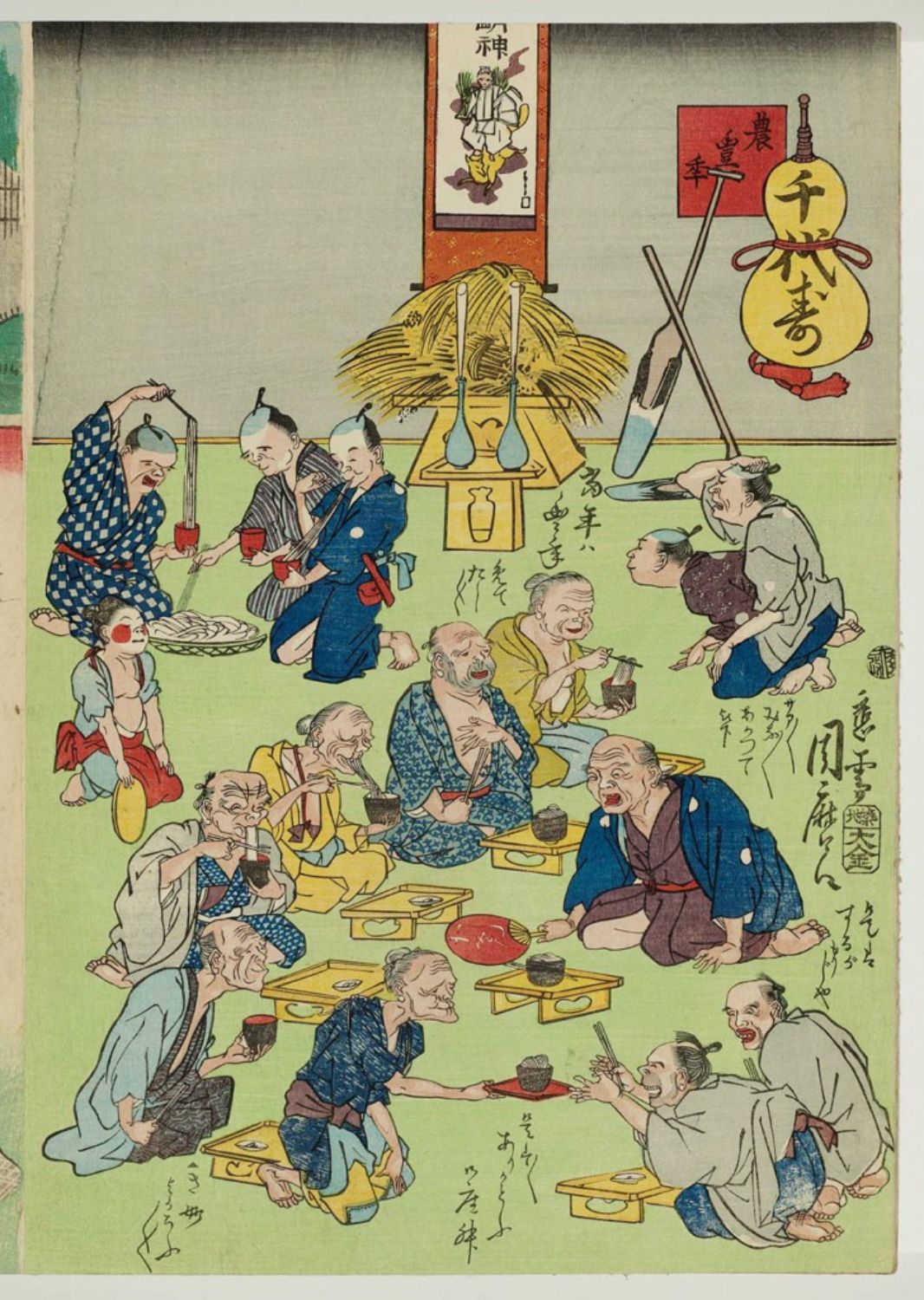
Celebrating the Good Harvest: Felicitations for a Thousand Ages (Nôhônen, Chiyo no kotobuki)
Woodblock print

Eastern Hamlet, Horyu Temple (Horyuji higashi sato)
1956
Color woodblock print
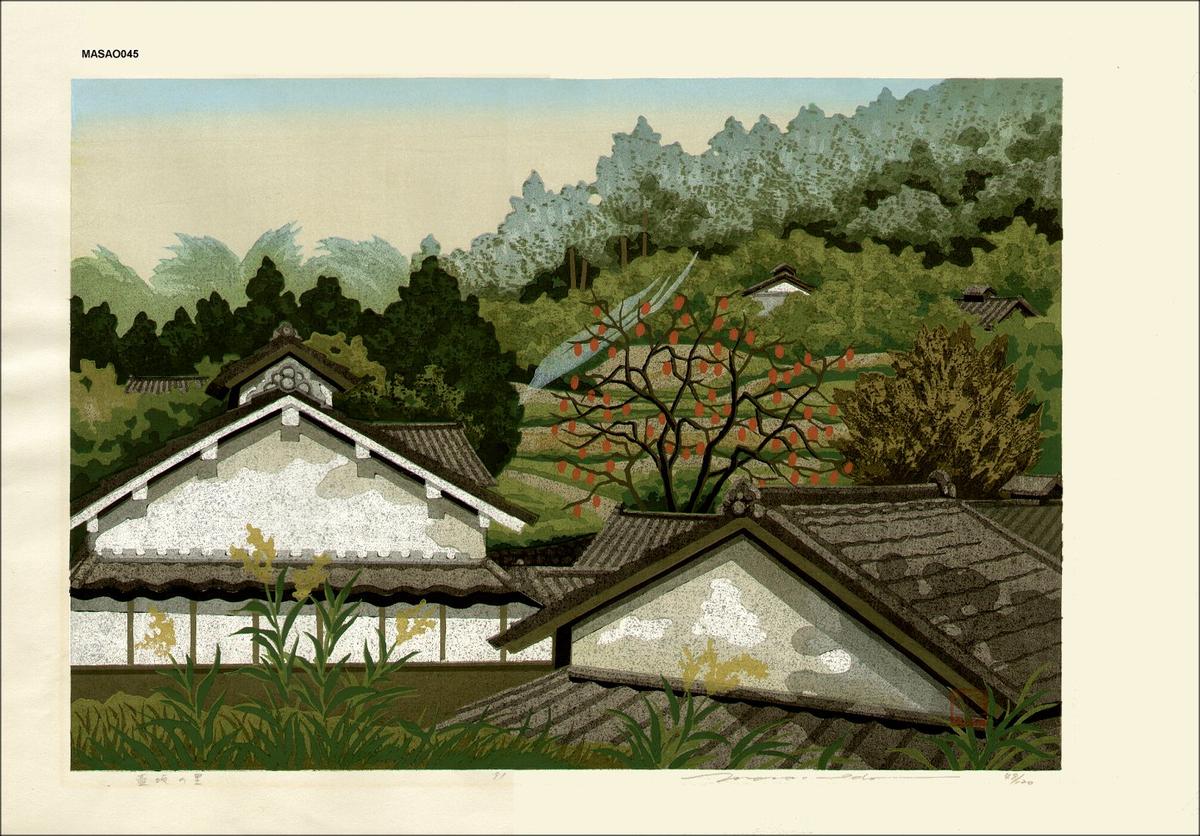
Village Scene in Nara
Woodblock print
Featured in Collections
Curated cross-cuts that include this print.
Frequently Asked Questions
Ishigaki Village (Stone wall village) was created by Fumio Kitaoka (北岡文雄).
Ishigaki Village (Stone wall village) depicts village scenes.