Armadillo
by Hideo Takeda
- Medium:
- Silkscreen
- Dimensions:
- 71.8 × 52.1 cm
- Image courtesy of
- Ronin Gallery
Description
This silkscreen places an armadillo at center, rendered with the graphic precision that defines Takeda's printmaking practice. The armadillo's segmented, interlocking dorsal plates lend themselves naturally to screenprint techniques, where flat areas of color and hard-edged contours can describe the animal's distinctive armor with minimal gradation. Takeda's training in sculpture at Tama Art University informed his sensitivity to three-dimensional form translated into two dimensions; the carapace likely reads as a series of interlocking geometric bands rather than naturalistic shading. The choice of an armadillo — an animal with no native Japanese presence — reflects Takeda's consistent interest in subjects from outside the conventional kacho-e tradition of birds and flowers, situating the work within his broader engagement with cross-cultural imagery and the unexpected.
More Prints by Hideo Takeda
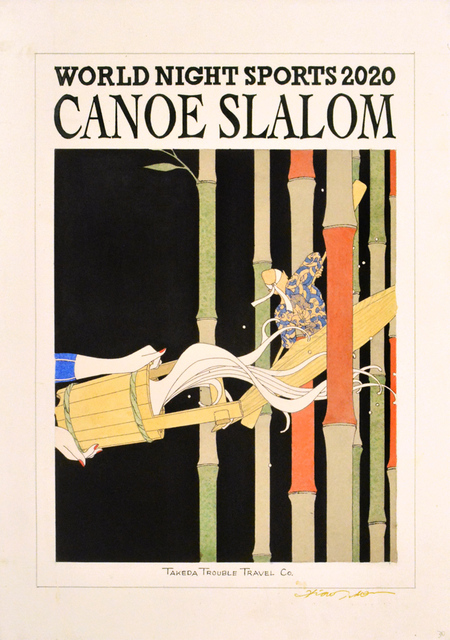
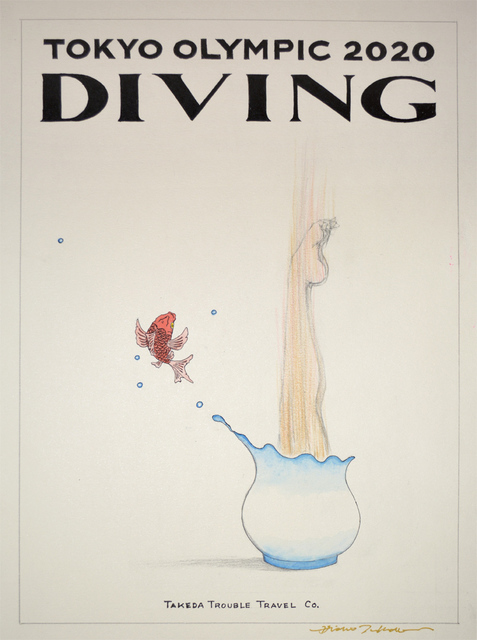
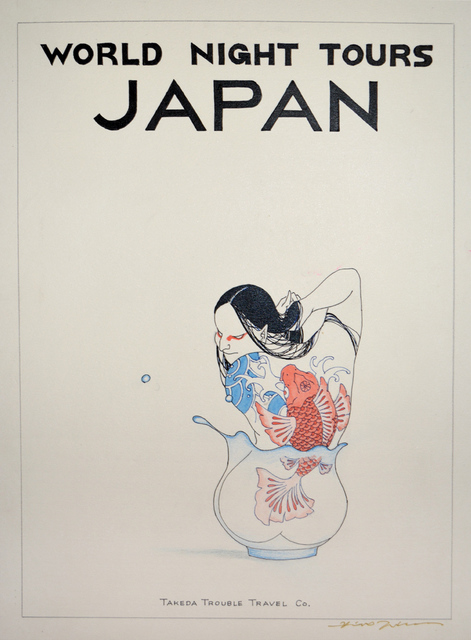
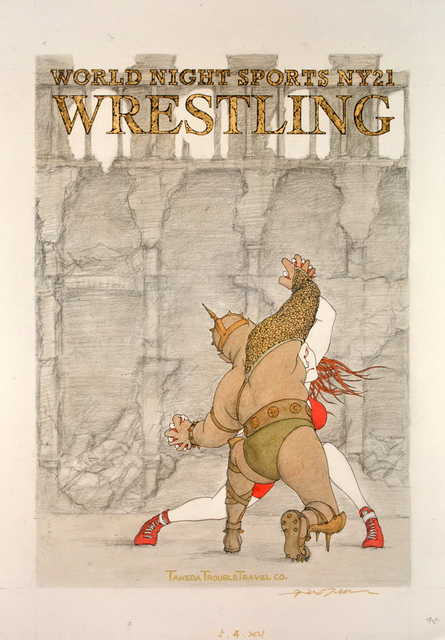
More Animals Prints

Snake Charmers (Hebizukai)
Hebizukai
1932
Color woodblock print; oban

Hoshifuri Pine at Zen'yoji Temple in Edogawa (Edogawa-ku Zen'yoji Hoshifuri matsu), from the series "One Hundred Views of Great Tokyo in the Showa Era (Showa dai Tokyo fukei hyaku zue hanga)"
1935
Color woodblock print; oban

Drawing for Rabbit and Boy
1964
Acrylic paint and oil pastel with oiled charcoal and ink over an ink and graphite underdrawing on paper

Rabbit and Boy
1964
Color lithograph with relief block and hand coloring; edition 35/36
Featured in Collections
Curated cross-cuts that include this print.
Frequently Asked Questions
Armadillo was created by Hideo Takeda (武田秀雄).
Armadillo uses Silkscreen, on silkscreen.
Armadillo depicts animals.
Armadillo measures 71.8 × 52.1 cm.