
Kyongju Village
- Medium:
- Mokuhanga (Japanese woodblock)
- Image courtesy of
- Saru Gallery
Description
Kyongju (Gyeongju), the ancient Silla capital in southeastern Korea, became a destination for Japanese artists during the colonial period (1910–1945), when rail and steamer routes made travel from the home islands routine. Nakazawa was among numerous yoga painters and printmakers who produced Korean subjects in these decades, often emphasizing thatched-roof rural architecture and figures in white hanbok against open landscape. The print likely shows a village street or grouping of houses with the rolling tumuli or pine-covered hills characteristic of the Kyongju basin. Nakazawa's approach treats Korean scenery with the same painterly observation he applied to Japanese landscapes — tonal massing, atmospheric handling, restrained palette — without the documentary stylization that some contemporaries adopted. The print also reflects how the Pan-Asian travel of early-twentieth-century Japanese artists expanded the geographic range of meisho-e beyond classical Japanese sites, incorporating Korea, Taiwan, and Manchuria into the printmaking repertoire of the period.
More Prints by Hiromitsu Nakazawa
More Village Scenes Prints

A Farmhouse in Autumn, Ayashi, Miyagi Prefecture (Noka no aki (Miyagi ken Ayashi)
Noka no aki (Miyagi ken Ayashi
1946
Color woodblock print
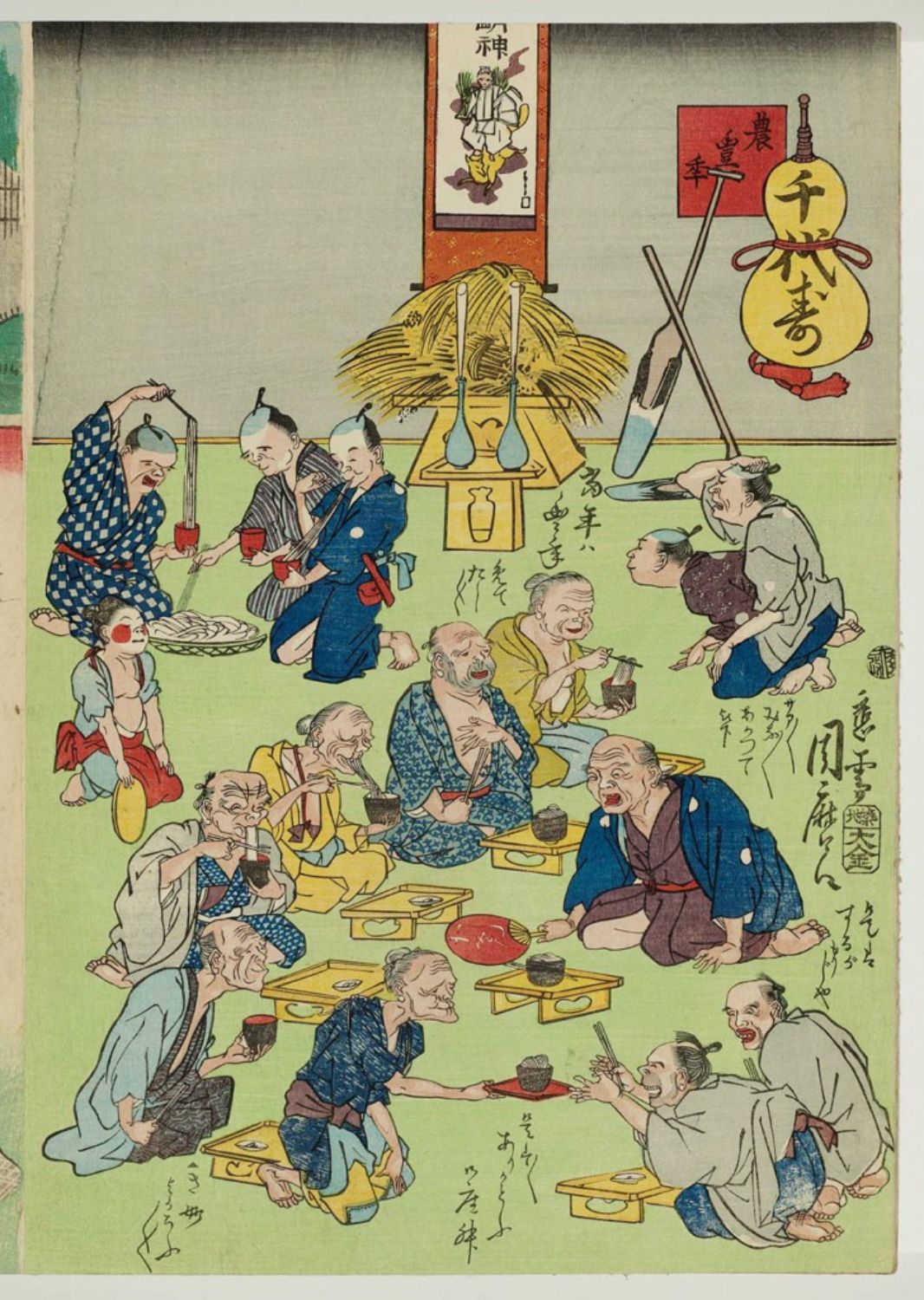
Celebrating the Good Harvest: Felicitations for a Thousand Ages (Nôhônen, Chiyo no kotobuki)
Woodblock print

Eastern Hamlet, Horyu Temple (Horyuji higashi sato)
1956
Color woodblock print
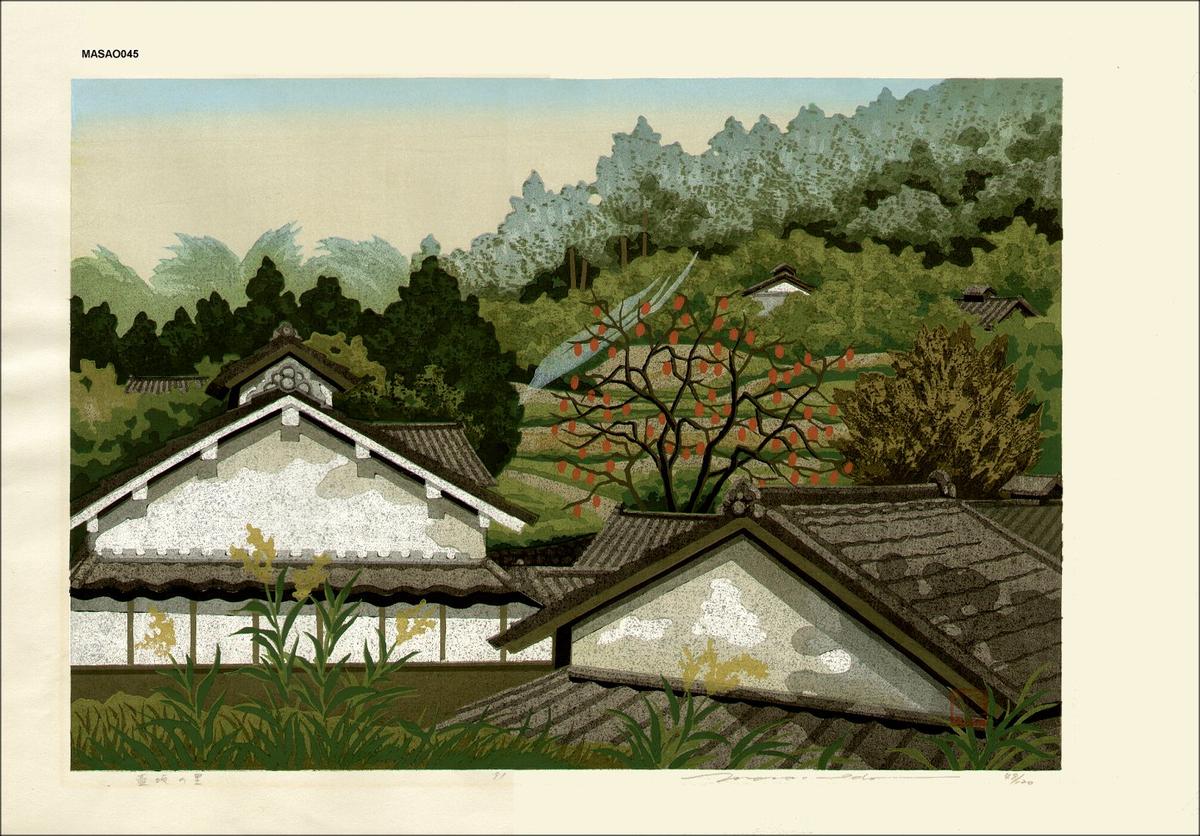
Village Scene in Nara
Woodblock print
Featured in Collections
Curated cross-cuts that include this print.
Frequently Asked Questions
Kyongju Village was created by Hiromitsu Nakazawa (中沢弘光).
Kyongju Village depicts village scenes.