
Shalimar Garden, Lahore
- Date:
- 1932
- Medium:
- Color woodblock print
- Format:
- Oban
- Dimensions:
- 27.8 × 39.9 cm
- Publisher:
- Yoshida Studio
- Source:
- Art Institute of Chicago
Description
The Shalimar Garden in Lahore — one of the finest surviving examples of Mughal garden design, built by Emperor Shah Jahan in 1641 in three terraced levels of descending water — provided Yoshida with a subject that combined his interests in architecture, garden design, and the play of water in formal settings during his 1932 Pakistan travels. The garden's Persian-inspired layout, with its long central canal, marble pavilions, and geometric plantings of flowering trees, offered a visual vocabulary quite different from Japanese garden aesthetics — more overtly mathematical, more overtly monumental — while sharing the fundamental conviction that water, stone, and planting could be arranged to create a paradise on earth. Yoshida's print captures the serene geometry of the garden's water channels and surrounding plantings.
More Prints by Hiroshi Yoshida
More Gardens Prints
![[Garden of] Taj Mahal, No. 1 (Taji Maharu no niwa, dai ichi) by Hiroshi Yoshida](https://www.artic.edu/iiif/2/230993a7-d4f0-c979-c267-127d48e1ef1c/full/843,/0/default.jpg)
[Garden of] Taj Mahal, No. 1 (Taji Maharu no niwa, dai ichi)
Taji Maharu no niwa, dai ichi
1931
Color woodblock print; oban

Kiyozumi Garden in Moonlight
January 1938
Woodblock print, ink and color on paper

Moon over Kiyosumi Garden (Tsuki no Kiyosumien)
1938
Color woodblock print; oban
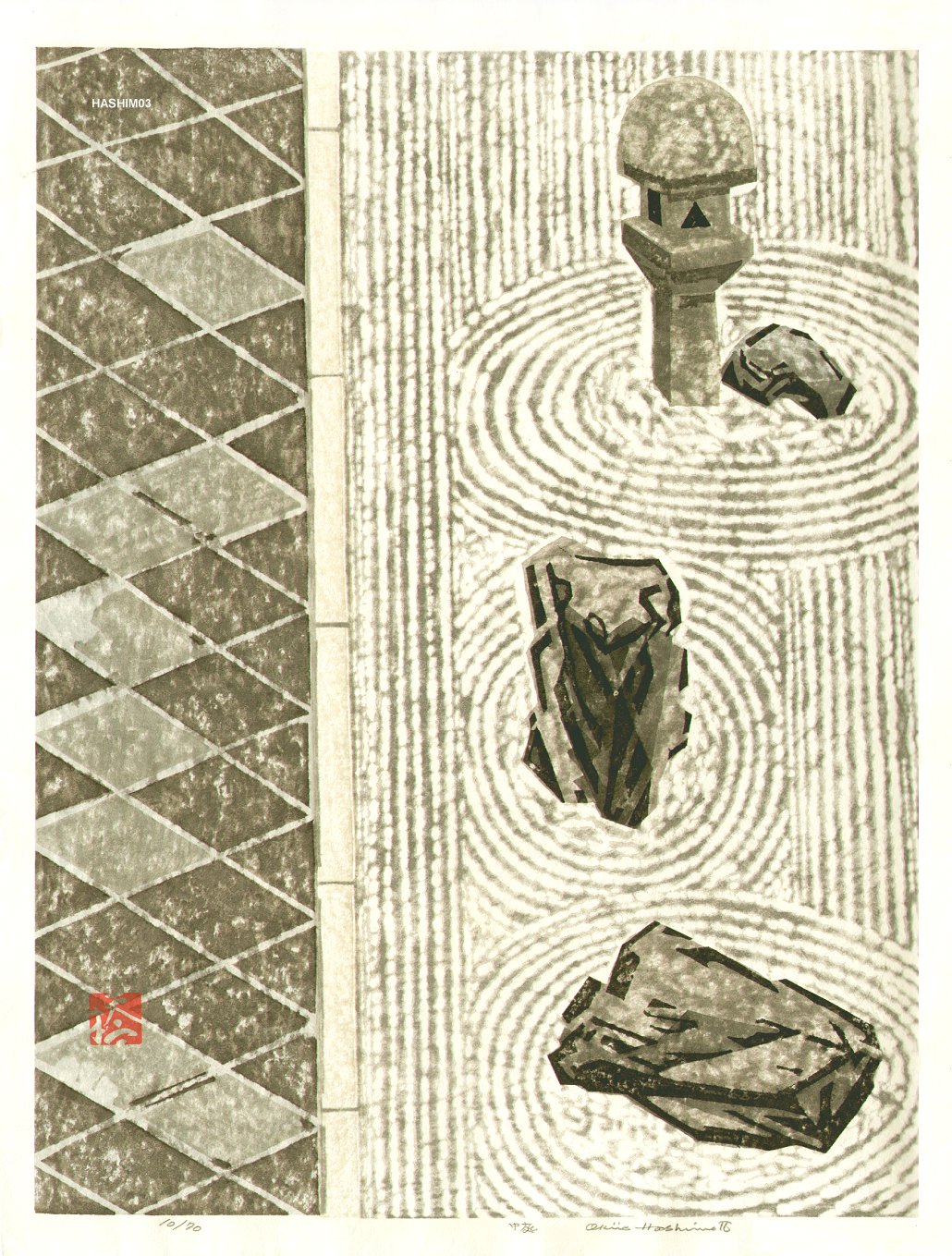
Rock garden
10/70, 1966
Woodblock print
Featured in Collections
Curated cross-cuts that include this print.
Frequently Asked Questions
Shalimar Garden, Lahore was created by Hiroshi Yoshida (吉田博) in 1932.
Shalimar Garden, Lahore uses Bokashi, Nishiki-e, and Moku-hanga, on color woodblock print.
Shalimar Garden, Lahore was published by Yoshida Studio (1932).
Shalimar Garden, Lahore depicts gardens.
Shalimar Garden, Lahore measures 27.8 × 39.9 cm (Oban format).