
A Passing Palanquin, from the series "Scenes of Flower-viewing at Ueno (Ueno hanami no tei)"
- Date:
- c. 1681/84
- Medium:
- Woodblock print; oban, sumizuri-e
- Source:
- Art Institute of Chicago
Description
Dated circa 1681 to 1684 and held in the Art Institute of Chicago, this oban sumizuri-e from the series Scenes of Flower-viewing at Ueno (Ueno hanami no tei) depicts a palanquin in transit through the hanami crowds at Ueno's famous cherry-blossom-viewing site. The palanquin, kago in Japanese, was the standard mode of conveyance for elites in Edo, and Moronobu's choice to feature one passing through the festival crowd captures the social mixing that hanami enabled, with high-ranking patrons, ordinary townspeople, and entertainers all converging on the blossoming sites. Moronobu's composition uses the palanquin and its bearers as a horizontal anchor for the scene, with surrounding figures clustered around it in attentive postures. His command of the festive crowd as a compositional subject, drawing on his earlier ehon experience with parade scenes and other group subjects, is on full display. Printed in single-block black ink, the work demonstrates Moronobu's expansion of ukiyo-e subject matter from purely Yoshiwara contexts into the broader sphere of urban leisure and seasonal celebration, an expansion that would prove foundational for the development of meisho-e.
More Prints by Hishikawa Moronobu
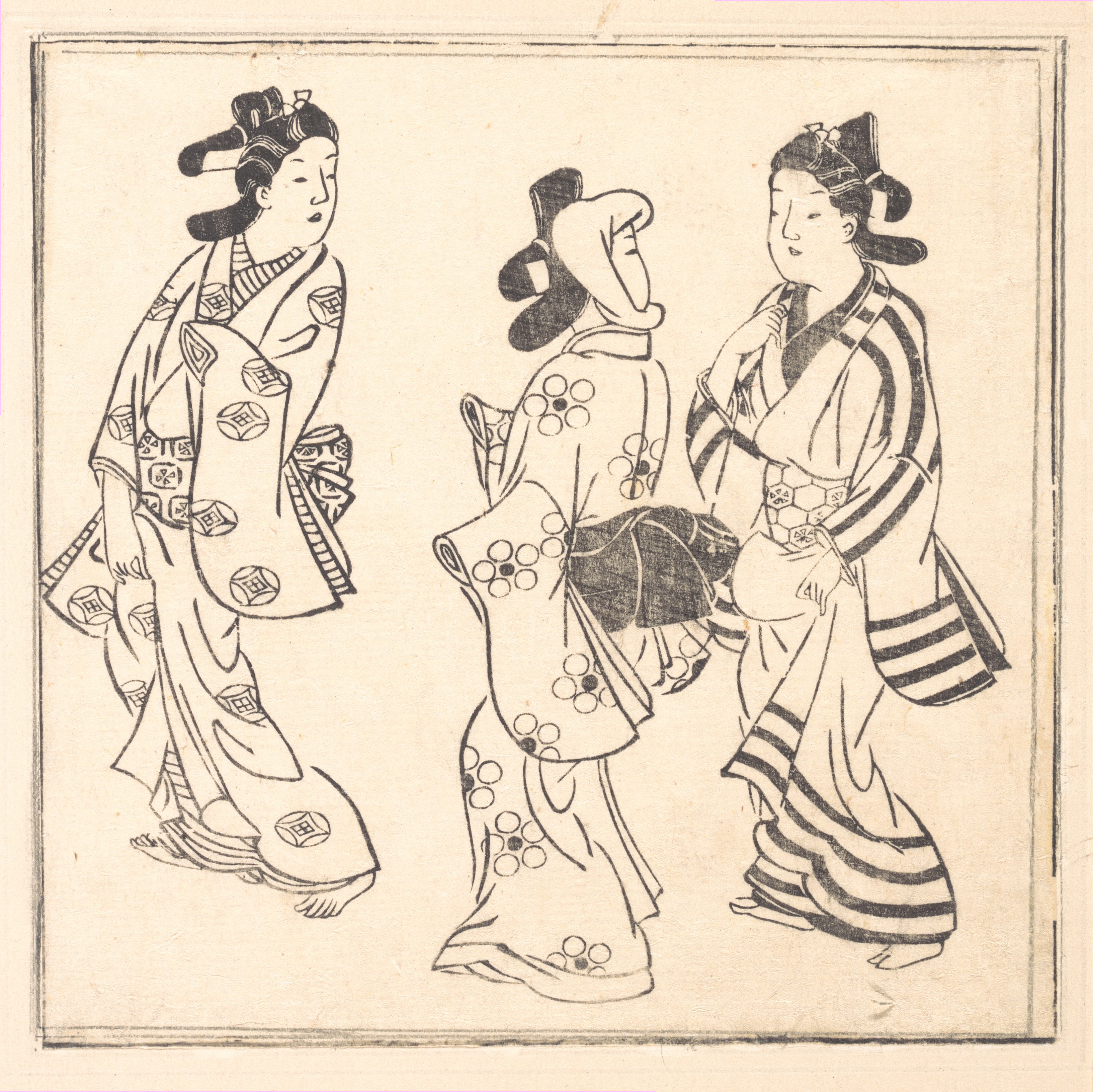
Leaf from a Book Entitled: Wakoku Hiaku-jo: One Hundred Japanese Women
Monochrome woodblock print; ink on paper

Fūryū sugatae hyakunin isshu
1695 Genroku 8
Woodblock- printed book; 3 vols.
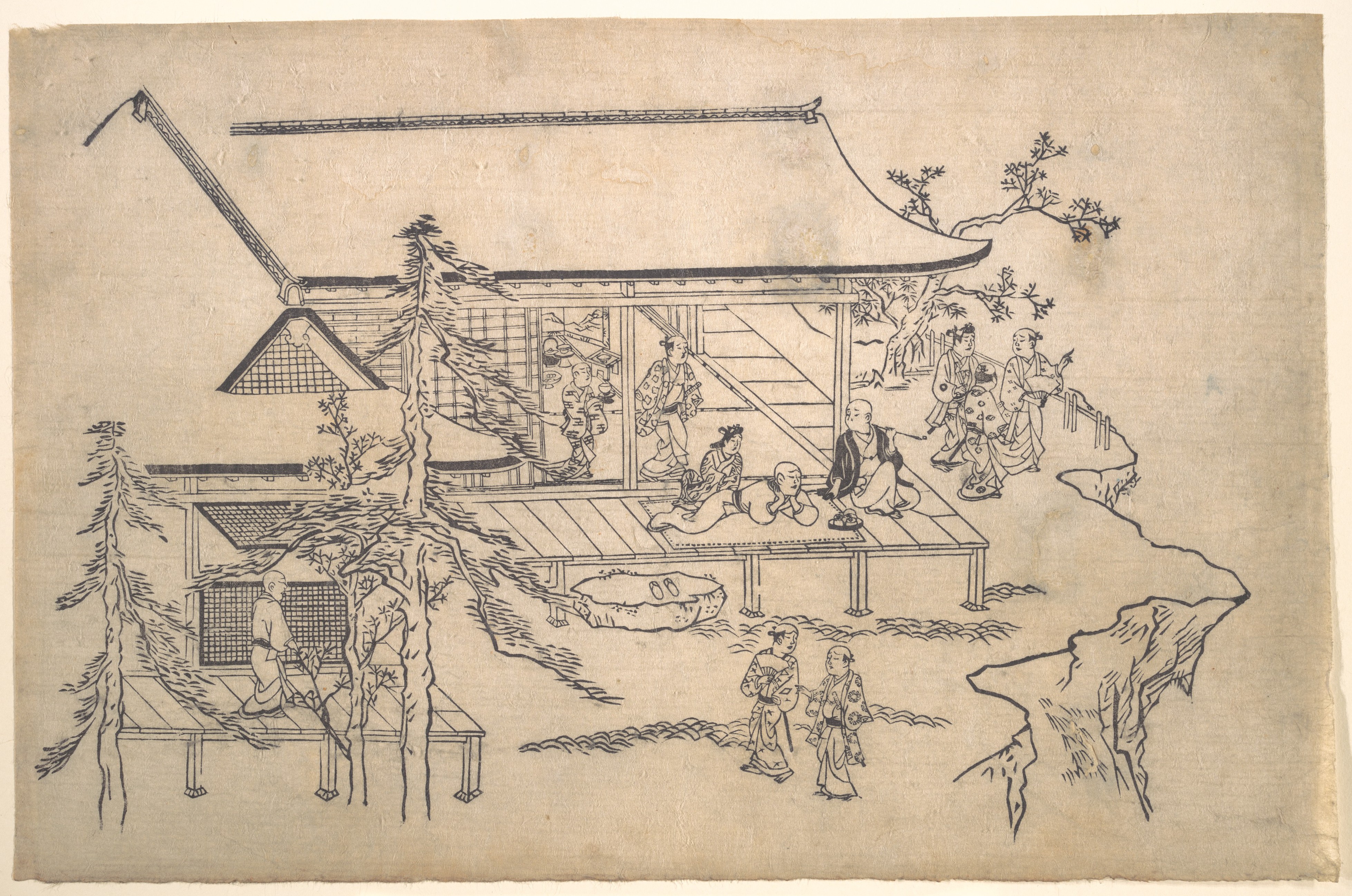
Flower-Viewing Scene
ca. 1685
Monochrome woodblock print (sumie); ink on paper
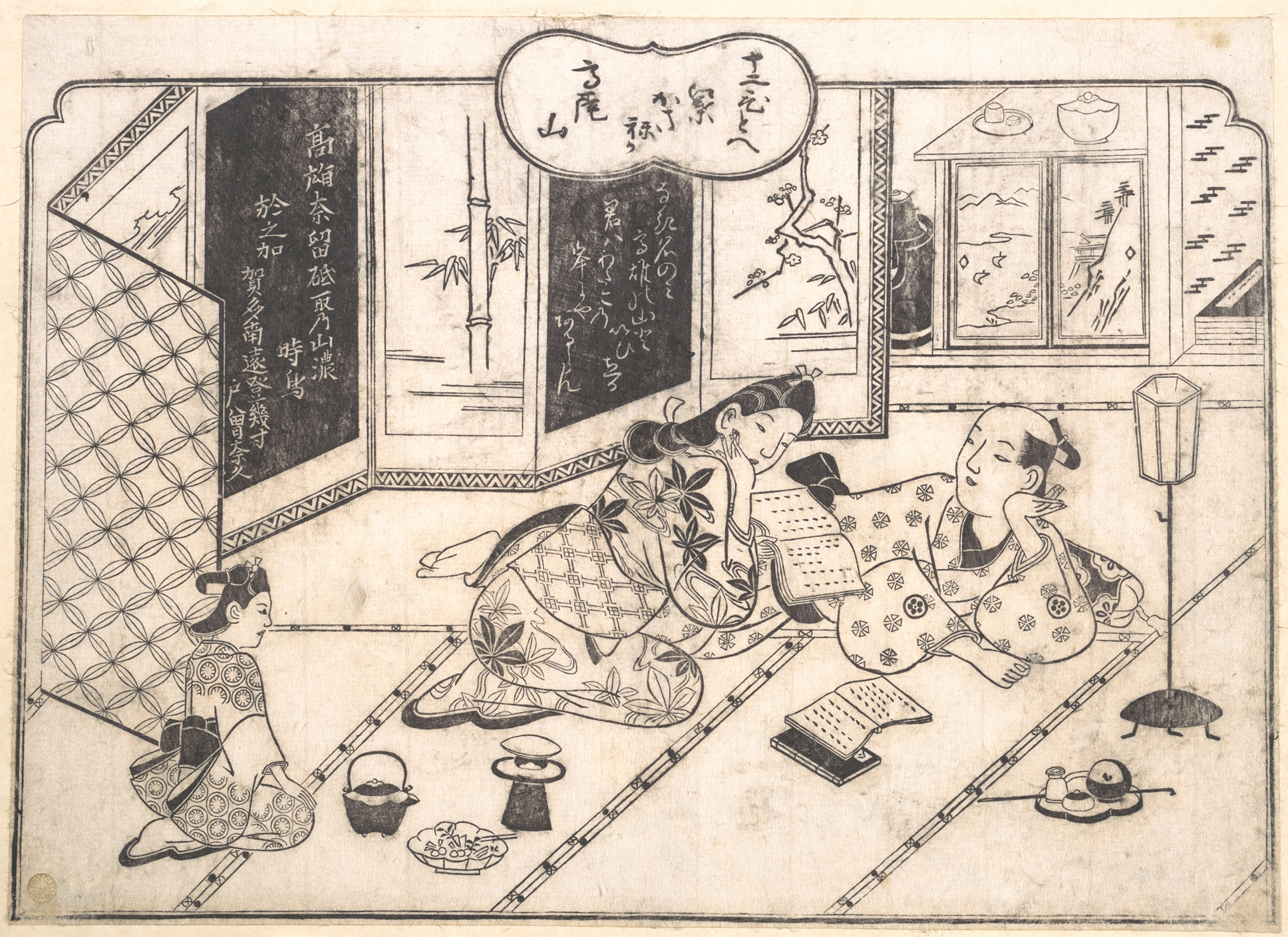
Go to Takaoyama to see Maple Leaves having Twelve Points
ca. 1690
Woodblock print; ink and color on paper
More Birds & Flowers Prints
Frequently Asked Questions
A Passing Palanquin, from the series "Scenes of Flower-viewing at Ueno (Ueno hanami no tei)" was created by Hishikawa Moronobu (菱川師宣) in c. 1681/84.
A Passing Palanquin, from the series "Scenes of Flower-viewing at Ueno (Ueno hanami no tei)" depicts birds & flowers.