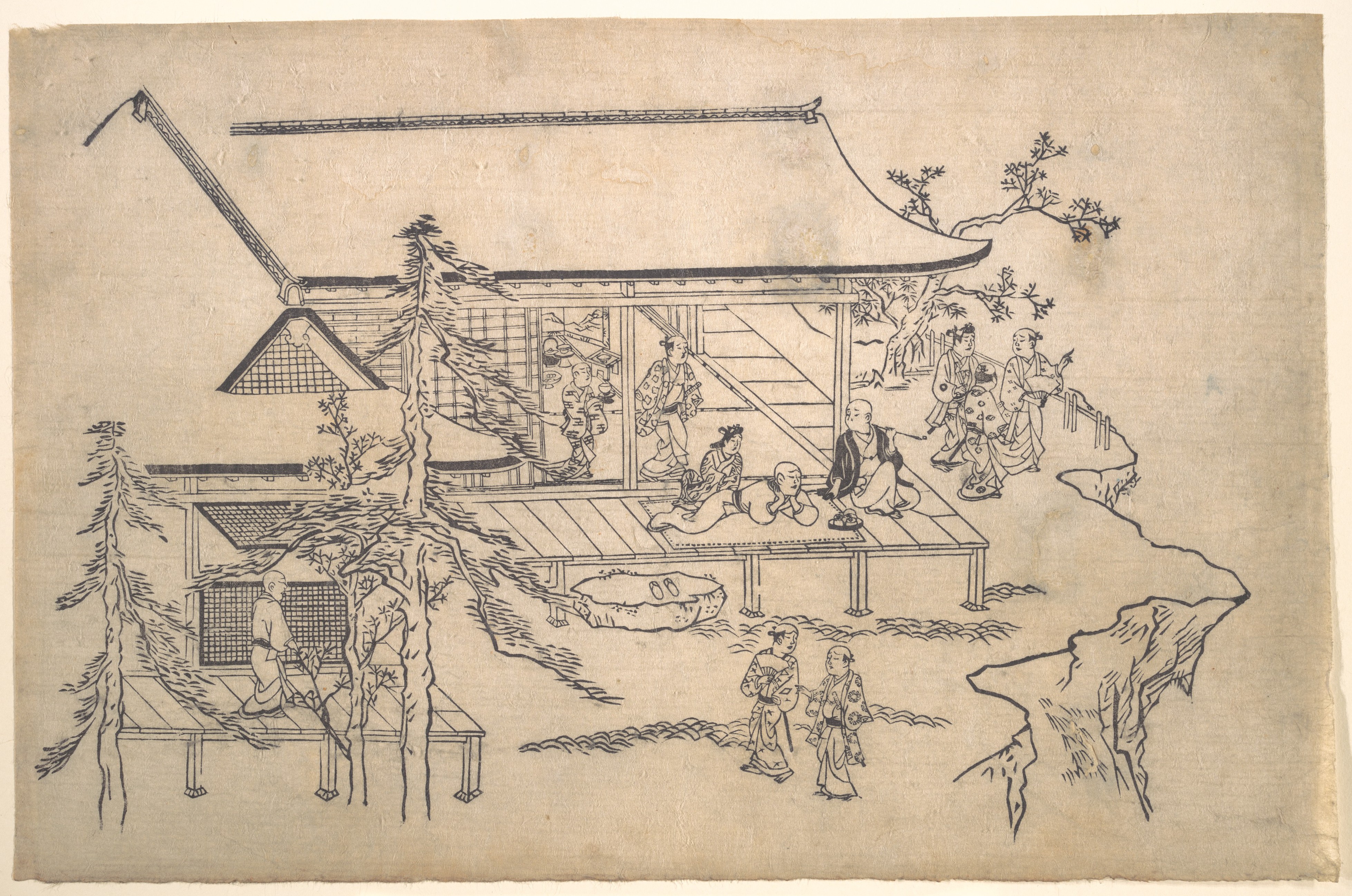
Flower-Viewing Scene
- Date:
- ca. 1685
- Medium:
- Monochrome woodblock print (sumie); ink on paper
- Source:
- Metropolitan Museum of Art
Description
Flower-Viewing Scene, dated 1675 in the Metropolitan Museum of Art's catalogue, is a horizontal book illustration by Hishikawa Moronobu depicting an Edo hanami—a spring outing under cherry blossoms. The composition runs across the full page: blossoming cherry branches arc along the upper register, and beneath them townspeople of mixed status gather in groups to picnic, drink, sing, and watch performers. A young woman in a richly patterned kimono lifts a saké cup to her lips while her companions adjust the layout of trays and lacquer boxes; nearby, an itinerant musician plays a shamisen; further along, two children chase each other along the line of trees while their parents look on. Moronobu, the ukiyo-e founder, distributes activity evenly across the picture so that the eye moves rhythmically from one cluster to the next, much in the manner of an unrolling handscroll. The print also documents a uniquely Edo social moment. Hanami was one of the few occasions when townspeople, samurai, and even some courtesans on holiday could share the same public space, and Moronobu's clear, weight-bearing line work captures both the festive disorder and the careful distinctions of dress and bearing that separated the participants. As a piece of early Edo ukiyo-e it is a model of how the new printed medium took ownership of the city's seasonal rituals. The Met preserves it as an exemplary document of Hishikawa Moronobu's mature picture-book practice in the 1670s.
More Prints by Hishikawa Moronobu
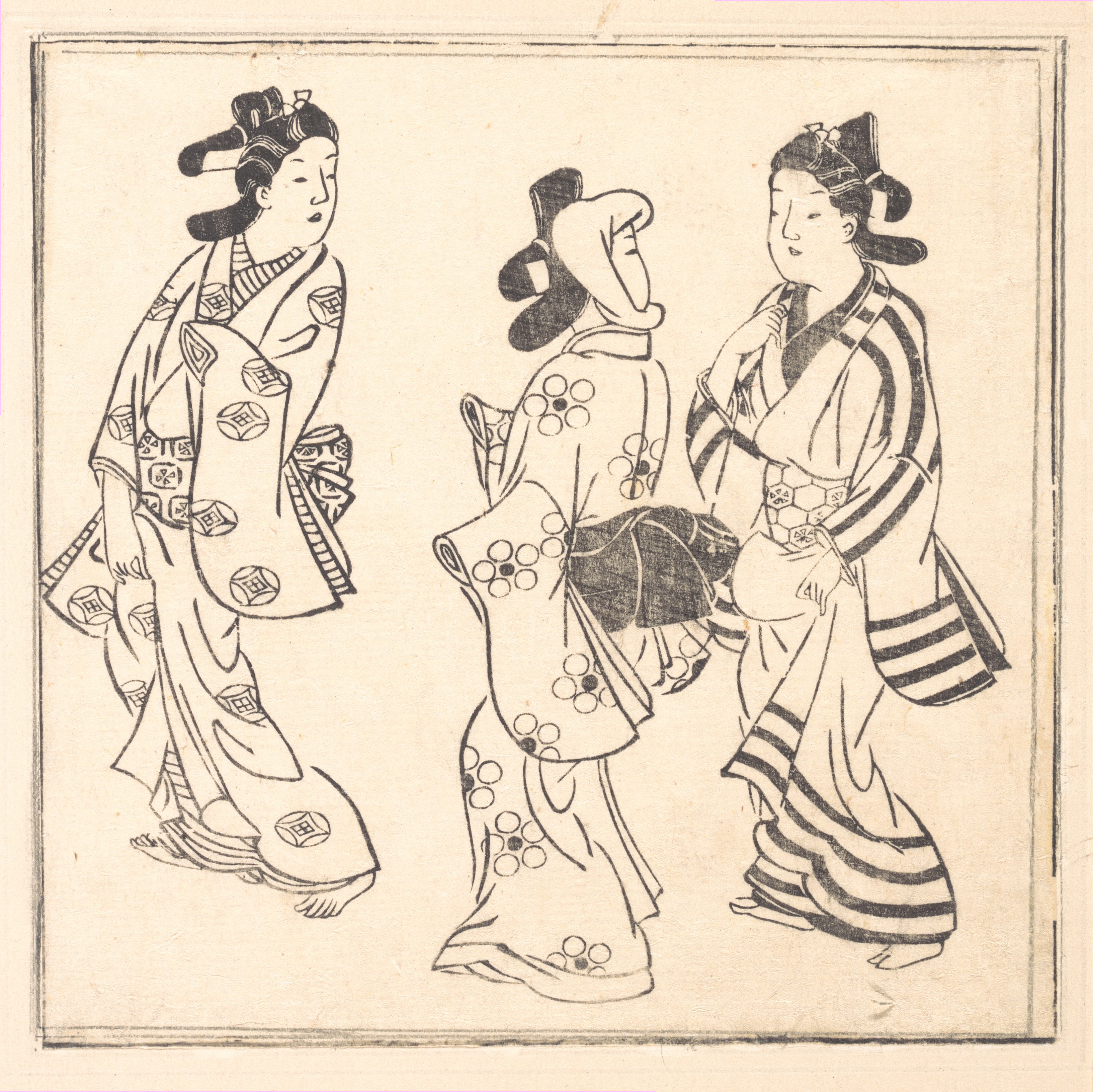
Leaf from a Book Entitled: Wakoku Hiaku-jo: One Hundred Japanese Women
Monochrome woodblock print; ink on paper

Fūryū sugatae hyakunin isshu
1695 Genroku 8
Woodblock- printed book; 3 vols.
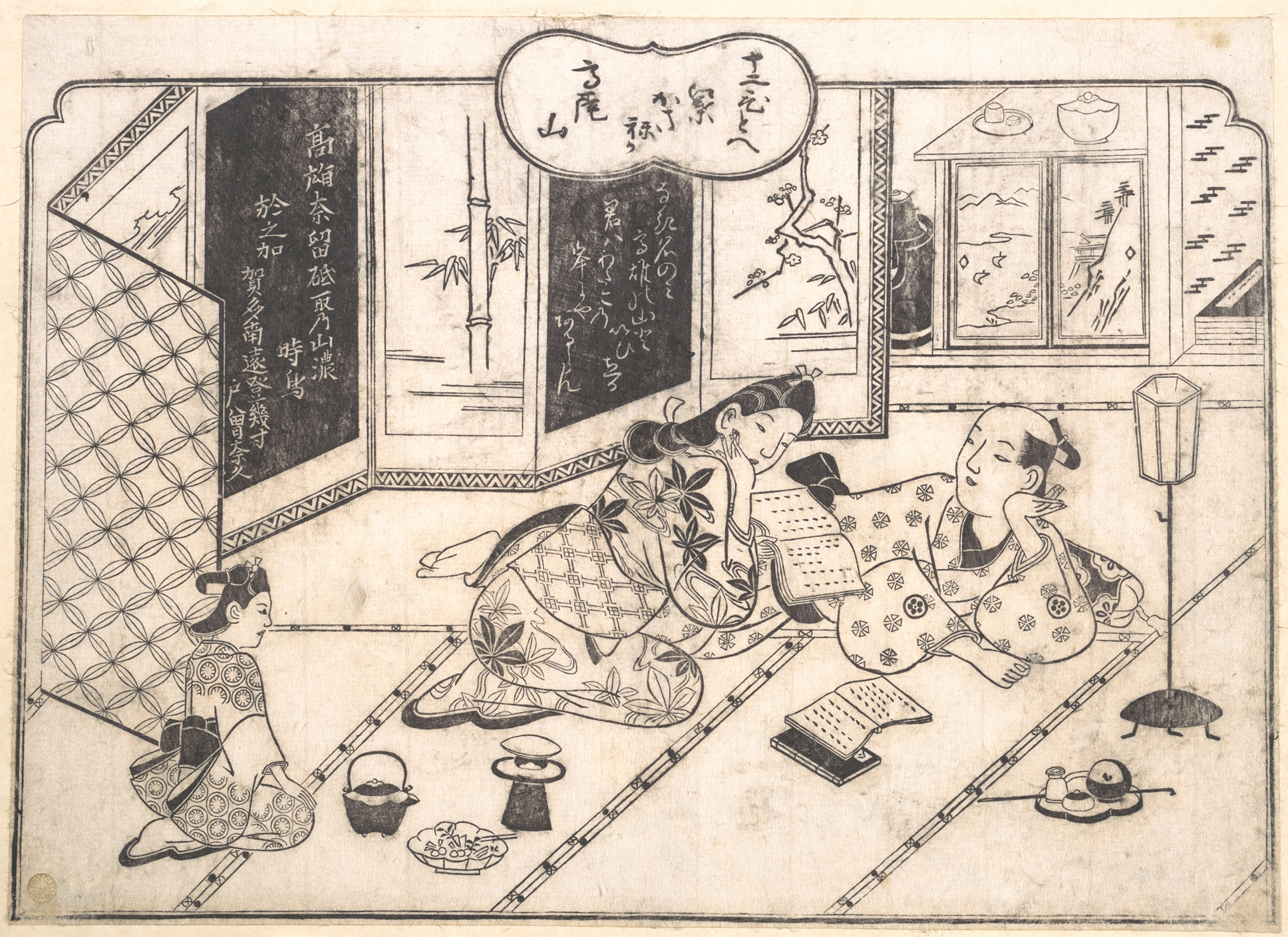
Go to Takaoyama to see Maple Leaves having Twelve Points
ca. 1690
Woodblock print; ink and color on paper
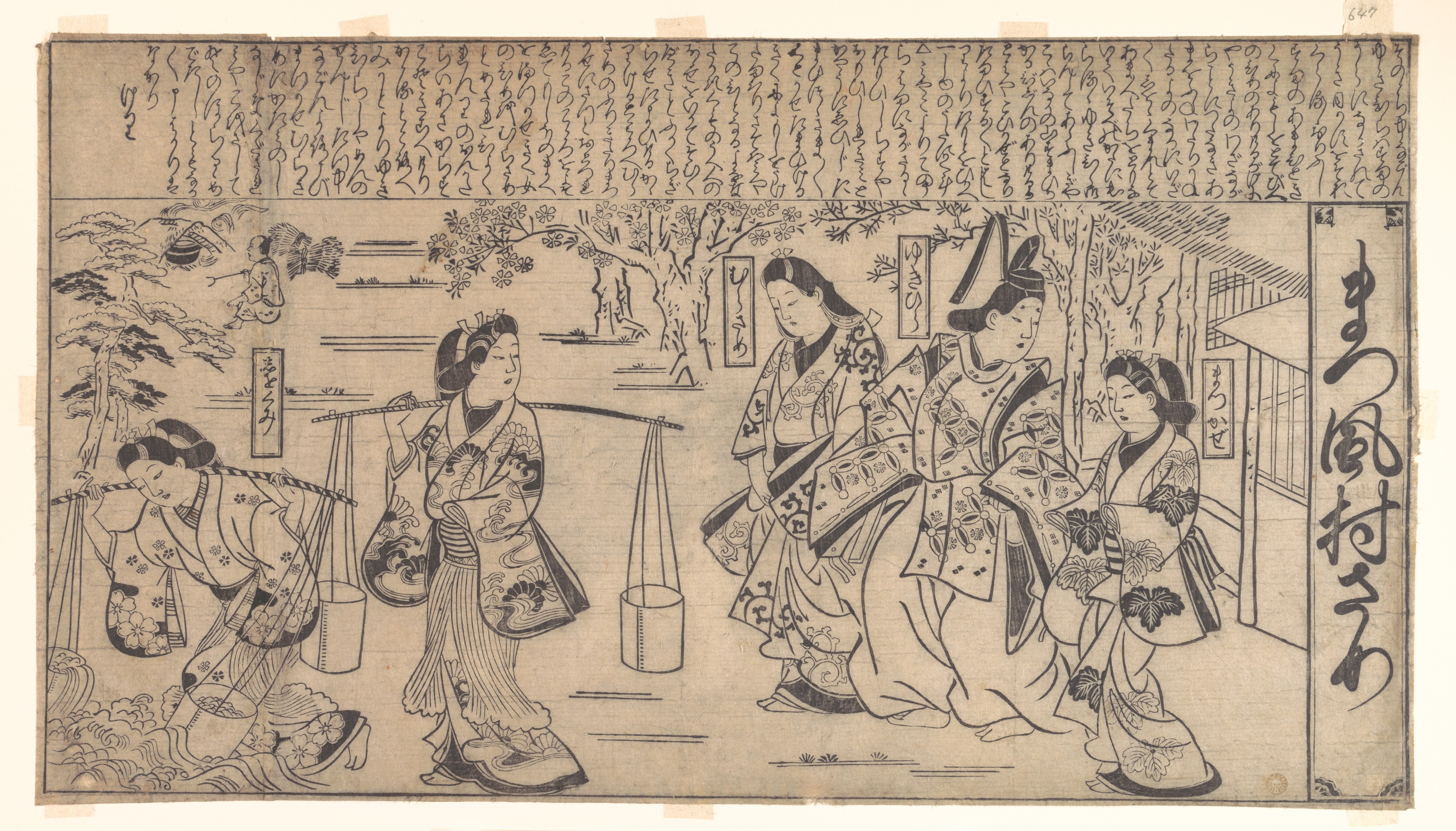
Matsukaze Murasame
ca. 1675–80
Woodblock print; ink and color on paper (sumi-e (ink print)
More Birds & Flowers Prints
Frequently Asked Questions
Flower-Viewing Scene was created by Hishikawa Moronobu (菱川師宣) in ca. 1685.
Flower-Viewing Scene depicts birds & flowers.