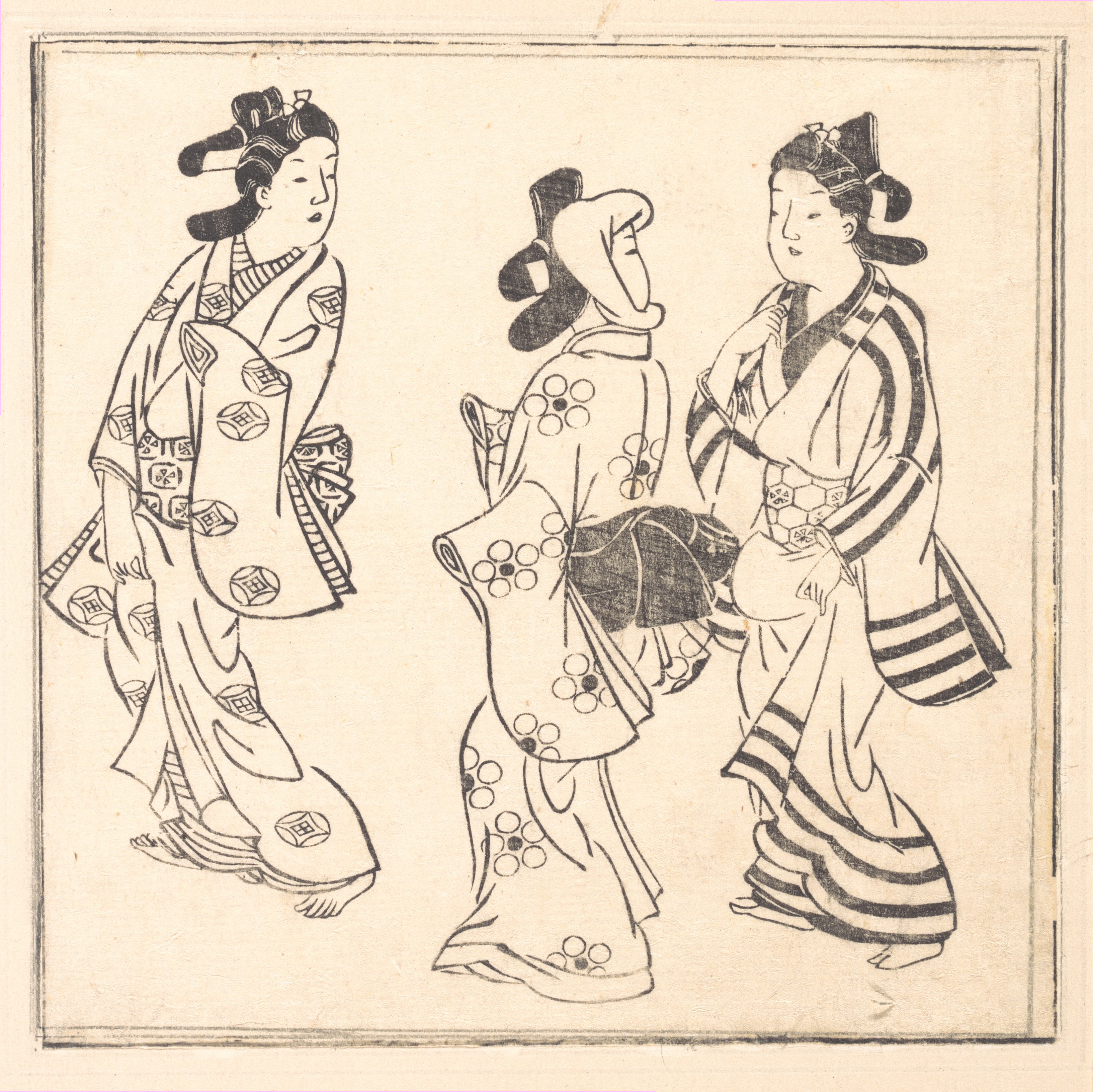
Leaf from a Book Entitled: Wakoku Hiaku-jo: One Hundred Japanese Women
- Medium:
- Monochrome woodblock print; ink on paper
- Source:
- Metropolitan Museum of Art
Description
This leaf from Wakoku hyakujo (One Hundred Japanese Women) is a printed page from one of the most ambitious illustrated books designed by Hishikawa Moronobu, preserved in the Metropolitan Museum of Art's collection of early Edo ukiyo-e. The series surveys female types from across Japanese society—court ladies, samurai wives, nuns, traveling pilgrims, courtesans, dancers, and household servants—presenting each at half-page scale with a short identifying text. Moronobu, the ukiyo-e founder, treats the project as a kind of compendium of contemporary femininity, comparable in ambition to the encyclopedic ehon his successors would later produce. The figure on this leaf stands with the assurance typical of his mature women: a confident silhouette, sleeves and skirt falling in long arcs, a hairstyle marked clearly enough to fix her social position at a glance. The lines are heavy and unbroken; pattern is suggested with a few sparse motifs rather than fully filled out, which keeps the print legible at book size. Although the Met records this sheet with an early seventeenth-century date, Wakoku hyakujo is securely datable to Moronobu's productive years in the late 1670s and 1680s. As part of an album rather than a single hanging print, the work circulated widely in Edo and helped establish the idea that pictures of women could be a subject worth serious sustained attention. For students of Hishikawa Moronobu, the leaf is a textbook case of how early Edo ukiyo-e converted social observation into a marketable picture format.
More Prints by Hishikawa Moronobu

Fūryū sugatae hyakunin isshu
1695 Genroku 8
Woodblock- printed book; 3 vols.
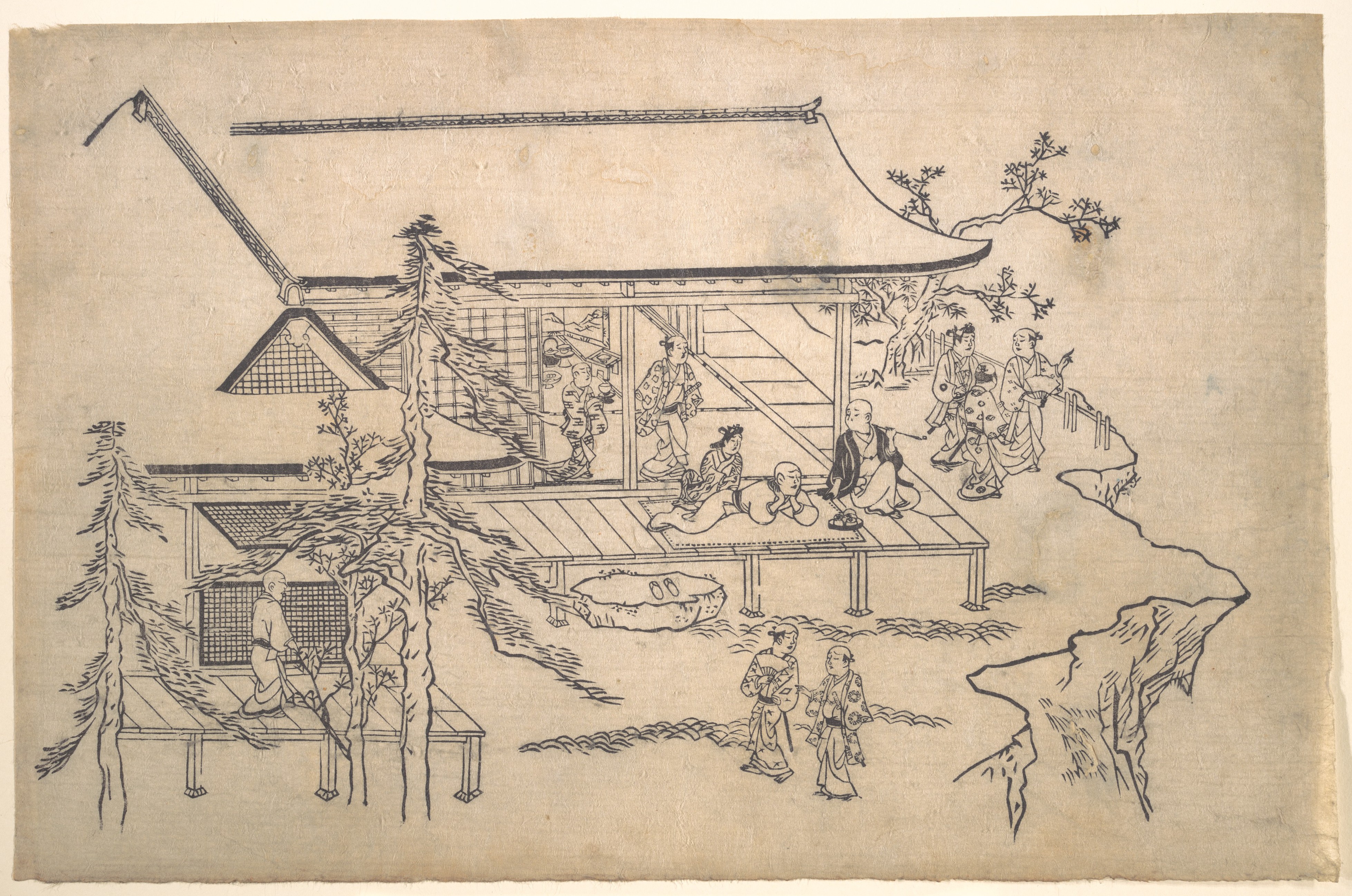
Flower-Viewing Scene
ca. 1685
Monochrome woodblock print (sumie); ink on paper
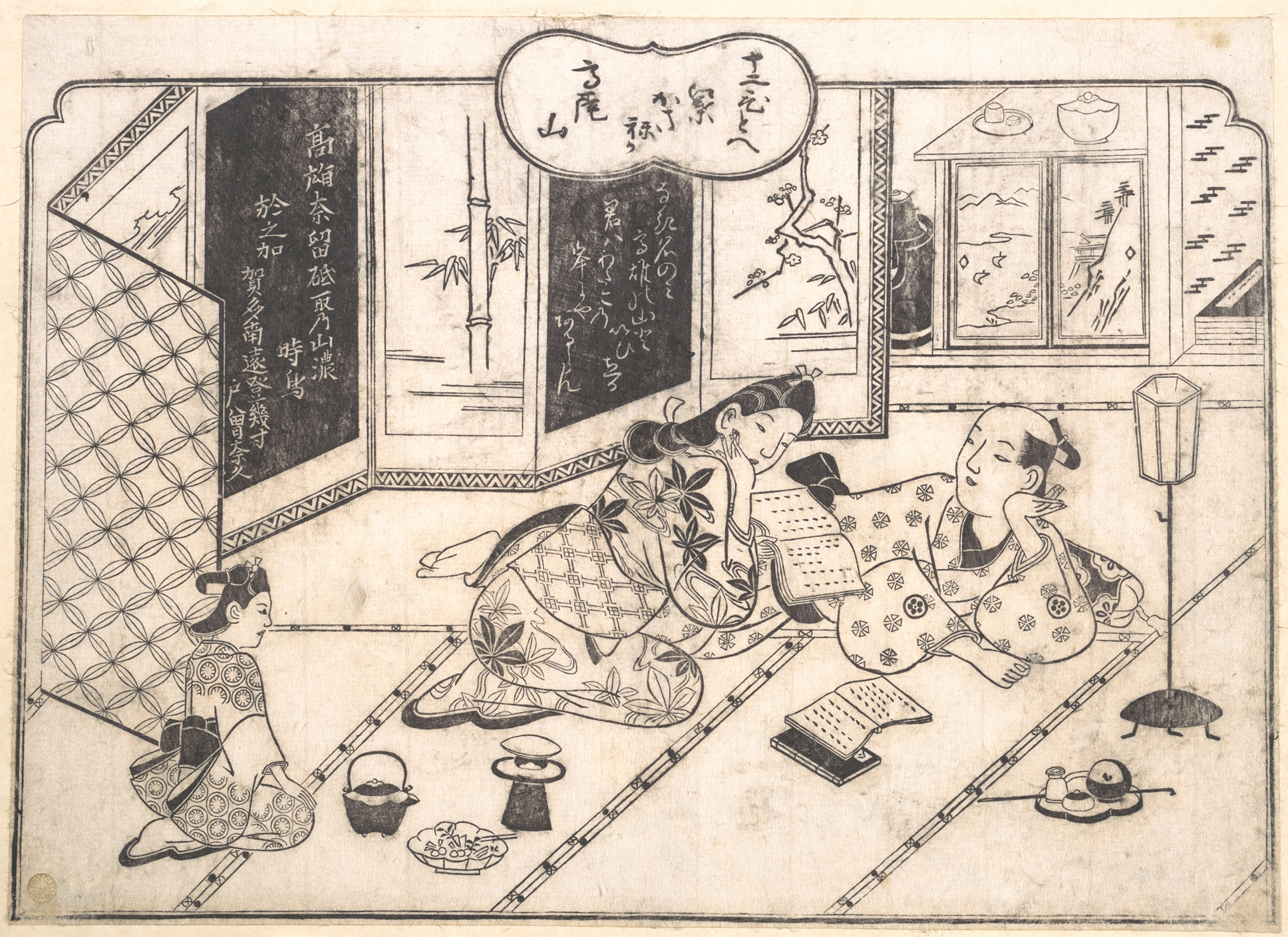
Go to Takaoyama to see Maple Leaves having Twelve Points
ca. 1690
Woodblock print; ink and color on paper
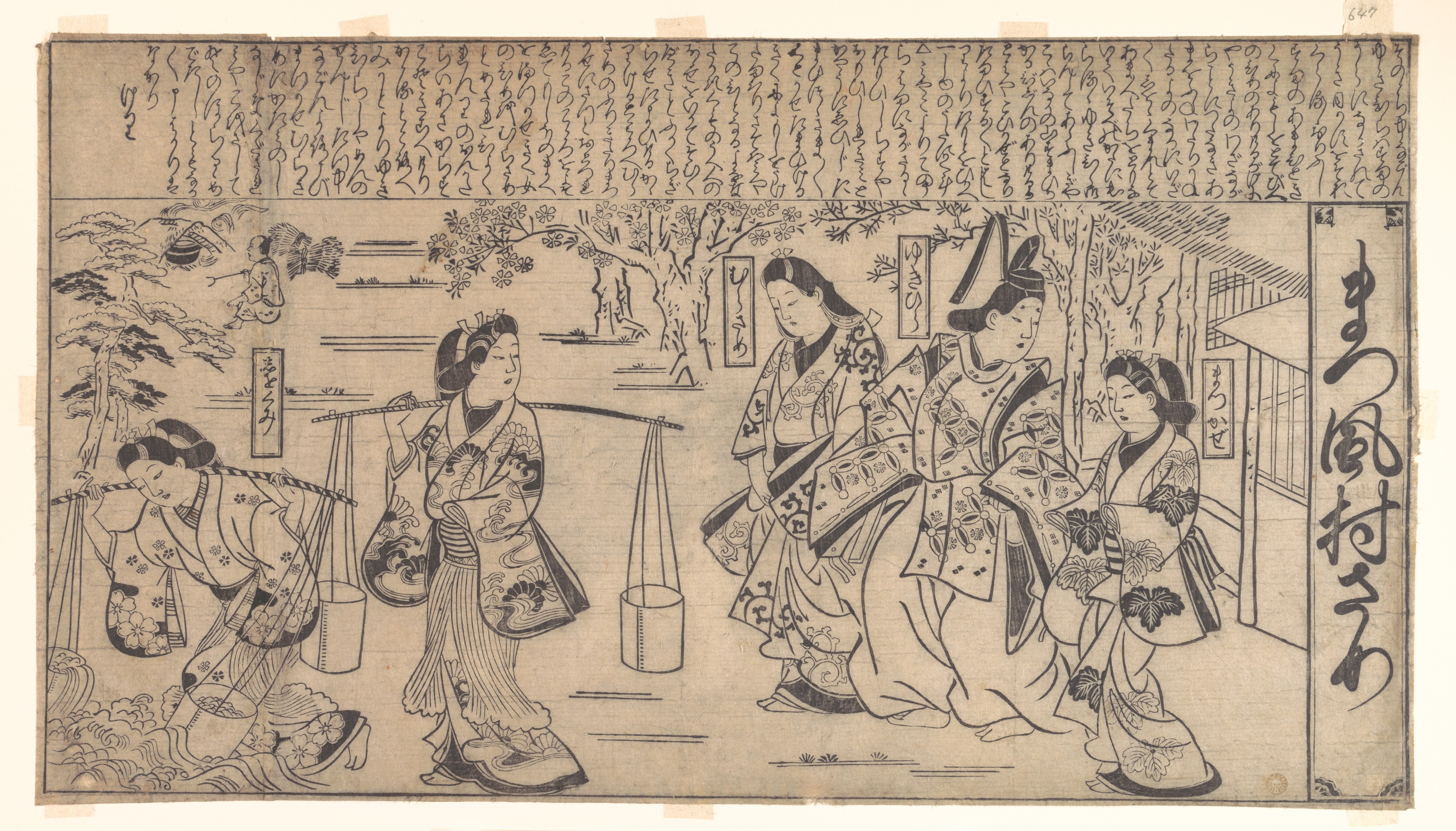
Matsukaze Murasame
ca. 1675–80
Woodblock print; ink and color on paper (sumi-e (ink print)
Frequently Asked Questions
Leaf from a Book Entitled: Wakoku Hiaku-jo: One Hundred Japanese Women was created by Hishikawa Moronobu (菱川師宣).