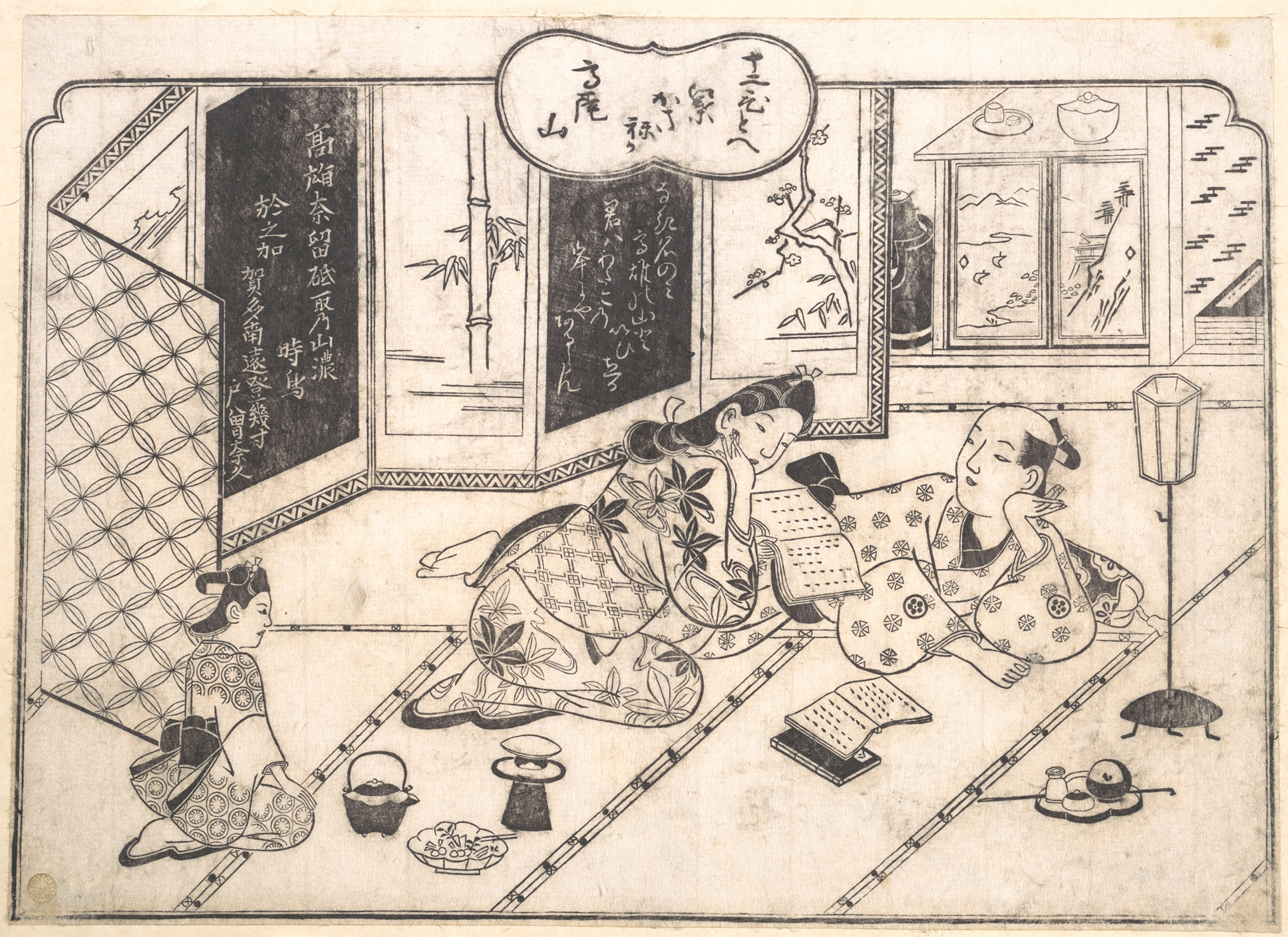
Go to Takaoyama to see Maple Leaves having Twelve Points
- Date:
- ca. 1690
- Medium:
- Woodblock print; ink and color on paper
- Source:
- Metropolitan Museum of Art
Description
Go to Takaoyama to See Maple Leaves Having Twelve Points, dated 1680 in the Metropolitan Museum of Art, is an autumn excursion scene by Hishikawa Moronobu. Mount Takao, in the western outskirts of Edo, was one of the favored destinations for momijigari—maple-leaf viewing—and the title alludes to the prized twelve-pointed maple variety that drew visitors in late autumn. Moronobu sets a group of townspeople and samurai on the hill path under spreading maple branches. Some have spread cloth on the ground for picnic boxes and saké; others lean against trees to catch their breath; a young attendant carries a long folded screen, perhaps to be set up as a windbreak. The ukiyo-e founder distributes the figures across the picture field in his usual horizontal manner, leaving generous open ground above and below so that the maple branches and their finely cut leaves can register clearly against the paper. The print sits in the heart of his mature production. By 1680 Moronobu was Edo's most identifiable picture designer, and outings of this type—seasonal, urban, broadly social—were among his most successful subjects. They demonstrated that early Edo ukiyo-e could be a kind of running visual journal of city life, charting where the townspeople of Edo went, what they did, and how they dressed. The Met preserves the leaf as part of its substantial collection of Hishikawa Moronobu's book illustrations and as evidence of how thoroughly his work mapped the rhythms of the seventeenth-century Edo year.
More Prints by Hishikawa Moronobu
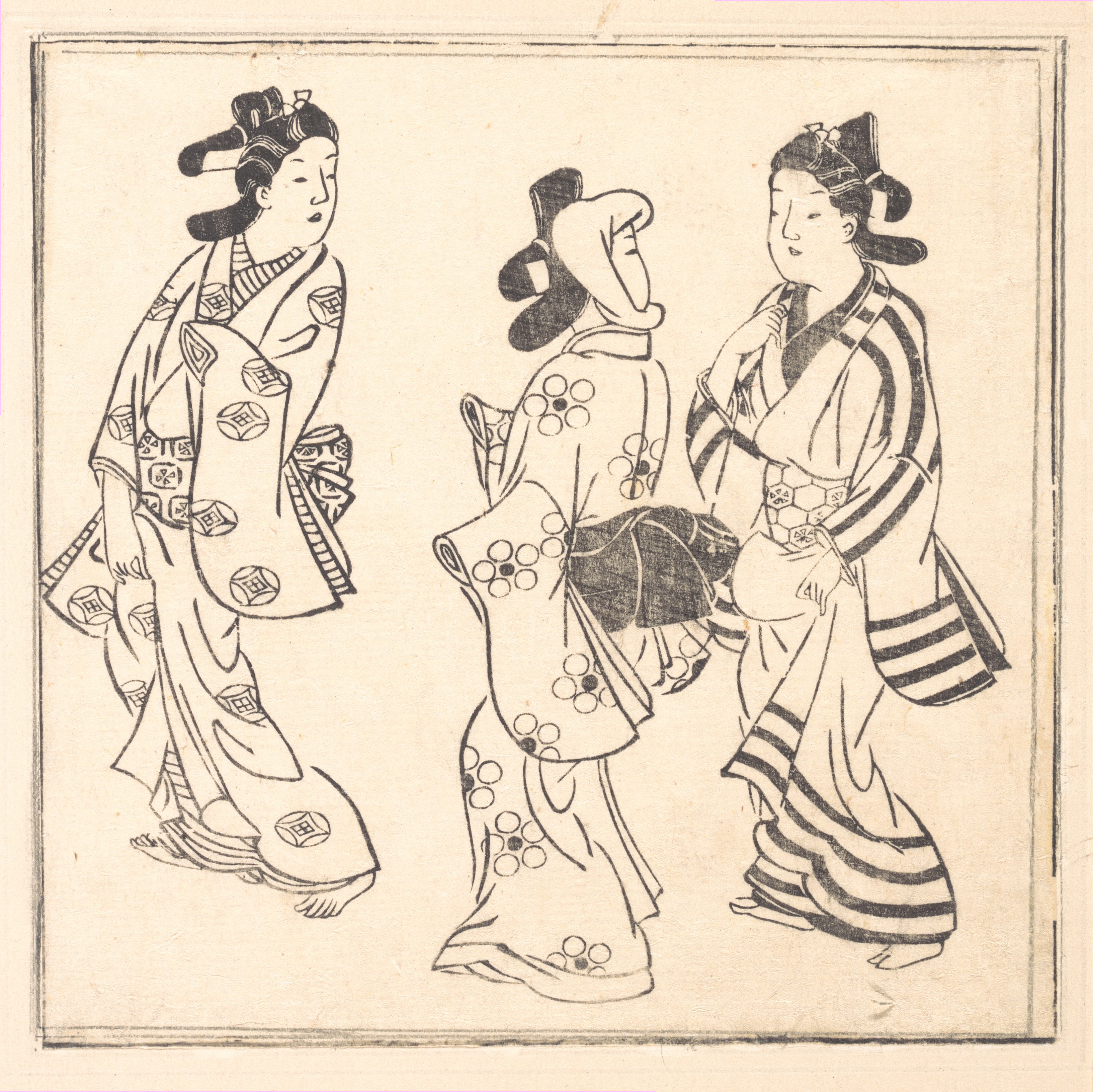
Leaf from a Book Entitled: Wakoku Hiaku-jo: One Hundred Japanese Women
Monochrome woodblock print; ink on paper

Fūryū sugatae hyakunin isshu
1695 Genroku 8
Woodblock- printed book; 3 vols.
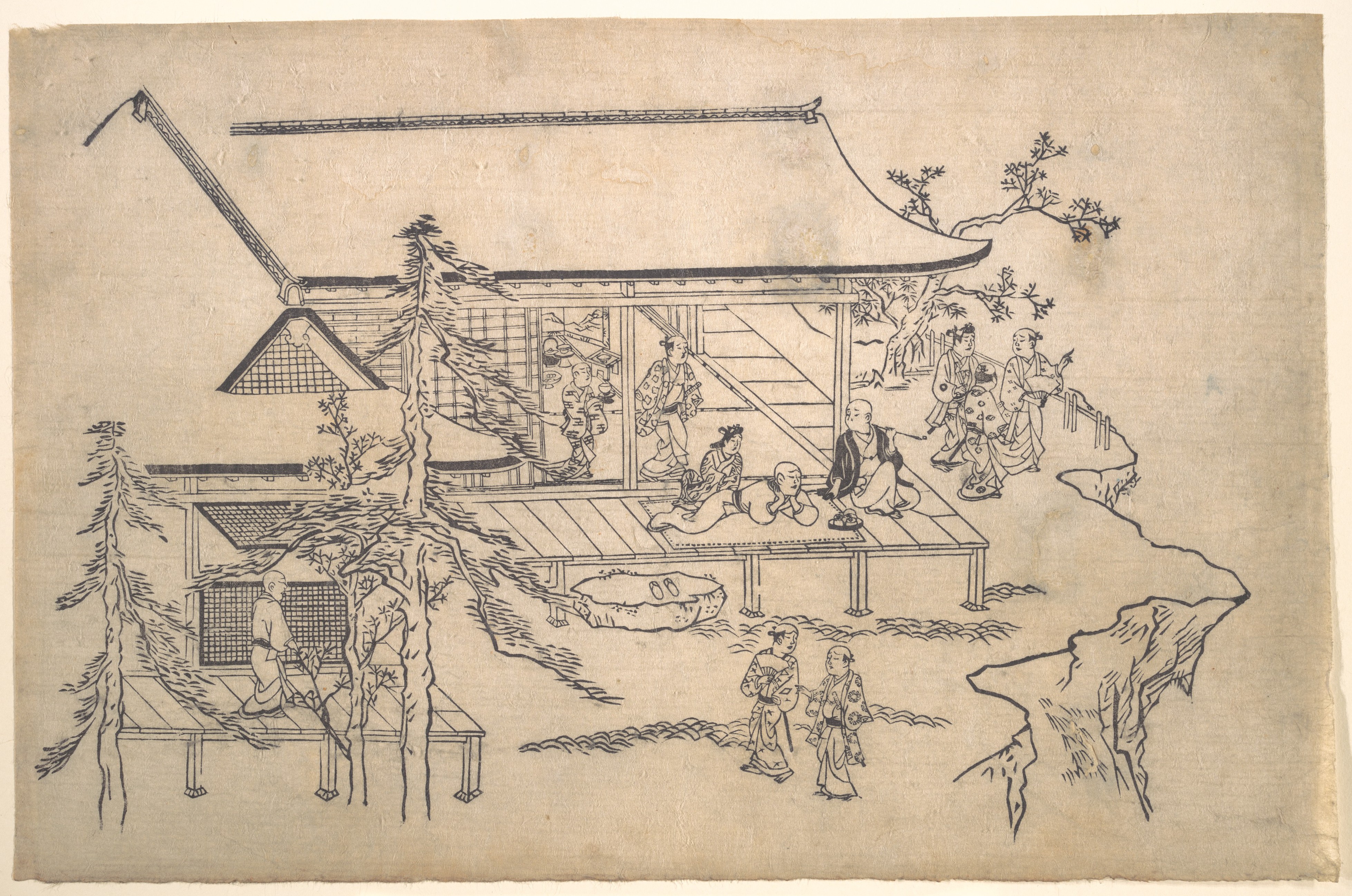
Flower-Viewing Scene
ca. 1685
Monochrome woodblock print (sumie); ink on paper
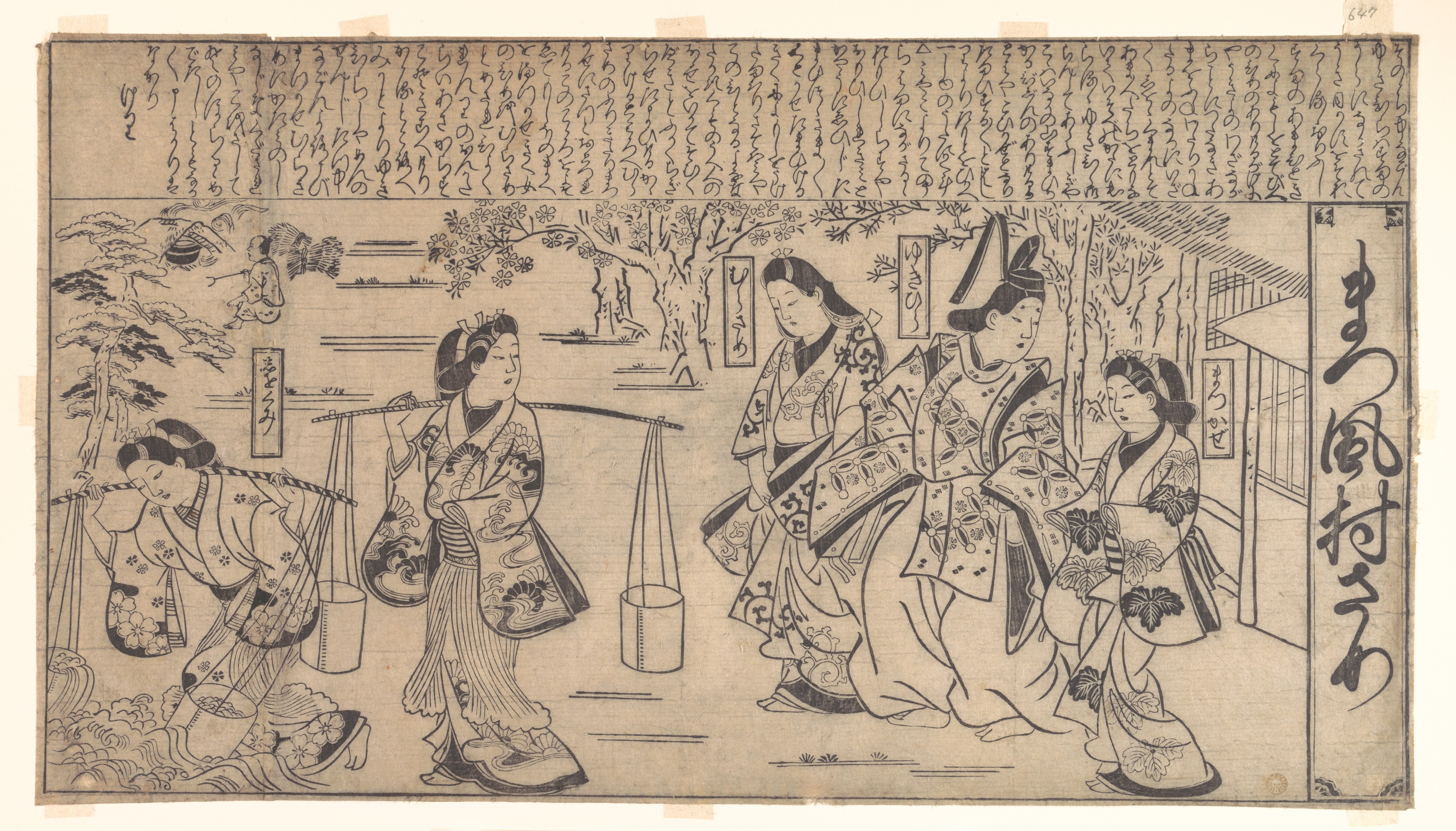
Matsukaze Murasame
ca. 1675–80
Woodblock print; ink and color on paper (sumi-e (ink print)
More Autumn Foliage Prints

A Farmhouse in Autumn, Ayashi, Miyagi Prefecture (Noka no aki (Miyagi ken Ayashi)
Noka no aki (Miyagi ken Ayashi
1946
Color woodblock print
Yoro Waterfall in Mino Province (Mino no kuni Yoro no taki), from the series Tour of the Waterfalls in Various Provinces (Shokoku Takimeguri)
Woodblock print

Tengui Rock, Autumn in Shiobara (Shiobara no aki (Tenguiwa))
1950
Color woodblock print

Autumn at the Arayu Hot Spring, Shiobara
Autumn 1920
Woodblock print, ink and color on paper
Frequently Asked Questions
Go to Takaoyama to see Maple Leaves having Twelve Points was created by Hishikawa Moronobu (菱川師宣) in ca. 1690.
Go to Takaoyama to see Maple Leaves having Twelve Points depicts autumn foliage.