
A sheet from a shunga album
- Date:
- 1680s
- Medium:
- Woodblock print; sumizuri-e
- Source:
- Art Institute of Chicago
Description
Held at the Art Institute of Chicago, this single sheet from a 1680s shunga album represents Moronobu's foundational contribution to the erotic print genre that would remain central to ukiyo-e for two centuries. Shunga, literally spring pictures, were explicit erotic woodblock prints and albums produced for private viewing across all classes of Edo society, and Moronobu was the first artist to treat the form with full pictorial seriousness. Printed in sumizuri-e, the single-block black-ink technique he favored before the development of color printing, the sheet would originally have been one of twelve, the conventional length of a shunga album. The composition demonstrates Moronobu's signature command of figural intimacy, with bodies arranged so that drapery, posture, and the architectural setting all participate in the erotic charge of the scene. His textile-background sensibility appears in the elaborate brocaded robes that frame the lovers, with patterns so detailed they nearly steal the eye from the figures themselves, a tension Moronobu uses to characteristic effect. This Art Institute of Chicago example, dating to the height of his career, helps document the formal language of pre-color shunga at the moment when Moronobu was establishing the visual conventions that Sukenobu, Harunobu, Utamaro, and Hokusai would all inherit and transform.
More Prints by Hishikawa Moronobu
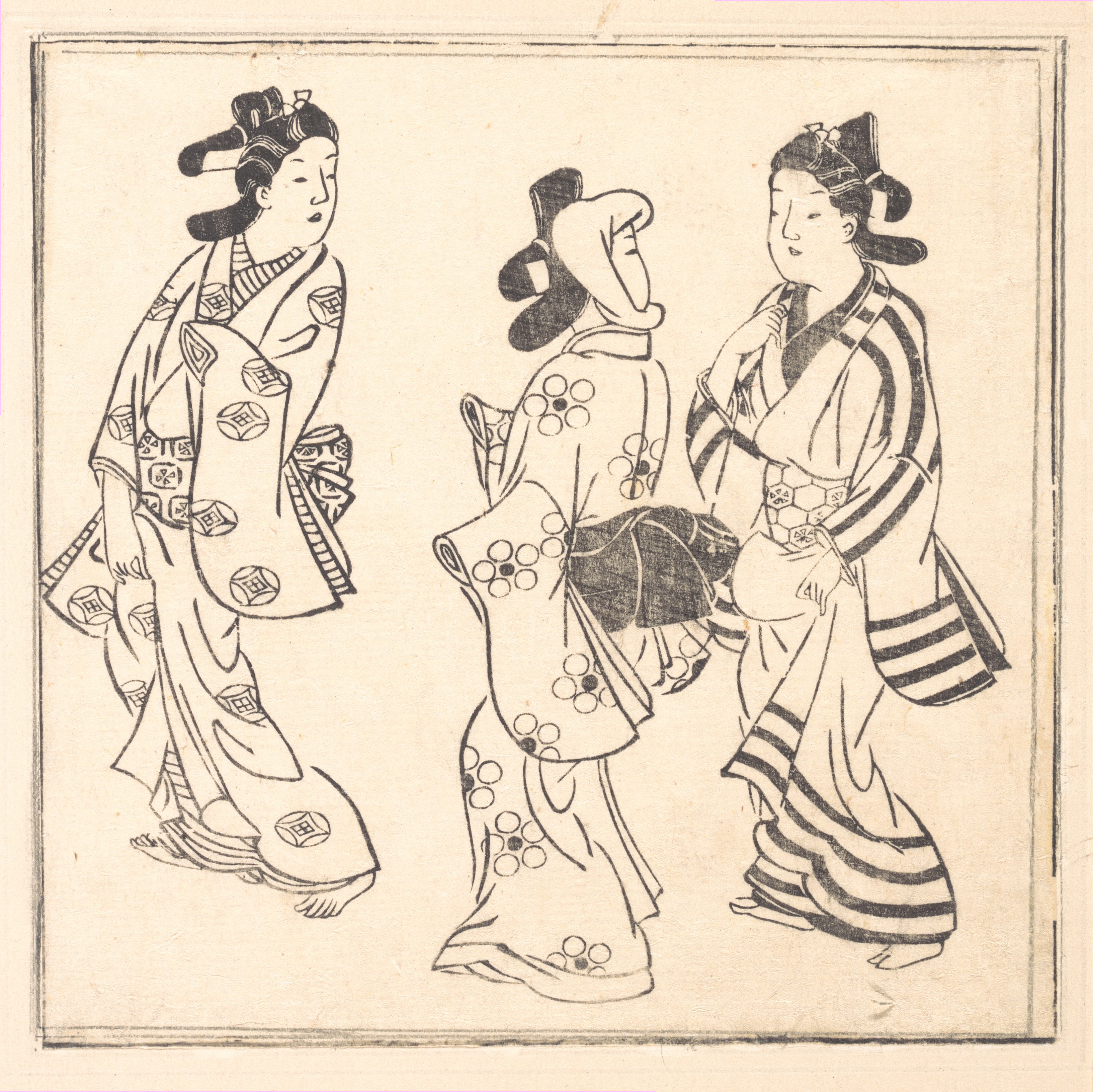
Leaf from a Book Entitled: Wakoku Hiaku-jo: One Hundred Japanese Women
Monochrome woodblock print; ink on paper

Fūryū sugatae hyakunin isshu
1695 Genroku 8
Woodblock- printed book; 3 vols.
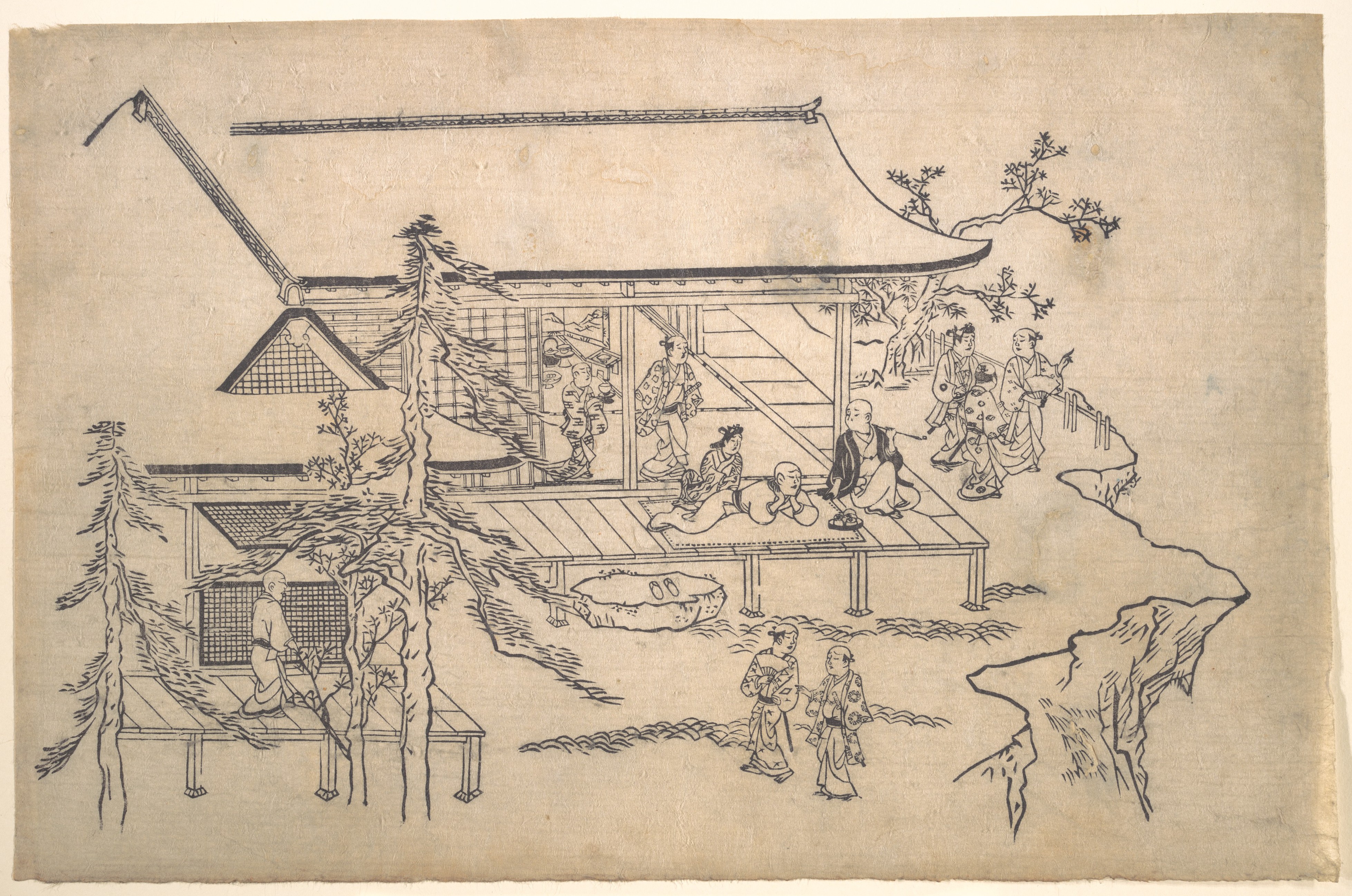
Flower-Viewing Scene
ca. 1685
Monochrome woodblock print (sumie); ink on paper
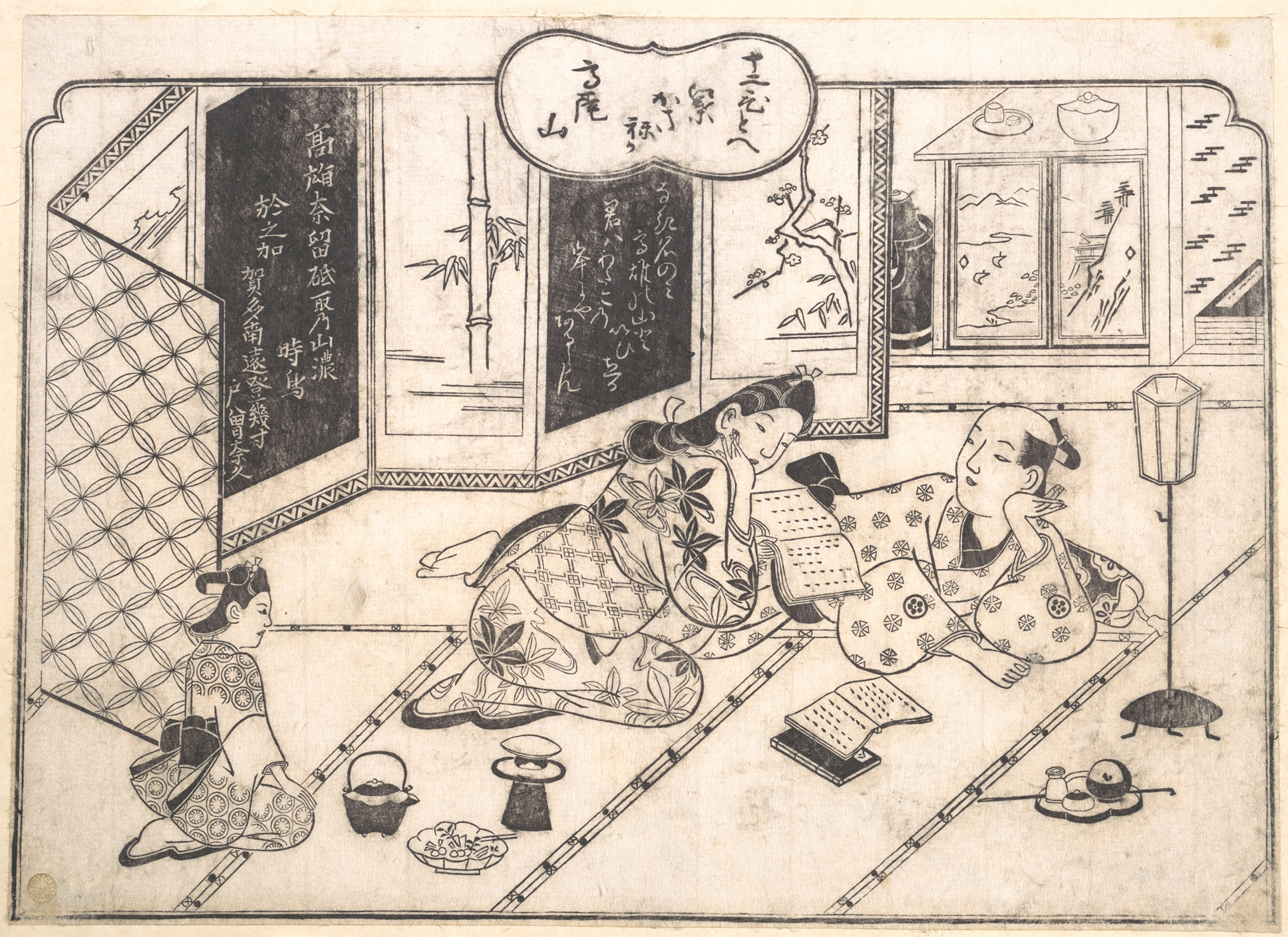
Go to Takaoyama to see Maple Leaves having Twelve Points
ca. 1690
Woodblock print; ink and color on paper
Frequently Asked Questions
A sheet from a shunga album was created by Hishikawa Moronobu (菱川師宣) in 1680s.