
Behind the Screen
- Date:
- c. 1673/81
- Medium:
- Woodblock print; sumizuri-e, oban yoko-e
- Source:
- Art Institute of Chicago
Description
Behind the Screen, a circa 1673 to 1681 sumizuri-e oban yoko-e in the Art Institute of Chicago, demonstrates Moronobu's signature use of architectural framing devices to organize erotic and intimate compositions. The byobu folding screen, a familiar element of Edo interiors, here serves both as a literal piece of furniture and as a compositional armature, dividing the picture plane and creating the partial concealment that gives the print its psychological charge. This use of screens as both architectural and narrative devices was a Moronobu innovation that subsequent ukiyo-e artists would borrow repeatedly. Printed in single-block black ink in the horizontal large-format oban yoko-e, the work shows how Moronobu could generate a sense of three-dimensional spatial recession purely through line, without color or perspective, by carefully managing the relationship between figure, drapery, and architectural element. The luxurious patterning of the screen itself, the elaborate brocades of the figures' robes, and the open, unmarked ground above and beside the action all coexist in a sophisticated visual hierarchy that demonstrates why Moronobu is credited not merely as the first ukiyo-e single-sheet artist but as the inventor of its compositional vocabulary.
More Prints by Hishikawa Moronobu
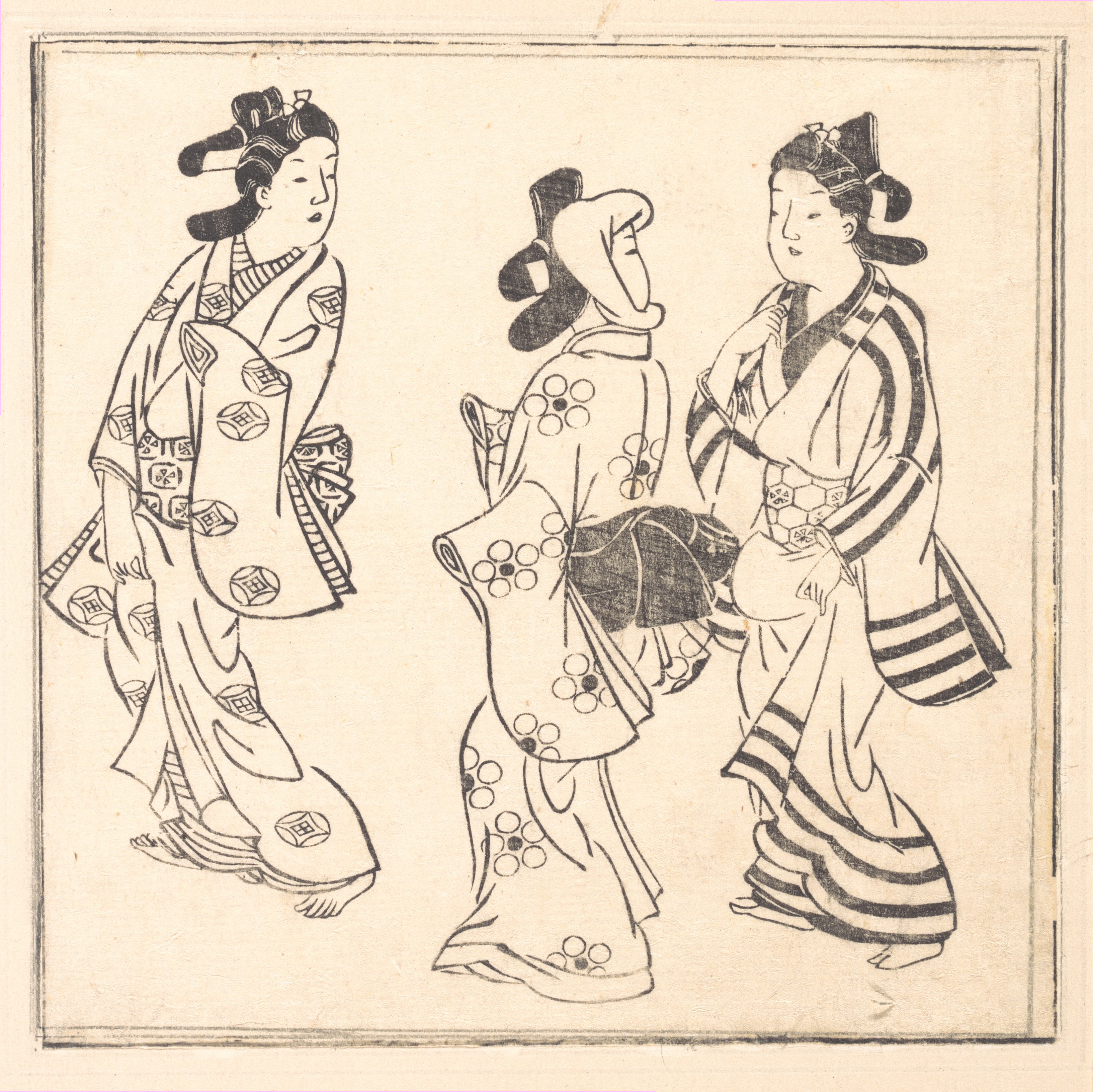
Leaf from a Book Entitled: Wakoku Hiaku-jo: One Hundred Japanese Women
Monochrome woodblock print; ink on paper

Fūryū sugatae hyakunin isshu
1695 Genroku 8
Woodblock- printed book; 3 vols.
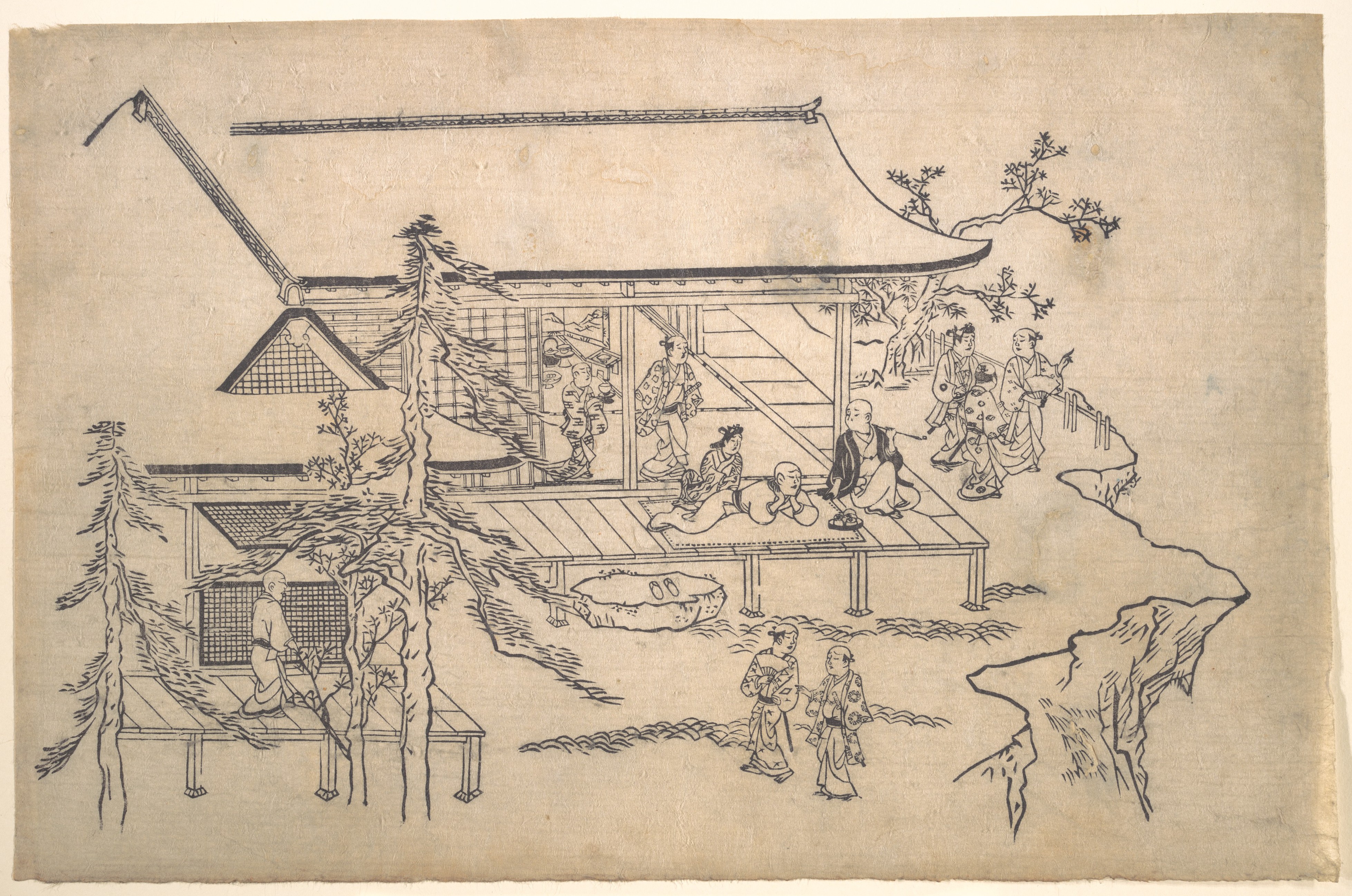
Flower-Viewing Scene
ca. 1685
Monochrome woodblock print (sumie); ink on paper
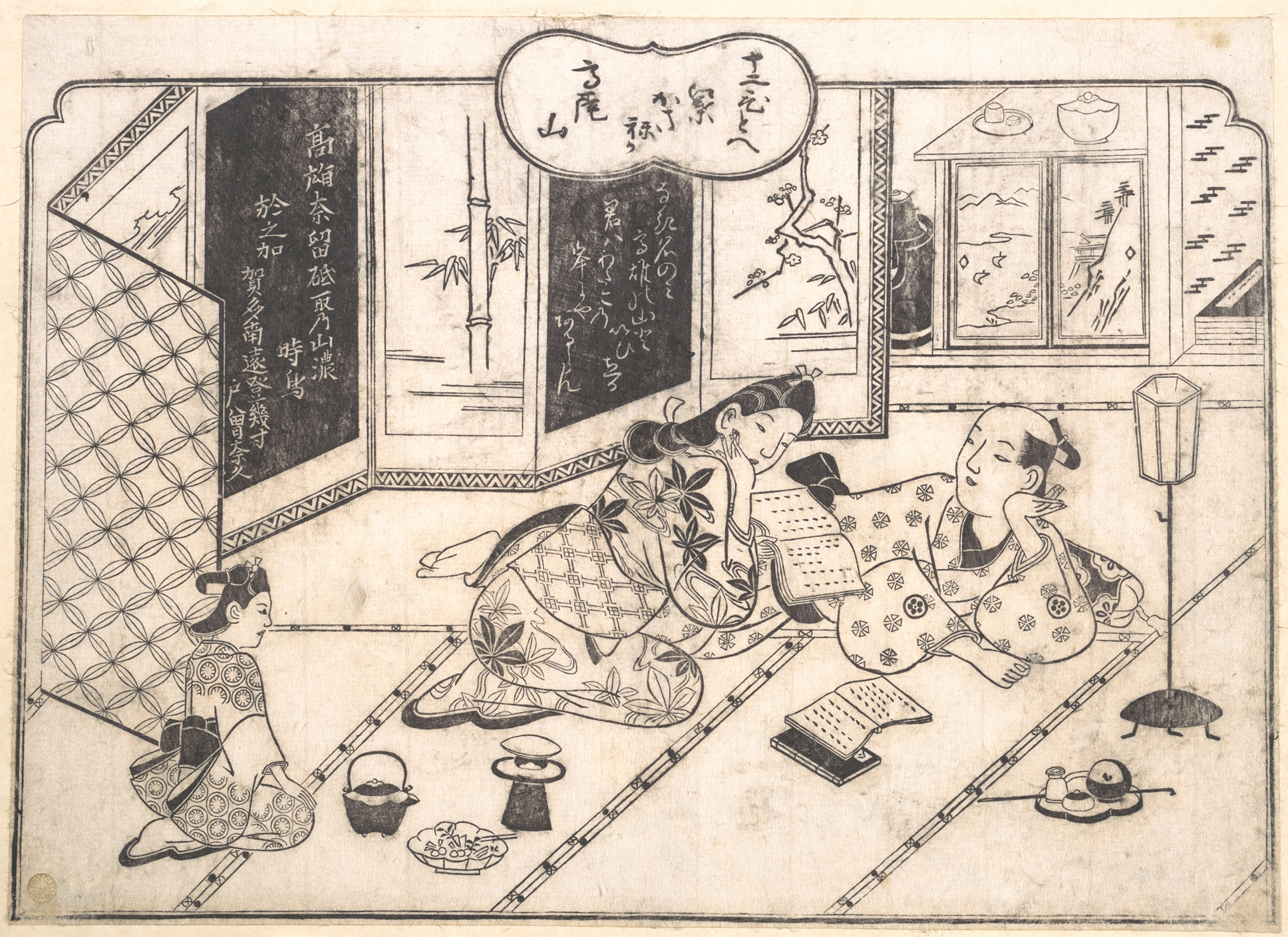
Go to Takaoyama to see Maple Leaves having Twelve Points
ca. 1690
Woodblock print; ink and color on paper
Frequently Asked Questions
Behind the Screen was created by Hishikawa Moronobu (菱川師宣) in c. 1673/81.