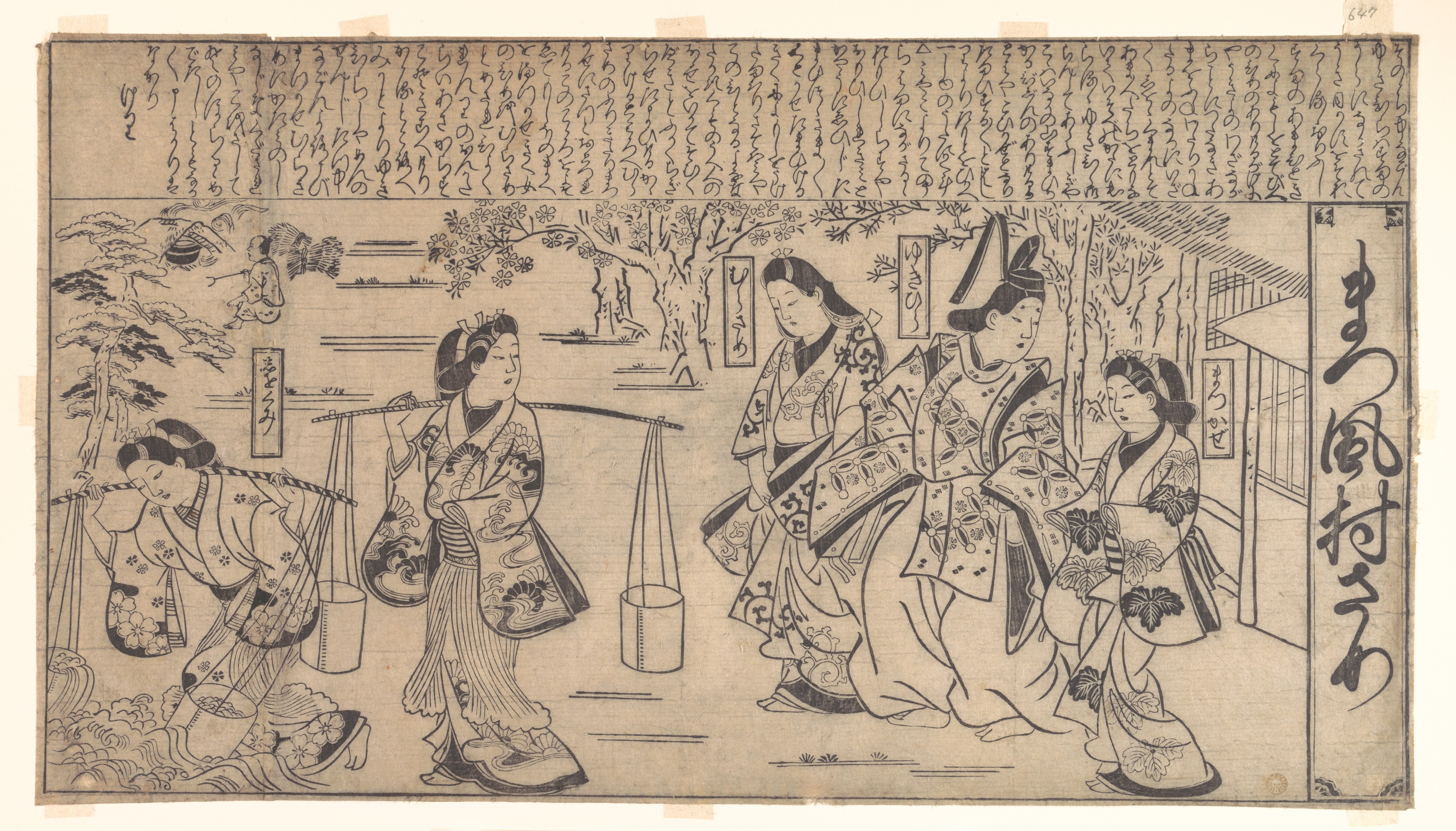
Matsukaze Murasame
- Date:
- ca. 1675–80
- Medium:
- Woodblock print; ink and color on paper (sumi-e (ink print)
- Source:
- Metropolitan Museum of Art
Description
Matsukaze Murasame, dated 1673 by the Metropolitan Museum of Art, is Hishikawa Moronobu's illustration of one of the most beloved love legends in classical Japanese literature. The story, known from Noh drama and earlier poetry, concerns the exiled Heian courtier Ariwara no Yukihira and the two sister salt-makers at Suma Bay—Matsukaze (Pine Wind) and Murasame (Autumn Shower)—who fall in love with him and continue to long for him after he returns to the capital. Moronobu sets the scene at the shore. The two sisters carry their wooden salt pails along a pine-fringed beach, the deep curves of their robes echoing the lines of the breaking waves, while Yukihira appears in his courtier's cap and trailing robes nearby. The ukiyo-e founder gives the figures the full visual emphasis: their silhouettes occupy almost the full height of the page, and the landscape is reduced to a few suggestive elements—pine trunks, a low horizon line, an open expanse of paper standing in for sea and sky. The economy of the design is what makes the print effective. Without filling the picture field, Moronobu calls up the sea wind, the brine on the sand, and the melancholy mood of the legend with a handful of inflected outlines. As an instance of early Edo ukiyo-e taking up classical Japanese subject matter, Matsukaze Murasame demonstrates how Hishikawa Moronobu deliberately bridged the high tradition of court literature and the new commercial picture book.
More Prints by Hishikawa Moronobu
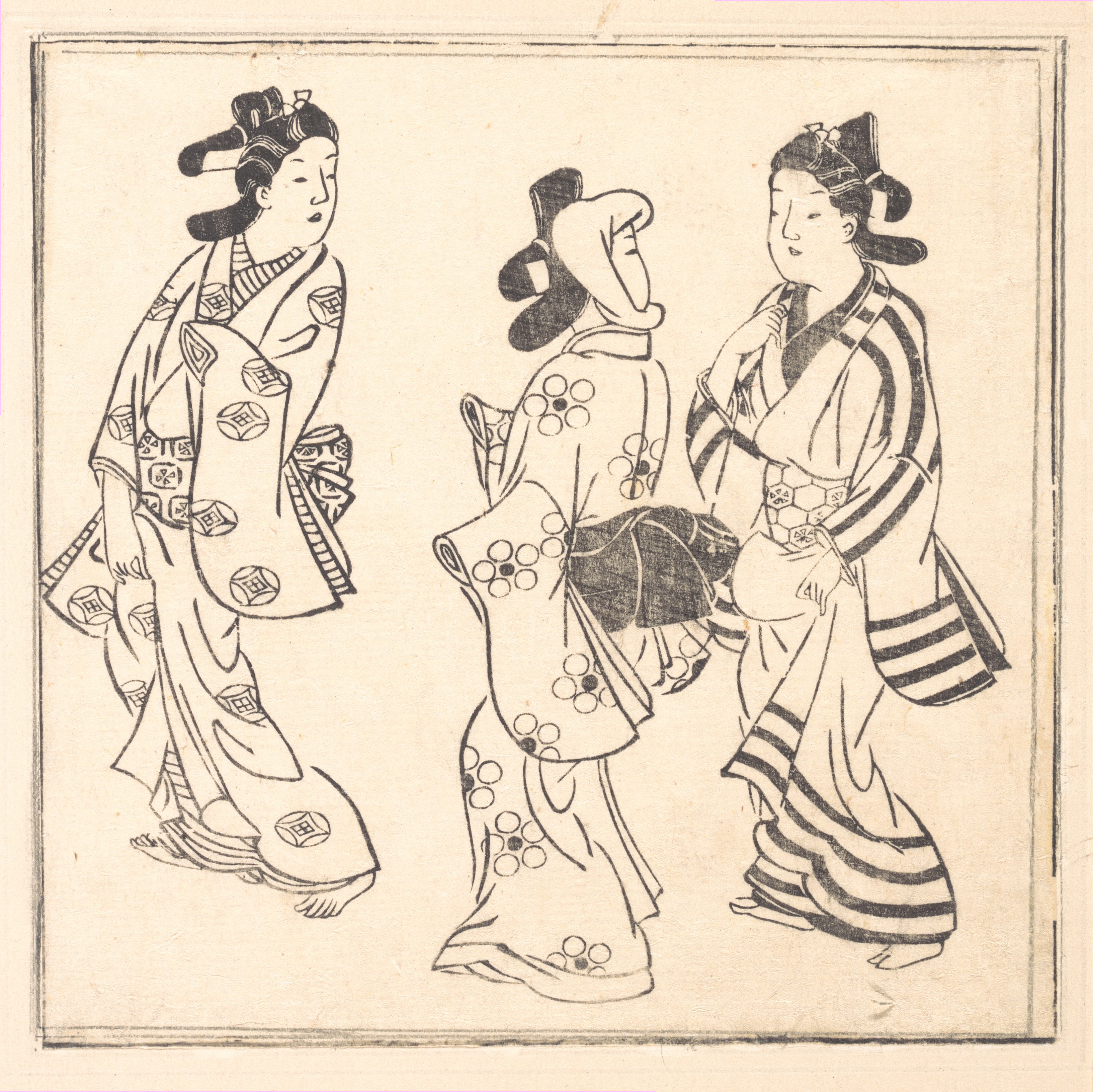
Leaf from a Book Entitled: Wakoku Hiaku-jo: One Hundred Japanese Women
Monochrome woodblock print; ink on paper

Fūryū sugatae hyakunin isshu
1695 Genroku 8
Woodblock- printed book; 3 vols.
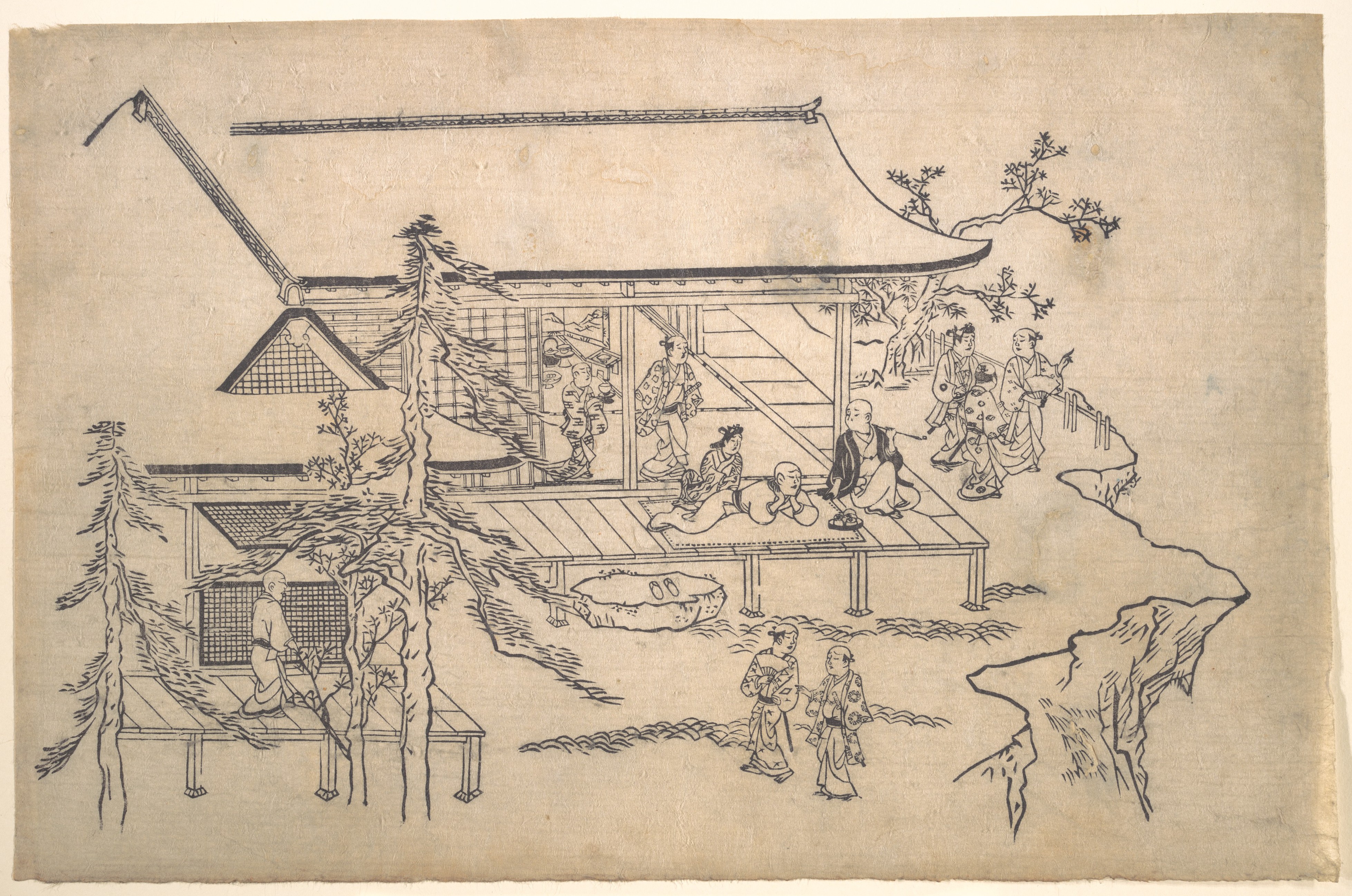
Flower-Viewing Scene
ca. 1685
Monochrome woodblock print (sumie); ink on paper
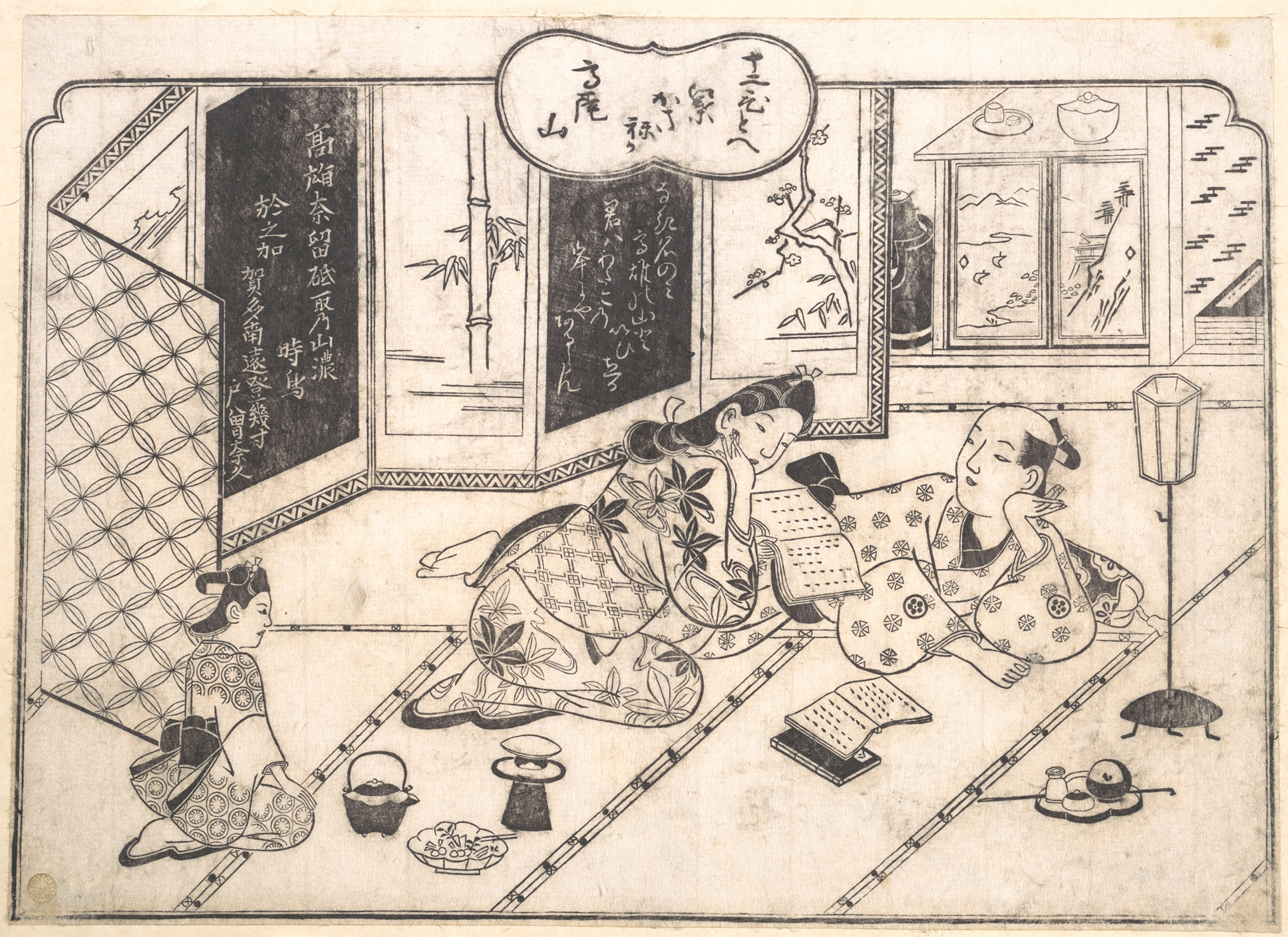
Go to Takaoyama to see Maple Leaves having Twelve Points
ca. 1690
Woodblock print; ink and color on paper
Frequently Asked Questions
Matsukaze Murasame was created by Hishikawa Moronobu (菱川師宣) in ca. 1675–80.