
Honbo, from the series "Scenes of Flower-viewing at Ueno (Ueno hanami no tei)"
- Date:
- c. 1681/84
- Medium:
- Woodblock print; oban, sumizuri-e
- Source:
- Art Institute of Chicago
Description
Honbo, from the series Scenes of Flower-viewing at Ueno (Ueno hanami no tei) and held in the Art Institute of Chicago, is a circa 1681 to 1684 oban sumizuri-e that depicts an architectural element of the Ueno hanami site, likely the main hall (honbo) of a temple precinct that hosted blossom-viewing crowds. The Kan'ei-ji temple complex at Ueno was one of Edo's most important Buddhist establishments and one of its premier public spaces for hanami; the temple's grounds, with their carefully maintained cherry trees, drew throngs of viewers each spring. Moronobu's depiction of the honbo as the site of festival activity demonstrates the strong topographical specificity of his Ueno series, which sought to document particular locations within the broader hanami experience. His architectural draftsmanship, evident in the rendering of the temple's tiled roof, posts, and verandas, sits in characteristic dialogue with his figural work, with festival-goers clustered around and within the building's open spaces. The print contributes to the foundational vocabulary of meisho-e, the genre of famous-place pictures that would develop into one of ukiyo-e's central modes, eventually flowering in the work of Hiroshige and Hokusai.
More Prints by Hishikawa Moronobu
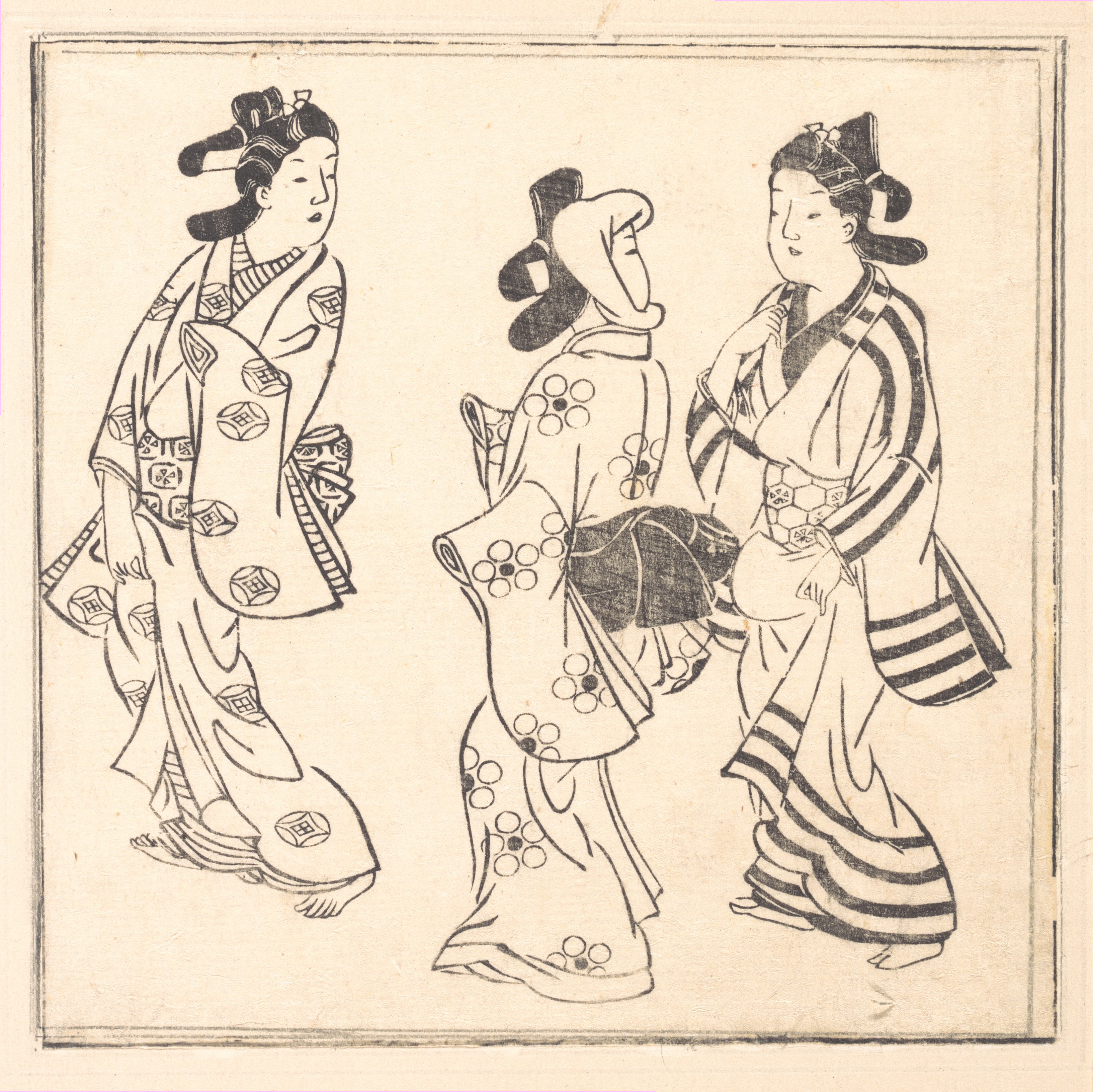
Leaf from a Book Entitled: Wakoku Hiaku-jo: One Hundred Japanese Women
Monochrome woodblock print; ink on paper

Fūryū sugatae hyakunin isshu
1695 Genroku 8
Woodblock- printed book; 3 vols.
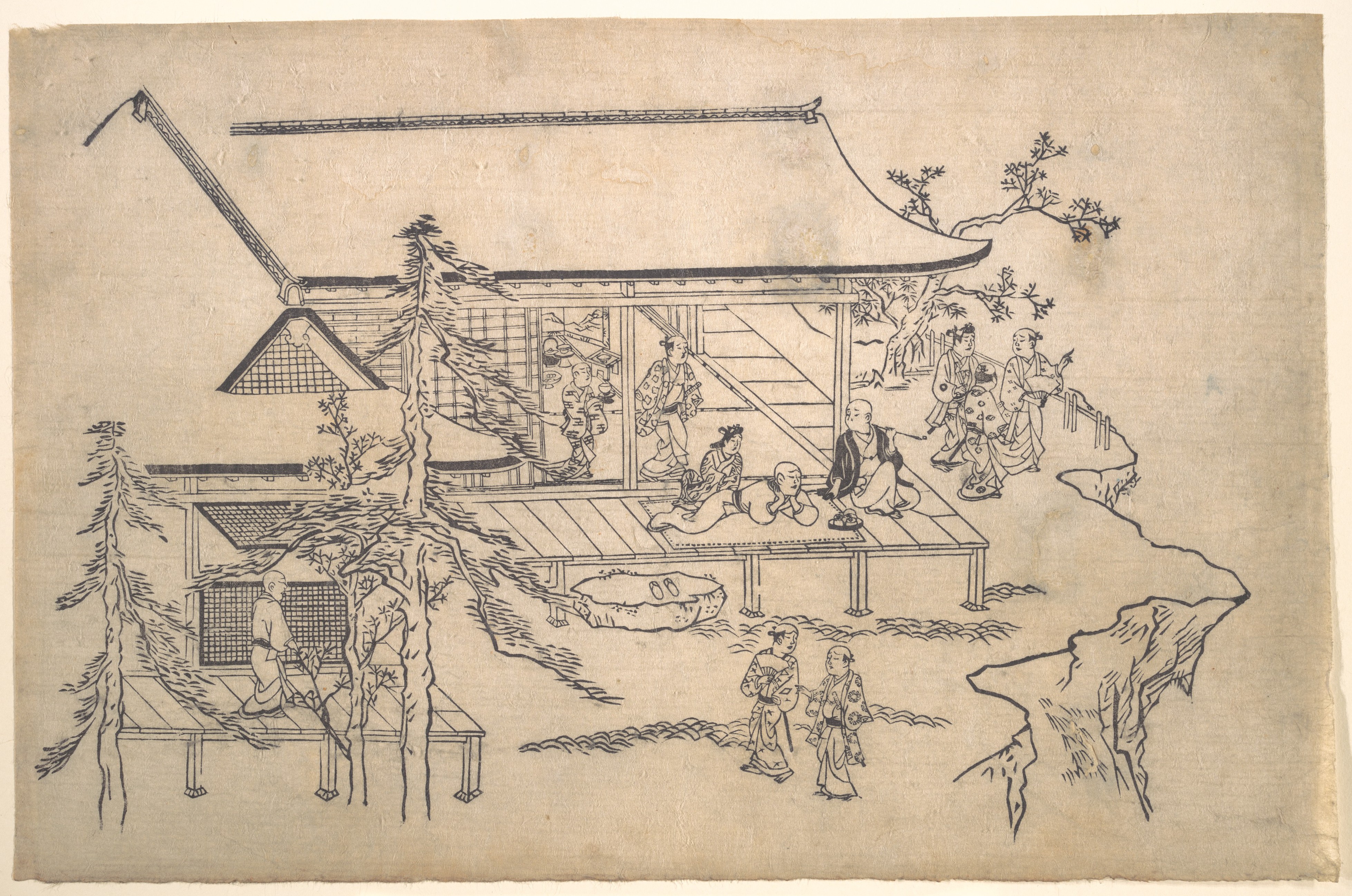
Flower-Viewing Scene
ca. 1685
Monochrome woodblock print (sumie); ink on paper
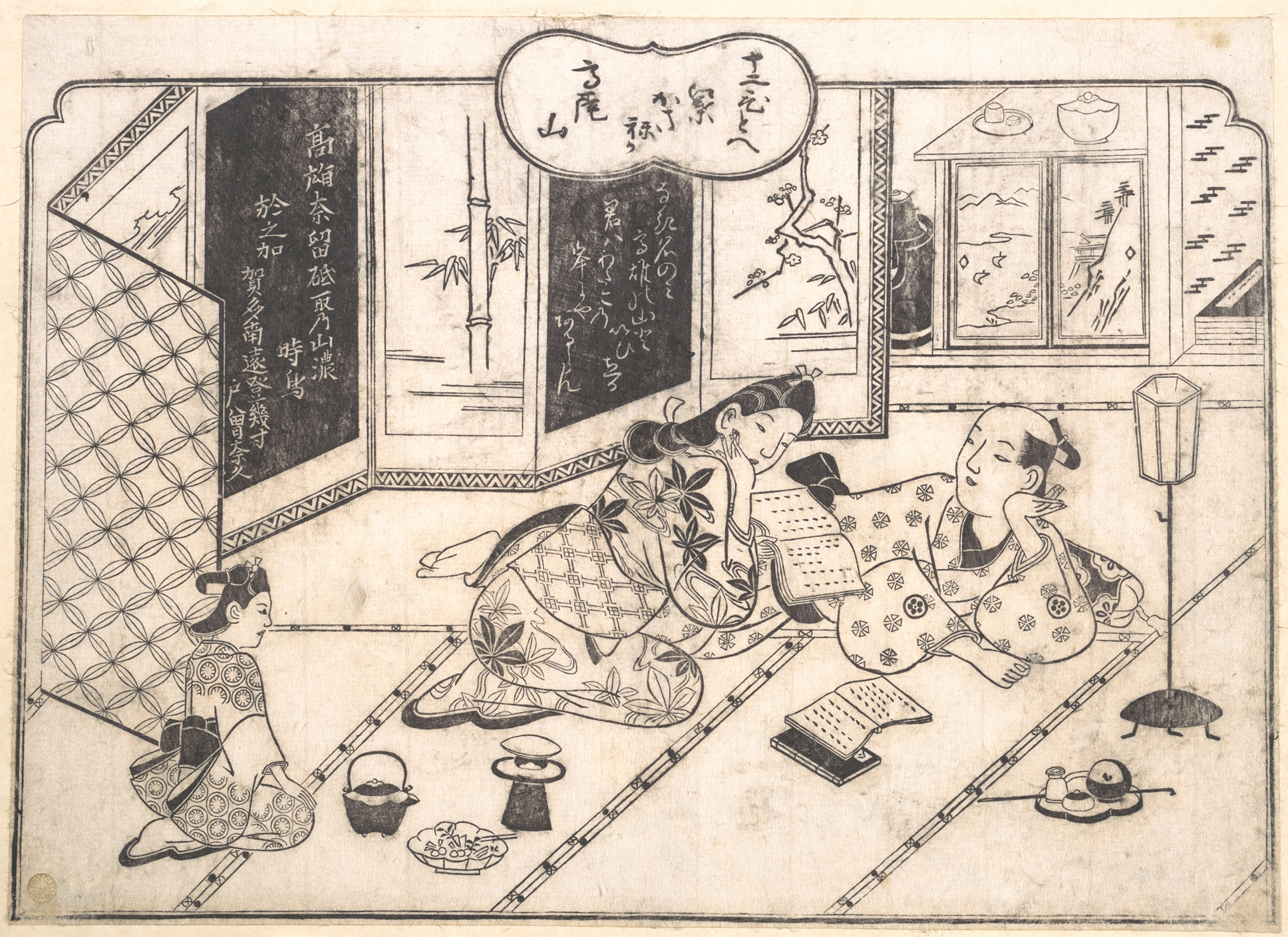
Go to Takaoyama to see Maple Leaves having Twelve Points
ca. 1690
Woodblock print; ink and color on paper
More Birds & Flowers Prints
Frequently Asked Questions
Honbo, from the series "Scenes of Flower-viewing at Ueno (Ueno hanami no tei)" was created by Hishikawa Moronobu (菱川師宣) in c. 1681/84.
Honbo, from the series "Scenes of Flower-viewing at Ueno (Ueno hanami no tei)" depicts birds & flowers.