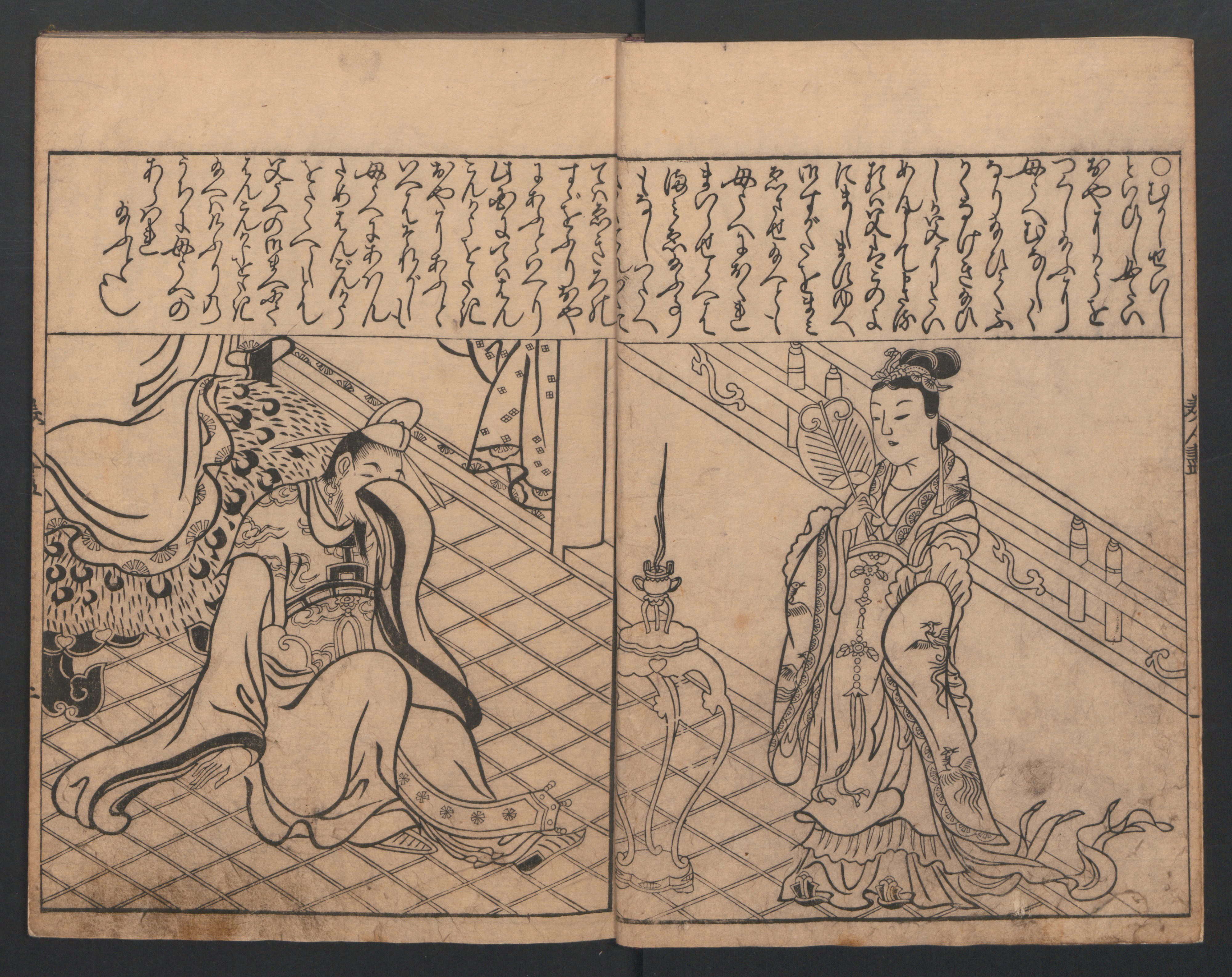
Illustrations of Beautiful Women (Bijin e-zukushi) 美人絵づくし
- Date:
- 1683, fifth month
- Medium:
- Set of three woodblock printed books; ink and color on paper
- Source:
- Metropolitan Museum of Art
Description
Illustrations of Beautiful Women (Bijin e-zukushi), dated 1683 by the Metropolitan Museum of Art, is an album of single-figure plates of women designed by Hishikawa Moronobu. Each leaf isolates one female figure against a largely empty ground, with little or no setting; the design's interest depends entirely on pose, hairstyle, and the cut and patterning of the kimono. Moronobu, the ukiyo-e founder, uses the format to lay out a typology of contemporary feminine style: a courtesan turning to glance over her shoulder, a townswoman walking with a fan tucked at her waist, a teahouse girl arranging her sash, a samurai's daughter in heavy formal layers. His outlining is thicker and more decisive than in earlier work, and the kimono patterns—geometric checks, scattered floral roundels, broad horizontal bands—are picked out with the spare confidence that became the prototype for the bijinga tradition. The album sits at a critical hinge in the history of early Edo ukiyo-e. By devoting an entire publication to single standing women, Moronobu effectively invented the format that Sukenobu, Kaigetsudō, and ultimately Utamaro would inherit a generation later. The Met's catalogue places the work in 1683, well within the artist's mature period, and the volume is regularly cited as a foundational document of the bijinga subgenre. For collectors and historians, Bijin e-zukushi is one of the clearest demonstrations of why Hishikawa Moronobu is identified as the ukiyo-e founder and why his single-figure prints continue to anchor early Edo ukiyo-e scholarship.
More Prints by Hishikawa Moronobu
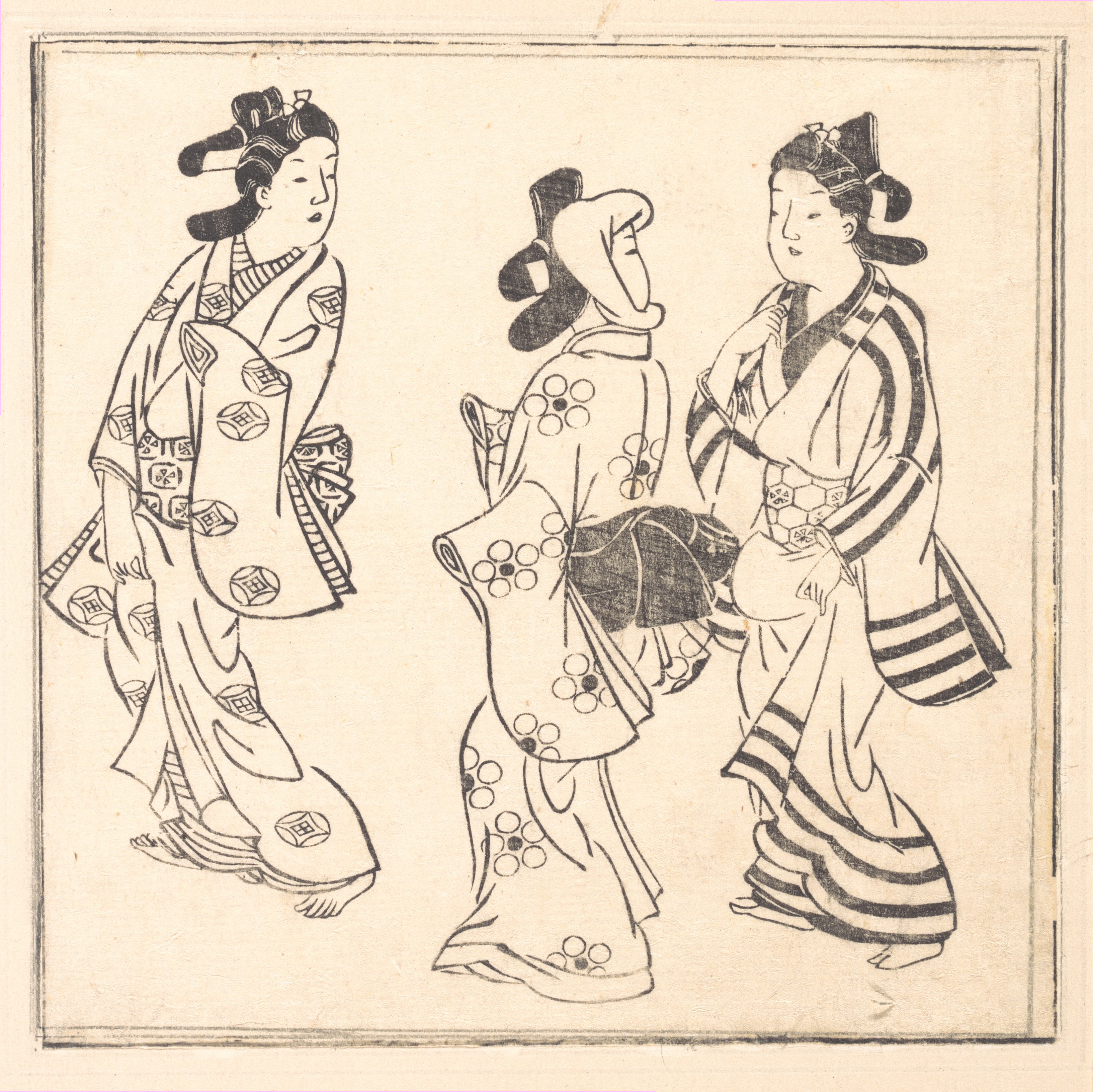
Leaf from a Book Entitled: Wakoku Hiaku-jo: One Hundred Japanese Women
Monochrome woodblock print; ink on paper

Fūryū sugatae hyakunin isshu
1695 Genroku 8
Woodblock- printed book; 3 vols.
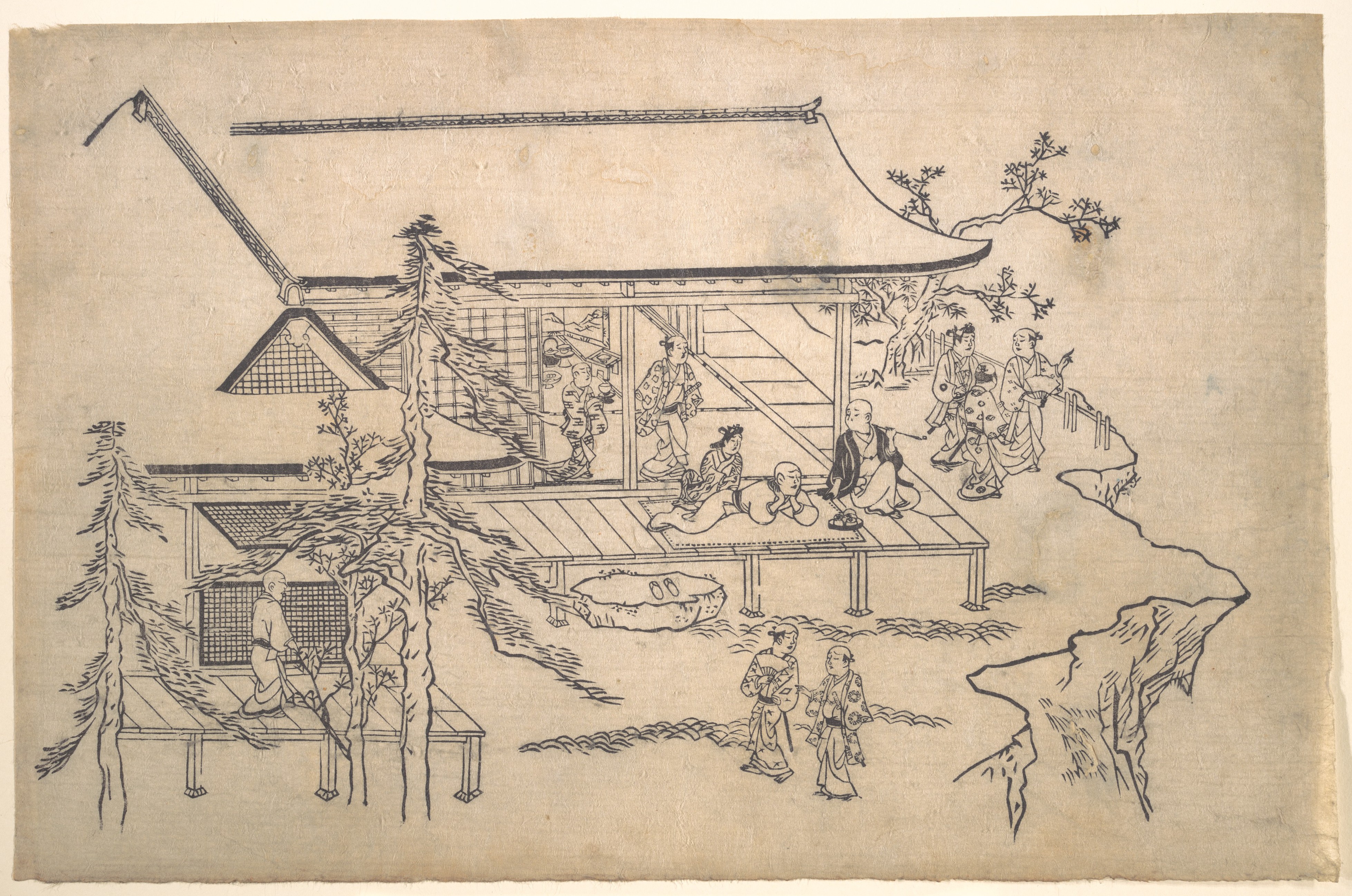
Flower-Viewing Scene
ca. 1685
Monochrome woodblock print (sumie); ink on paper
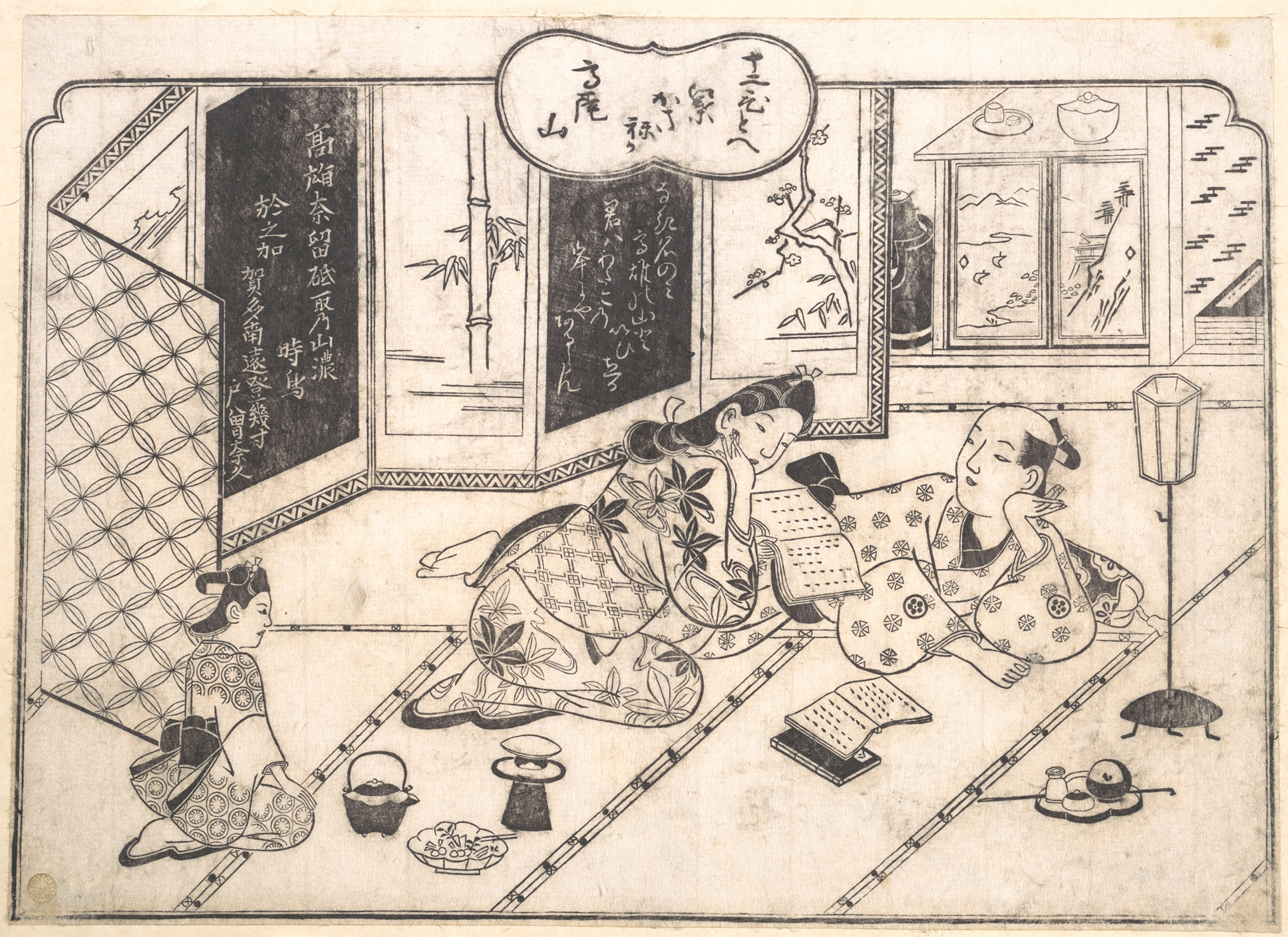
Go to Takaoyama to see Maple Leaves having Twelve Points
ca. 1690
Woodblock print; ink and color on paper
Frequently Asked Questions
Illustrations of Beautiful Women (Bijin e-zukushi) 美人絵づくし was created by Hishikawa Moronobu (菱川師宣) in 1683, fifth month.