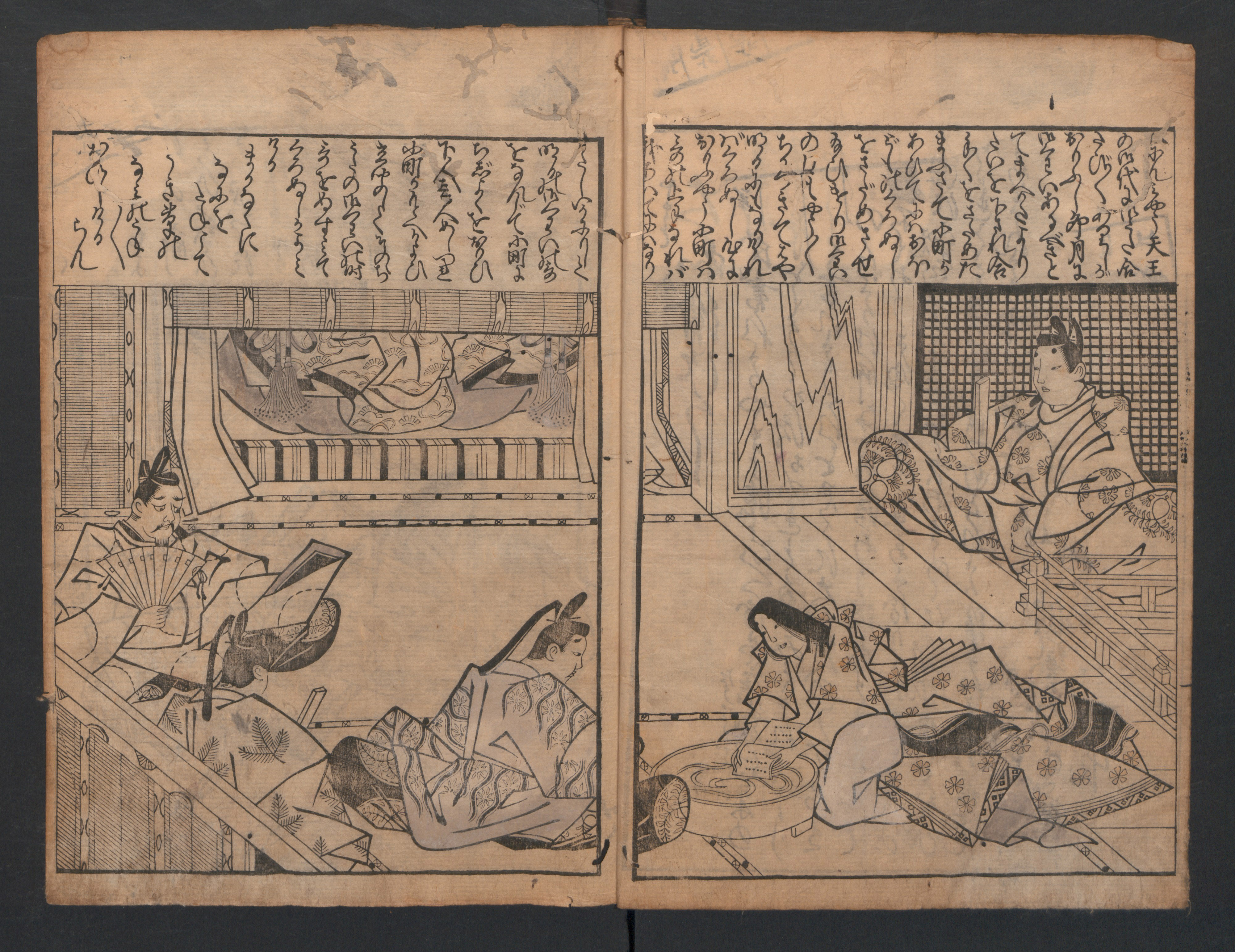
Illustrations of Japanese Painting Themes (Yamato-e zukushi) 大和絵づくし
- Date:
- 1686, ninth month
- Medium:
- Woodblock printed book; ink on paper
- Source:
- Metropolitan Museum of Art
Description
Illustrations of Japanese Painting Themes (Yamato-e zukushi), dated 1686 in the Metropolitan Museum of Art, is a survey volume by Hishikawa Moronobu cataloguing the canonical subjects of yamato-e—the indigenous Japanese painting tradition associated with the Heian court and its successors. The book moves through famous literary and historical scenes: episodes from Genji monogatari and Ise monogatari, vignettes from the Tale of the Heike, set pieces from the lives of poets and saints, and the recurring seasonal compositions of moon-viewing, snowy bridges, and cherry-blossom outings that had been established subjects of court painting for centuries. The ukiyo-e founder draws each scene in compact rectangular vignettes, often two to a page, with the title of the subject inscribed alongside. The result functions as both a reader's reference and a painter's guidebook. Moronobu adapts his usual style to the project, restraining his line slightly to evoke Tosa-school precedents while still keeping the work unmistakably his own. The act of compiling these subjects into a printed book is itself notable. By gathering the high tradition of yamato-e and reissuing it through commercial publishing, Hishikawa Moronobu was arguing that early Edo ukiyo-e was not merely an entertainment for the floating world but a legitimate vehicle for the central pictorial tradition of Japan. The Met preserves the volume as part of its core early Edo ukiyo-e holdings, and it remains a key document for understanding how the new urban print culture in late seventeenth-century Edo absorbed and redistributed the older painting canon.
More Prints by Hishikawa Moronobu
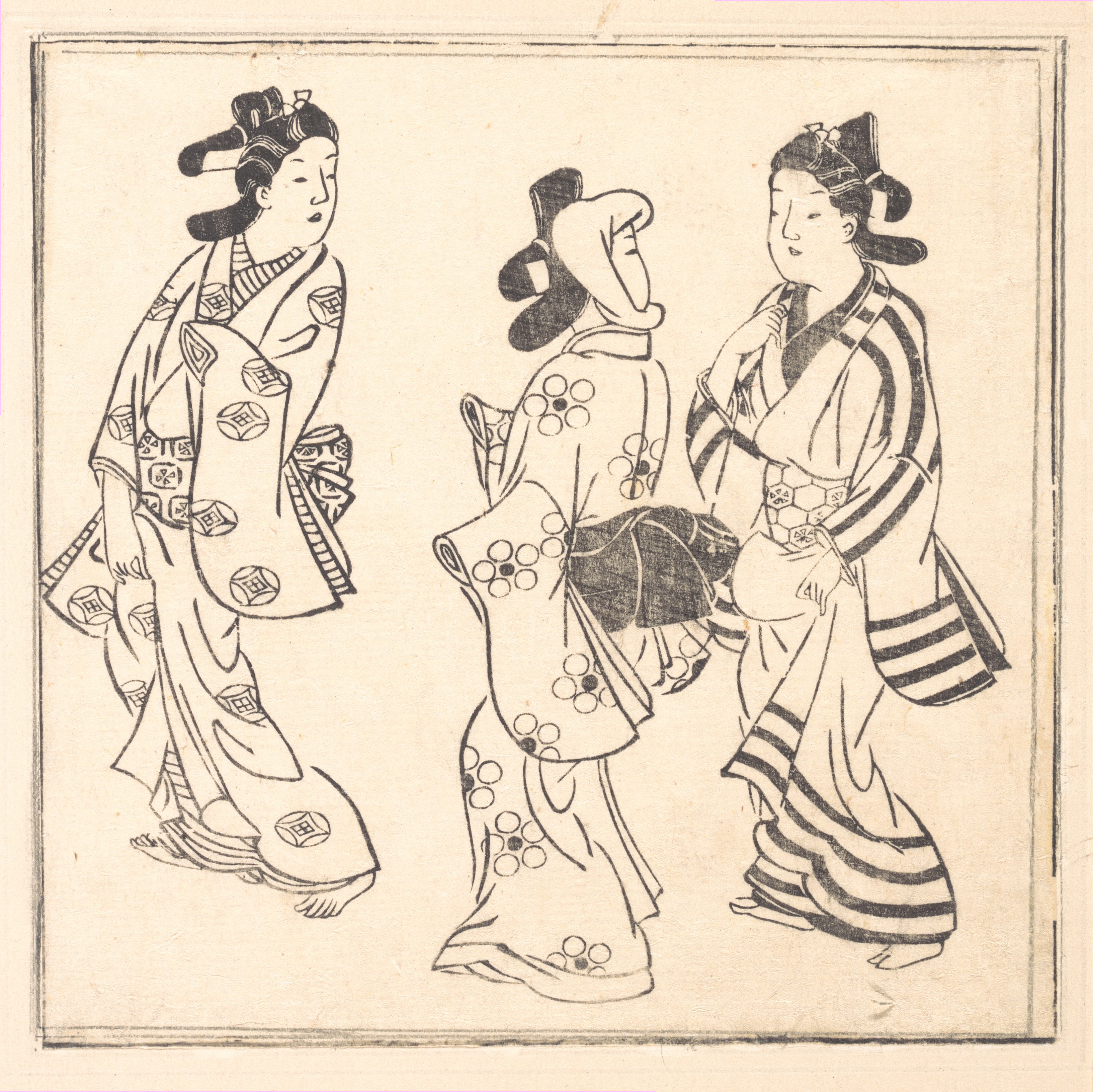
Leaf from a Book Entitled: Wakoku Hiaku-jo: One Hundred Japanese Women
Monochrome woodblock print; ink on paper

Fūryū sugatae hyakunin isshu
1695 Genroku 8
Woodblock- printed book; 3 vols.
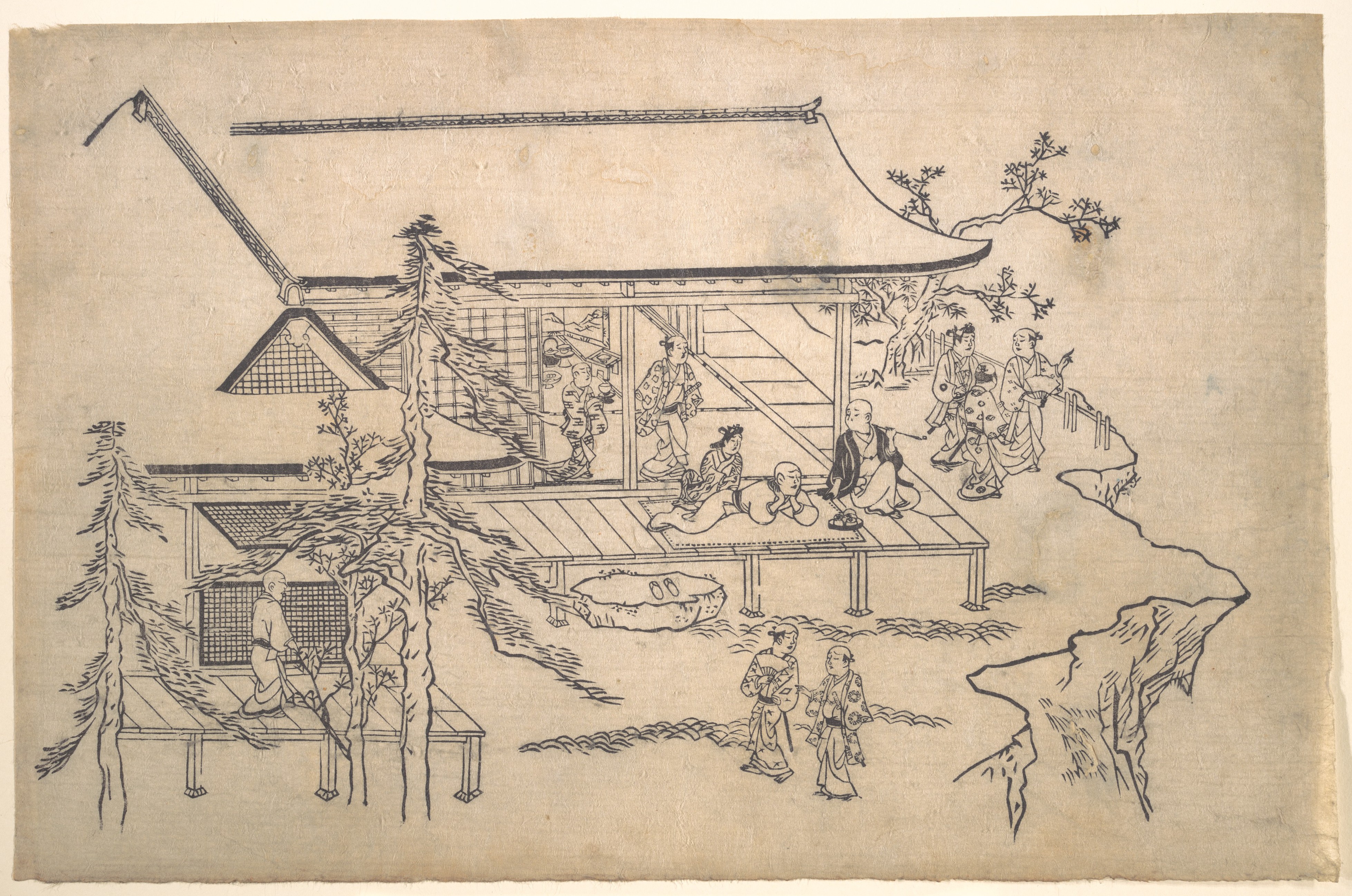
Flower-Viewing Scene
ca. 1685
Monochrome woodblock print (sumie); ink on paper
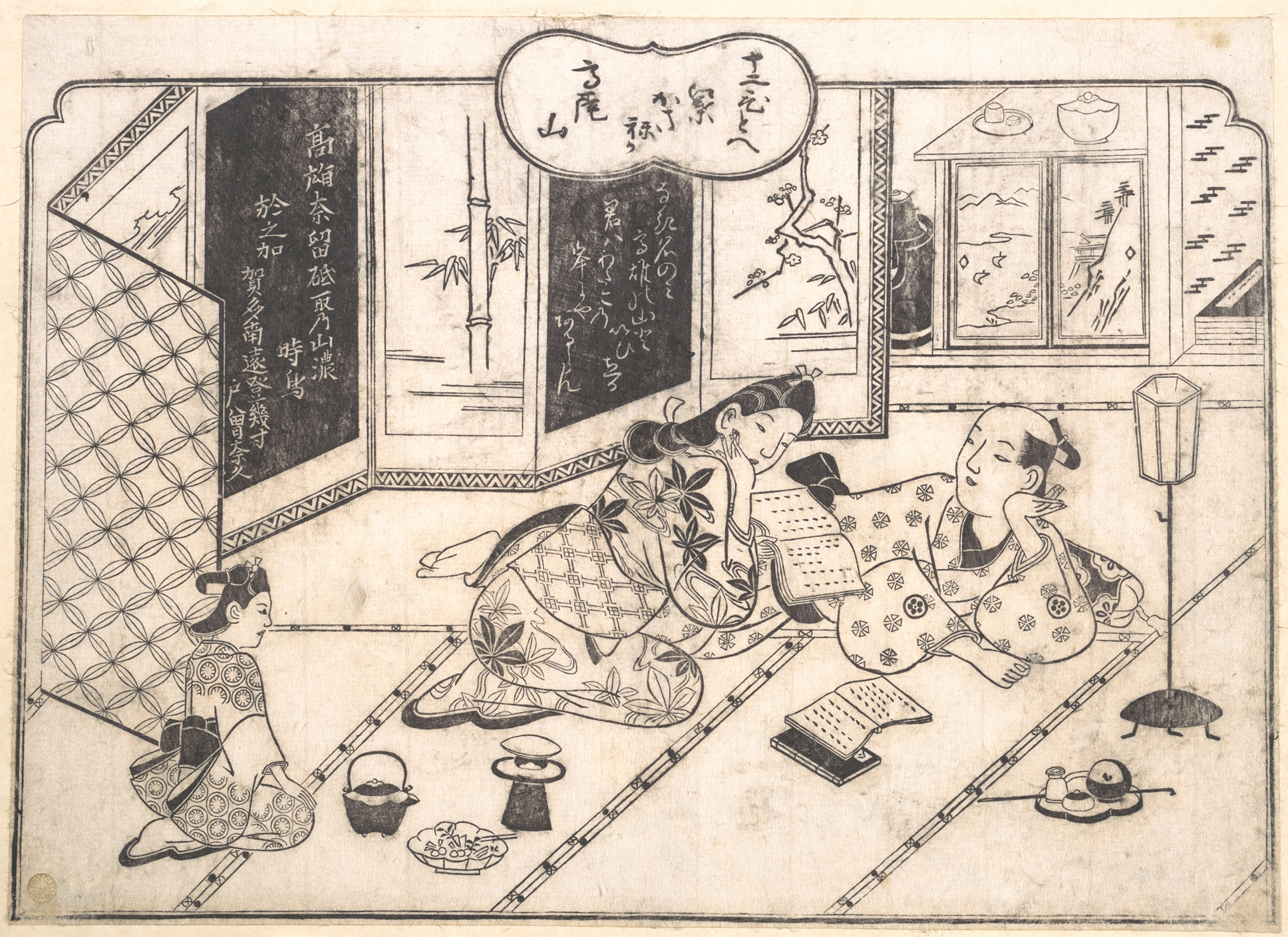
Go to Takaoyama to see Maple Leaves having Twelve Points
ca. 1690
Woodblock print; ink and color on paper
Frequently Asked Questions
Illustrations of Japanese Painting Themes (Yamato-e zukushi) 大和絵づくし was created by Hishikawa Moronobu (菱川師宣) in 1686, ninth month.