
Kyōgen zukushi
- Date:
- 1678
- Medium:
- Woodblock- printed book; 1 vol.
- Source:
- Art Institute of Chicago
Description
Kyōgen zukushi is an illustrated book by Hishikawa Moronobu, the ukiyo-e founder whose workshop transformed Edo's print culture in the second half of the seventeenth century. Held in the Art Institute of Chicago's Japanese collection, the work surveys kyōgen, the comic theatrical interludes performed between Noh plays. Moronobu draws stock figures—lords, daimyō retainers, monks, footmen, and mischievous servants—in the full range of postures the kyōgen stage demanded. His brushwork is thick, confident, and built for clarity at small reading scale: faces are sketched with a few decisive strokes, robes fall in sweeping black outlines, and the patterns of kataginu shoulder pieces and hakama trousers carry the visual weight. There is no chiaroscuro and almost no background. Each page reads like a freeze-frame of comic timing, the kind of image a literate Edo townsman could use as both reference book and entertainment. In the long arc of early Edo ukiyo-e, this title sits at a critical juncture. Moronobu had begun signing his own illustrated books in the 1670s, breaking with the anonymity of earlier ehon and asserting the designer's identity on the title page. By compiling kyōgen subjects he was bringing the popular stage into the same picture-book format he used for courtesans, classical poetry, and Edo street life, and in doing so he was knitting together the visual vocabulary later masters of ukiyo-e would inherit. The Art Institute of Chicago records the volume as part of its substantial holdings of Moronobu and his school. The book stands as evidence of how Hishikawa Moronobu, working at the edge of professional theater and commercial publishing, turned printed pictures into a serious commercial art.
More Prints by Hishikawa Moronobu
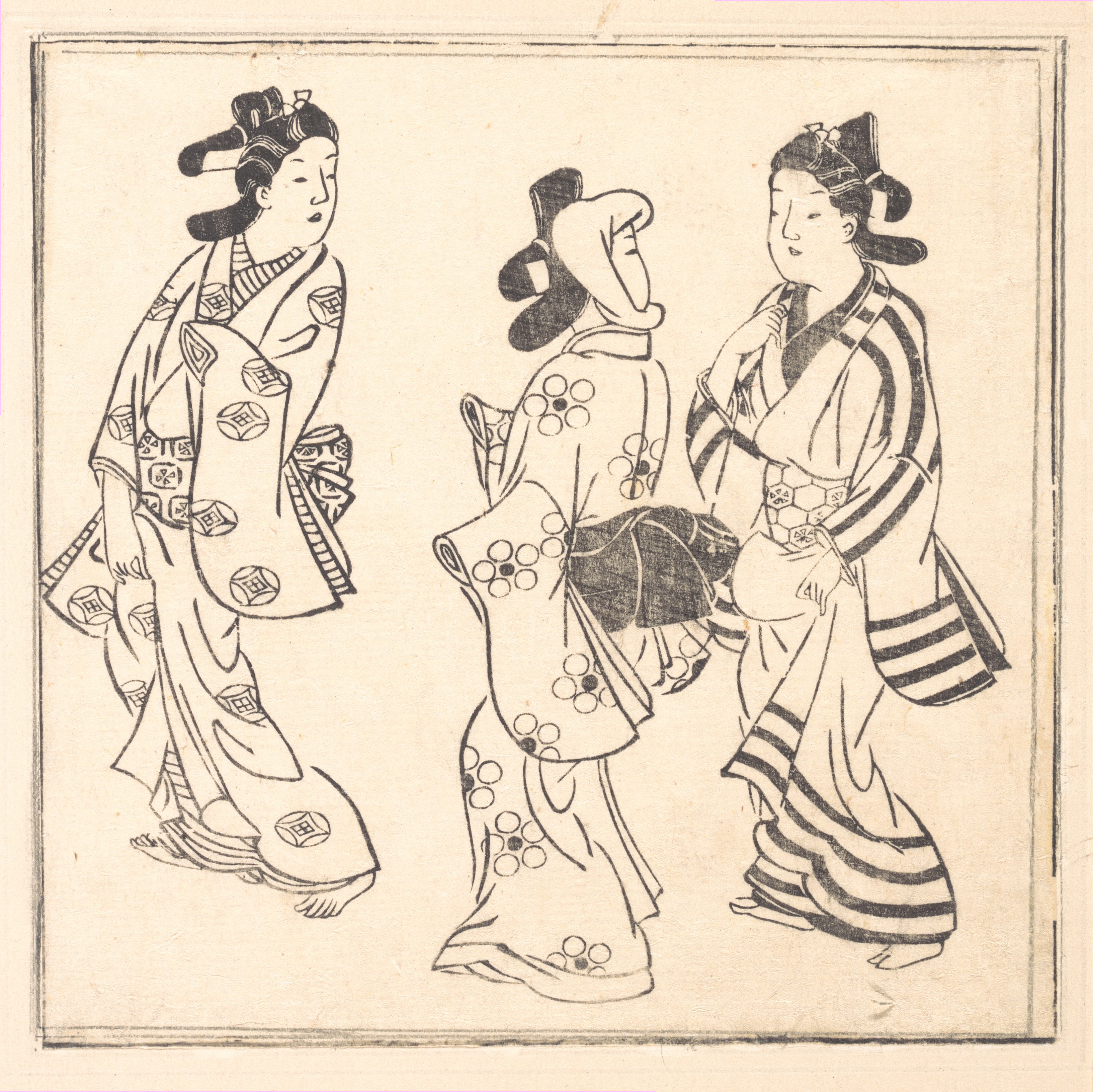
Leaf from a Book Entitled: Wakoku Hiaku-jo: One Hundred Japanese Women
Monochrome woodblock print; ink on paper

Fūryū sugatae hyakunin isshu
1695 Genroku 8
Woodblock- printed book; 3 vols.
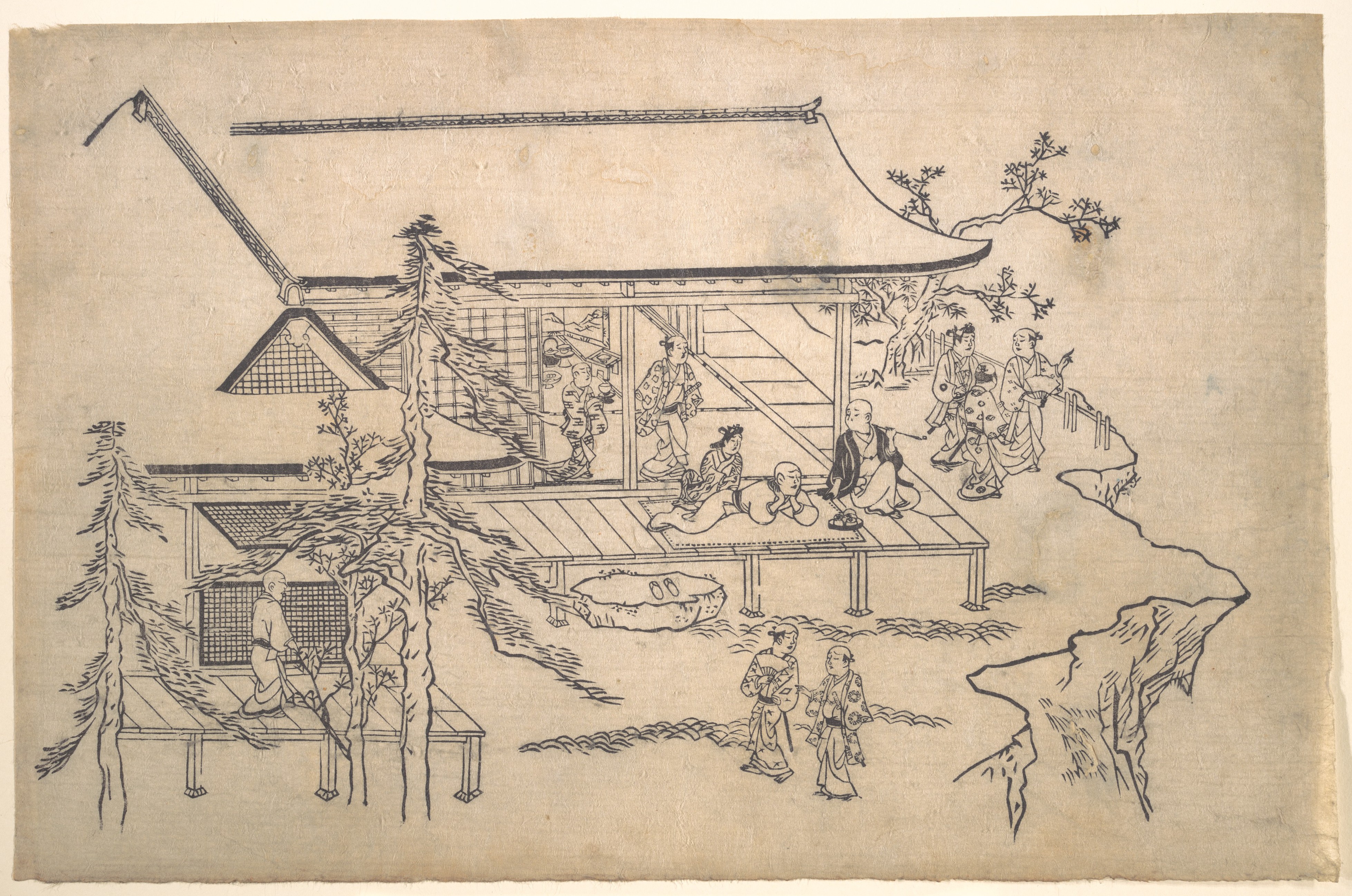
Flower-Viewing Scene
ca. 1685
Monochrome woodblock print (sumie); ink on paper
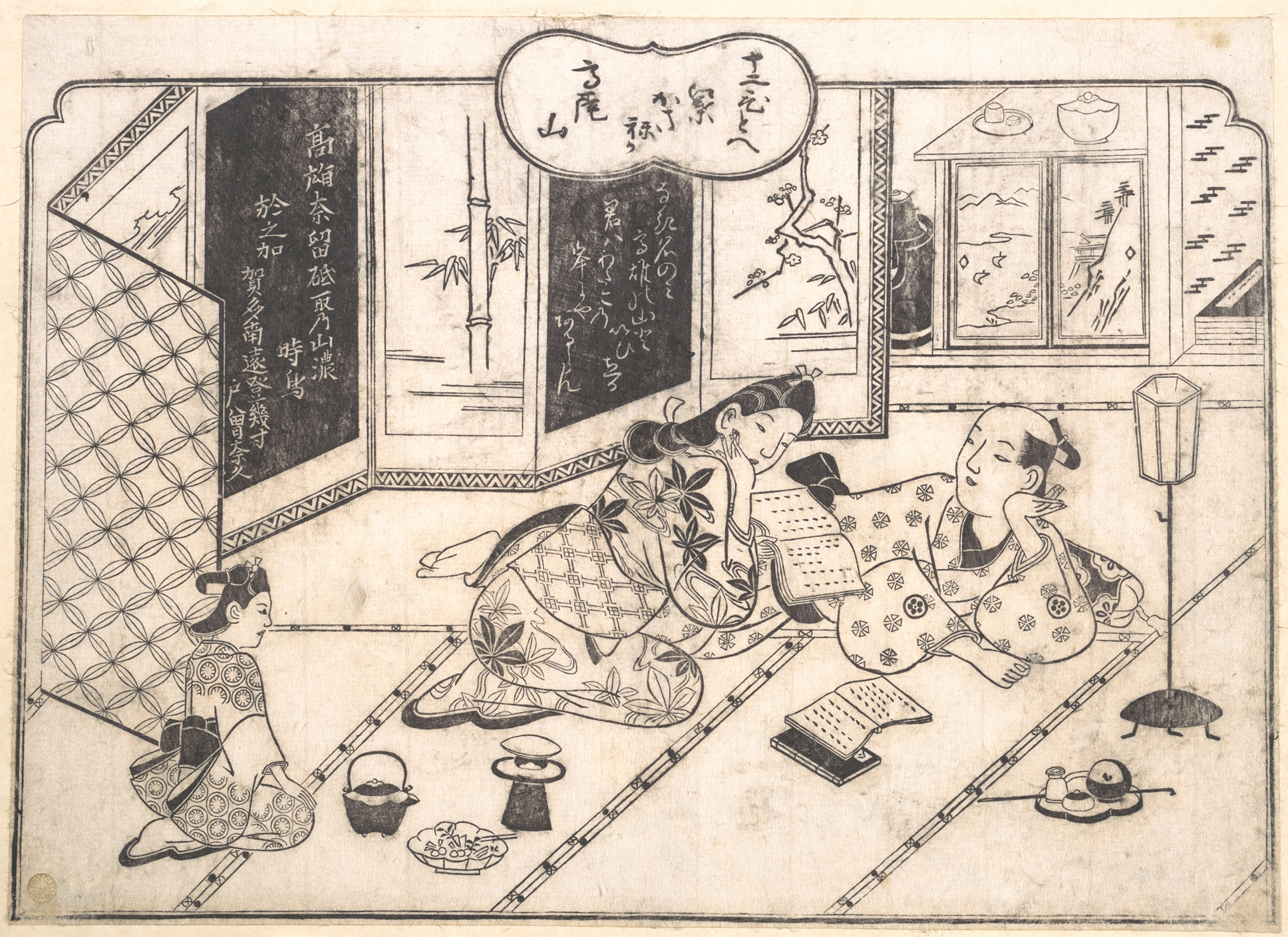
Go to Takaoyama to see Maple Leaves having Twelve Points
ca. 1690
Woodblock print; ink and color on paper
Frequently Asked Questions
Kyōgen zukushi was created by Hishikawa Moronobu (菱川師宣) in 1678.