
Narihira's Eastern Journey, from the illustrated book "Panorama of Paintings on Screens and Hanging Scrolls (Byobu kakemono ekagami)"
- Date:
- 1682
- Medium:
- Woodblock print; double-page illustration cut from a book
- Source:
- Art Institute of Chicago
Description
Dated 1682 and held in the Art Institute of Chicago, this double-page illustration cut from the book Panorama of Paintings on Screens and Hanging Scrolls (Byobu kakemono ekagami) depicts the celebrated Eastern Journey of Ariwara no Narihira, the ninth-century courtier-poet whose travels east from the capital are recounted in The Tales of Ise. Narihira's eastern journey became one of the most iconic narratives of classical Japanese literature, with the eight-bridge scene at Yatsuhashi and the encounter with Mount Fuji forming canonical images in painting from the Heian period onward. The book's title Byobu kakemono ekagami, mirror of paintings on screens and hanging scrolls, signals its ambitious framing as a printed compendium of the high painting traditions, with Moronobu effectively producing a printed catalog of yamato-e compositional types. The double-page format allowed Moronobu to render Narihira's journey scene with the kind of compositional breadth associated with the painted screens it referenced. Printed in single-block black ink, the work exemplifies Moronobu's broader project of translating the elite painting tradition into a popular, reproducible printed medium, making classical iconography accessible to readers who would never have access to the original screen paintings.
More Prints by Hishikawa Moronobu
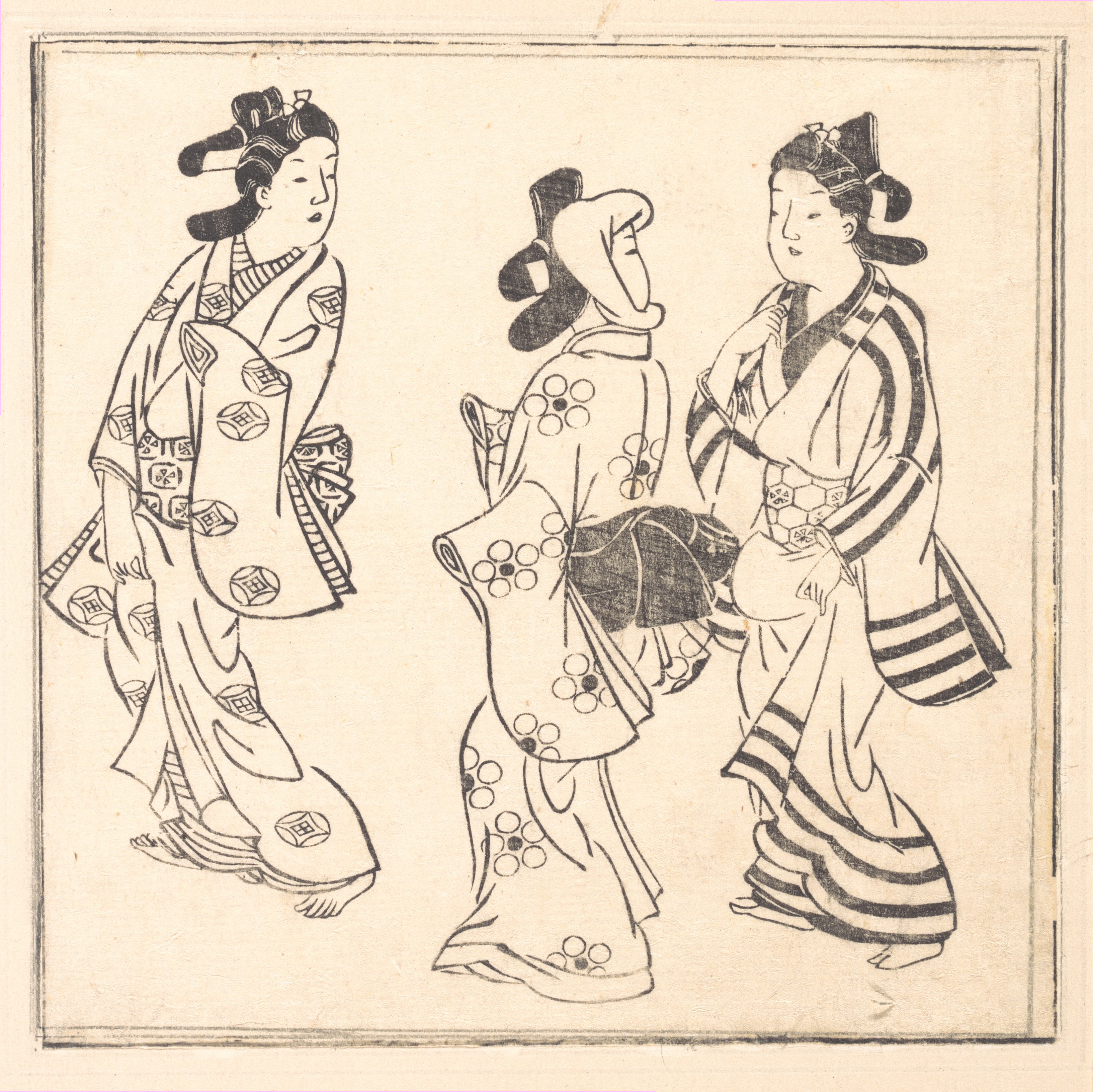
Leaf from a Book Entitled: Wakoku Hiaku-jo: One Hundred Japanese Women
Monochrome woodblock print; ink on paper

Fūryū sugatae hyakunin isshu
1695 Genroku 8
Woodblock- printed book; 3 vols.
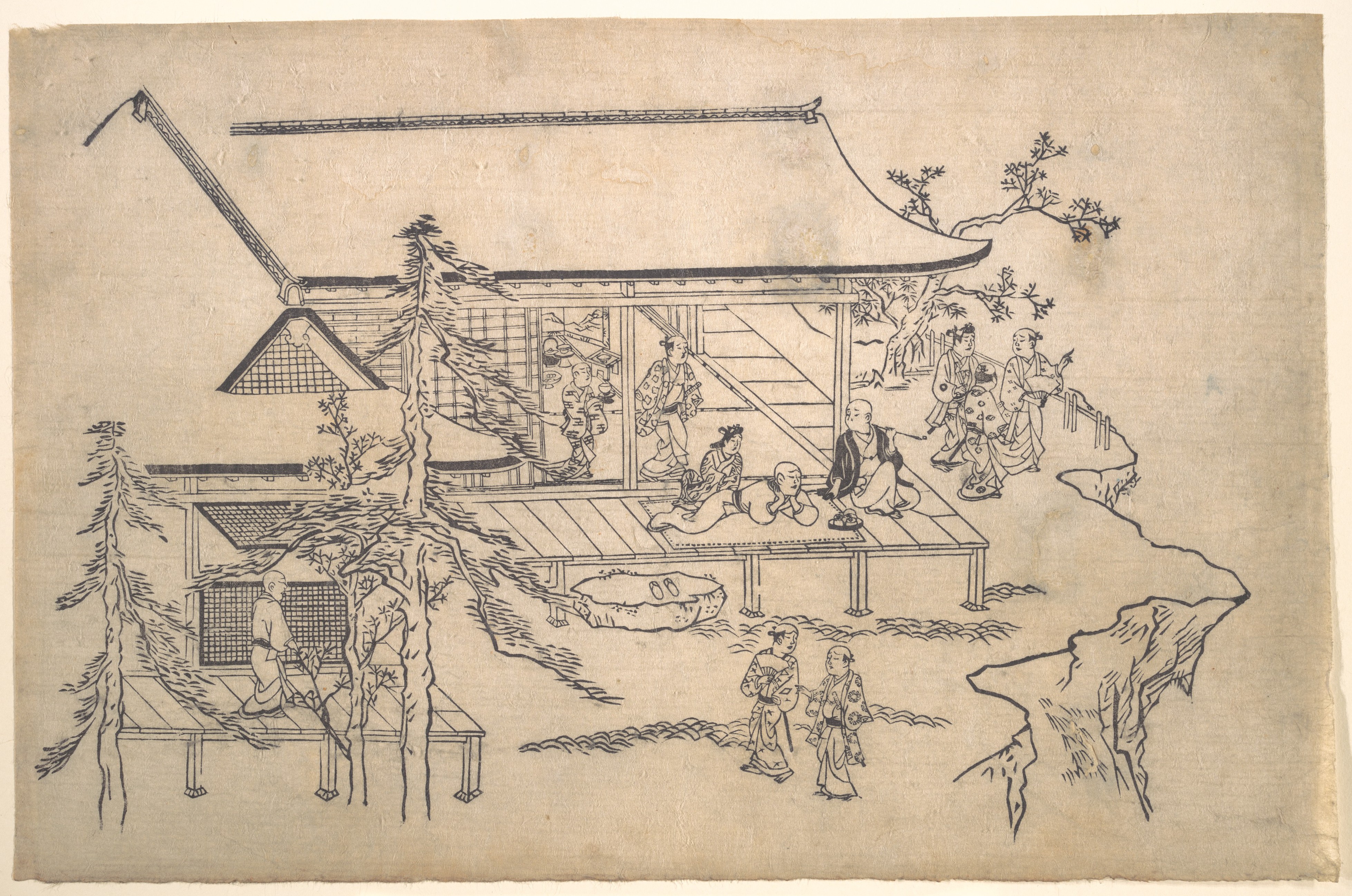
Flower-Viewing Scene
ca. 1685
Monochrome woodblock print (sumie); ink on paper
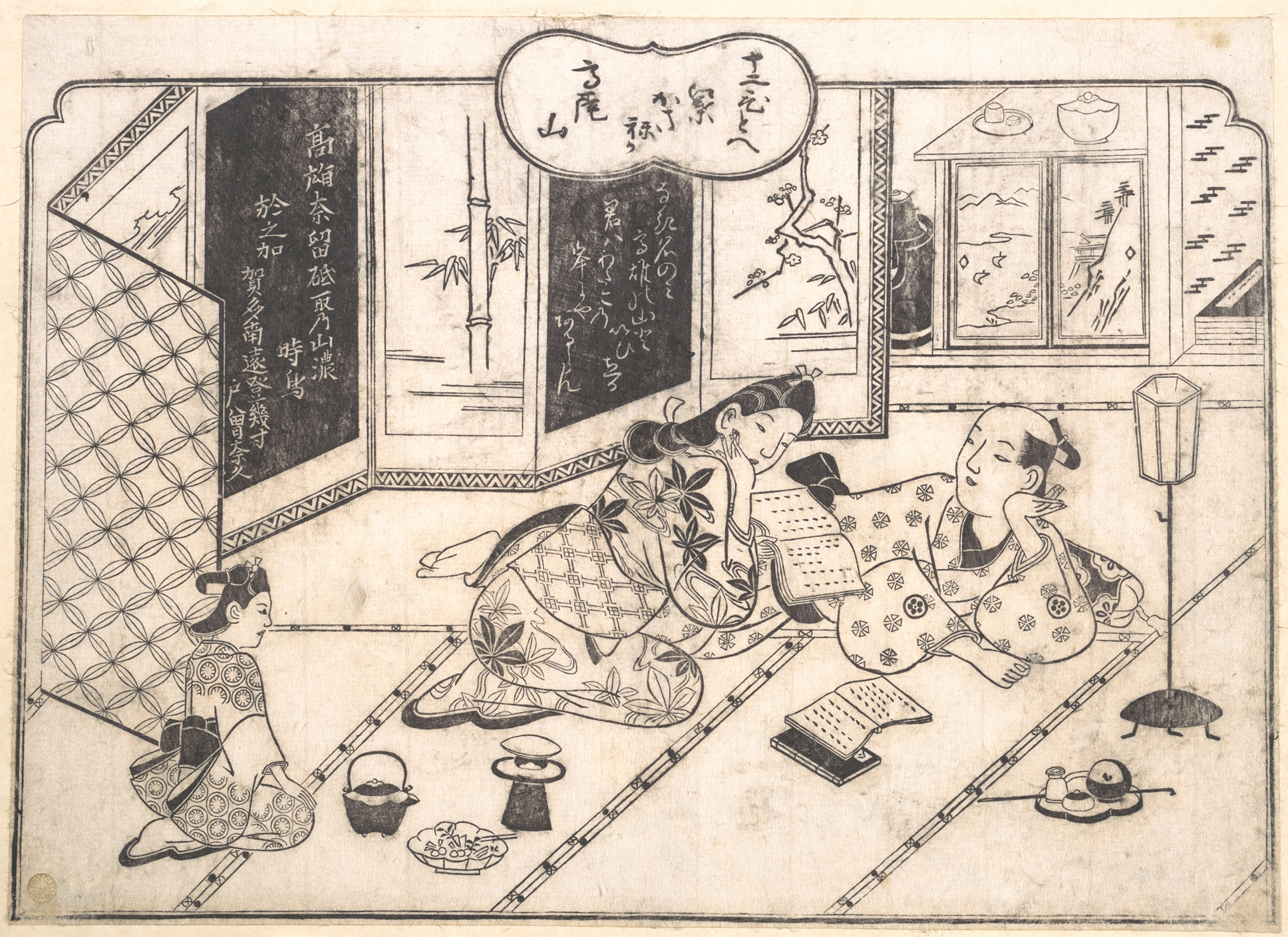
Go to Takaoyama to see Maple Leaves having Twelve Points
ca. 1690
Woodblock print; ink and color on paper
Frequently Asked Questions
Narihira's Eastern Journey, from the illustrated book "Panorama of Paintings on Screens and Hanging Scrolls (Byobu kakemono ekagami)" was created by Hishikawa Moronobu (菱川師宣) in 1682.