
Pleasure with the Beauties of Japan (Wakoku bijin asobi)
- Date:
- c. 1673
- Medium:
- Woodblock-printed book, sumizuri-e
- Source:
- Art Institute of Chicago
Description
This circa 1673 woodblock-printed book in the collection of the Art Institute of Chicago, Pleasure with the Beauties of Japan (Wakoku bijin asobi), is one of Moronobu's foundational contributions to the bijin-ga tradition, the depiction of beautiful women that would become a primary genre of ukiyo-e for two centuries. The title, which translates roughly as the entertainments or amusements of the beauties of Japan, signals the book's organizational principle, a parade of female figures arranged by type, setting, or activity. Printed entirely in sumizuri-e, the monochromatic black-ink technique, the book relies on Moronobu's draftsmanship to carry every element of characterization, from the bearing of a Yoshiwara oiran to the modesty of a household maid. His textile-trained eye is everywhere visible in the intricate patterning of the women's kimonos, which encodes information about their social position, season, and the latest Edo fashions, the same kind of detailed sartorial reportage that would later make Utamaro's bijin-ga commercially indispensable. Wakoku bijin asobi represents Moronobu at the height of his powers as a book illustrator and helps document the moment when bijin-ga as a coherent genre emerged from his hand.
More Prints by Hishikawa Moronobu
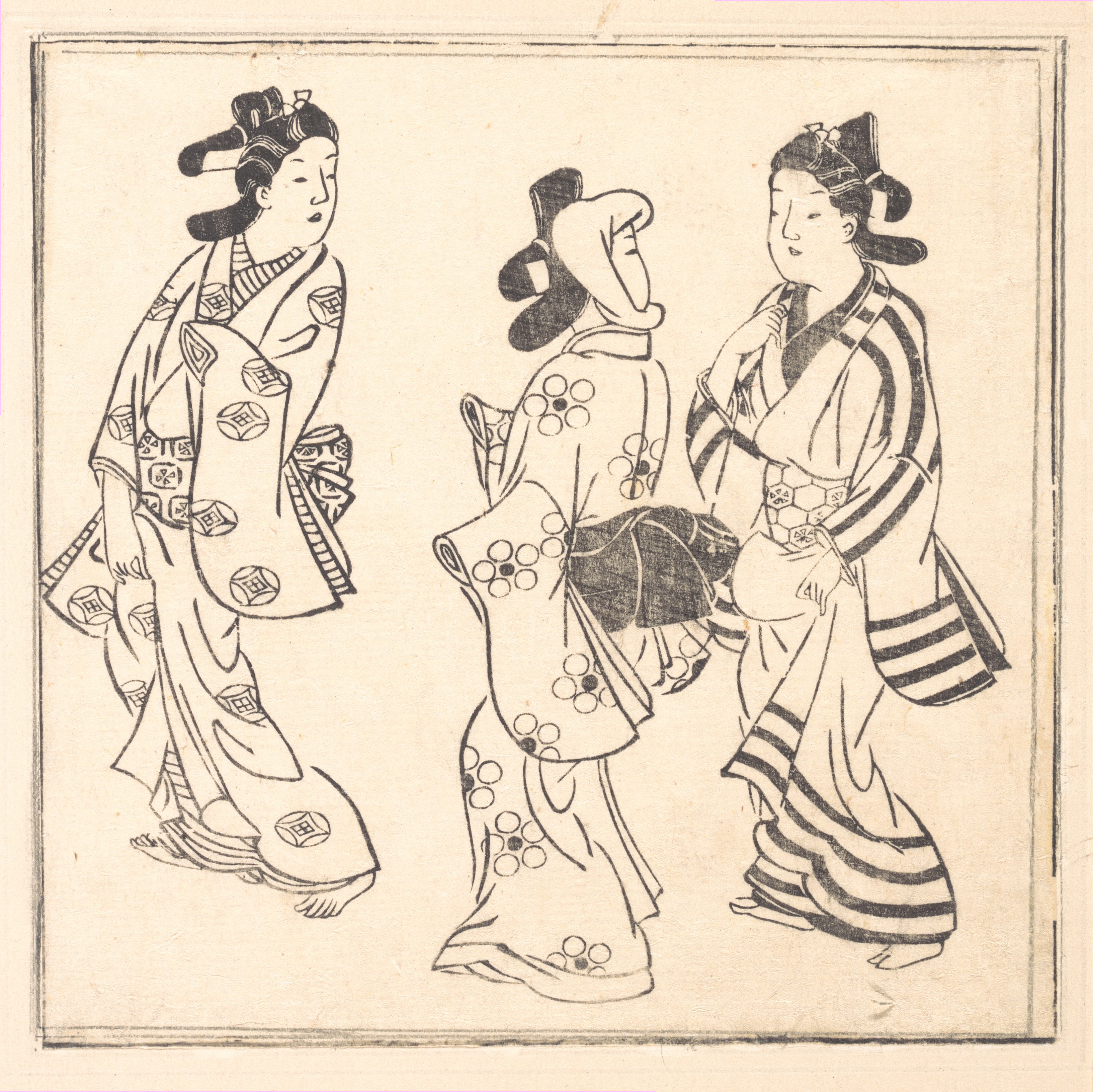
Leaf from a Book Entitled: Wakoku Hiaku-jo: One Hundred Japanese Women
Monochrome woodblock print; ink on paper

Fūryū sugatae hyakunin isshu
1695 Genroku 8
Woodblock- printed book; 3 vols.
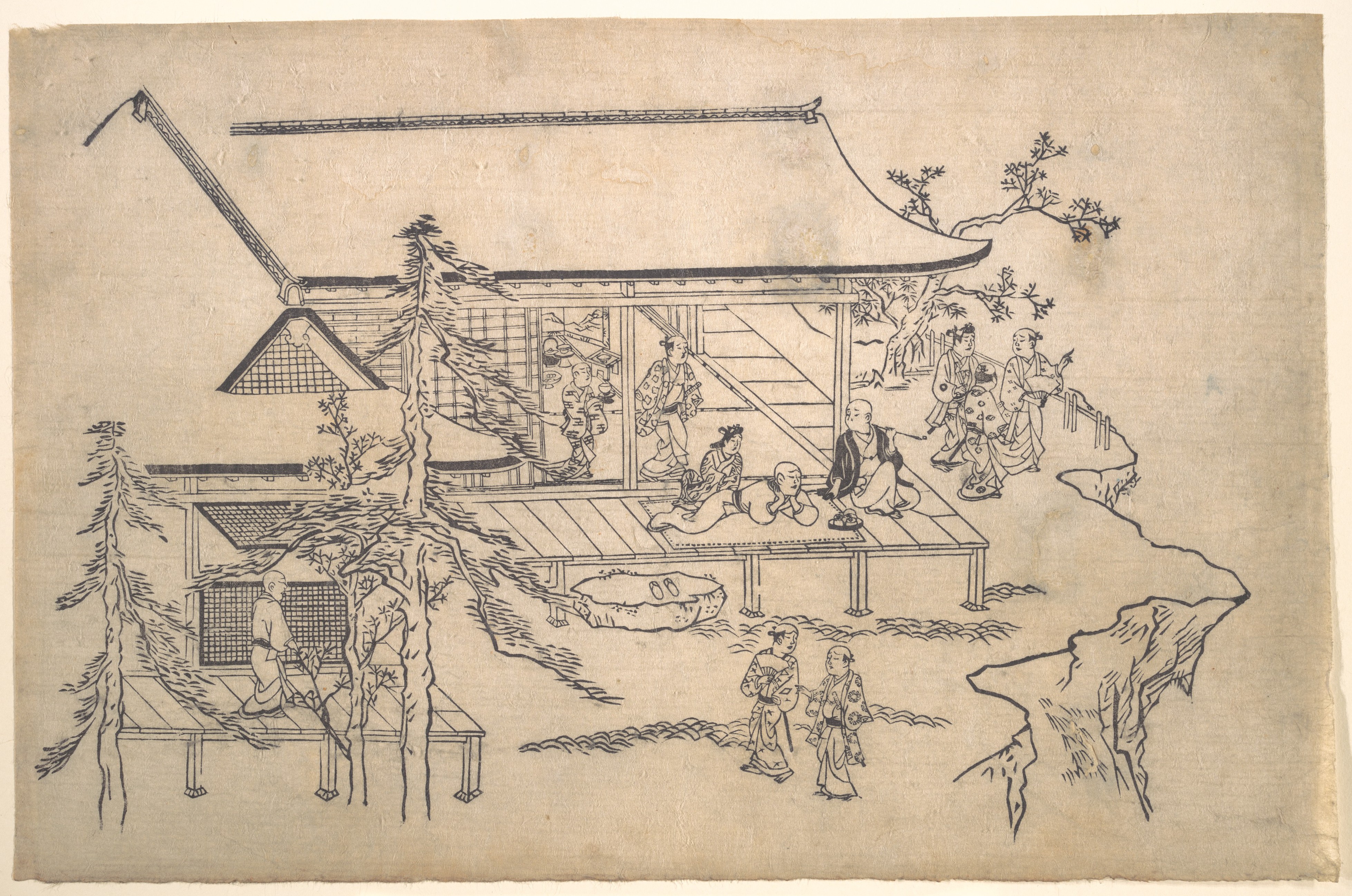
Flower-Viewing Scene
ca. 1685
Monochrome woodblock print (sumie); ink on paper
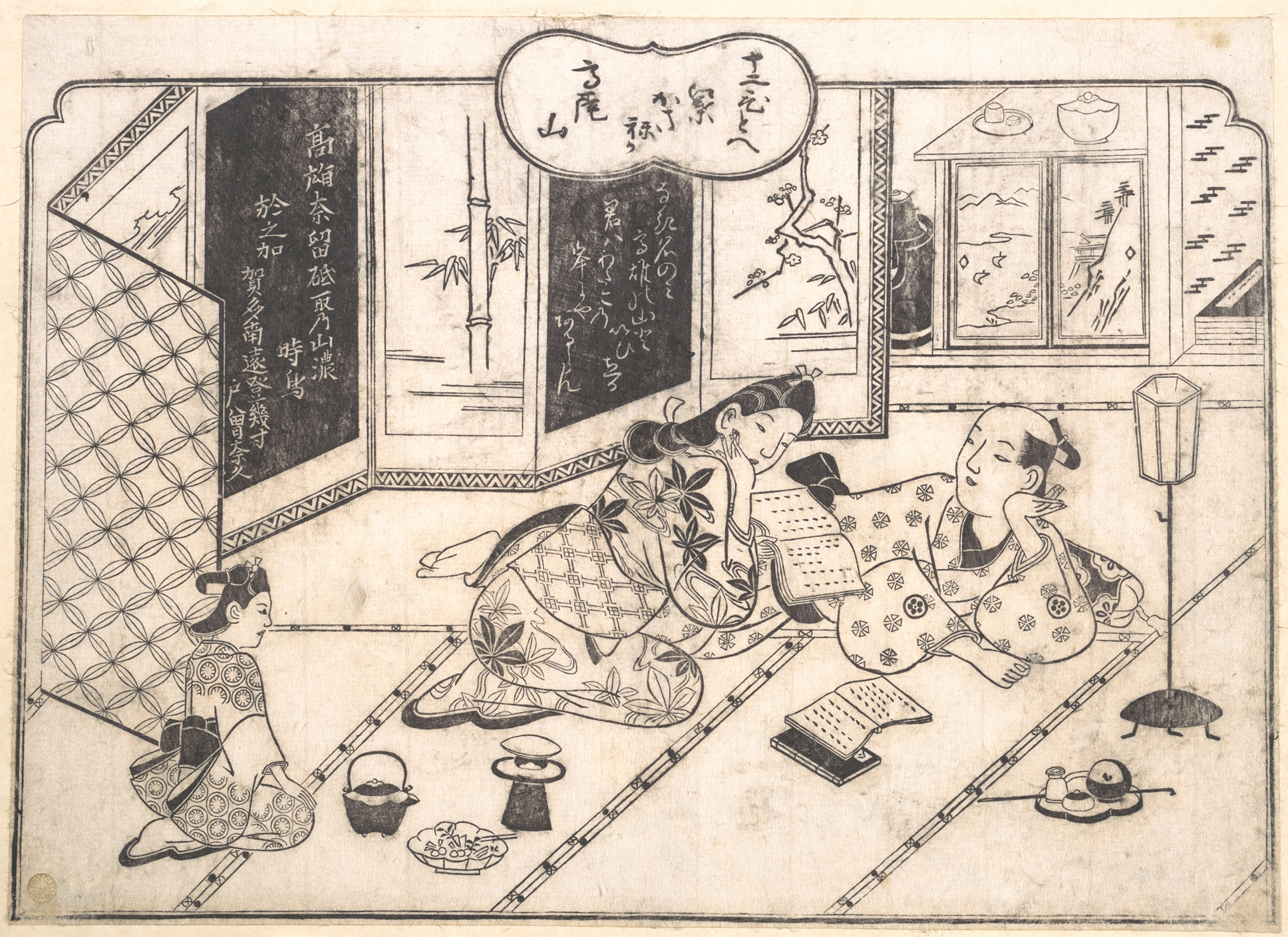
Go to Takaoyama to see Maple Leaves having Twelve Points
ca. 1690
Woodblock print; ink and color on paper
Frequently Asked Questions
Pleasure with the Beauties of Japan (Wakoku bijin asobi) was created by Hishikawa Moronobu (菱川師宣) in c. 1673.