
Procession of a Daimyo
- Date:
- c. 1681/84
- Medium:
- Hand-colored woodblock print; oban yoko-e, sumizuri-e
- Source:
- Art Institute of Chicago
Description
Held in the Art Institute of Chicago and dated circa 1681 to 1684, this hand-colored oban yoko-e sumizuri-e print depicts a daimyo's formal procession, a recurring spectacle of Edo public life under the sankin kotai system that required regional lords to alternate residence between their domains and the shogunal capital. Moronobu's choice to document these processions extended ukiyo-e's range beyond the pleasure quarter into the broader civic ceremonial of Edo, establishing precedents for the meisho-e and historical genres that would follow. The horizontal oban yoko-e format suited the long, parade-like organization of the subject, with retainers, palanquin bearers, banner carriers, and mounted samurai stretched across the picture plane in the kind of frieze-like composition Moronobu favored for processional and crowd scenes. The hand-coloring, likely added after the initial black-ink printing using tan, sumi, and mineral pigments, brings out the heraldic signifiers, banners, crests, and armor identifications that were the essential information content of any daimyo procession. The print documents Moronobu's role not only as the founder of single-sheet ukiyo-e but as the originator of its broader documentary impulse toward Edo civic life.
More Prints by Hishikawa Moronobu
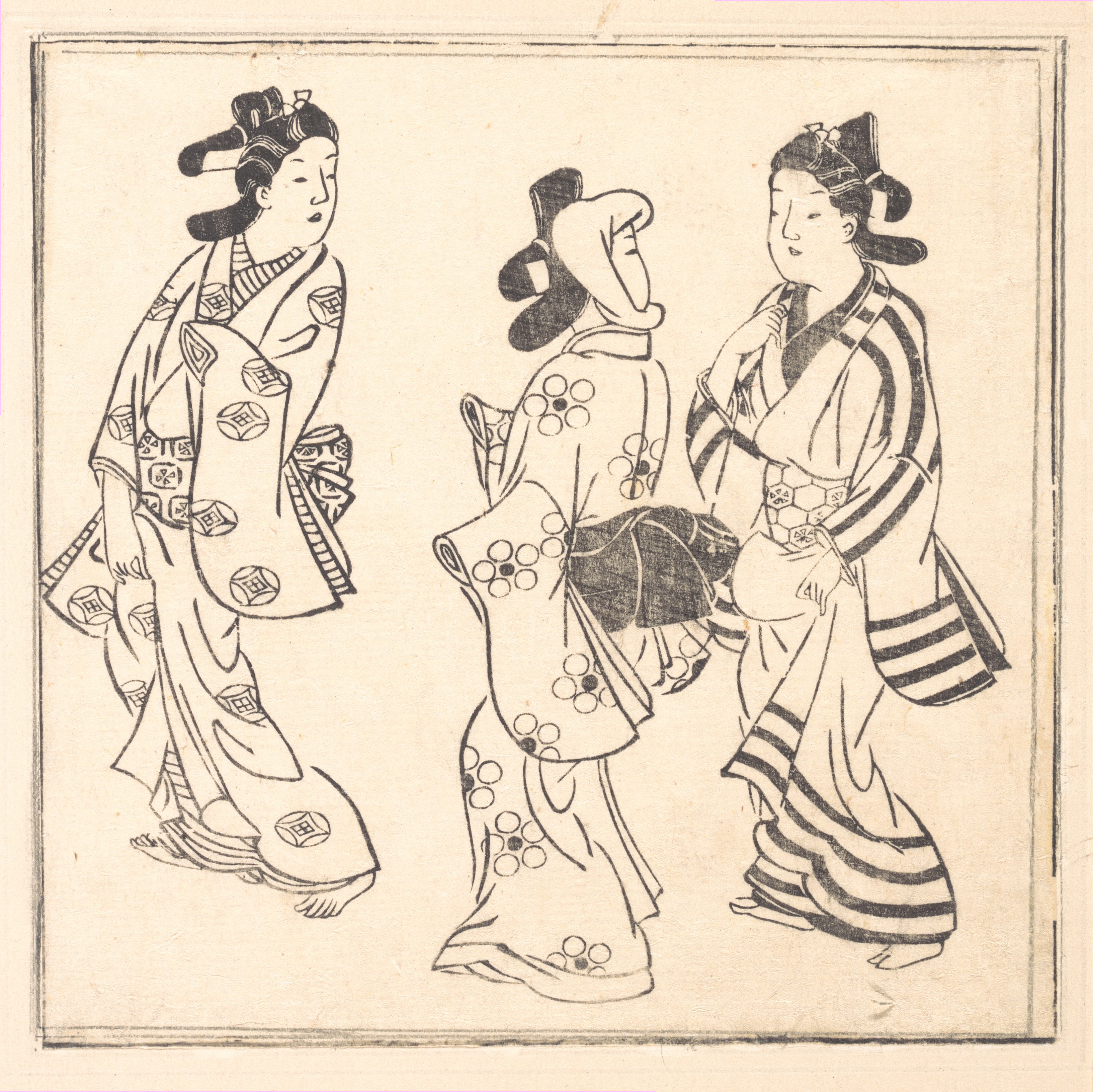
Leaf from a Book Entitled: Wakoku Hiaku-jo: One Hundred Japanese Women
Monochrome woodblock print; ink on paper

Fūryū sugatae hyakunin isshu
1695 Genroku 8
Woodblock- printed book; 3 vols.
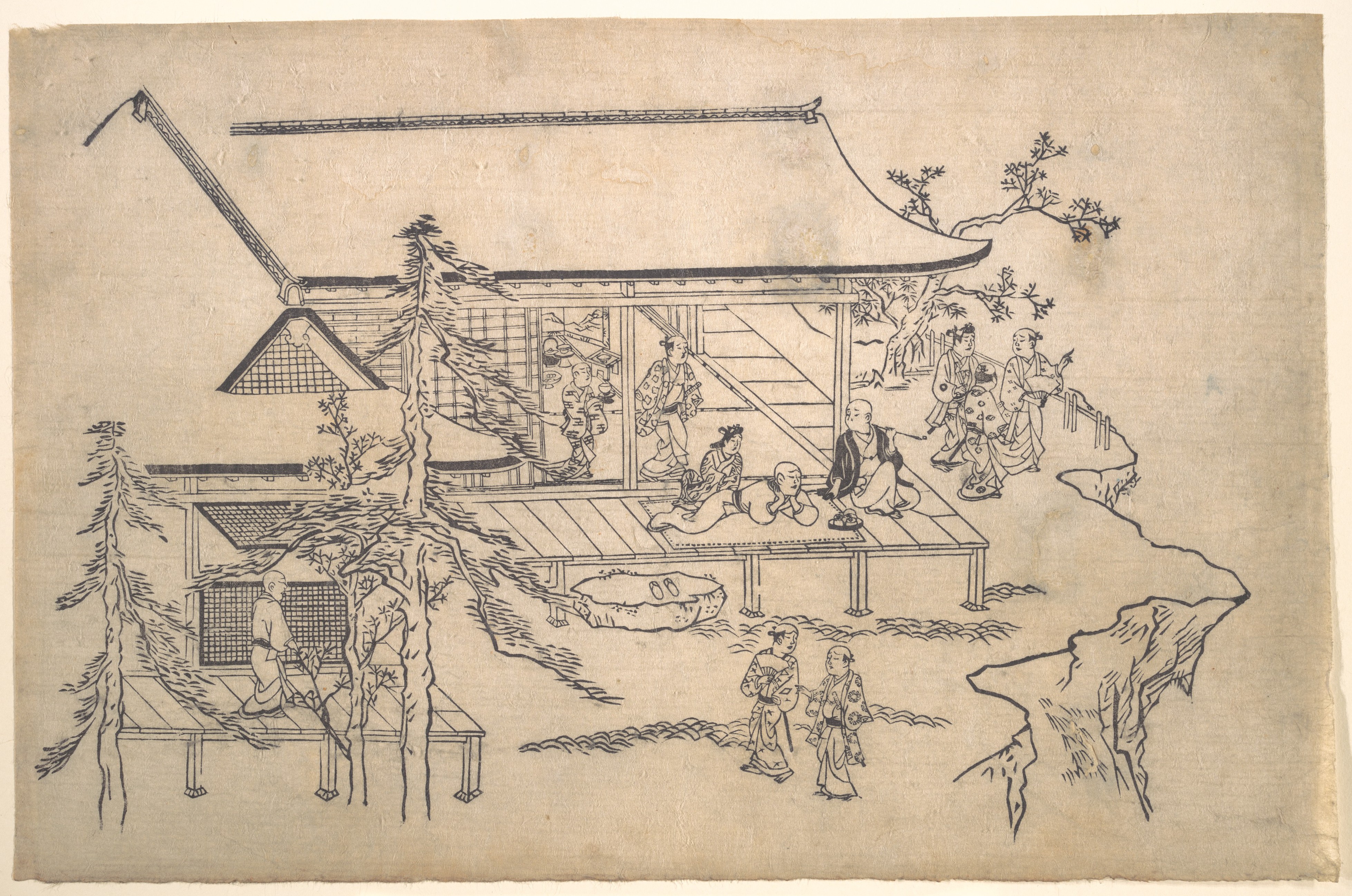
Flower-Viewing Scene
ca. 1685
Monochrome woodblock print (sumie); ink on paper
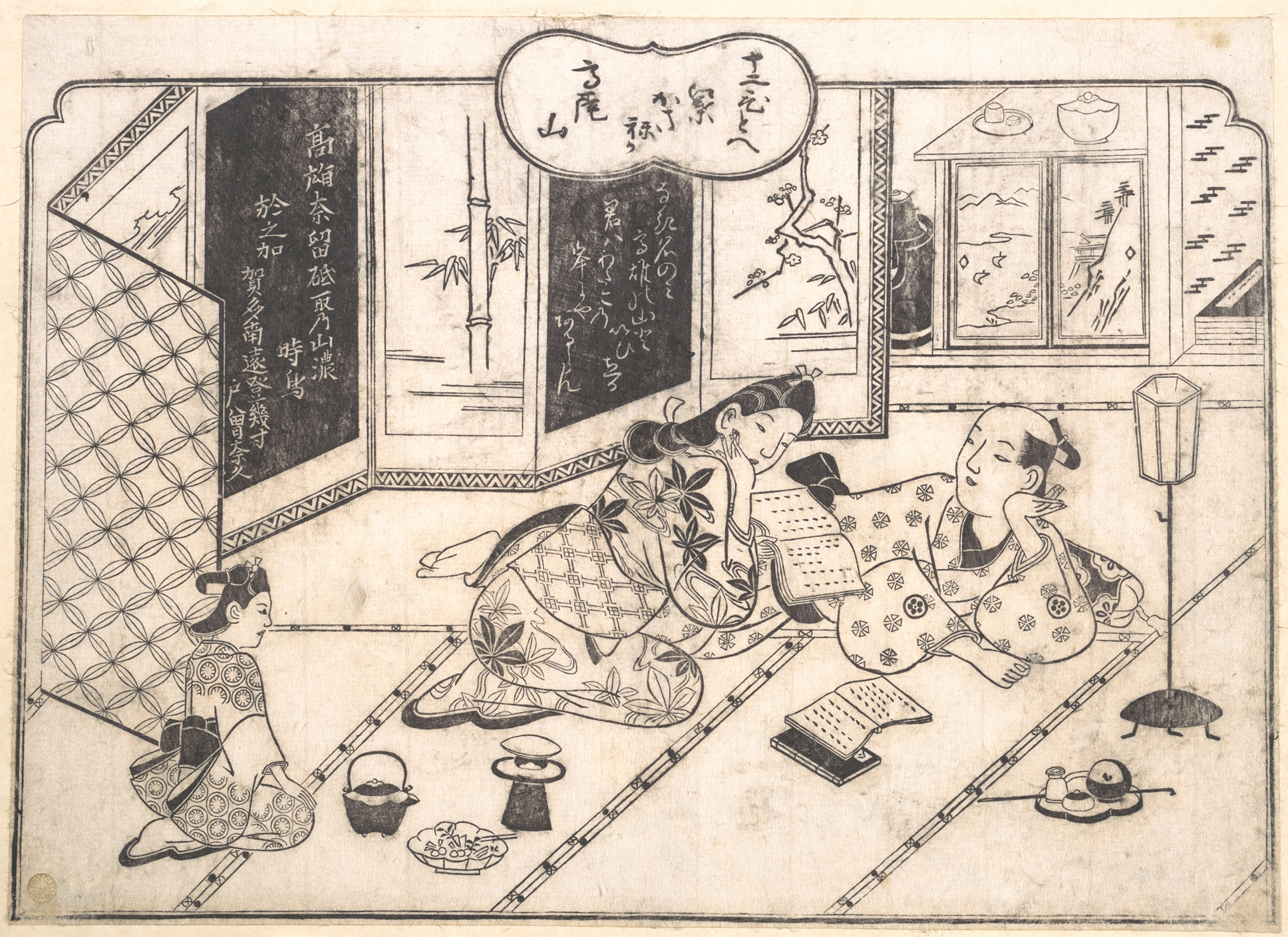
Go to Takaoyama to see Maple Leaves having Twelve Points
ca. 1690
Woodblock print; ink and color on paper
Frequently Asked Questions
Procession of a Daimyo was created by Hishikawa Moronobu (菱川師宣) in c. 1681/84.