
Scene in the Yoshiwara, from the series "Views of Yoshiwara"
- Date:
- About 1680
- Medium:
- Woodblock print; sumizuri-e, oban
- Source:
- Art Institute of Chicago
Description
This circa 1680 sumizuri-e oban in the Art Institute of Chicago, from the series Views of Yoshiwara, is one of Moronobu's foundational Yoshiwara prints, contributing directly to the development of bijin-ga and to the documentary tradition of recording the pleasure quarter's architecture, fashion, and daily life. The Yoshiwara, Edo's licensed pleasure district, was a controlled urban environment where the kabuki theatre, the teahouses, the courtesan houses, and the broader culture of the floating world all converged, and Moronobu's series Views of Yoshiwara was among the first to treat it as a worthy subject for sustained pictorial documentation. Printed in single-block black ink in the large oban format, the print uses Moronobu's signature compositional logic, with foreground figures, mid-ground architecture, and background hints of additional activity all knitted together by his confident line. The textile patterning of the courtesans' robes, the architectural detail of the teahouse interior, and the carefully observed social hierarchy of attendants and clientele all reflect the kind of close-observation reportage that would become a defining ukiyo-e mode. The series helped establish the visual vocabulary that would shape Yoshiwara imagery from Sukenobu through Utamaro.
More Prints by Hishikawa Moronobu
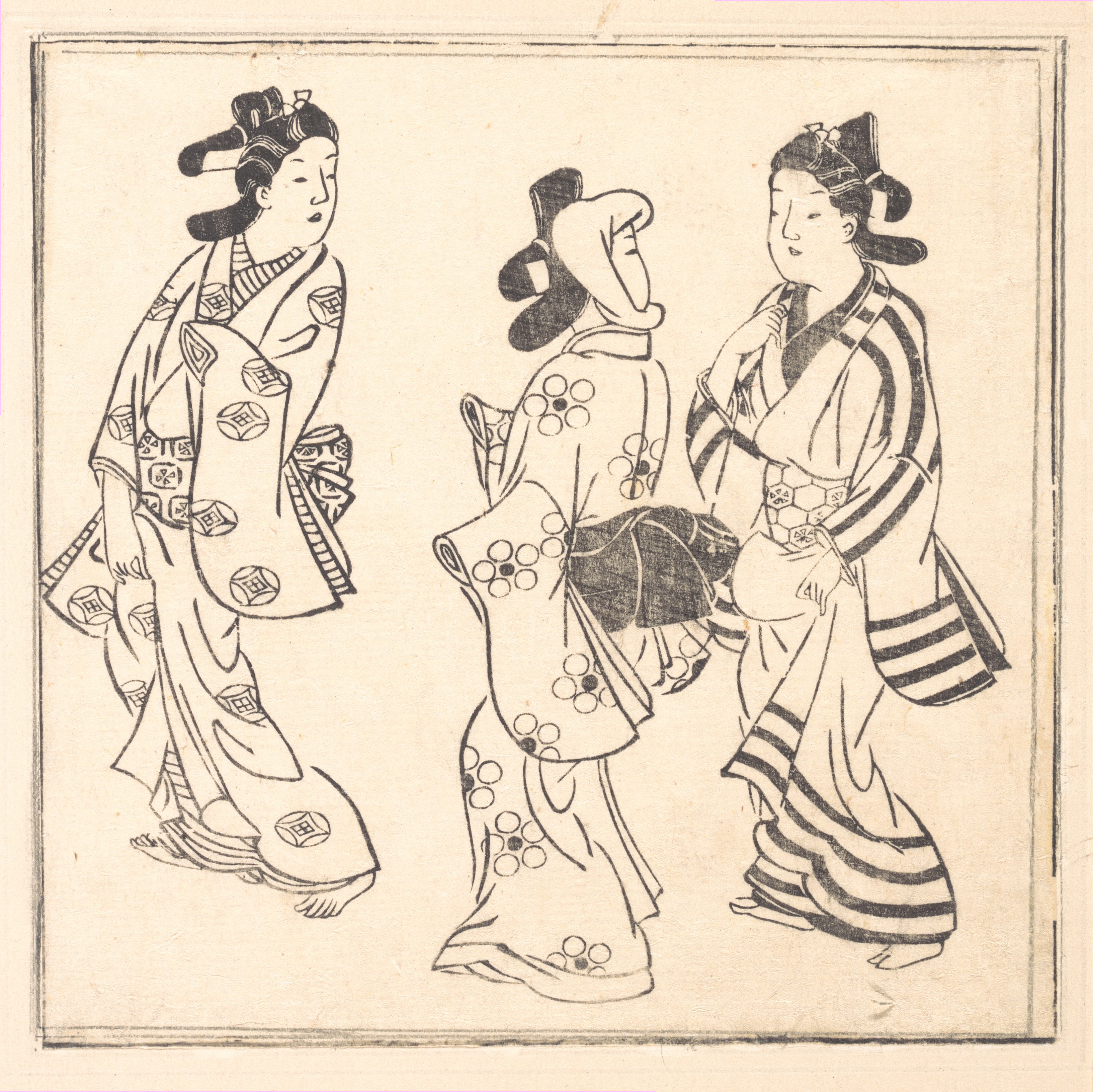
Leaf from a Book Entitled: Wakoku Hiaku-jo: One Hundred Japanese Women
Monochrome woodblock print; ink on paper

Fūryū sugatae hyakunin isshu
1695 Genroku 8
Woodblock- printed book; 3 vols.
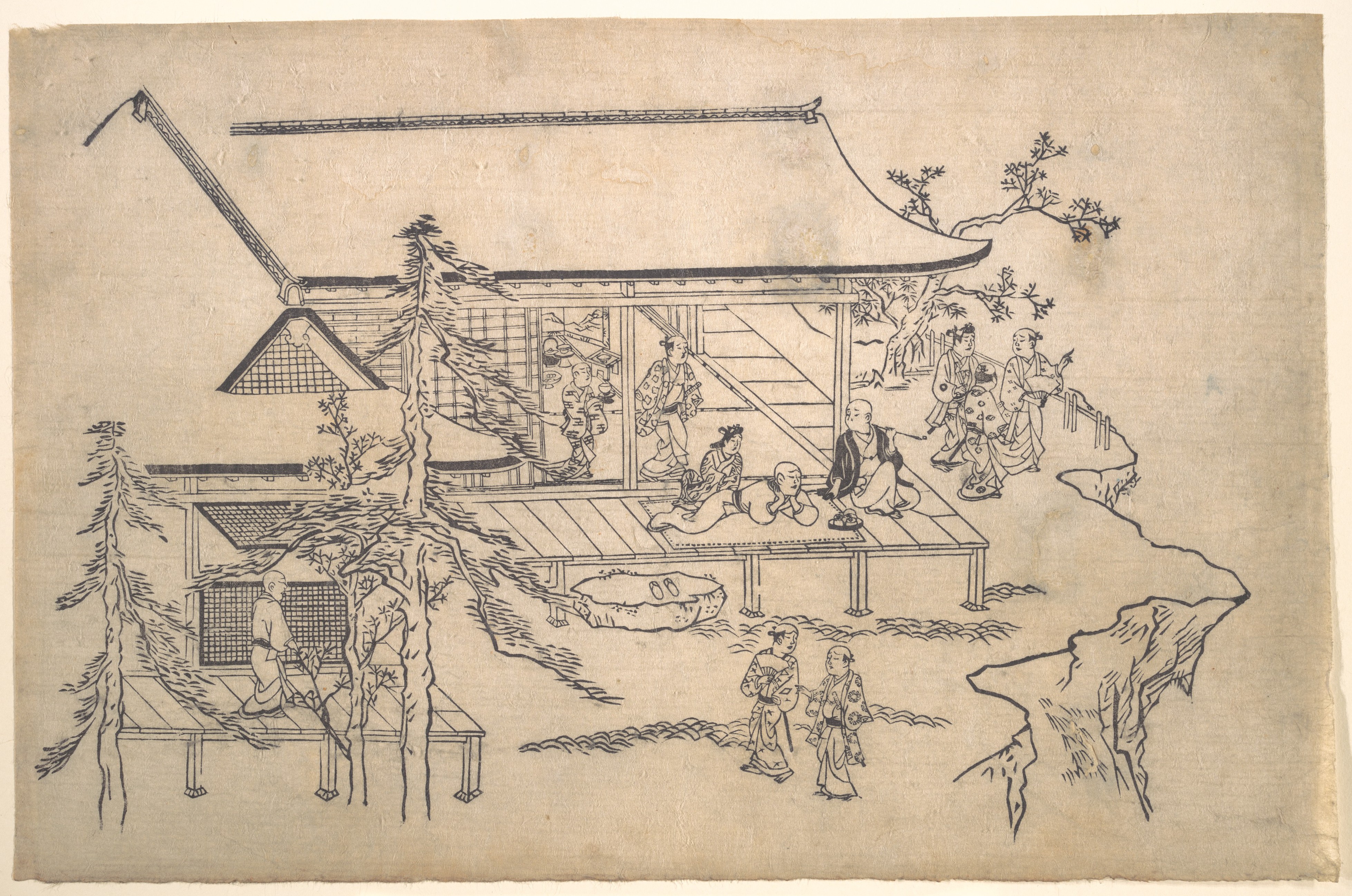
Flower-Viewing Scene
ca. 1685
Monochrome woodblock print (sumie); ink on paper
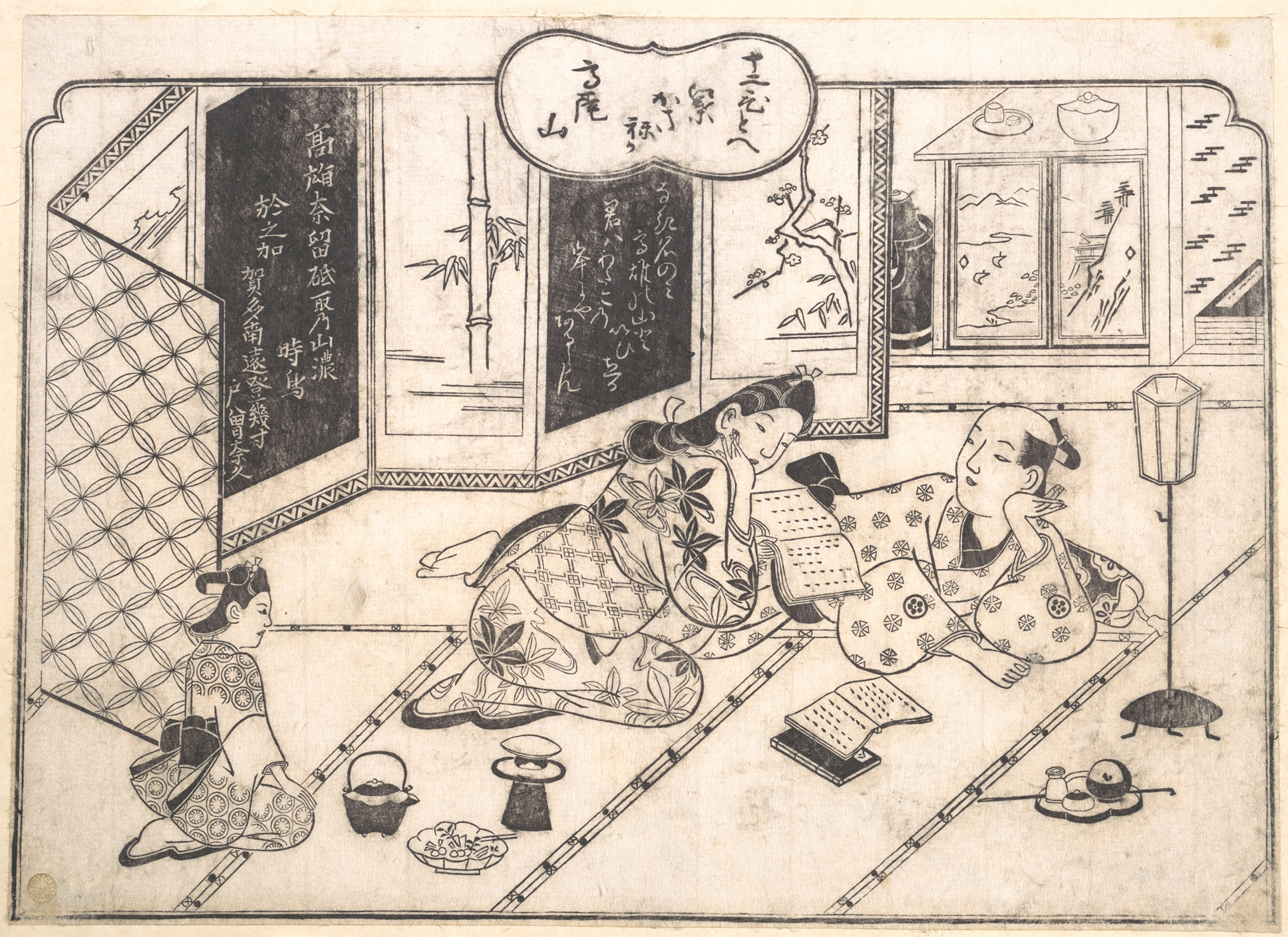
Go to Takaoyama to see Maple Leaves having Twelve Points
ca. 1690
Woodblock print; ink and color on paper
Frequently Asked Questions
Scene in the Yoshiwara, from the series "Views of Yoshiwara" was created by Hishikawa Moronobu (菱川師宣) in About 1680.