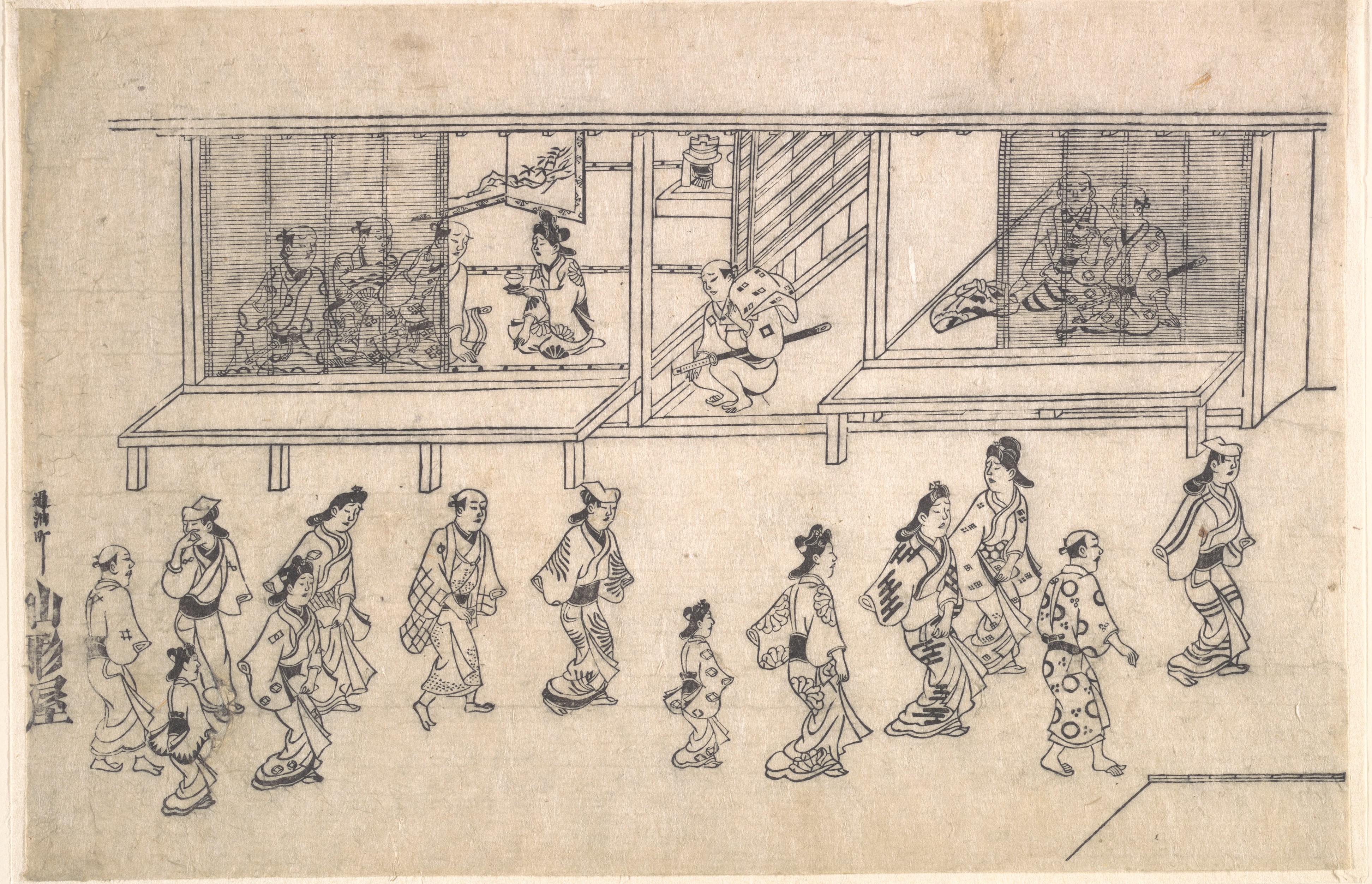
Street Scene in the Yoshiwara
- Medium:
- Monochrome woodblock print; ink on paper
- Source:
- Metropolitan Museum of Art
Description
Street Scene in the Yoshiwara, an ink-and-color book illustration by Hishikawa Moronobu, captures a typical day in Edo's licensed pleasure quarter at the moment when ukiyo-e was first taking shape as a genre. Moronobu, the artist commonly identified as the ukiyo-e founder, made the Yoshiwara one of his recurring subjects, and the Metropolitan Museum of Art preserves this leaf among its core early Edo ukiyo-e holdings. The composition unfolds across a wide horizontal field: courtesans in heavy patterned kimono parade behind teahouse lattices, attendants follow carrying chests and parasols, and male visitors in samurai dress and townsman robes negotiate with the proprietors at the edge of the street. The architecture of the quarter—wood lattice fronts, tiled eaves, the distinctive cage-like mise where lower-ranking courtesans sat on display—is rendered in clear, almost diagrammatic line. Moronobu's strength here is his ability to let the eye move along the street as though following a single visitor's walk, an early prototype of the panoramic Yoshiwara scenes that Utamaro and Hokusai would refine more than a century later. The print also documents the public face of a quarter that organized much of urban Edo's social and visual life. Although the Met's catalogue assigns this leaf a date in the early seventeenth century, the depicted activity matches the Yoshiwara's mature decades after its 1657 relocation to Asakusa. As an example of Hishikawa Moronobu's mature output, the sheet shows how the ukiyo-e founder fused reportage, fashion plate, and commercial advertisement into a single image of early Edo ukiyo-e.
More Prints by Hishikawa Moronobu
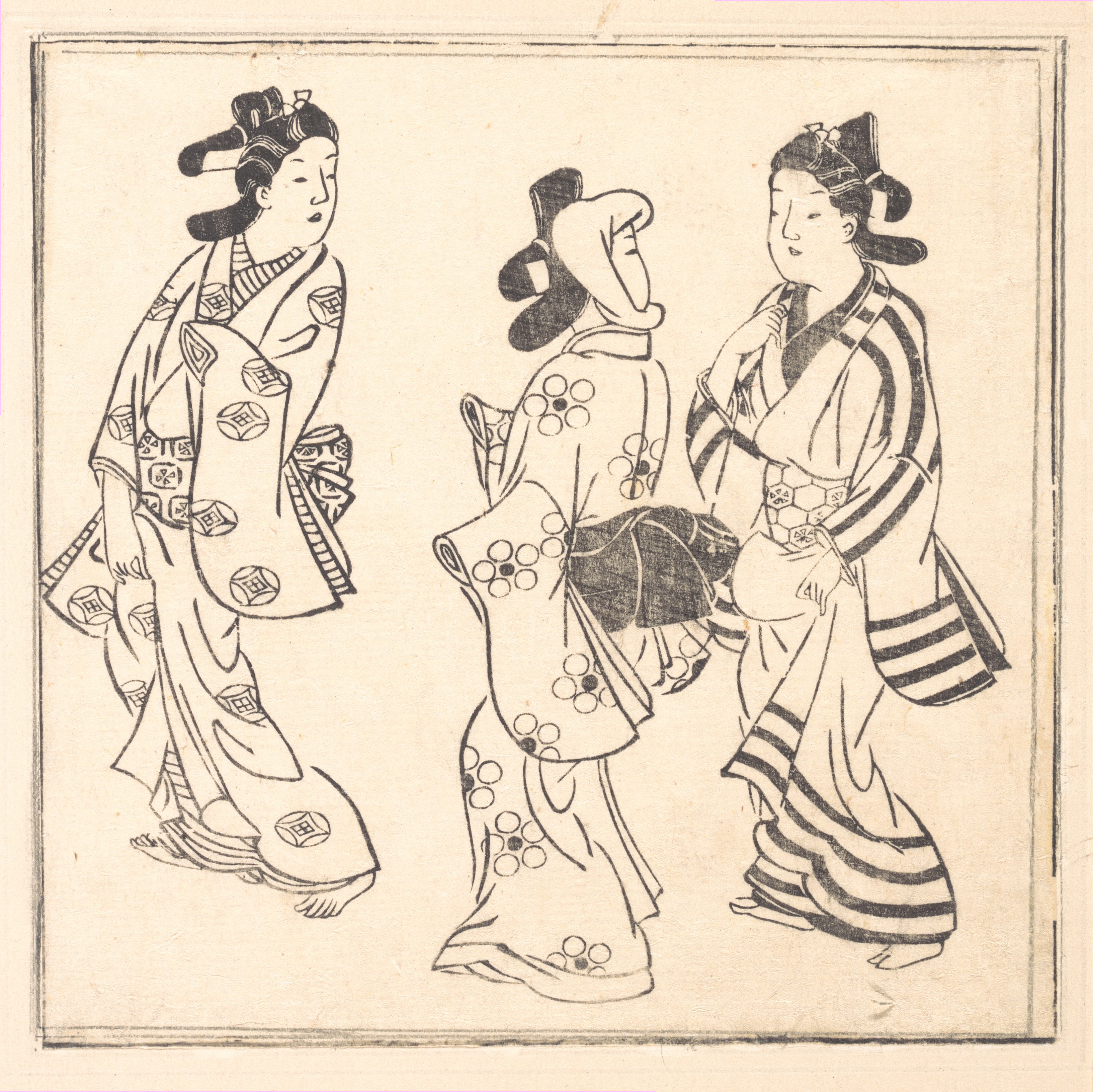
Leaf from a Book Entitled: Wakoku Hiaku-jo: One Hundred Japanese Women
Monochrome woodblock print; ink on paper

Fūryū sugatae hyakunin isshu
1695 Genroku 8
Woodblock- printed book; 3 vols.
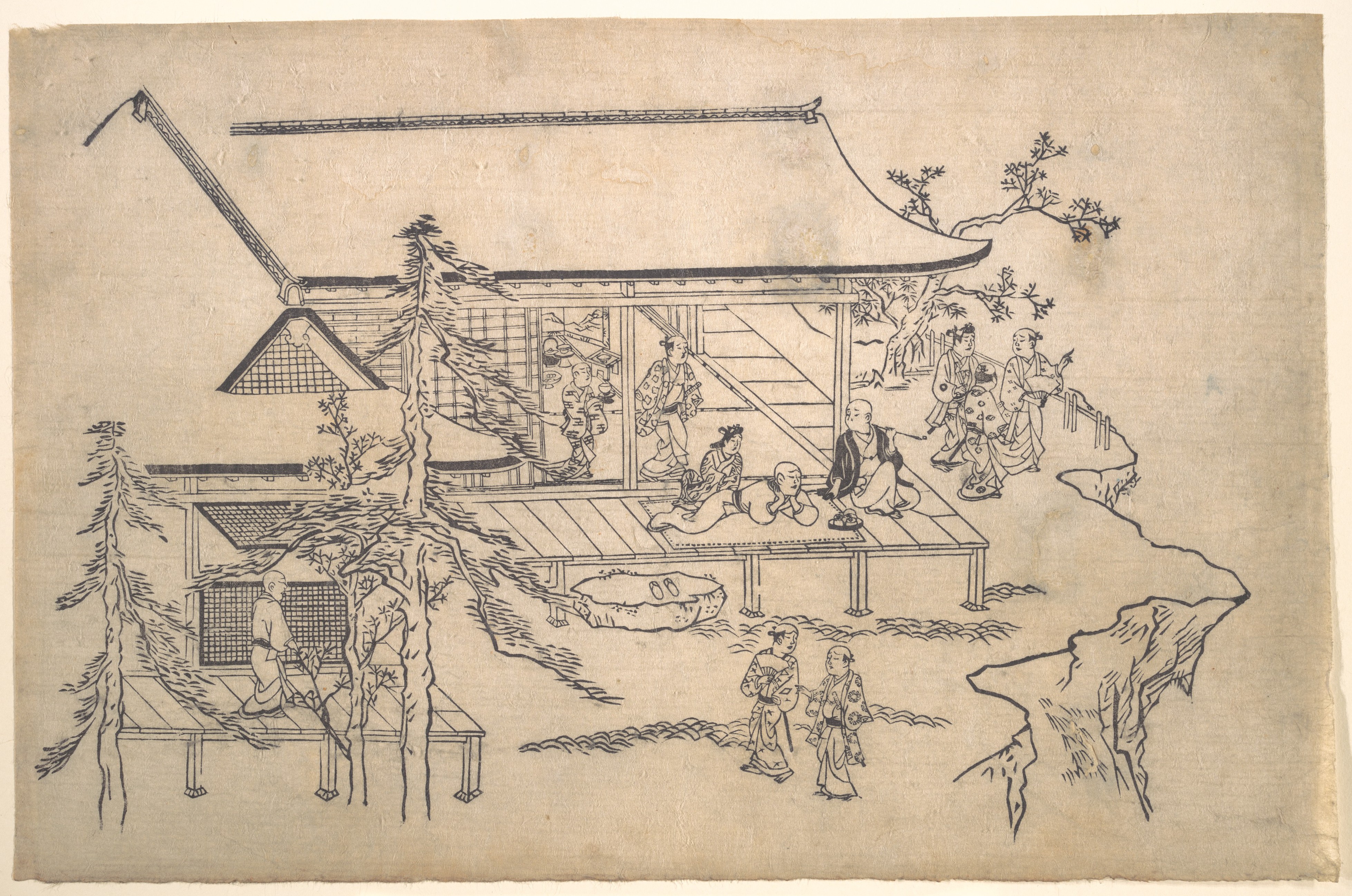
Flower-Viewing Scene
ca. 1685
Monochrome woodblock print (sumie); ink on paper
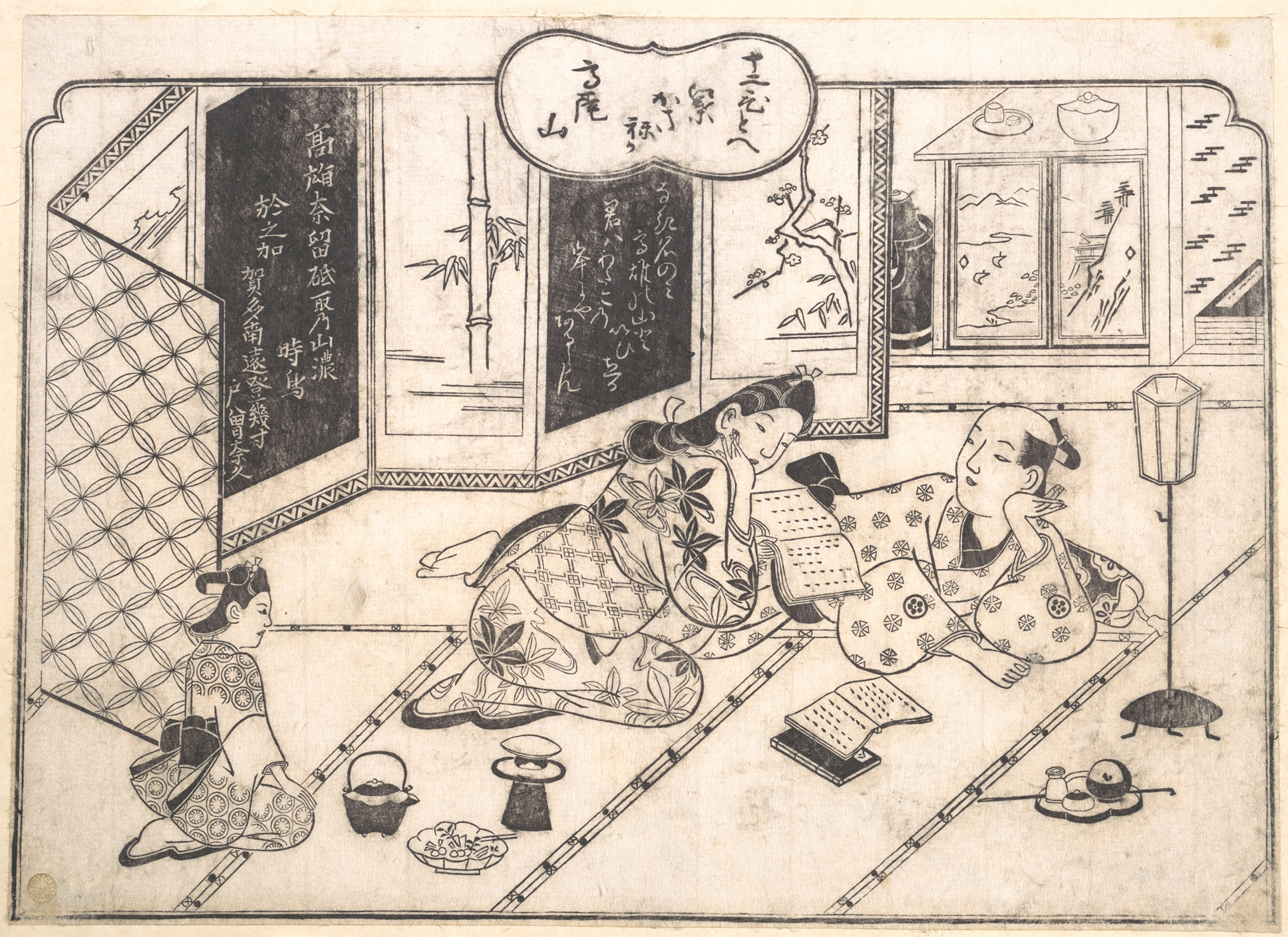
Go to Takaoyama to see Maple Leaves having Twelve Points
ca. 1690
Woodblock print; ink and color on paper
Frequently Asked Questions
Street Scene in the Yoshiwara was created by Hishikawa Moronobu (菱川師宣).