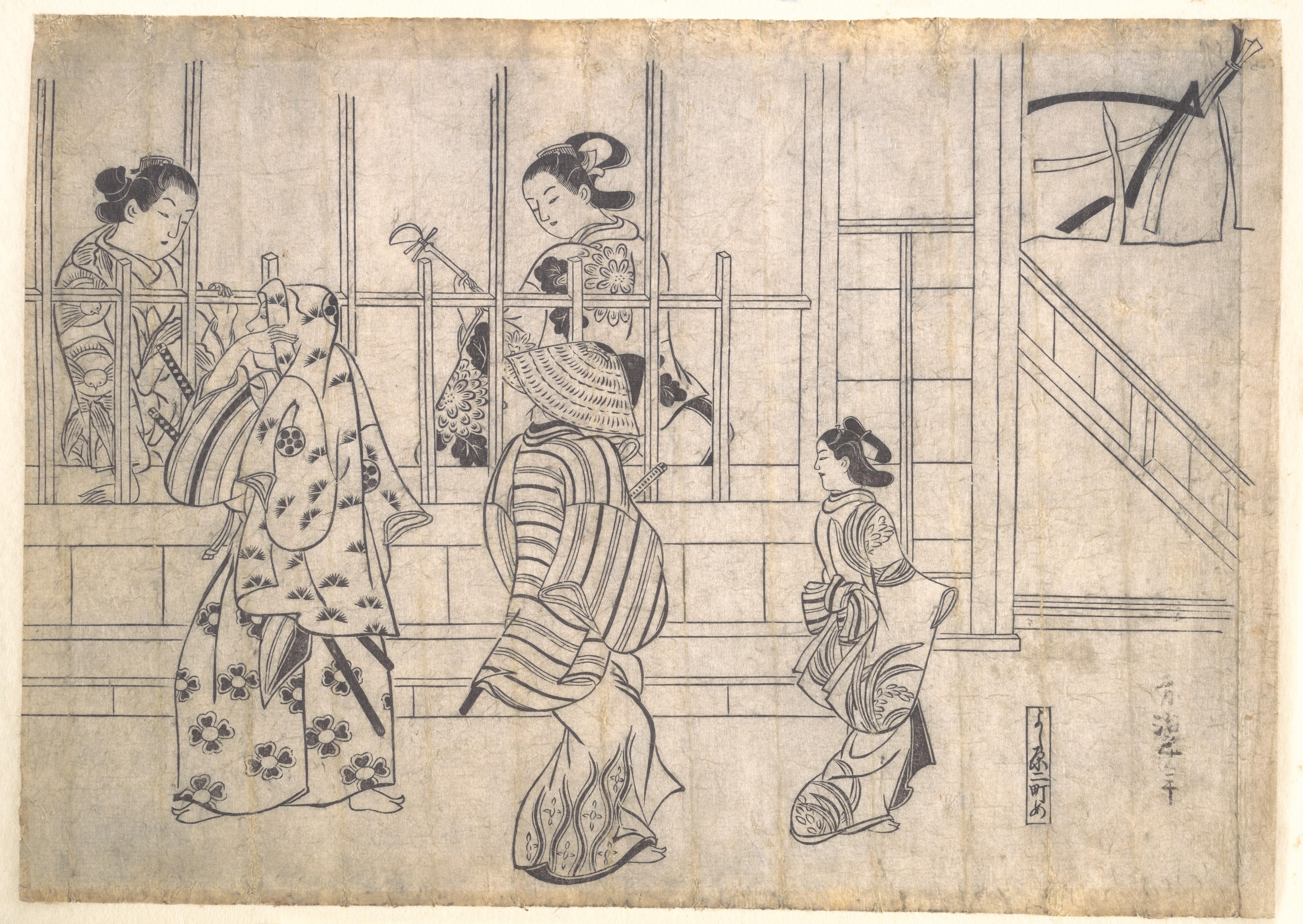
Street Scene in Yoshiwara
- Date:
- late 17th century
- Medium:
- Monochrome woodblock print; ink on paper
- Source:
- Metropolitan Museum of Art
Description
Street Scene in Yoshiwara, dated 1667 by the Metropolitan Museum of Art, is one of Hishikawa Moronobu's panoramic depictions of the Edo pleasure quarter at the height of its mid-seventeenth-century reorganization. The Yoshiwara had been moved to Asakusa only a decade earlier, after the Great Meireki Fire of 1657, and Moronobu was among the first printmakers to systematically picture the rebuilt district. His horizontal composition follows the main street: visitors arrive at the front of the print, work past lattice-fronted teahouses where courtesans wait on display, encounter a parade of higher-ranking oiran walking with their attendant kamuro and parasol-bearers, and finally reach the entrances of upper-tier brothels with their formal curtains. Moronobu organizes the crowd in the manner of a continuous handscroll, even though the image is printed on a book leaf, and the result is a kind of moving photograph of the quarter at midday. His figures are unmistakable: heavy, confident silhouettes with broad sleeve curves, hair drawn in solid black masses, and just enough kimono pattern to register social rank without crowding the page. The ukiyo-e founder used the Yoshiwara not for prurient effect but as a public stage on which Edo's social hierarchies could be observed in compact form. As an early Edo ukiyo-e document, the print is among the most important visual records of the Asakusa Yoshiwara in its first generation. The Met's preservation of the leaf has made Hishikawa Moronobu's account of the quarter the standard reference for later scholarship on the licensed district.
More Prints by Hishikawa Moronobu
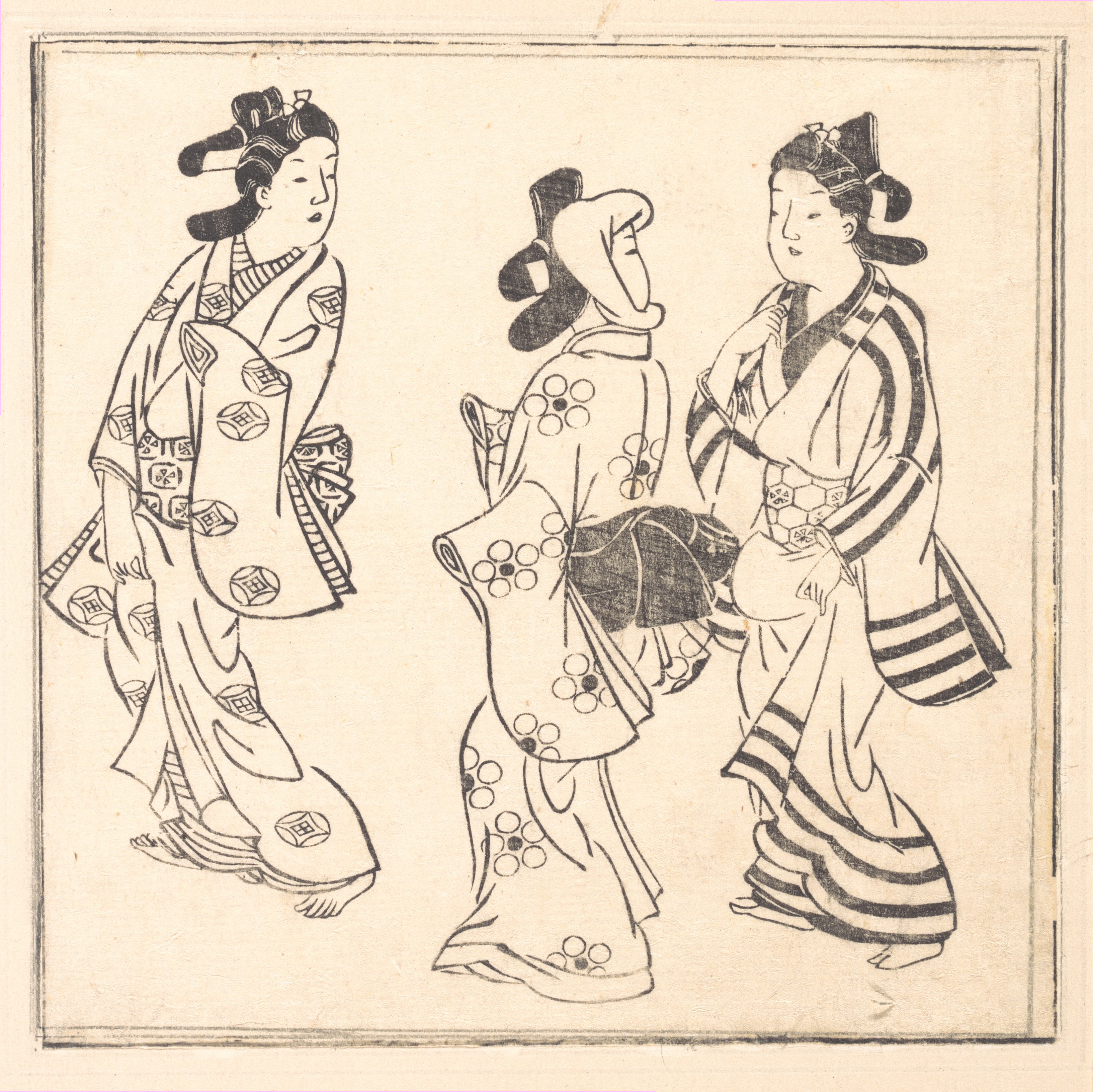
Leaf from a Book Entitled: Wakoku Hiaku-jo: One Hundred Japanese Women
Monochrome woodblock print; ink on paper

Fūryū sugatae hyakunin isshu
1695 Genroku 8
Woodblock- printed book; 3 vols.
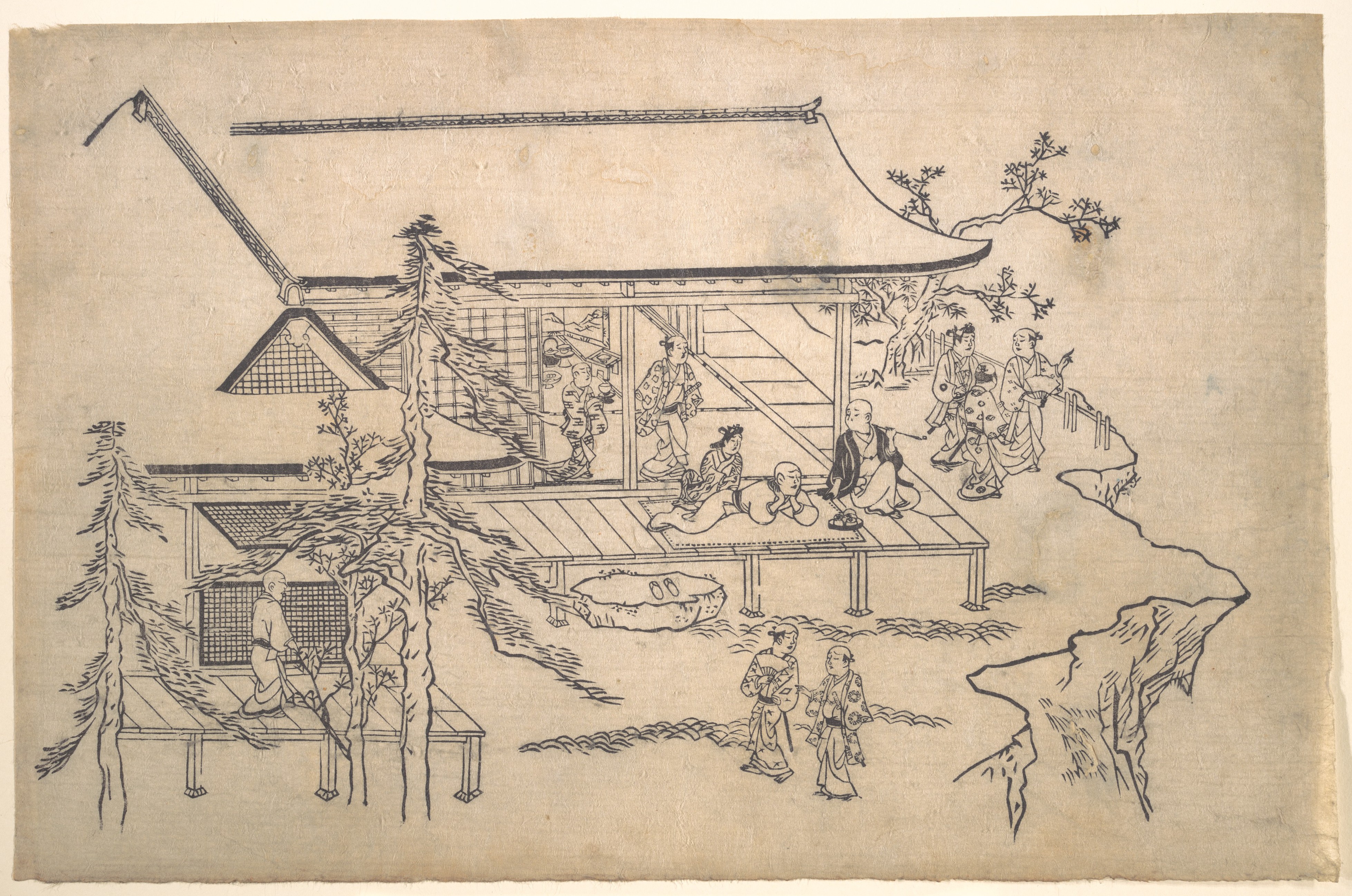
Flower-Viewing Scene
ca. 1685
Monochrome woodblock print (sumie); ink on paper
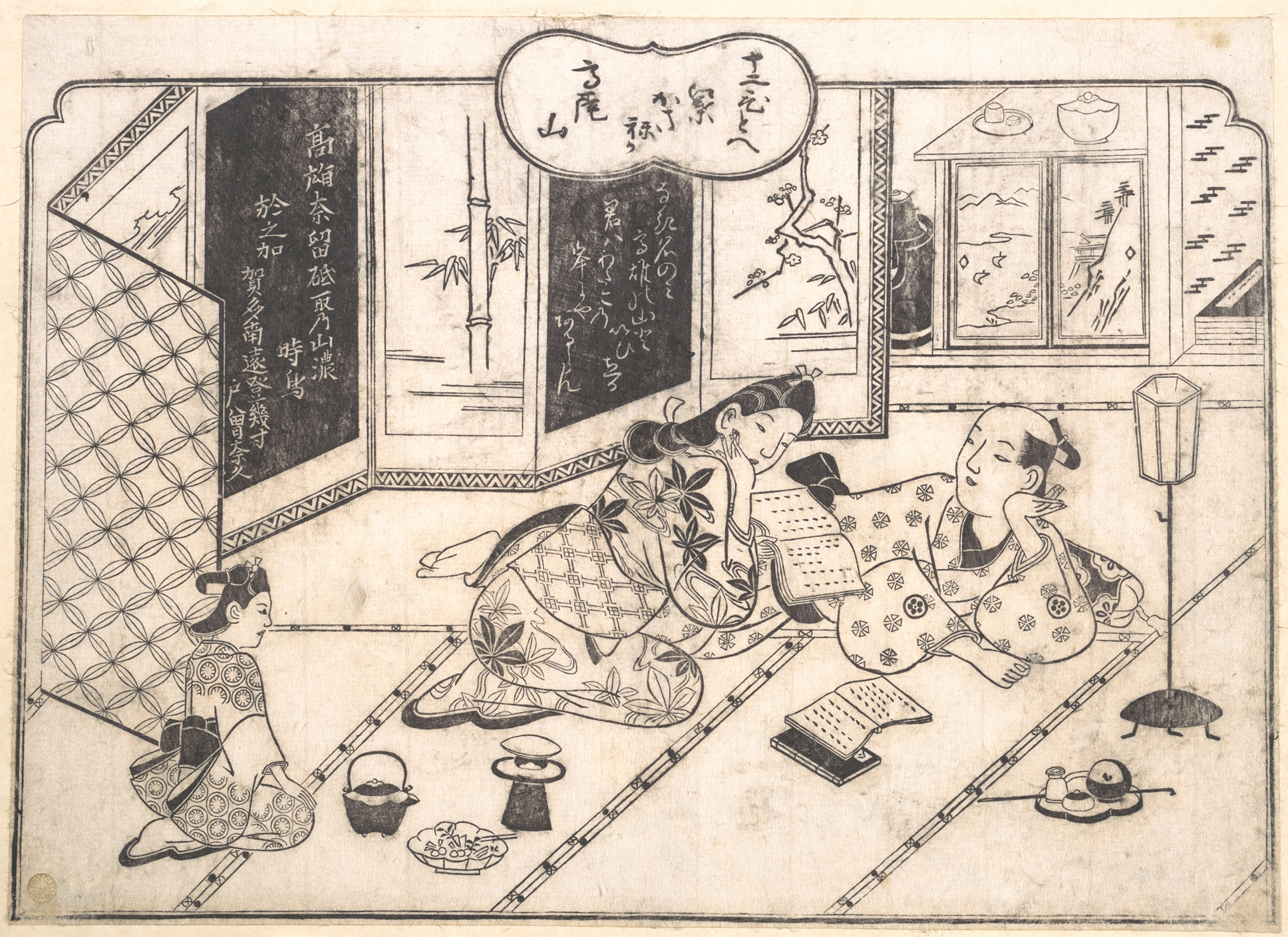
Go to Takaoyama to see Maple Leaves having Twelve Points
ca. 1690
Woodblock print; ink and color on paper
Frequently Asked Questions
Street Scene in Yoshiwara was created by Hishikawa Moronobu (菱川師宣) in late 17th century.