
The Evergreen Pine
- Date:
- 1682
- Medium:
- Woodblock-printed book, sumizuri-e
- Source:
- Art Institute of Chicago
Description
This 1682 woodblock-printed book in the Art Institute of Chicago, The Evergreen Pine, exemplifies Moronobu's contributions to the literary and poetic ehon genre, where text and image worked together to celebrate seasonal, philosophical, or mythological themes. The pine tree, with its evergreen needles and great longevity, is among the most resonant symbols in East Asian visual culture, signifying endurance, virtue, the New Year, and Daoist immortality, and Moronobu's choice of subject demonstrates his fluency in this classical iconographic vocabulary. Printed in sumizuri-e, the book uses single-block black ink to develop the calligraphic and pictorial dialogue between writing and image that characterizes the most ambitious ehon of the period. Moronobu's textile-trained eye is evident in the patterning of the pine needles, the texture of bark, and the kimono motifs of any human figures included in the book's compositions. The Evergreen Pine sits within Moronobu's broader effort to demonstrate that woodblock printing could engage with the highest themes of Japanese visual culture, not merely the topical or popular, and helped establish the prestige and legitimacy of the ehon form.
More Prints by Hishikawa Moronobu
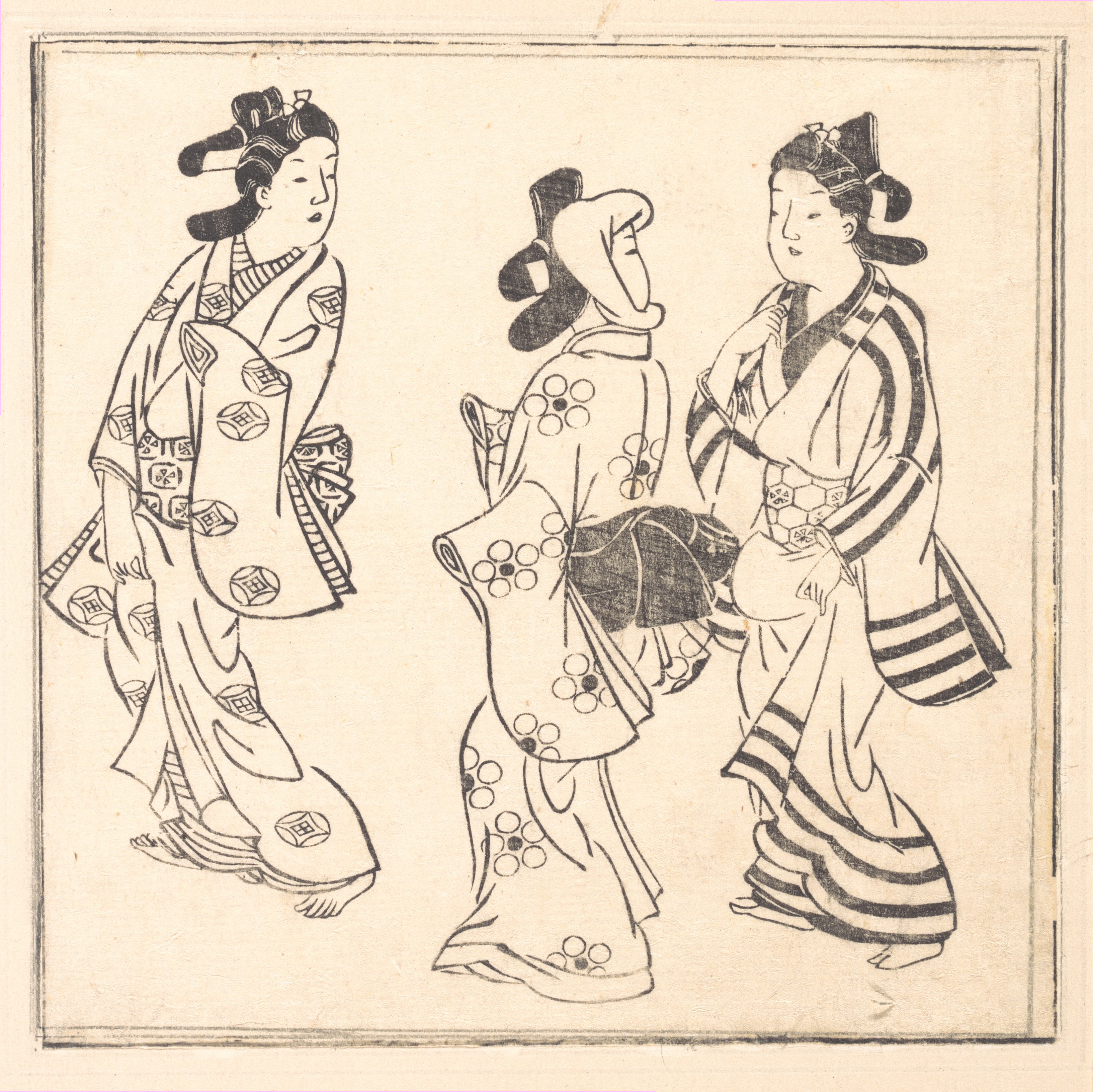
Leaf from a Book Entitled: Wakoku Hiaku-jo: One Hundred Japanese Women
Monochrome woodblock print; ink on paper

Fūryū sugatae hyakunin isshu
1695 Genroku 8
Woodblock- printed book; 3 vols.
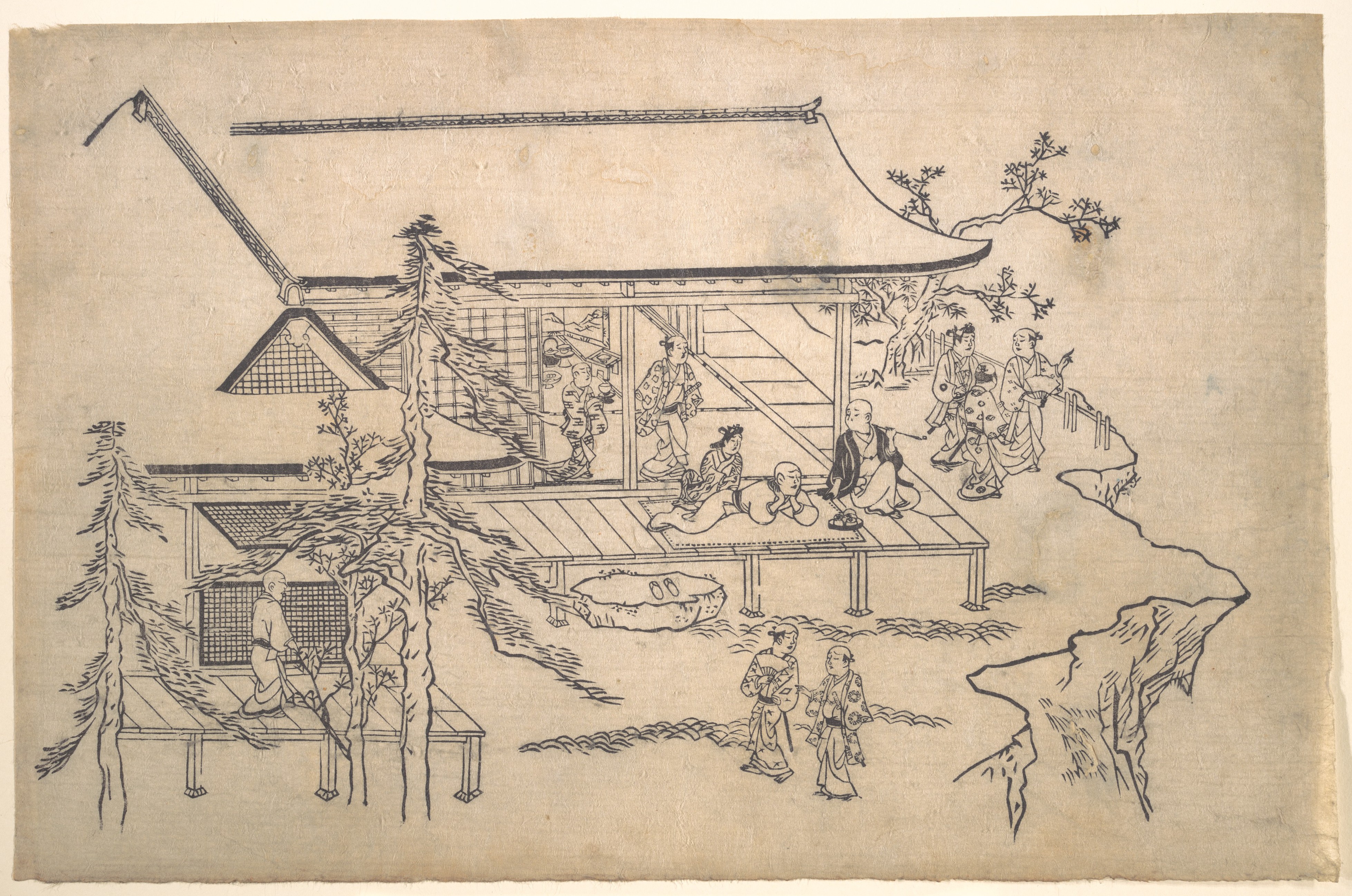
Flower-Viewing Scene
ca. 1685
Monochrome woodblock print (sumie); ink on paper
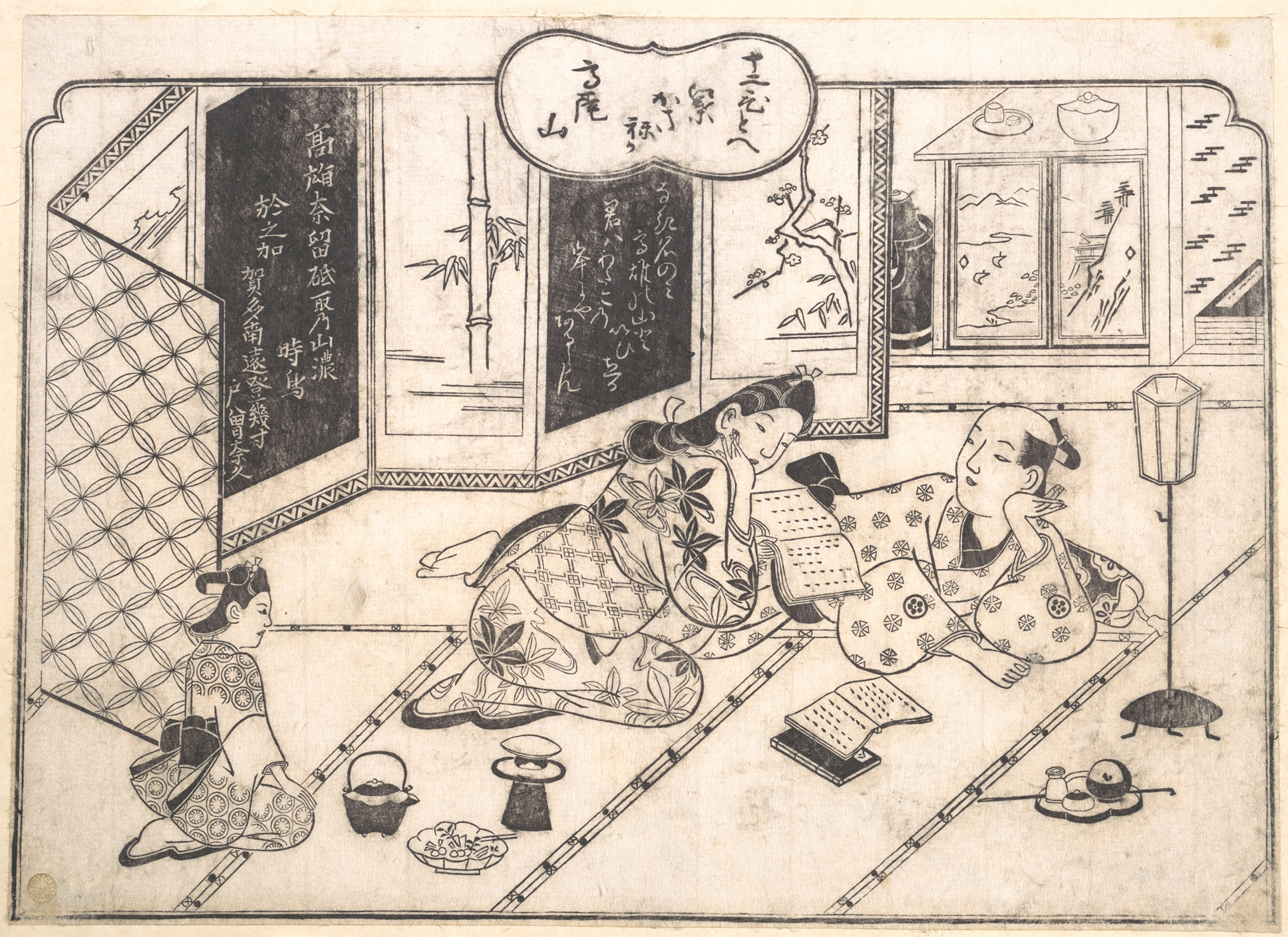
Go to Takaoyama to see Maple Leaves having Twelve Points
ca. 1690
Woodblock print; ink and color on paper
Frequently Asked Questions
The Evergreen Pine was created by Hishikawa Moronobu (菱川師宣) in 1682.