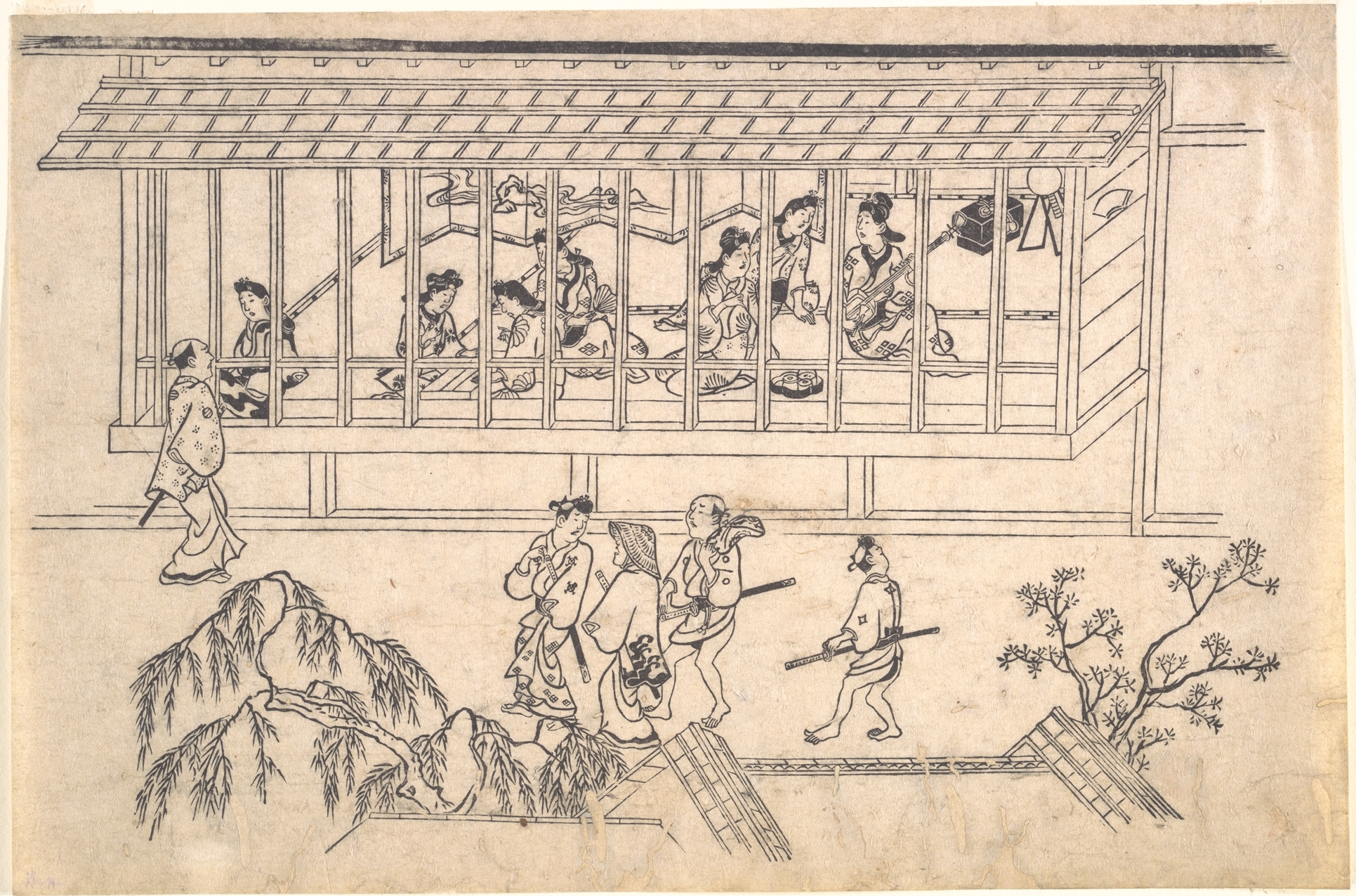
The Sixth Scene from Scenes of the Pleasure Quarter at Yoshiwara in Edo
- Date:
- late 17th century
- Medium:
- Monochrome woodblock print; ink on paper
- Source:
- Metropolitan Museum of Art
Description
The Sixth Scene from Scenes of the Pleasure Quarter at Yoshiwara in Edo is one leaf of a multi-sheet sequence by Hishikawa Moronobu, dated 1667 by the Metropolitan Museum of Art. The series follows a visitor's progress through the Yoshiwara from arrival at the great gate to the final, intimate encounters inside an upper-tier brothel. By the sixth scene, the action has moved indoors. A senior courtesan receives her client in a reception room of a high-ranking establishment, surrounded by attendants—a kamuro pouring saké, a shinzō folding a robe, an older yarite supervising the arrangements from a corner. Moronobu organizes the space along a single sweep of tatami; the sliding doors at the back of the room are pushed aside to reveal further interior depth, and a folding screen partially shields the principal figures from the viewer's gaze. His line work is at its most confident here. The courtesan's robe falls in long, unbroken curves; her hair is rendered as a single mass of black ink; and her face, like all the figures', is drawn with a few decisive strokes that nonetheless register tilt, glance, and mood. As the ukiyo-e founder, Hishikawa Moronobu used this series to fix in printed form the visual language of the Yoshiwara that later artists would inherit. Within the broader history of early Edo ukiyo-e, the sequence remains one of the most important descriptions of the licensed quarter's mature ritual, and the Met's preservation of the sixth scene gives modern viewers a direct window into Edo's most famous public secret.
More Prints by Hishikawa Moronobu
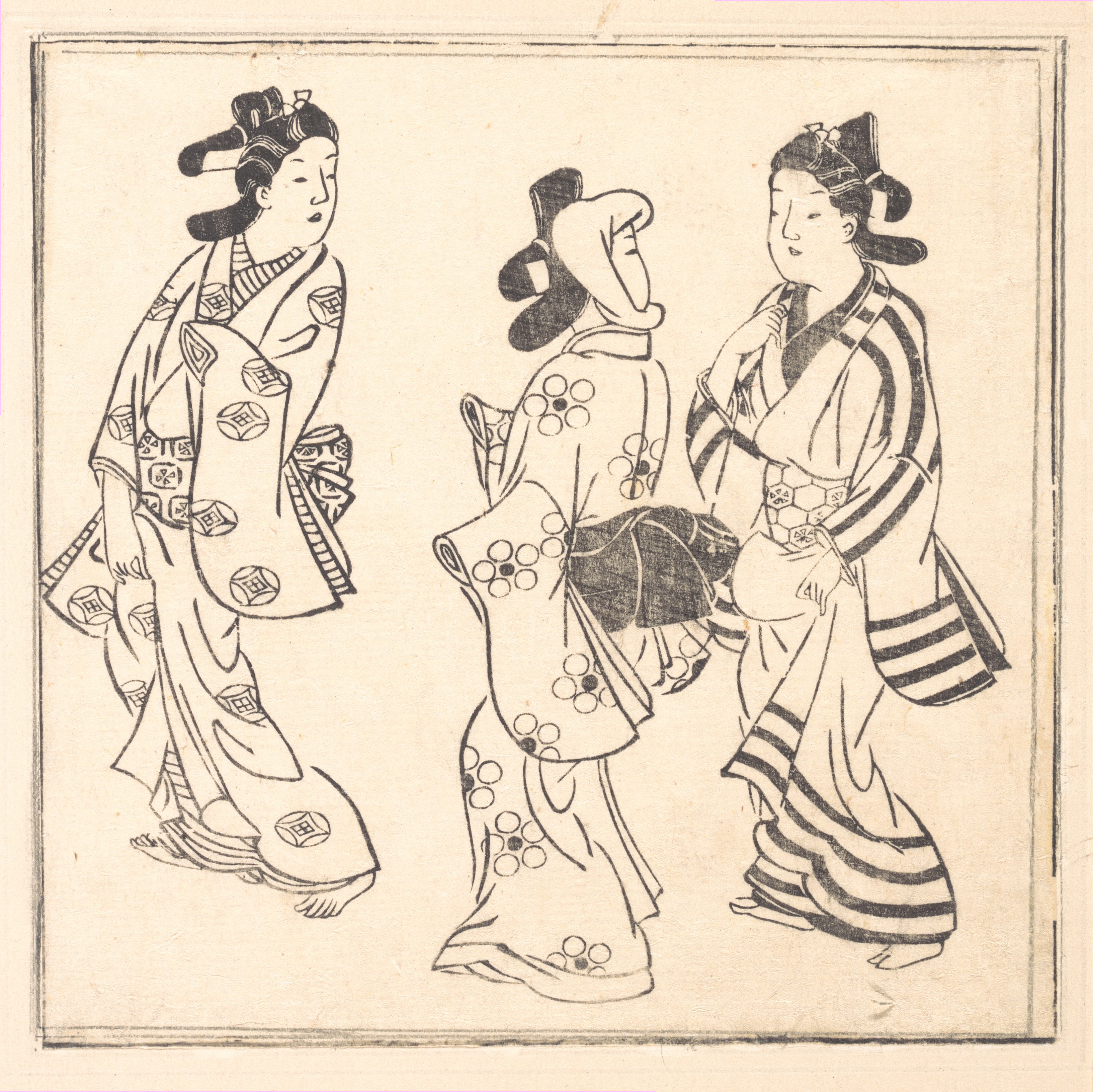
Leaf from a Book Entitled: Wakoku Hiaku-jo: One Hundred Japanese Women
Monochrome woodblock print; ink on paper

Fūryū sugatae hyakunin isshu
1695 Genroku 8
Woodblock- printed book; 3 vols.
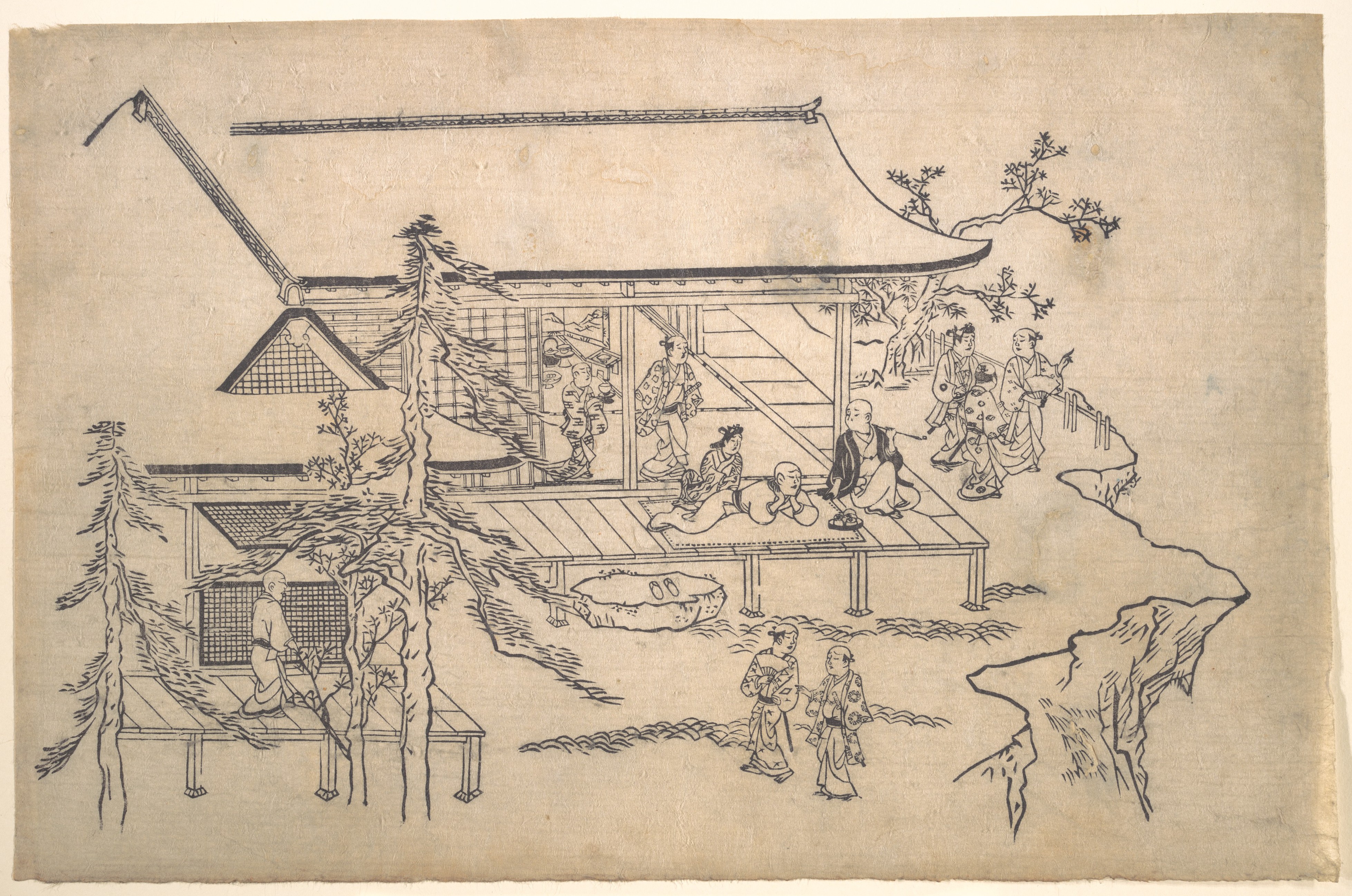
Flower-Viewing Scene
ca. 1685
Monochrome woodblock print (sumie); ink on paper
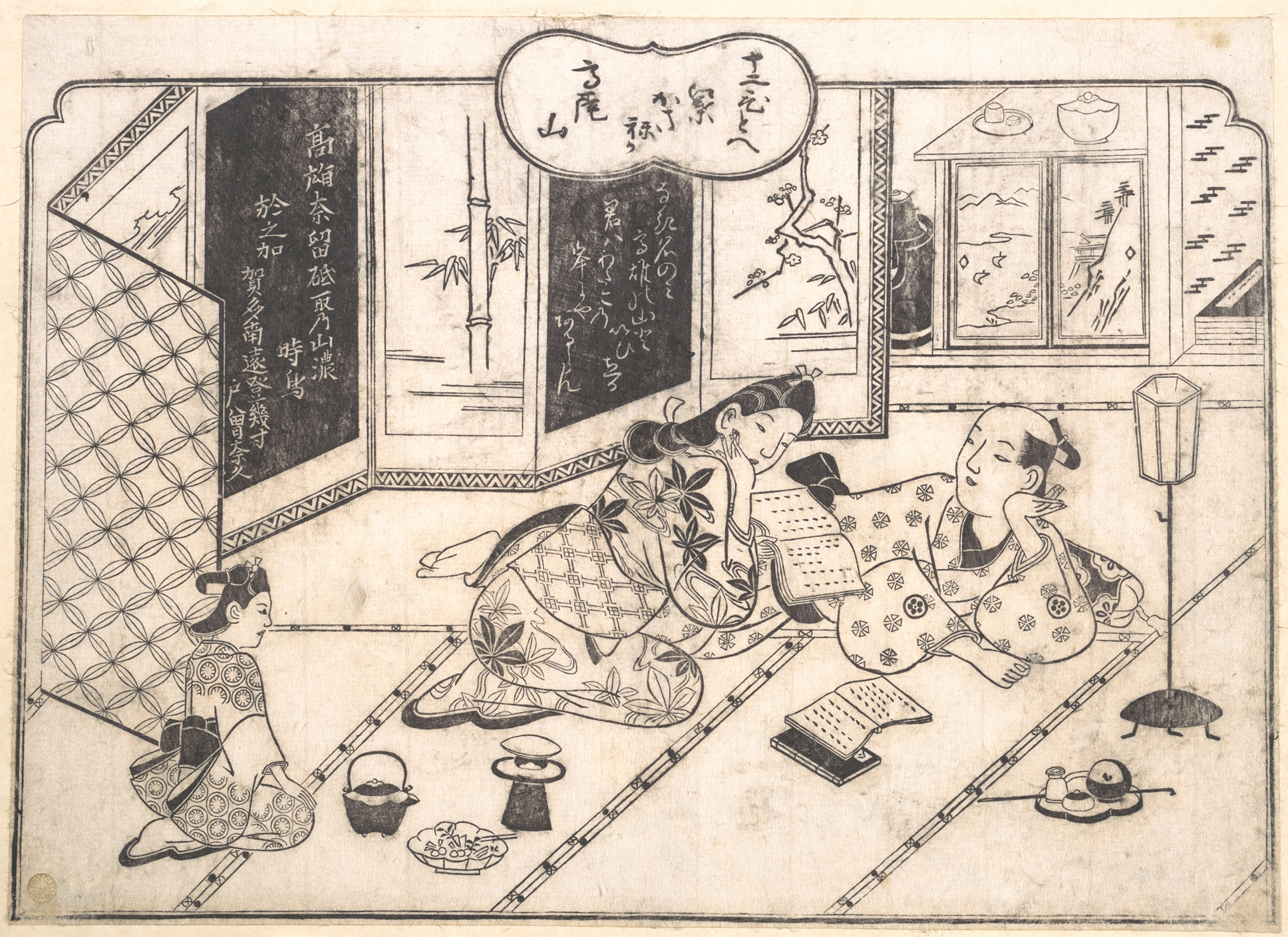
Go to Takaoyama to see Maple Leaves having Twelve Points
ca. 1690
Woodblock print; ink and color on paper
Frequently Asked Questions
The Sixth Scene from Scenes of the Pleasure Quarter at Yoshiwara in Edo was created by Hishikawa Moronobu (菱川師宣) in late 17th century.