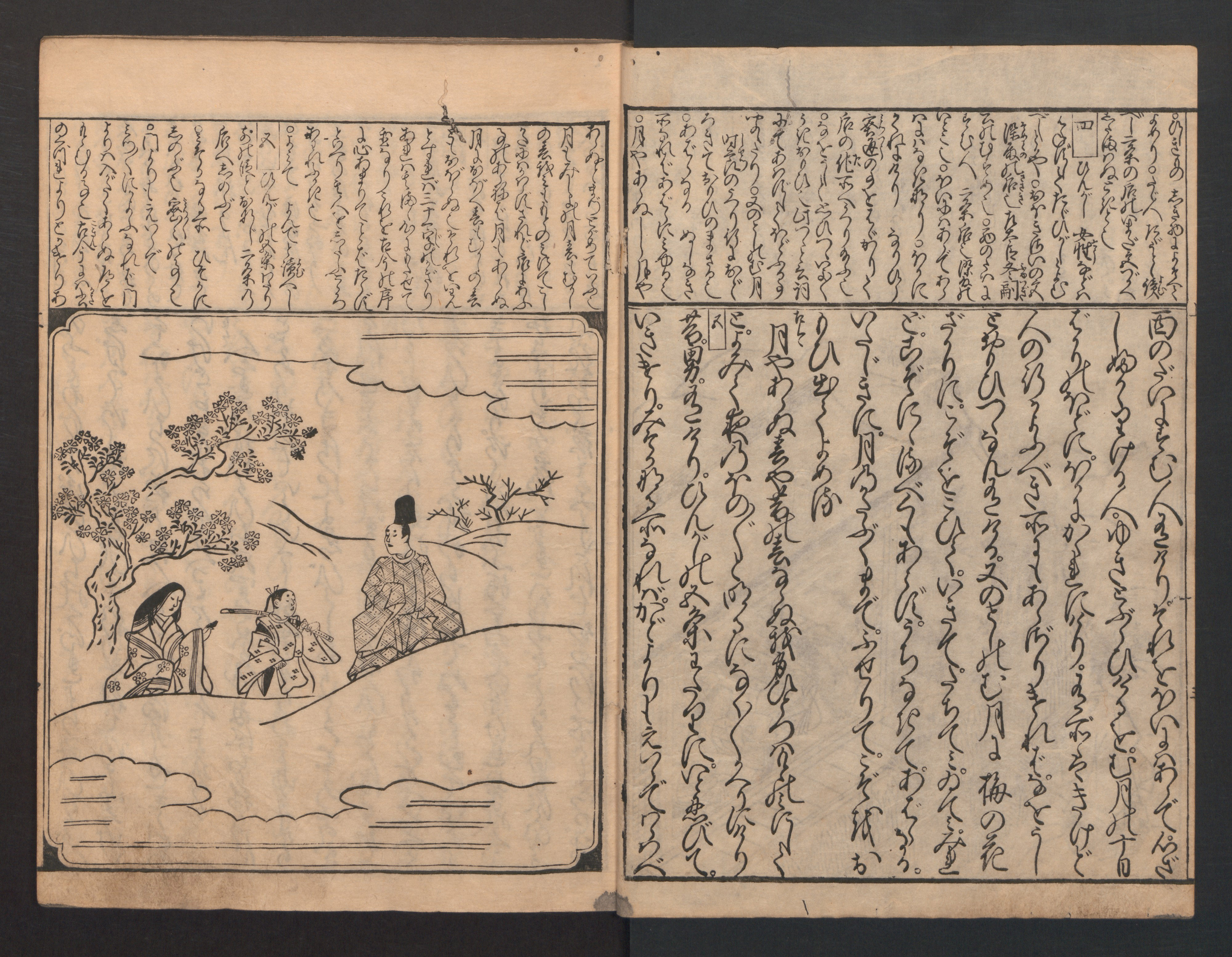
The Tales of Ise with Annotations (Ise Monogatari tōsho shō) 伊勢物語頭書抄
- Date:
- 1679, third month
- Medium:
- Set of 3 woodblock printed books; ink on paper
- Source:
- Metropolitan Museum of Art
Description
The Tales of Ise with Annotations, dated 1679 in the Metropolitan Museum of Art's catalogue, is an illustrated and commented edition of the Heian-period Ise monogatari designed by Hishikawa Moronobu. The Ise tales—a sequence of short poetic episodes traditionally associated with the courtier Ariwara no Narihira—were among the most prestigious works of classical Japanese literature, studied in elite households and quoted in painting, lacquer, and Noh. Moronobu's edition packages the text with detailed commentary at the head of each page (tōsho shō means 'annotation at the top') and supplies a full picture for every major episode. The result was a book that could serve simultaneously as a school text and as a luxury picture book. Moronobu draws Narihira and the women of the tales in archaic court robes, drifting through landscaped gardens, riverside settings, and roadside encounters. His line is comparatively restrained here: figures are slim, sleeves trail to the ground, and the compositions lean on Tosa-school precedents while remaining unmistakably his own. By taking on the Ise monogatari, the ukiyo-e founder argued for the dignity of his medium. He was showing that early Edo ukiyo-e could absorb the central canon of classical Japanese literature and present it for an expanding urban readership. The Met preserves the volume as one of the key documents of Hishikawa Moronobu's literary work, and it remains an essential reference point for understanding how popular print culture in late seventeenth-century Edo absorbed the heritage of the Heian court.
More Prints by Hishikawa Moronobu
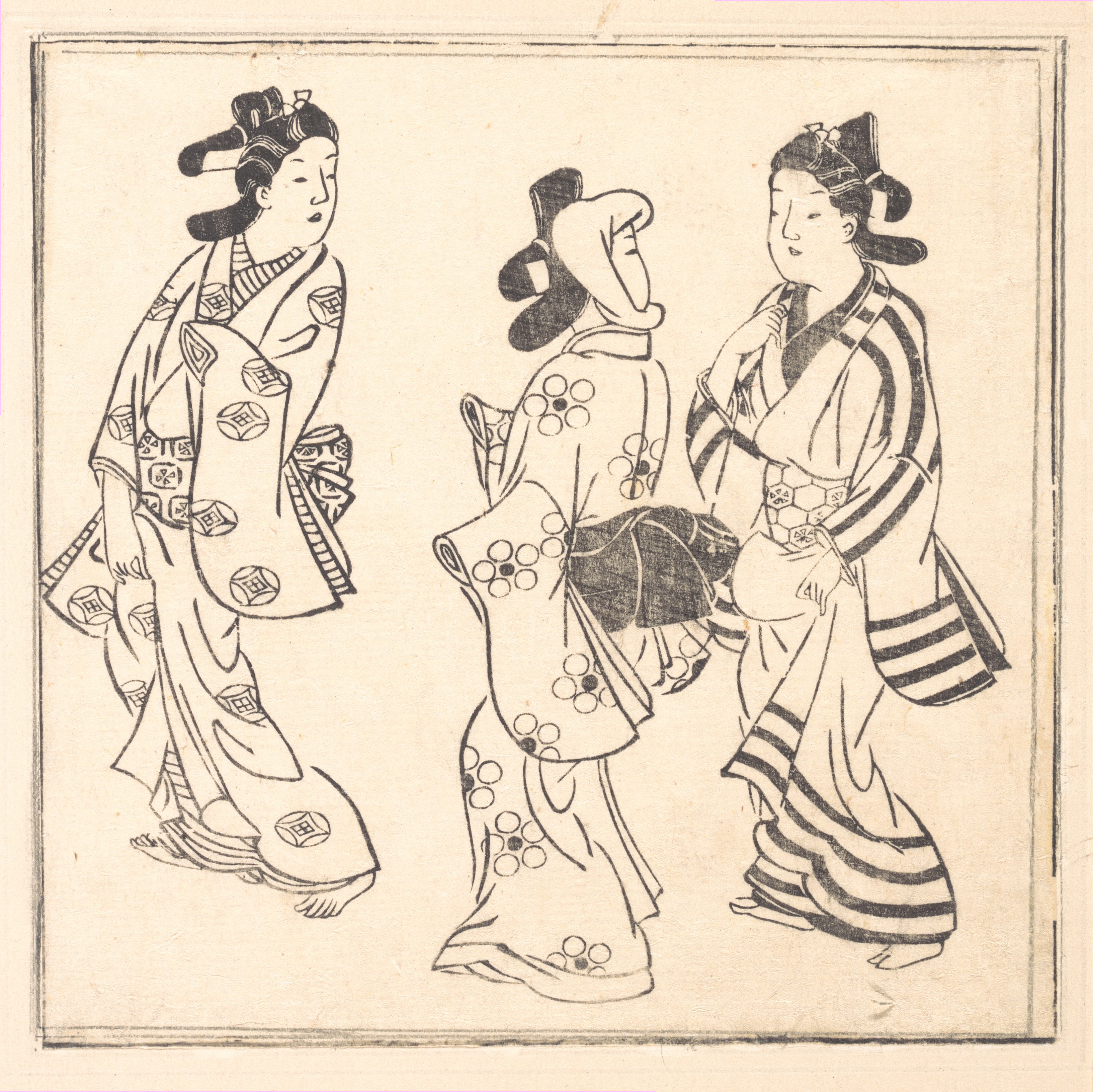
Leaf from a Book Entitled: Wakoku Hiaku-jo: One Hundred Japanese Women
Monochrome woodblock print; ink on paper

Fūryū sugatae hyakunin isshu
1695 Genroku 8
Woodblock- printed book; 3 vols.
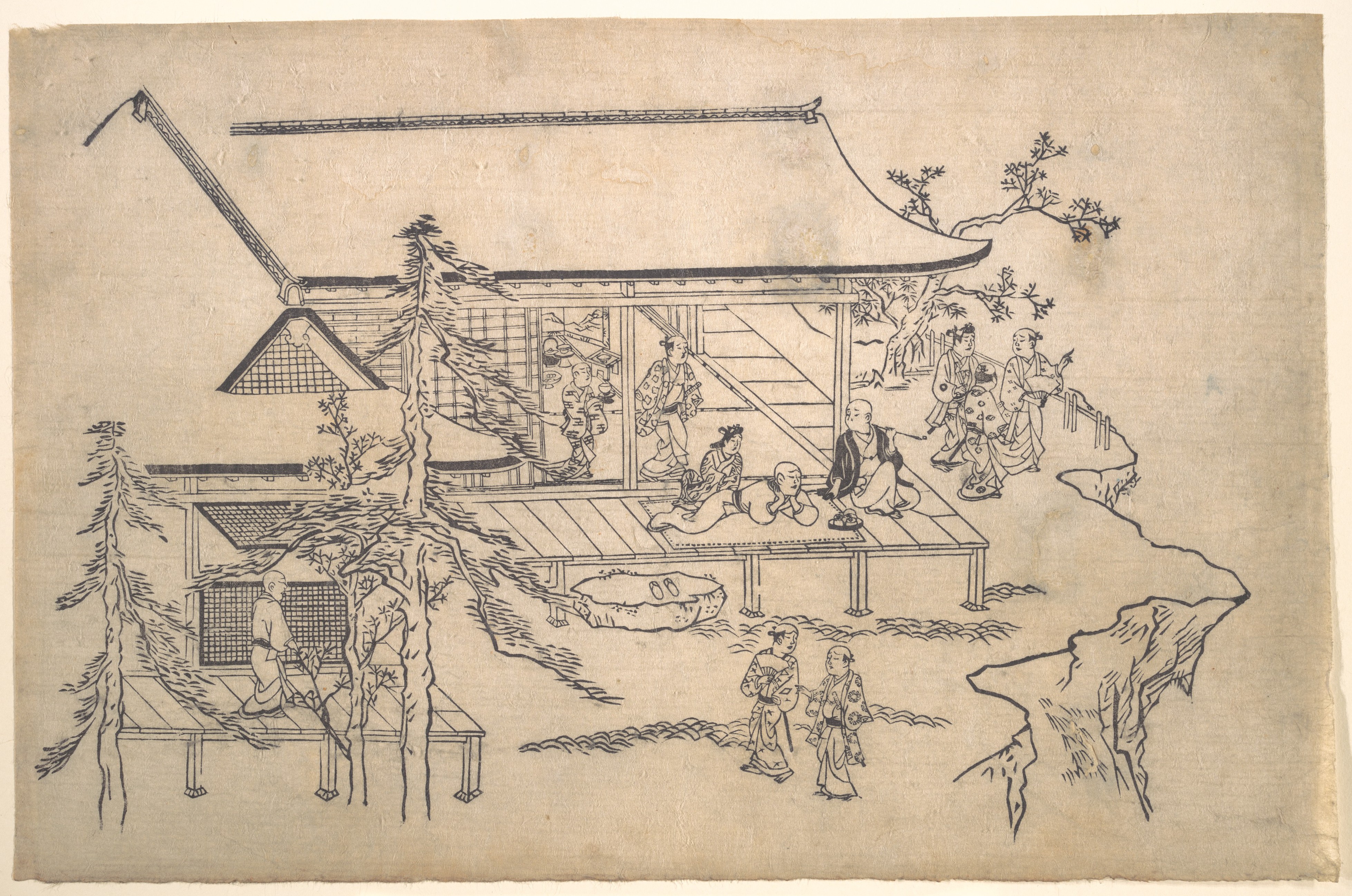
Flower-Viewing Scene
ca. 1685
Monochrome woodblock print (sumie); ink on paper
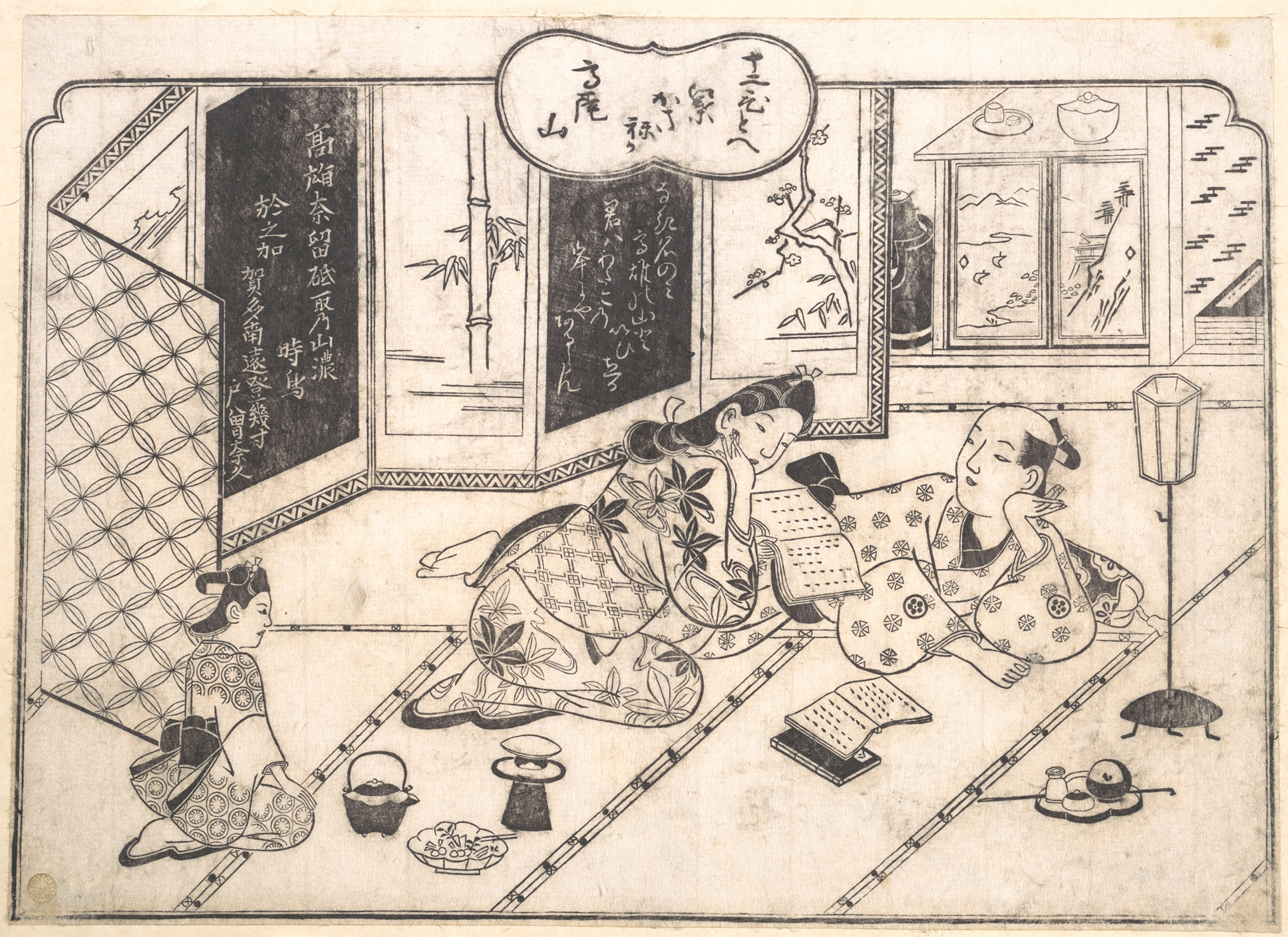
Go to Takaoyama to see Maple Leaves having Twelve Points
ca. 1690
Woodblock print; ink and color on paper
Frequently Asked Questions
The Tales of Ise with Annotations (Ise Monogatari tōsho shō) 伊勢物語頭書抄 was created by Hishikawa Moronobu (菱川師宣) in 1679, third month.