
Yamato shinoe zukushi
- Date:
- 1686
- Medium:
- Woodblock printed book
- Source:
- Art Institute of Chicago
Description
This 1686 woodblock-printed book in the collection of the Art Institute of Chicago exemplifies Hishikawa Moronobu's prolific output of ehon, the illustrated books that constituted the bulk of his career and shaped popular visual culture across Edo. The title points to a compendium-style format, with zukushi denoting an exhaustive collection or anthology, a structure Moronobu favored for organizing themed groupings of figures, scenes, and motifs. Printed entirely in sumizuri-e, the monochromatic black-ink technique that preceded color printing, the book relies on Moronobu's mastery of line to carry both narrative and decorative weight. His textile-trained eye is visible throughout, in the way kimono patterns are described with the same calligraphic confidence as facial features, in the rhythmic spacing of figures across each opening, and in the bold contrast between dense ornament and open ground. Yamato shinoe zukushi belongs to the period when Moronobu was at the height of his fame in Edo, when his name on a book's colophon was itself a commercial draw, and when the publishing industry had begun to position him as an author-artist rather than an anonymous illustrator. Surviving copies of his ehon are now rare, making this Art Institute of Chicago volume an important document of his role as the founder of single-sheet ukiyo-e while remaining one of Edo's most productive book illustrators.
More Prints by Hishikawa Moronobu
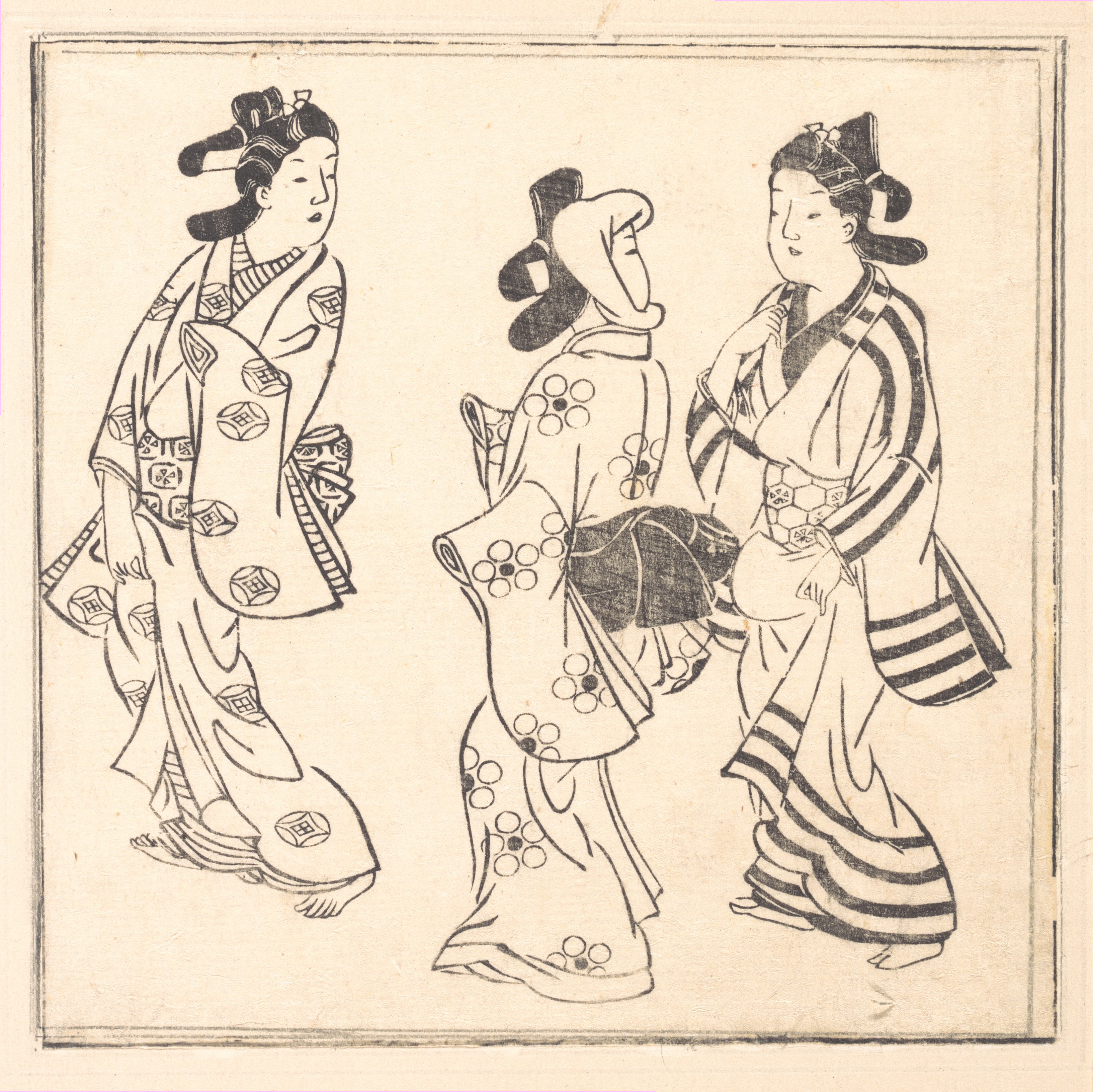
Leaf from a Book Entitled: Wakoku Hiaku-jo: One Hundred Japanese Women
Monochrome woodblock print; ink on paper

Fūryū sugatae hyakunin isshu
1695 Genroku 8
Woodblock- printed book; 3 vols.
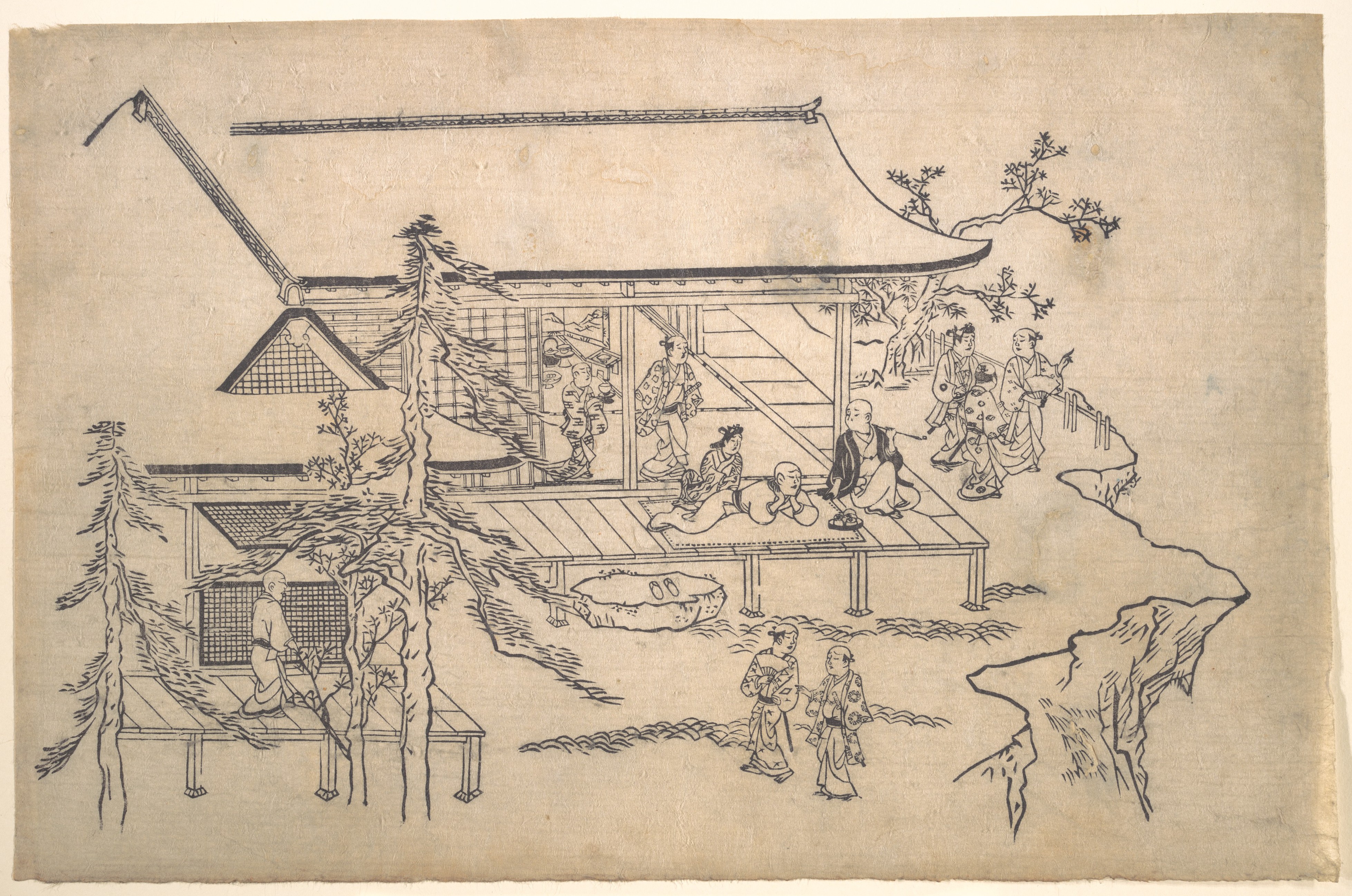
Flower-Viewing Scene
ca. 1685
Monochrome woodblock print (sumie); ink on paper
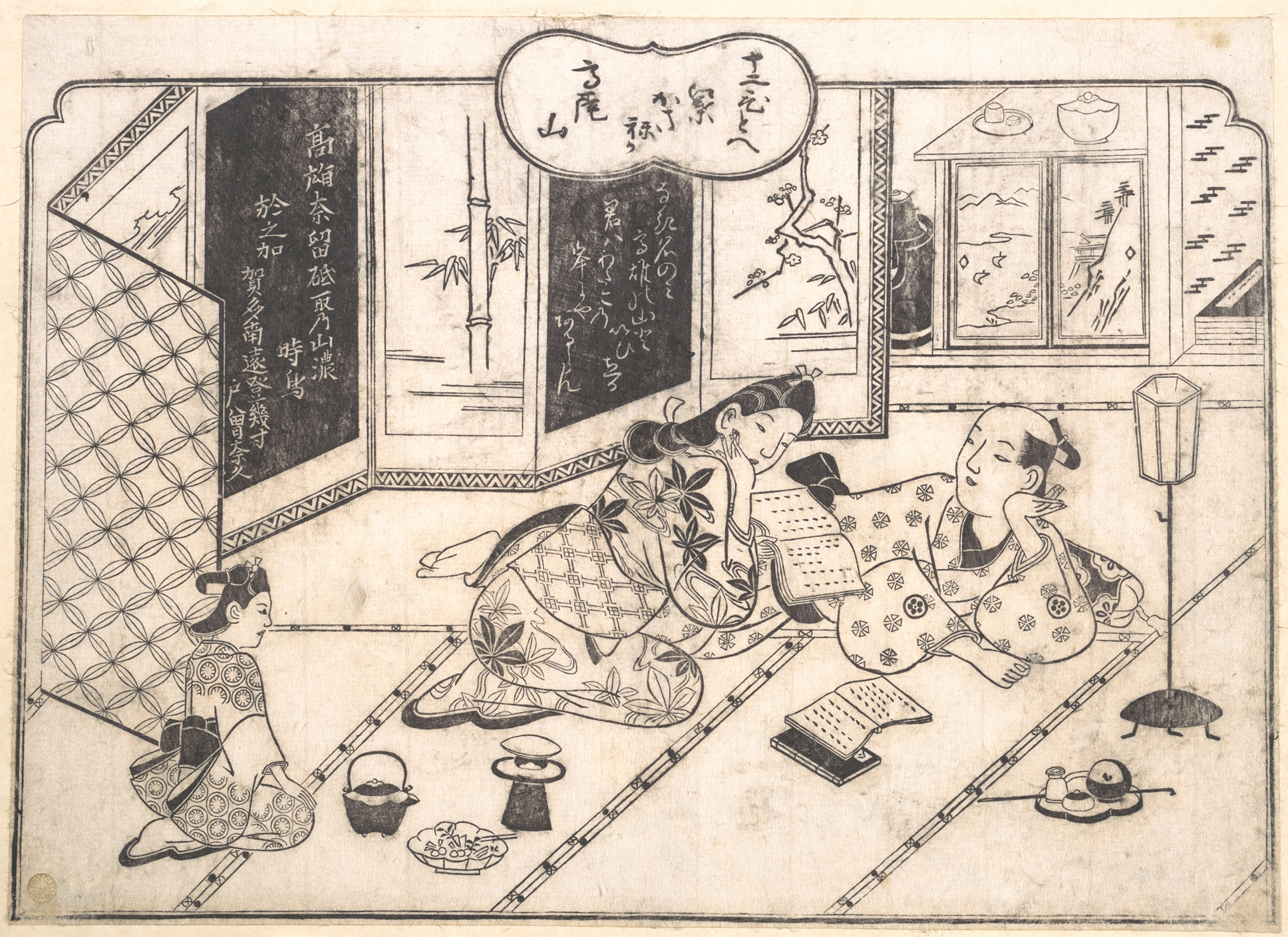
Go to Takaoyama to see Maple Leaves having Twelve Points
ca. 1690
Woodblock print; ink and color on paper
Frequently Asked Questions
Yamato shinoe zukushi was created by Hishikawa Moronobu (菱川師宣) in 1686.