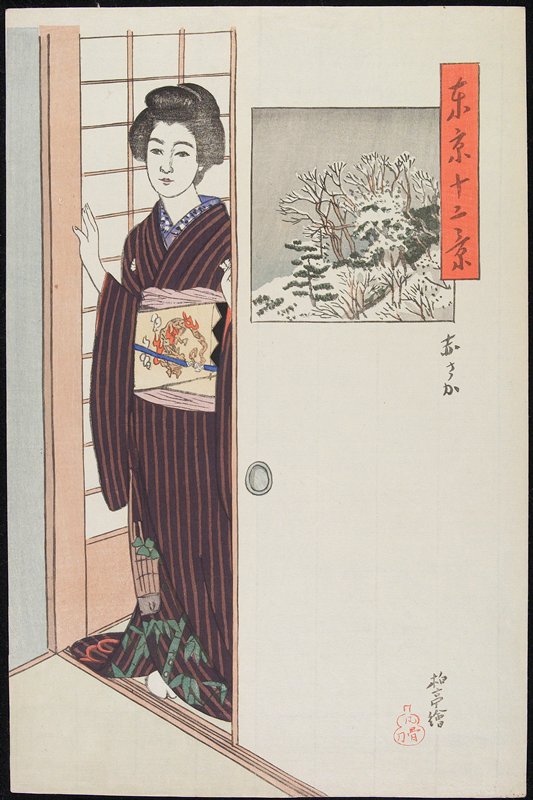
Akasaka
- Date:
- c. 1914–1916
- Medium:
- Woodblock print, ink and color on paper
- Dimensions:
- 39.4 × 26 cm
- Edition:
- Self-printed
- Source:
- Minneapolis Institute of Art
Description
This woodblock print depicts the Akasaka district of Tokyo, one of the city's commercial and entertainment quarters during the Taisho era. Produced circa 1914-1916 in ink and color on paper, the image records urban life at a moment when Tokyo was rapidly modernizing. Hakutei, who had studied Western oil painting in Europe, brings a painterly eye to the woodblock format, treating the streetscape with attention to light and spatial depth uncommon in traditional Japanese printmaking. The color palette and compositional framing suggest the influence of Post-Impressionist cityscapes that Hakutei absorbed during his time in Paris. As a founding figure of the sosaku-hanga movement, Hakutei carved and printed this block himself, rejecting the division of labor that had defined ukiyo-e production for centuries.
More Prints by Ishii Hakutei
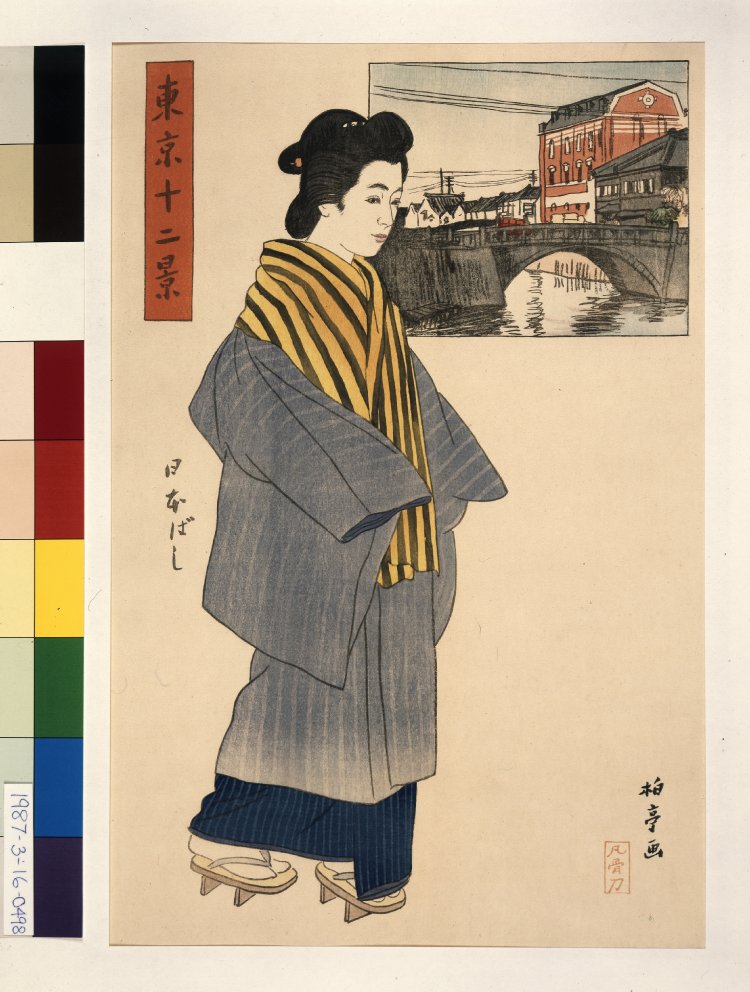
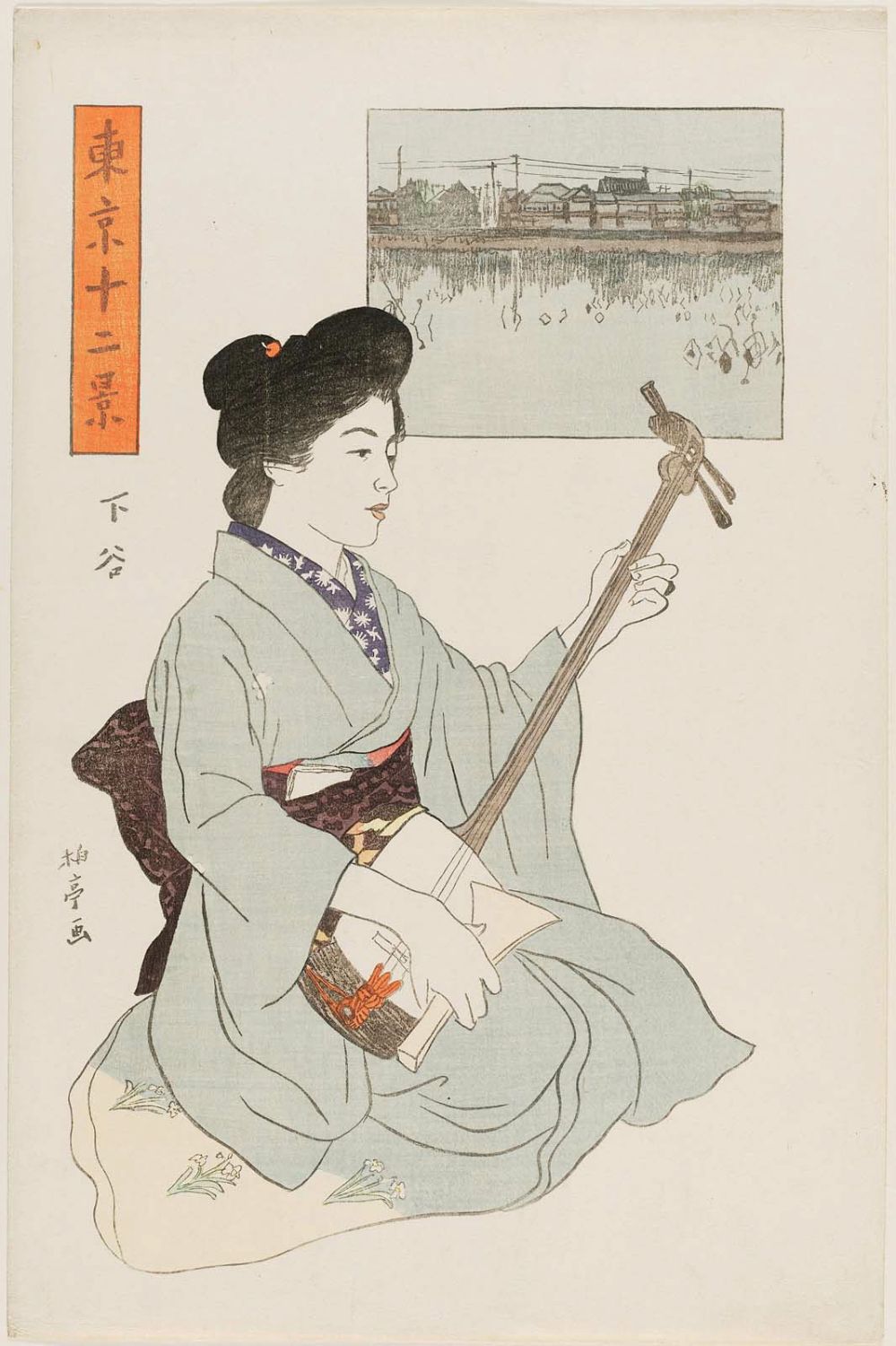
More Urban Scenes Prints
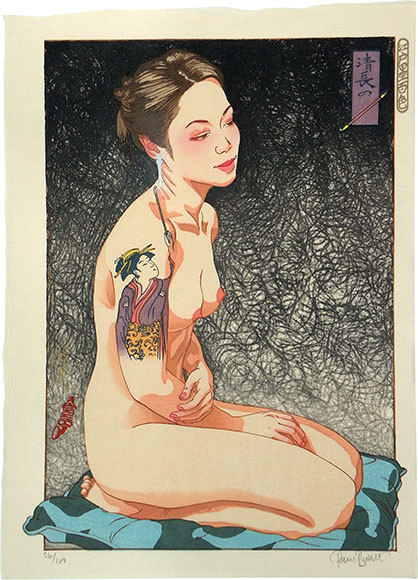
A Hundred Shades of Ink of Edo: Kiyonaga's Pipe (Edo zumi hyaku shoku: Kiyonaga no kiseru)
Woodblock print

View of Kabuki Theater from Matsuya (Ginza Matsuya yori Kabukiza), no. 3 from the series "Pictures of Ginza, First Series (Gashu Ginza dai isshu)"
1928
Color lithograph

Distant View of Mitsukoshi Movie Theater in Shinjuku from the Sixth Floor of Hoteiya (Hoteiya rokkai kara Shinjuku Mitsukoshi Musashi no kan enbo zu), no. 1 from the series "Scenery of Shinjuku (Gashu Shinjuku fukei)"
1930
Color lithograph
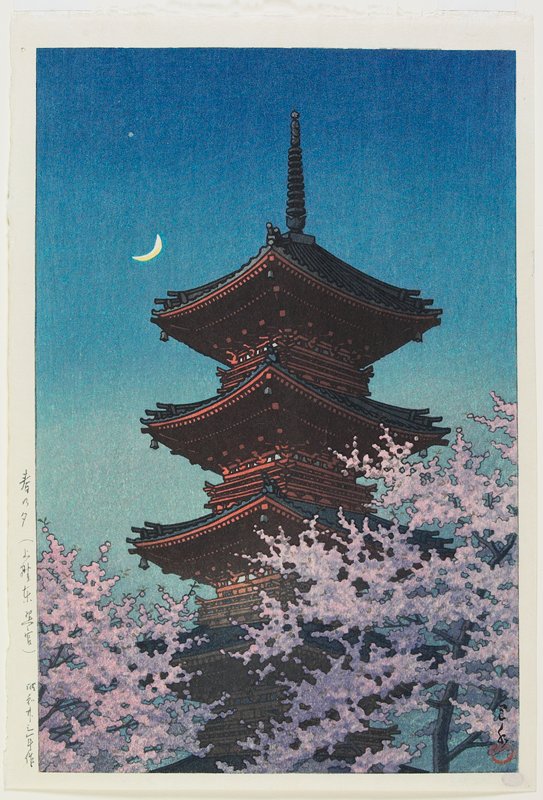
Spring Dusk at the Tōshō Shrine in Ueno
1948
Woodblock print, ink and color on paper
Featured in Collections
Curated cross-cuts that include this print.
Frequently Asked Questions
Akasaka was created by Ishii Hakutei (石井柏亭) in c. 1914–1916.
Akasaka depicts urban scenes.
Akasaka measures 39.4 × 26 cm.