
Asakusa
- Medium:
- Mokuhanga (Japanese woodblock)
- Image courtesy of
- Saru Gallery
Description
Asakusa, the temple-and-entertainment district anchored by Senso-ji and the Nakamise approach, was a recurring subject across early-twentieth-century Japanese printmaking, and Hakutei's treatment of it sits within his ongoing project of recording modern Tokyo. The print likely depicts a characteristic vignette — the five-storied pagoda, the Kaminarimon gate, a crowd along the temple precinct, or a side-street view of the surrounding shitamachi — rendered as a meisho-e updated for the Taisho or early Showa city. Technically, one can expect flat color fields laid down by baren over hand-cut blocks, with bokashi gradations used sparingly for sky and distance, and a relatively loose keyblock that preserves the feel of the preparatory sketch. Hakutei's Asakusa belongs to the same impulse that produced his Tokyo Twelve Months and his contributions to the Nihon Sosaku Hanga Kyokai: a desire to claim the everyday modern city as a legitimate subject for the woodblock medium, treated with the immediacy of plein-air observation rather than the codified poetry of older ukiyo-e formulas.
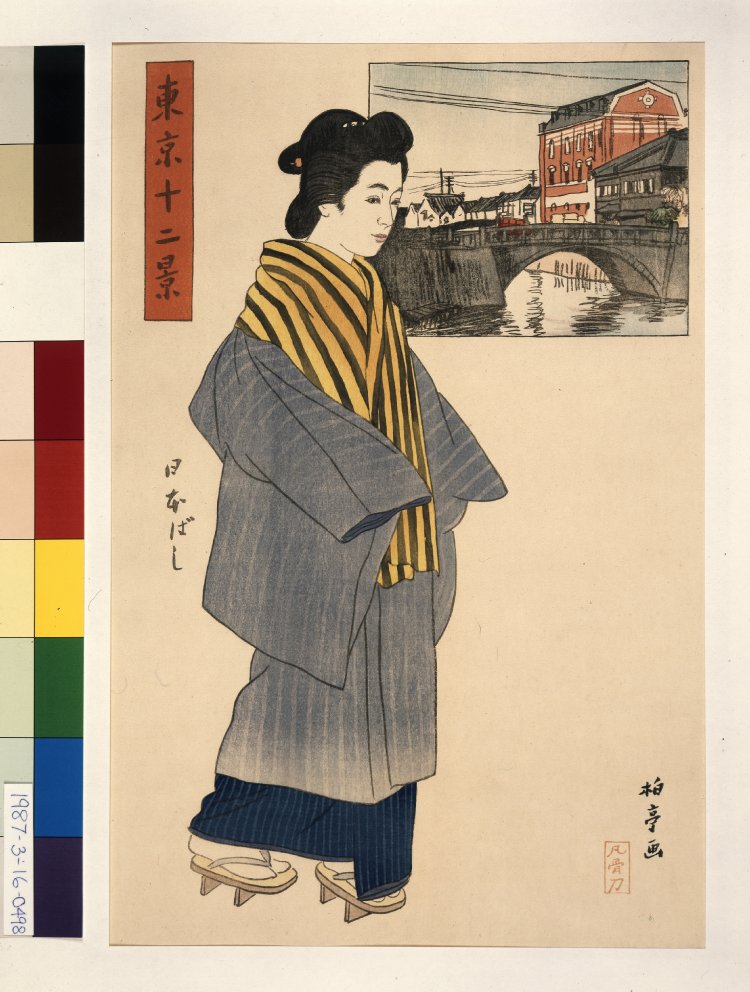
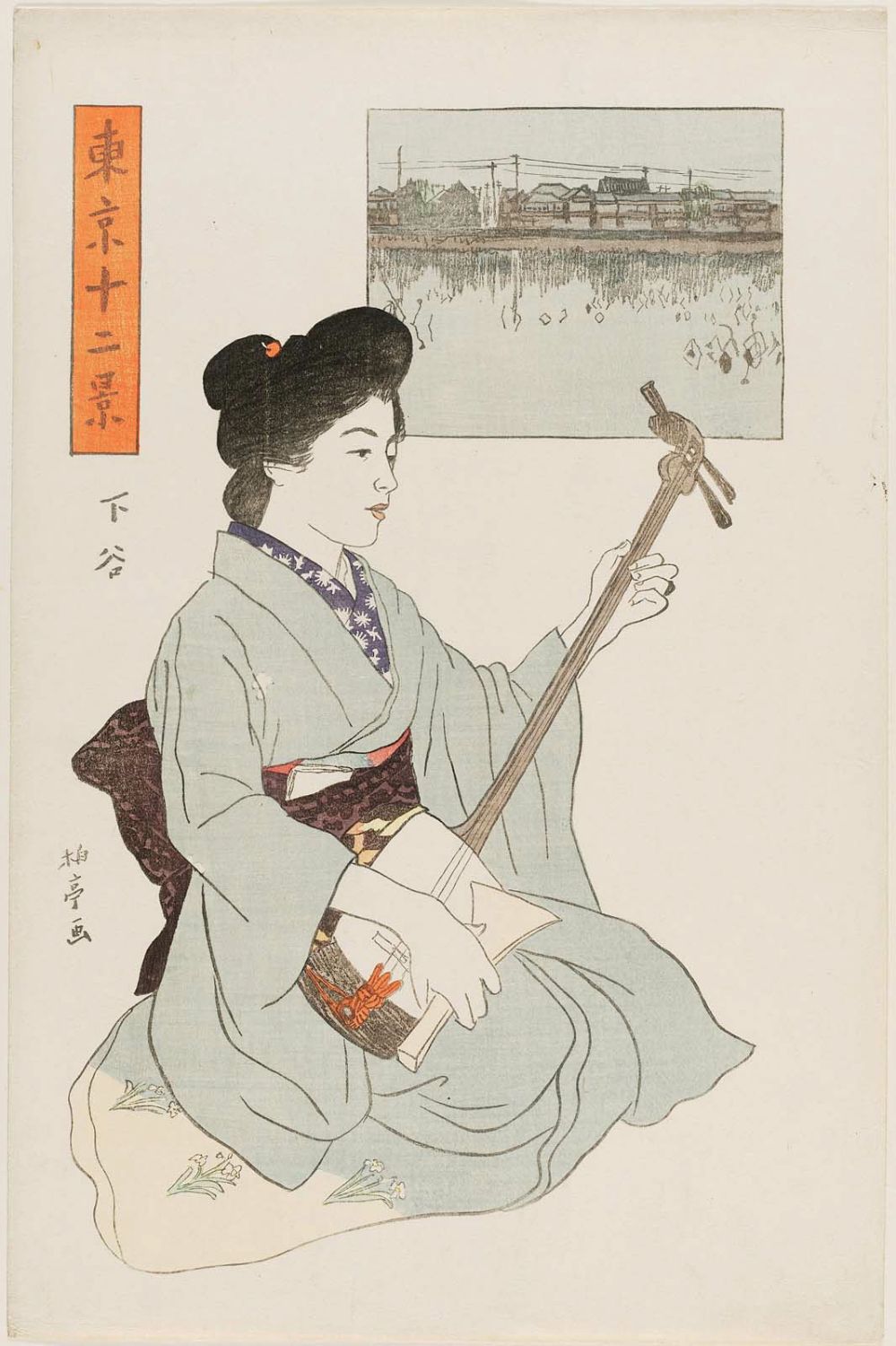
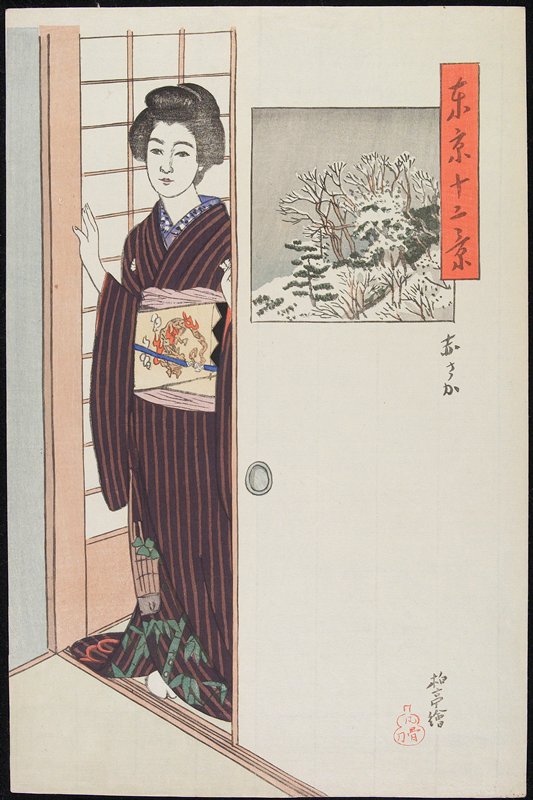
More Prints by Ishii Hakutei
Featured in Collections
Curated cross-cuts that include this print.
Frequently Asked Questions
Asakusa was created by Ishii Hakutei (石井柏亭).