
Funabashi
- Medium:
- Mokuhanga (Japanese woodblock)
- Image courtesy of
- Saru Gallery
Description
Funabashi sits on the northern shore of Tokyo Bay in Chiba Prefecture, a town whose name (lit. 'boat bridge') refers to its historic role as a river crossing on the Sakura Kaidō and as a fishing port supplying Edo. A meisho-e of this location likely depicts the working coastline — fishing boats, mudflats at low tide where shellfish were harvested, or the river estuary — rather than the central Tokyo landmarks more commonly chosen by his contemporaries. Hakutei's choice of such a workaday subject reflects the broader interest in everyday regional Japan that distinguished both shin-hanga and sosaku-hanga from the codified meisho repertoire of Hiroshige's generation. The mokuhanga is printed by hand with baren on washi, with Hakutei's characteristic use of muted, modulated color and bokashi gradations on water and sky carrying the influence of his yoga (Western-style) painting training. The composition typically combines planar simplicity with carefully observed local detail.
More Prints by Ishii Hakutei
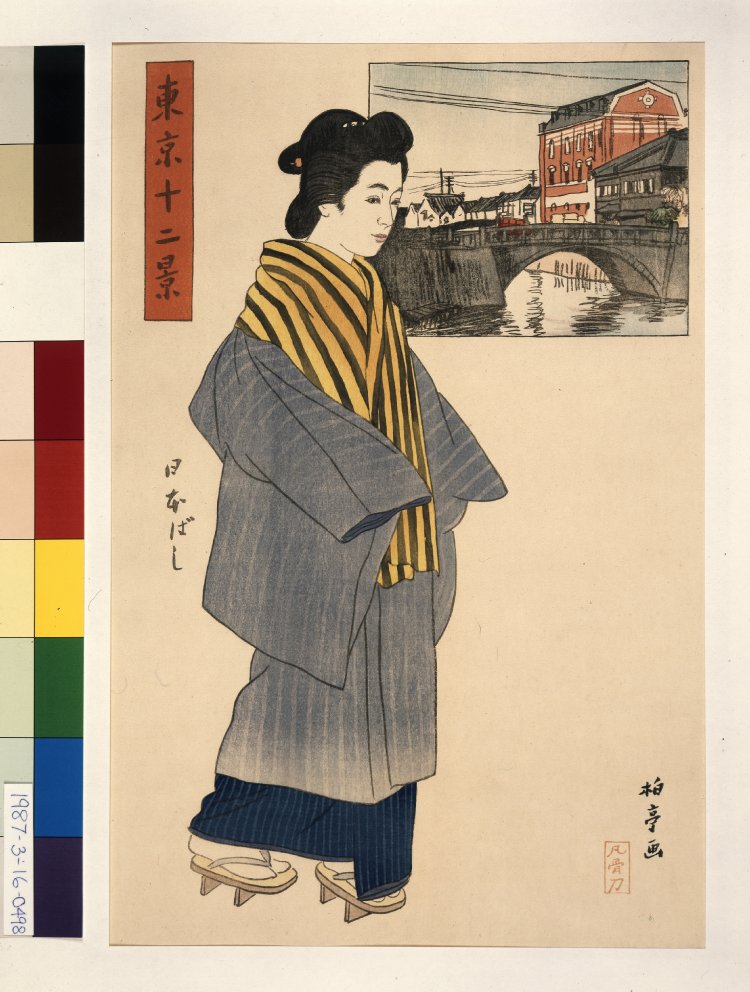
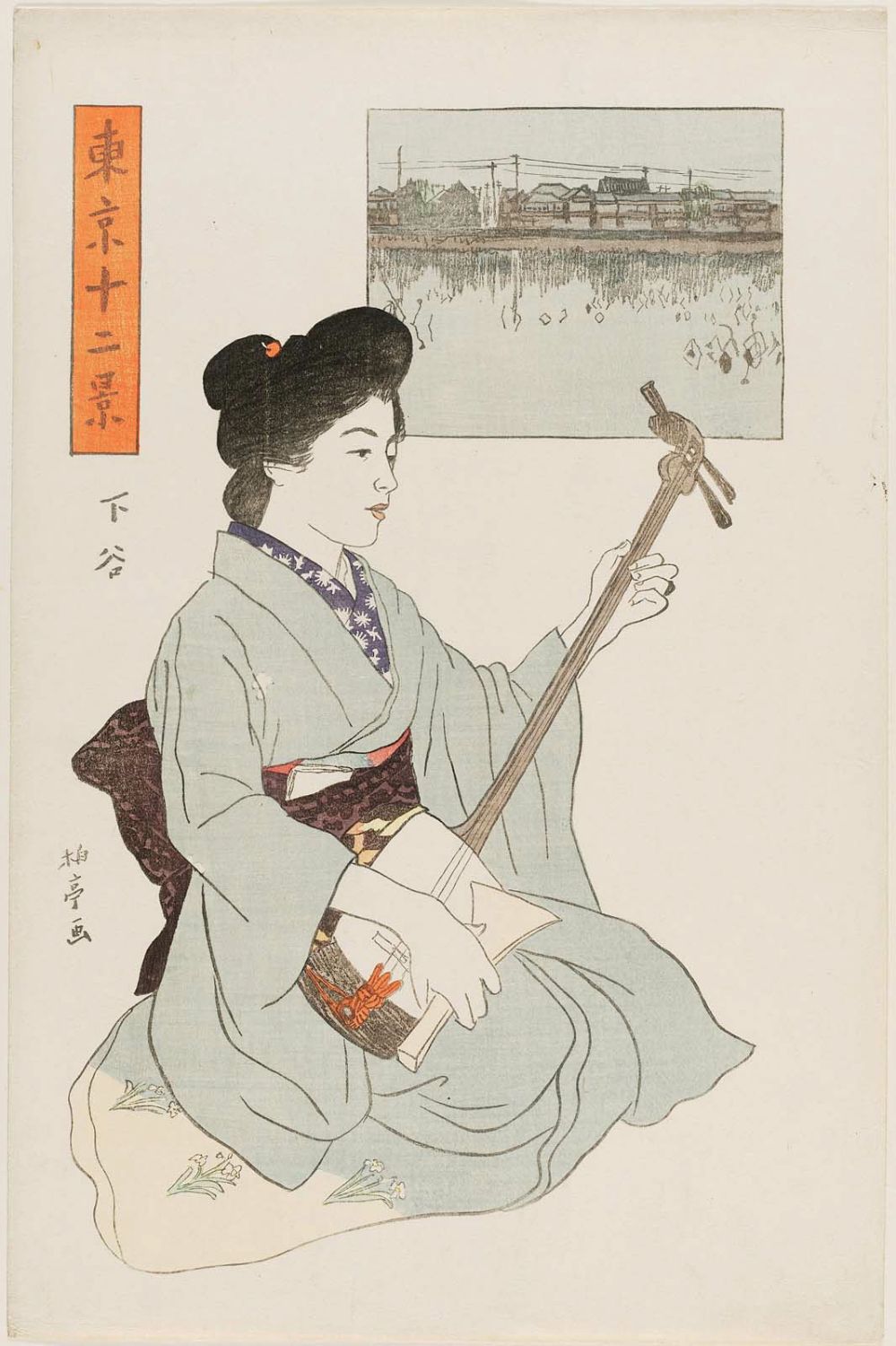
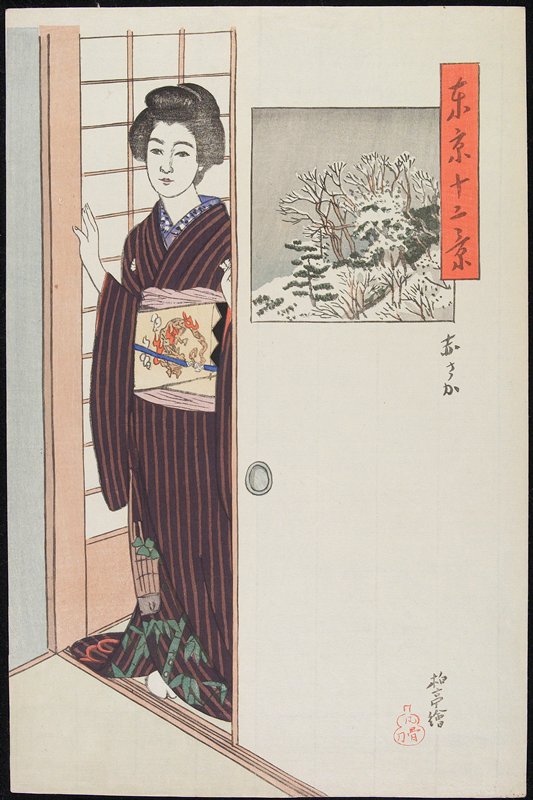
Featured in Collections
Curated cross-cuts that include this print.
Frequently Asked Questions
Funabashi was created by Ishii Hakutei (石井柏亭).