
Monk at a Mountain Temple
- Date:
- 20th century
- Medium:
- Color woodblock print
- Dimensions:
- 22.9 × 26.7 cm
- Edition:
- Self-printed
- Source:
- Art Institute of Chicago
Description
A solitary monk ascending a mountain path toward a temple complex represents one of Sekino's recurring themes: the human figure in relationship to sacred landscape. The color woodblock places the small figure against the mountain's scale, the temple buildings visible above as both destination and symbol. Sekino's mountain-temple compositions draw on a long tradition of Buddhist landscape painting while recasting it in the assertive graphic language of sosaku-hanga.
More Prints by Jun'ichiro Sekino
More Landscapes Prints

Lake Kugushi in Wakasa Province (Wakasa Kugushiko), from the series Souvenirs of Travel I (Tabi miyage dai isshu)"
Wakasa Kugushiko
1920
Color woodblock print; oban
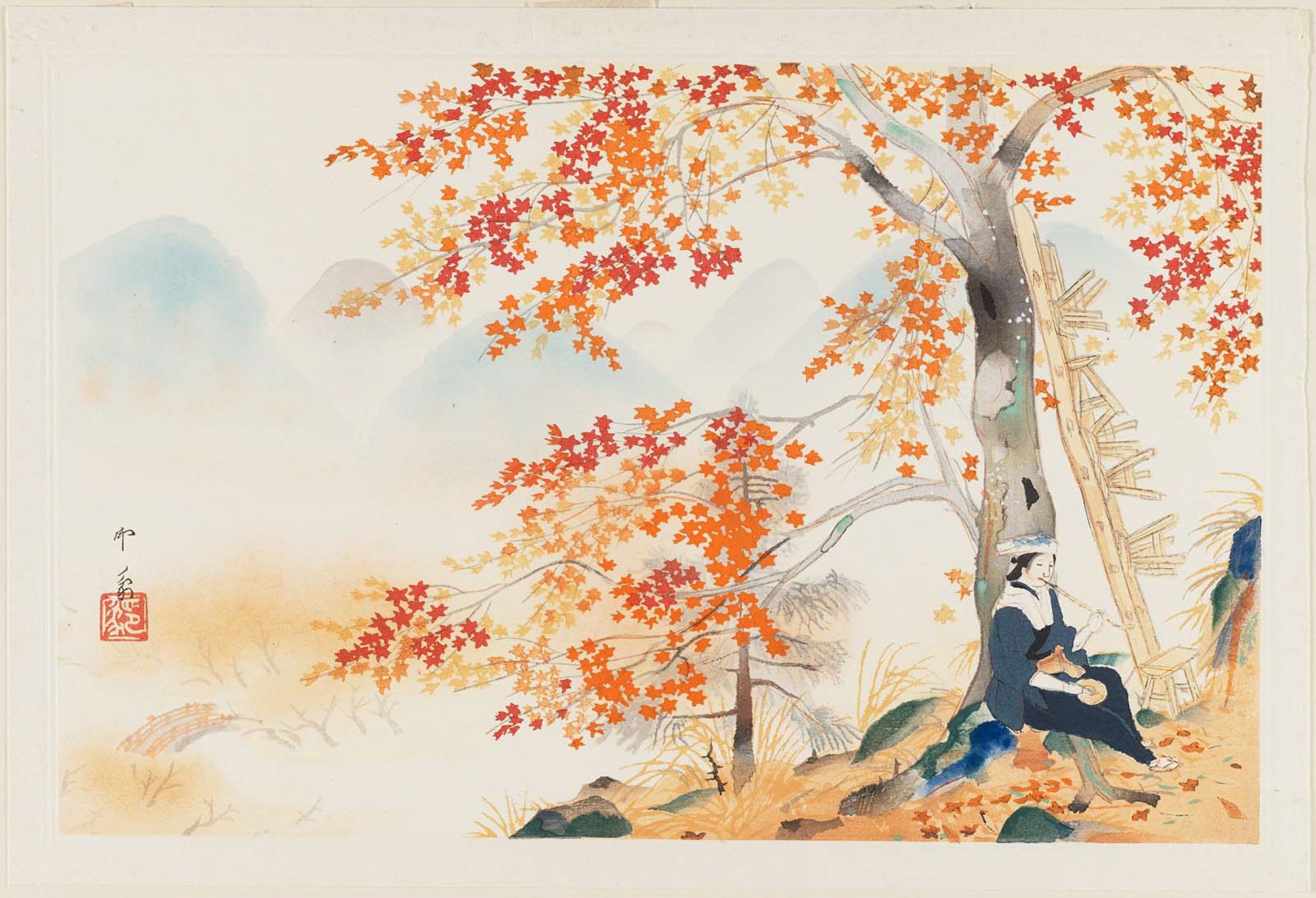
Autumn Maple Leaves at Takao, from the album Eight Views of Kyoto (Kyôto hakkei)
Woodblock print

The Beach at Kaiganji in Sanuki Province (Sanuki Kaiganji no hama), from the series "Collection of Views of Japan II, Kansai Edition (Nihon fukei shu II Kansai hen)"
1934
Color woodblock print; oban

Tea Kettle, section of a sheet from the series "Mirror of Stone Rubbings of Views of the Provinces" (Kohon meihitsu ishizuri kagami)
n.d.
Woodblock print; ishizuri-e, section of harimaze sheet
Featured in Collections
Curated cross-cuts that include this print.
Frequently Asked Questions
Monk at a Mountain Temple was created by Jun'ichiro Sekino (関野準一郎) in 20th century.
Monk at a Mountain Temple uses Nishiki-e, Moku-hanga, and Kento, on color woodblock print.
Monk at a Mountain Temple depicts landscapes, figures, and temples & shrines.
Monk at a Mountain Temple measures 22.9 × 26.7 cm.