
Cherry blossom at night - Maruyama Park
- Medium:
- Mokuhanga (Japanese woodblock)
- Image courtesy of
- Saru Gallery
Description
Maruyama Park, at the foot of the Higashiyama hills behind Yasaka Shrine, has been Kyoto's central hanami site since its opening in 1886, anchored by the great shidarezakura (weeping cherry). The print depicts yozakura — blossoms viewed at night, when paper lanterns transform the grounds into a field of pale petal against deep ground. Such subjects demand technical control of dark fields: indigo or sumi backgrounds printed in multiple impressions to achieve density without flatness, the blossoms left largely unprinted or carrying only the lightest pink wash so the washi paper itself reads as petal. Yoshikawa would have employed bokashi shading in the sky and selective karazuri to suggest petal volume against the dark surround. The print belongs to a strand of shin-hanga night views and reflects Yoshikawa's documentation of distinctly Kyoto rituals of seasonal observance — subjects he understood not only as picturesque scenes but as expressions of the city's cultural continuity.
More Prints by Kanpo Yoshikawa

The Actor Kataoka Gado IV as Miyuki in the play Shoutsushi Asagao Nikki (The Diary of the Morning Glory)
c. 1924
Color woodblock print; oban

Five, Hinazō
early summer 1922
Woodblock print, ink and color on paper with mica
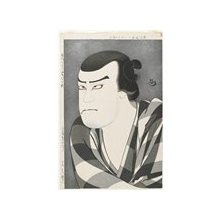
The Actor Nakamura Enjaku II as the Snarling Gonta
Woodblock print
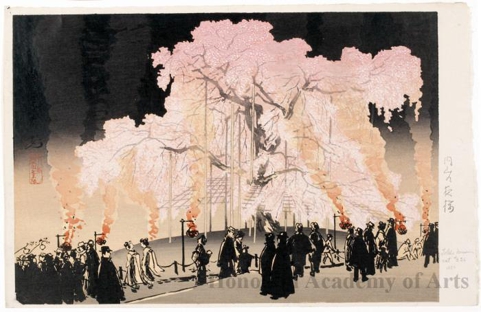
Cherry Blossoms at Night, Maruyama
Woodblock print
More Cherry Blossoms Prints

Kumoi Cherry Trees (Kumoi sakura)
Kumoi sakura
1926
Color woodblock print

Hirosaki Castle, from the series "Eight Views of Cherry Blossoms"
1935
Color woodblock print

Chion-in Temple Gate (Romon), from the series Eight Scenes of Cherry Blossoms (Sakura hachidai)
Romon
1935
Color woodblock print
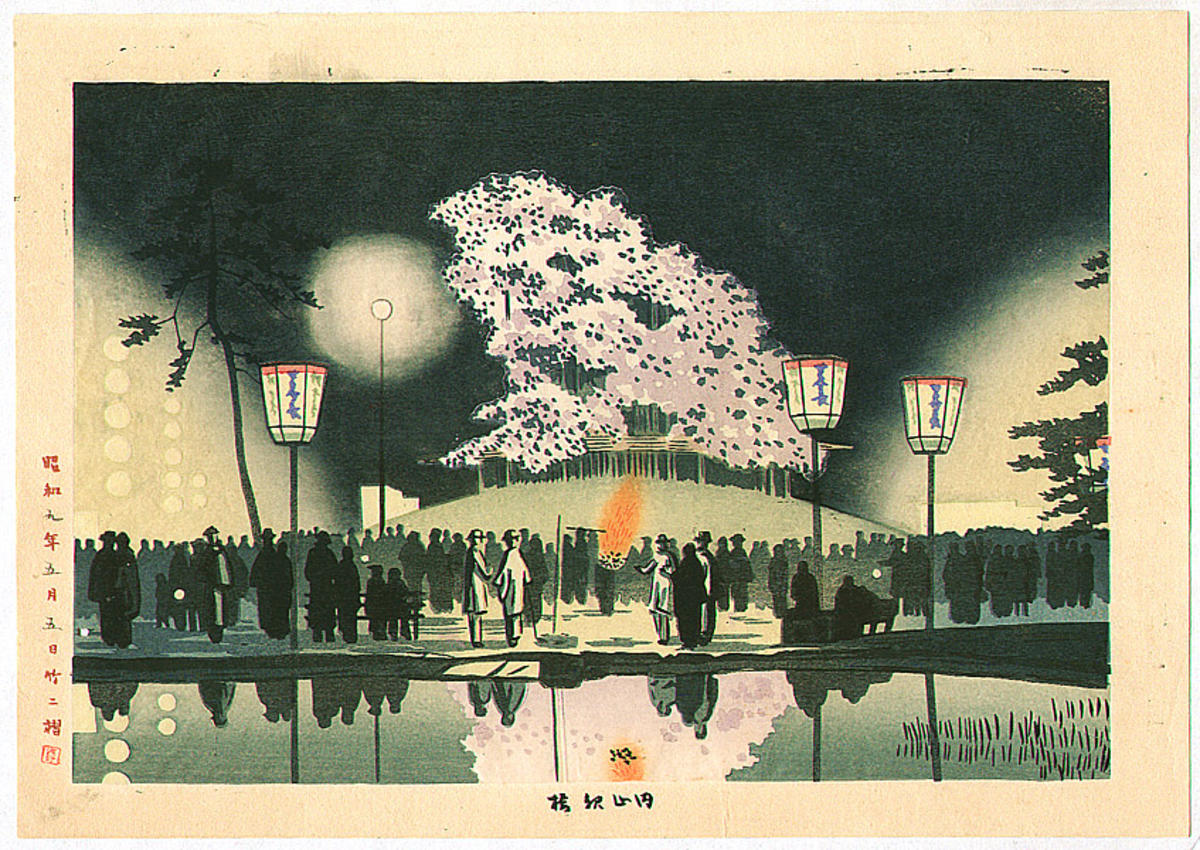
Cherry Blossoms at Maruyama Park
円山公園桜
Woodblock print
Featured in Collections
Curated cross-cuts that include this print.
Frequently Asked Questions
Cherry blossom at night - Maruyama Park was created by Kanpo Yoshikawa (吉川観方).
Cherry blossom at night - Maruyama Park depicts cherry blossoms, night scenes, and gardens.